


- by wangfred
What Digital Products Are Trending 2025: A Glimpse Into The Next Tech Revolution
- by wangfred
Imagine a world where your surroundings anticipate your needs, your clothing monitors your health in real-time, and your digital and physical realities are so seamlessly intertwined they become indistinguishable. This isn't a distant sci-fi fantasy; it's the tangible future being built today, set to explode into the mainstream by 2025. The pace of technological innovation is not just accelerating; it's converging, creating a perfect storm of breakthroughs that will redefine our daily lives. The digital products trending in 2025 will be less about isolated gadgets and more about interconnected ecosystems, intelligent environments, and deeply personalized experiences that augment human capability and connection. This is a preview of the next tech revolution, a roadmap to the tools that will shape our tomorrow.
For decades, our interaction with technology has been screen-based and intentional—we pick up a device, open an app, and command it. The dominant trend for 2025 is a shift away from this paradigm toward ambient computing, where technology fades into the background of our lives. The goal is no longer to create a more captivating screen but to eliminate the need for one altogether.
This will be powered by a proliferation of distributed, low-power sensors and AI assistants that are always-on, context-aware, and proactive. Instead of asking a smart speaker to play music, the system will know your morning routine and begin playing a news briefing as you enter the kitchen, adjusting the smart lighting to an energizing hue. Your environment becomes the computer. Key products enabling this will be advanced, discreet smart home hubs with vastly improved natural language processing, environmental sensors that monitor air quality, temperature, and occupancy, and AI agents that can orchestrate complex sequences of events across different brands and devices without explicit instruction. The interface becomes auditory, haptic, and environmental, moving beyond the glass rectangle in our hands.
If 2023 was the year of the AI chatbot, 2025 will be the year the AI gets a job. Standalone AI applications will give way to deeply integrated AI co-pilots embedded directly into the operating systems of our phones, computers, and creative software. This is more than a clever chatbot; it's a fundamental rewrite of how software works.
Imagine a writing application that doesn't just correct grammar but suggests entire paragraphs in your style based on a one-sentence prompt. Envision a design tool that can generate complex UI mockups from a crude napkin sketch or a video editor that can automatically source b-roll, apply color grading, and suggest cuts based on the emotional tone of your script. These AI co-pilots will function as tireless, hyper-competent assistants, dramatically lowering the barrier to creation and productivity. The trending digital products will be the hardware and subscription services that enable this, from next-generation processors with dedicated neural engines to software platforms where the AI is not a feature but the foundation. This intelligence will become a utility, as essential and ubiquitous as electricity.
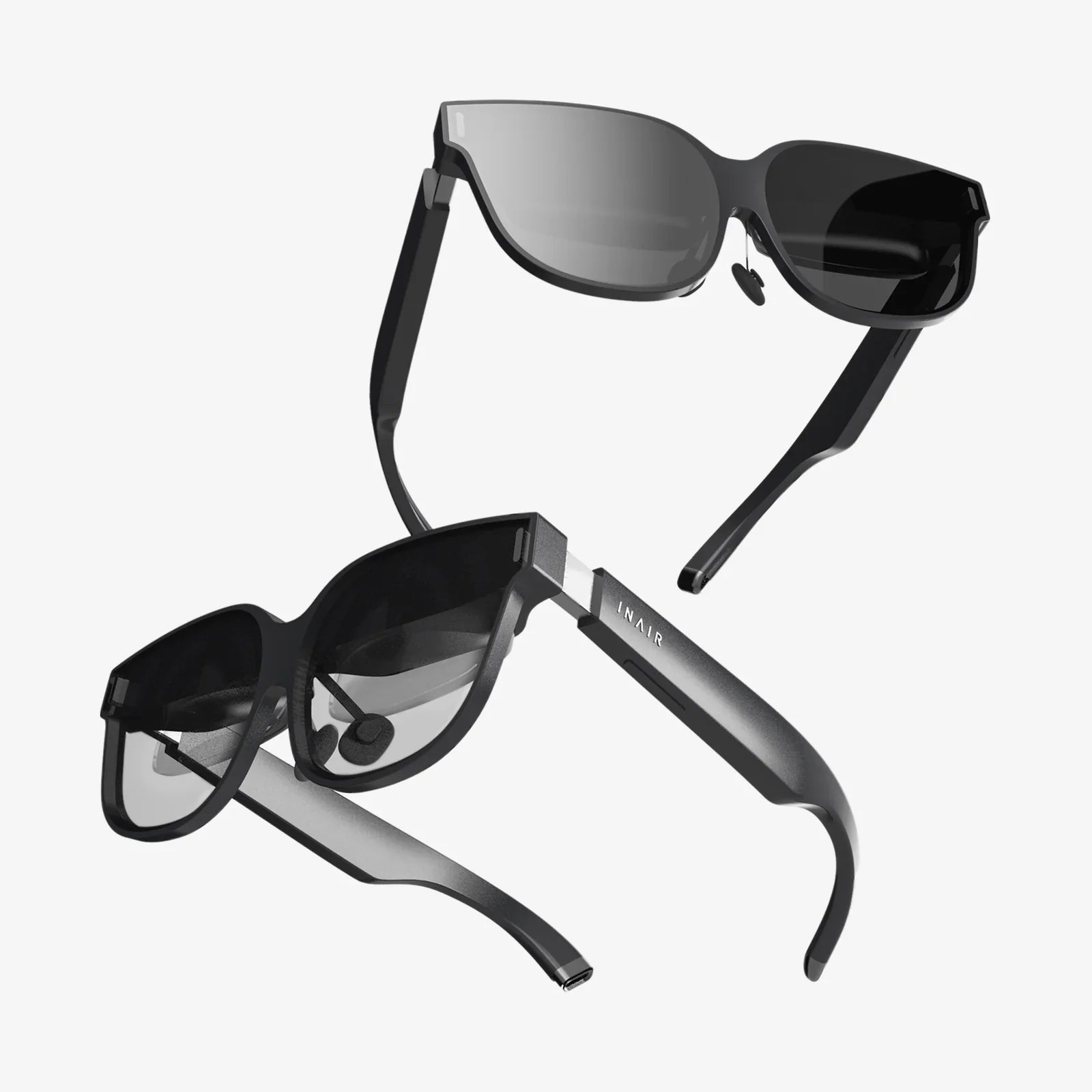
Augmented Reality (AR) has been perpetually "five years away" for the past fifteen years. 2025 is poised to be the inflection point where it finally arrives for the masses, thanks to the maturation of spatial computing. This goes beyond overlaying simple graphics on a phone screen; it's about understanding and interacting with the 3D space around you.
The key will be the arrival of compelling, affordable, and stylish AR glasses. While early versions exist today, 2025's models will be lighter, have all-day battery life, and offer high-resolution, contextually-aware displays. They will use advanced computer vision to map rooms, recognize objects, and persist digital information in physical space. The applications are staggering: navigation arrows painted directly onto the street in front of you, a virtual mechanic guiding you through a car repair by highlighting parts under the hood, or a virtual pet that actually knows it's sitting on your real couch. The smartphone will begin its slow descent from the center of our digital lives, replaced by a more intuitive, hands-free, and spatially-aware layer of computing that sits over our world.
The fusion of the physical and digital—"phygital"—will hit its stride in the fashion world by 2025. Clothing and accessories will cease to be passive items and will transform into interactive, dynamic digital products. We are moving beyond simple fitness trackers to advanced smart fabrics and wearable technology.
Trending products will include jackets with woven-in, flexible displays that can change color or pattern on demand, connected to your digital avatar's wardrobe. Shoes with adaptive cushioning that automatically adjusts to your gait and the terrain. Jewelry with embedded low-power screens that show notifications, health metrics, or digital art. This trend is fueled by innovations in miniaturization, battery technology, and e-textiles. Furthermore, this "phygital" link will extend to digital ownership and identity, with physical items serving as keys or tokens for exclusive digital experiences, memberships, or assets in virtual worlds, blurring the lines between our online and offline selves.
The quantified self movement will evolve into the hyper-personalized health revolution. Generalized health data will be replaced by continuous, multi-layered biometric monitoring, providing a holistic, real-time picture of an individual's well-being. The digital products trending in 2025 will make today's smartwatches look like simple pedometers.
Expect advanced non-invasive blood glucose monitors, continuous blood pressure sensors, and sleep trackers that can detect sleep apnea and measure sleep stages with medical-grade accuracy. These devices will be packaged in more accessible forms like rings, patches, and smart clothing. The real power, however, will come from the AI that analyzes this constant stream of data. It will be able to predict potential health events, suggest micronutrient adjustments based on sweat analysis, recommend personalized workout regimens, and even detect early signs of mental fatigue or stress, prompting proactive interventions. This shift from reactive healthcare to predictive and personalized wellness will be one of the most significant impacts of digital product innovation.
On the more frontier end of the spectrum, 2025 will see significant strides in technologies that directly interface with the human nervous system. Neuromorphic computing, which involves designing computer chips that mimic the neural structure of the human brain, will lead to devices that are incredibly efficient at processing sensory data (sight, sound) and AI workloads.
This will accelerate the development of non-invasive Brain-Computer Interfaces (BCIs). While not yet mainstream consumer products, we will see sophisticated developer kits and early-adopter devices that allow for control of computers and digital environments through thought and focus. Applications will initially focus on accessibility, allowing individuals with mobility challenges to control prosthetics or navigate digital spaces. However, the potential extends to entirely new forms of communication and control for everyone, moving toward a future where we can manipulate digital information as effortlessly as we move our own limbs. This represents the ultimate destination of human-computer interaction: the complete erosion of the interface.
A critical undercurrent for all 2025 tech trends will be sustainability. Consumers are increasingly demanding products that are not only powerful but also responsibly made. This will manifest in several ways: a major push toward devices made with recycled and biodegradable materials, a "right to repair" movement leading to products designed for easy disassembly and upgradability, and a focus on extreme energy efficiency.
Trending products will include solar-powered and kinetic-energy-harvesting gadgets that never need to be plugged in, modular devices where you can upgrade individual components (like the camera or battery) instead of the entire unit, and software optimized to extend hardware lifespan. The most successful companies will be those that can demonstrate a genuine commitment to a circular economy, proving that cutting-edge innovation and environmental responsibility are not mutually exclusive but are, in fact, the defining duo of next-generation technology.
The digital landscape of 2025 is being forged at the intersection of AI, ambient intelligence, and human-centric design. It promises a world not of colder isolation, but of warmer, more intuitive technology that understands context, anticipates needs, and empowers human potential in ways we are only beginning to imagine. The revolution won't be televised; it will be lived, worn, and experienced all around us.