


Imagine a world where the line between the digital and the physical isn't just blurred—it's artistically erased. A world where information doesn't live on a screen in your pocket but is painted onto the very fabric of your reality, accessible with a glance, a point, or a spoken word. This is the promise and the power of augmented reality, a technology that is quietly weaving itself into the tapestry of our daily lives, and it's doing far more than you might think.
At its absolute core, augmented reality (AR) superimposes digital information—be it images, sounds, text, or 3D models—onto a user's real-world view in real-time. Unlike Virtual Reality (VR), which seeks to replace your world with a simulated one, AR aims to enhance and augment your existing environment. It acts as a dynamic layer of intelligence, adding context, data, and digital magic to the physical spaces and objects we interact with every day. But to say it merely "adds a layer" is a dramatic oversimplification. The real question is: what does this layering actually do? What tangible functions does it perform?
The Foundational Function: The Informational Overlay
The most immediate and widely understood action of AR is the simple overlay of information. This is the digital equivalent of having a brilliant, all-knowing assistant whispering in your ear, pointing things out, and providing instant context for everything you see.
- Visual Recognition and Labeling: Point your device's camera at a complex piece of machinery, and AR can identify its components, overlaying labels, operating instructions, or warning indicators. Look at a restaurant, and see its reviews and today's specials float beside its sign.
- Navigation and Wayfinding: Instead of looking down at a 2D map on your phone, AR can project giant, floating arrows onto the street in front of you, guiding you turn-by-turn through a city. Indoors, it can transform confusing hallways into a clearly marked path to your gate at an airport or the specific product you're searching for in a vast supermarket.
- Real-Time Data Visualization: For professionals, this is transformative. An architect can walk through a construction site and see the planned plumbing and electrical conduits behind the drywall. A weather forecaster can stand in front of a green screen and manipulate 3D storm systems as if they were physical objects.
This function transforms the world from a static place into a live, data-rich interface. It turns ignorance into immediate understanding, making the opaque transparent.
The Transformative Function: Visualization and "Try-Before-You-Buy"
Perhaps the most commercially explosive action of AR is its ability to visualize the unreal within the real. It allows users to project digital objects into their physical space with accurate scale, perspective, and lighting, effectively enabling them to try things before making a commitment.
- Retail and E-Commerce: This is a game-changer. You can see how a new sofa would look in your living room, accurately judging its size and color against your existing decor. You can "try on" glasses, makeup, or even sneakers, seeing a high-fidelity simulation of how they look on you without ever stepping into a store or opening a package.
- Interior Design and Home Decoration: Beyond furniture, AR lets homeowners experiment with wall colors, artwork, lighting fixtures, and flooring. They can rearrange entire rooms with digital proxies of their furniture, planning spaces with confidence before lifting a single heavy object.
- Art and Public Installations: Artists and museums are using AR to create dynamic, interactive exhibits. A static sculpture in a park can come to life with a historical reenactment when viewed through a device. A painting on a wall can tell the story of its creation.
This function bridges the gap between imagination and reality. It drastically reduces the uncertainty inherent in many purchasing and design decisions, empowering consumers and reducing return rates for businesses.
The Interactive Function: Gamification and Storytelling
AR doesn't just have to be informative or practical; it can be profoundly entertaining. It can turn the entire world into a playground, a game board, or a narrative canvas.
- Location-Based Gaming: This function popularized AR for millions. It encourages users to explore their physical environment to find and interact with digital creatures, characters, or objects placed at real-world locations. Parks, landmarks, and even street corners become sites of adventure and discovery.
- Interactive Narrative and Education: A history lesson can transform a schoolyard into a Roman fort. Students can walk through a digital recreation of ancient Egypt or witness a historical event unfold on their classroom table. This experiential learning creates powerful, memorable connections that textbooks cannot.
- Social Filters and Lenses: While seemingly frivolous, these playful face-tracking filters are a massive driver of AR adoption. They allow for creative self-expression, humor, and shared experiences, normalizing the technology for a global audience and demonstrating its potential for real-time manipulation of our environment (in this case, our own faces).
This function injects wonder and play into the mundane. It re-enchants our familiar surroundings, reminding us that magic and story can be found anywhere, if you have the right lens to see it.
The Collaborative Function: Remote Assistance and Shared Spaces
AR is breaking down geographical barriers by creating shared, augmented spaces where people can collaborate as if they were physically together. This is one of its most powerful enterprise applications.
- See-What-I-See Remote Support: A field technician stuck on a complex repair can stream their live point-of-view to an expert located thousands of miles away. The expert can then draw arrows, circles, and instructions directly onto the technician's real-world view, pointing precisely to the component that needs adjusting. This slashes downtime, travel costs, and error rates.
- Shared 3D Models for Design and Review: Engineers, designers, and medical professionals can interact with the same 3D hologram of a product prototype or a human organ from different locations. They can manipulate it, annotate it, and discuss it in real-time as if it were a physical object sitting between them.
- Virtual Telepresence: The next evolution of video conferencing. Instead of seeing colleagues in little boxes on a screen, AR could project their life-sized, volumetric avatars into your office, allowing for more natural, spatial conversations and collaboration.
This function creates a collective intelligence. It allows expertise to be beamed anywhere instantaneously, making knowledge and guidance ubiquitous rather than localized.
The Practical Function: Training and Simulation
AR provides a safe, scalable, and highly effective environment for training complex skills without real-world risk or cost.
- Procedural Guidance: A trainee surgeon can practice a procedure on a physical mannequin while AR overlays each step of the operation, highlighting incision points and critical anatomy. A mechanic-in-training can learn to assemble an engine with digital instructions superimposed on the physical parts.
- Hazardous Scenario Simulation: Firefighters can train for dangerous blazes with digital flames overlaid in a real building. Soldiers can rehearse missions with simulated enemies and battlefield conditions. All of this is done with zero actual risk, allowing for repetition and mistake-making that would be catastrophic in reality.
- Muscle Memory and Skill Development: By providing real-time visual feedback on movement, AR is used in sports training, physical therapy, and rehabilitation. A golfer can see the ideal swing path projected over their own, or a patient can be guided through a correct exercise form.
This function democratizes expertise. It accelerates the learning curve for complex tasks and creates a safer, more competent workforce across countless industries.
Beyond the Screen: The Future of AR and Spatial Computing
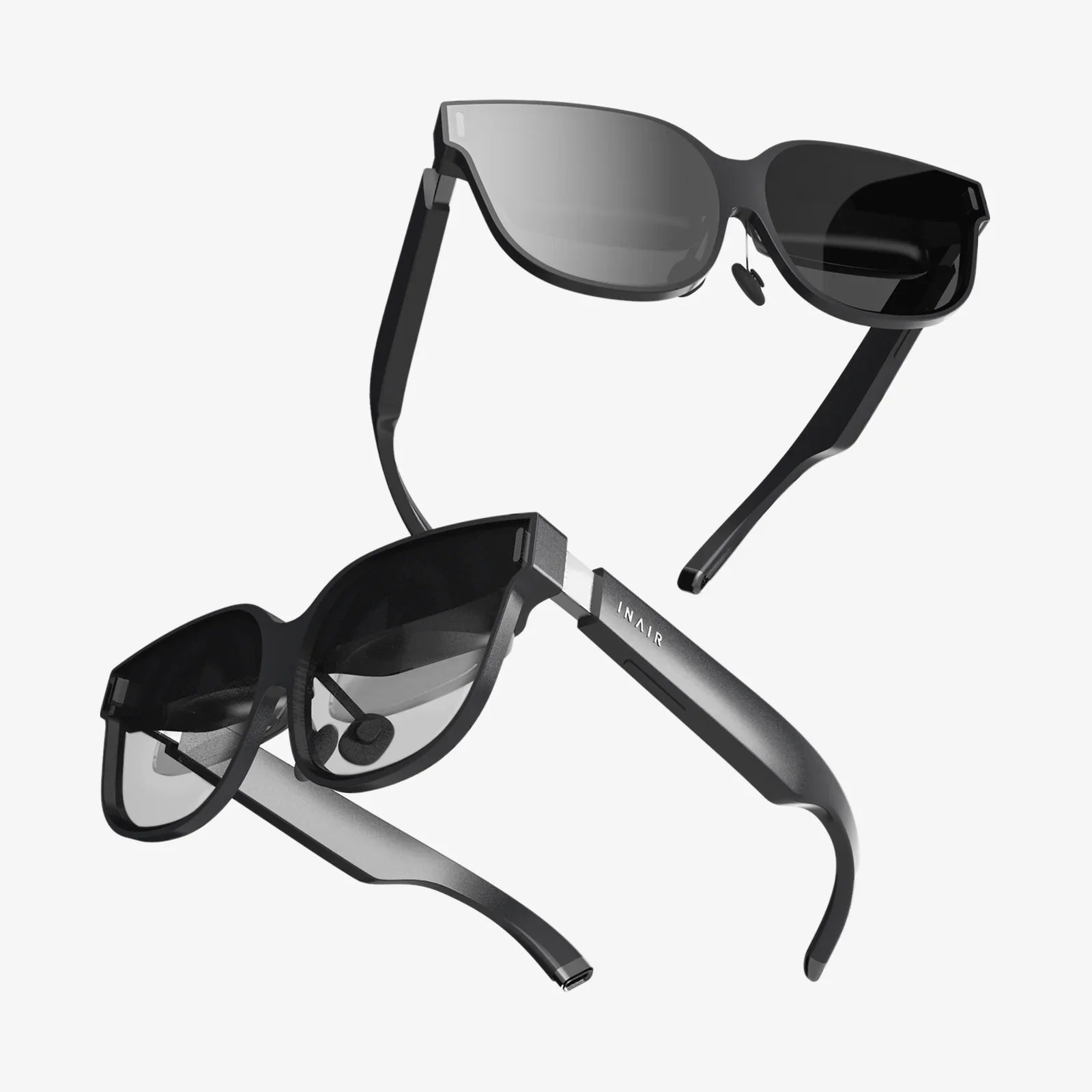
The true evolution of AR is its move away from the smartphone screen and onto our faces in the form of sleek glasses and eventually contact lenses. This shift to wearable, always-available AR—often called spatial computing—will unlock its full potential, making the digital layer a seamless and persistent part of our perception.
In this future, AR will do even more. It will act as a cognitive prosthesis, remembering names and details for us when we meet someone. It will translate foreign language signs instantly as we read them. It will warn us of hazards we might not have seen and provide gentle reminders throughout our day. It will fundamentally change our relationship with information, shifting from a model of actively seeking it out to one of passively and contextually receiving it.
The journey of AR is just beginning. From its humble beginnings as an informational overlay, it is rapidly becoming an indispensable tool for visualization, collaboration, training, and pure entertainment. It is not about escaping our world, but about enriching it, making it more understandable, efficient, and magical. The real magic isn't in the technology itself, but in what it enables us to do: to see the unseen, to know the unknown, and to interact with our world in ways we once believed were confined to the realms of science fiction.
So the next time you use your phone to see how a new chair fits in your room or laugh at a animated filter on your face, remember—you're witnessing a sliver of a much larger revolution. You're not just using an app; you're peering through a keyhole into a future where our reality is endlessly customizable, deeply intelligent, and limited only by our imagination. The digital and physical worlds are finally having a conversation, and augmented reality is providing the language.
Share:
Even Realities Smart Glasses Discount: A New Era of Accessible Augmented Reality
Wearable Tech Under $100: The Ultimate Guide to Affordable Fitness and Smart Features