


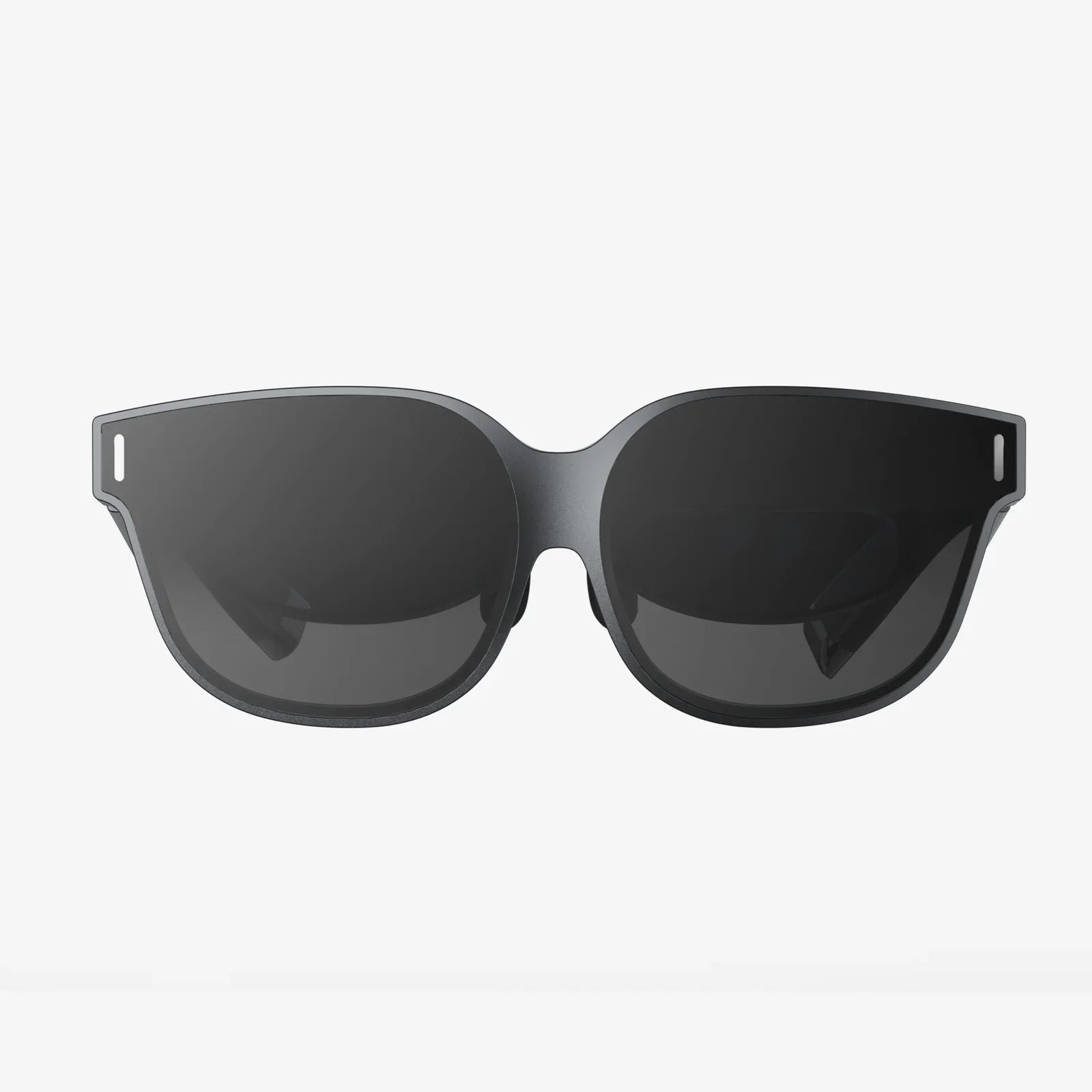
Imagine pointing your device at a city street and seeing its history unfold before your eyes, or looking at a complex engine and watching a virtual tutorial highlight the exact part you need to fix. This is the promise of augmented reality, a technology quietly weaving a digital layer of information over our physical reality, and it’s poised to change everything. It’s not about escaping our world, but enhancing it, making the invisible visible and the complex comprehensible. The question isn't just what AR is, but what does augmented reality (AR) do? The answer lies in its unique ability to bridge the gap between the digital and the physical, creating a new, interactive, and deeply informative hybrid space.
The Core Function: A Bridge Between Real and Digital
At its most fundamental level, augmented reality does one primary thing: it superimposes computer-generated perceptual information onto the real-world environment. Unlike Virtual Reality (VR), which creates a completely immersive, digital experience that replaces reality, AR adds to it. This is achieved through a combination of hardware—like cameras, sensors, and displays—and sophisticated software that understands and interacts with the physical world.
The magic happens through a process of scanning, interpreting, and projecting. A device's camera scans the immediate environment. Advanced algorithms, including simultaneous localization and mapping (SLAM), then interpret this visual data to understand surfaces, depths, and objects. Finally, the AR system projects or "anchors" digital content—be it a 3D model, a line of text, an animated character, or a data overlay—onto this understood physical space. This creates the seamless illusion that the digital object exists within the user's real-world context, responding to movement and interaction in real-time.
Transforming the Retail and Shopping Experience
One of the most visible and consumer-friendly applications of AR is in the retail sector. Here, AR does something revolutionary: it solves the problem of imagination. Shopping online has always had one critical drawback—the inability to try before you buy. AR erases this limitation.
- Virtual Try-On: Users can see how furniture would look in their living room, scaled to the correct size and perspective. They can "try on" glasses, makeup, or even clothes using their device's camera, seeing a realistic overlay on their own reflection. This drastically reduces purchase uncertainty and minimizes returns.
- Enhanced Product Information: Pointing a smartphone at a product on a shelf can trigger an AR experience. This might show detailed specifications, user reviews, comparable products, or even a video demonstrating the product's use. It turns a static shopping aisle into an interactive showroom.
- Virtual Showrooms: Companies can create entire digital catalogs that users can place in their physical space, browsing products in a life-like context without the need for a massive physical inventory on display.
By overlaying digital information onto physical products and spaces, AR creates a more confident, informed, and engaging shopping journey, blurring the lines between the convenience of e-commerce and the tangibility of brick-and-mortar stores.
Revolutionizing Industrial Design and Manufacturing
Beyond consumer fun, AR is doing heavy lifting in industrial settings, becoming an indispensable tool for engineers, designers, and factory workers. In these fields, AR acts as a powerful visualization and guidance system.
- Prototyping and Design: Designers can project full-scale 3D models of new products, machinery, or architectural plans directly into a physical space. This allows for rapid iteration and collaboration, identifying design flaws and spatial issues long before costly physical prototypes are built.
- Assembly and Maintenance: Technicians wearing AR smart glasses can see digital instructions overlaid directly onto the equipment they are repairing. Animated arrows can point to specific components, torque settings can be displayed next to bolts, and a remote expert can "see what they see" and draw annotations into their field of view. This reduces errors, slashes training time, and improves safety.
- Logistics and Warehousing: In massive warehouses, AR can visually guide pickers to the exact shelf and bin location for an item, displaying the most efficient route and verifying the correct product is selected, supercharging efficiency and accuracy.
Here, AR functions as a real-time manual and expert companion, turning complex tasks into manageable, guided procedures and unlocking new levels of precision and efficiency.
Redefining Education and Training
AR is doing for education what the printing press did for knowledge dissemination: it's making learning immersive, interactive, and accessible. It transforms abstract concepts into tangible, interactive experiences.
- Interactive Textbooks: A student can point their tablet at a diagram of the human heart in a textbook and watch a beating, interactive 3D model emerge from the page. They can rotate it, zoom in, and tap on parts to learn their names and functions.
- Historical and Scientific Exploration: Imagine walking through a historical site and seeing a reconstruction of ancient buildings overlay the ruins. Or studying astronomy by holding a device up to the sky to see constellations, planetary orbits, and satellite paths labeled and animated.
- Skill-Based Training: Medical students can practice procedures on virtual patients. Mechanics-in-training can learn to dismantle a complex virtual engine. This provides a safe, repeatable, and cost-effective training environment where mistakes are part of the learning process, not a real-world crisis.
By making learning a multi-sensory, exploratory activity, AR boosts engagement, improves knowledge retention, and caters to a variety of learning styles.
Powering Navigation and Wayfinding
AR is set to do for navigation what GPS did for paper maps—make them obsolete. Instead of looking at a 2D map on a screen and translating that into the 3D world, AR navigation overlays directions directly onto your view of the real world.
- Urban Navigation: Hold up your phone, and arrows, directions, and distance markers appear on the live camera feed, painted onto the sidewalk and pointing down the correct street. The name of your destination can hover over the actual building.
- Indoor Navigation: In sprawling environments like airports, museums, or shopping malls, AR can guide you to your specific gate, exhibit, or store, showing you the path through the halls and turns.
- Automotive Heads-Up Displays (HUDs): AR projections on car windshields can show speed, navigation cues, and safety alerts that appear to be floating over the road ahead, allowing drivers to keep their eyes on the road while accessing crucial information.
This contextual guidance system reduces cognitive load, makes navigation more intuitive, and helps users understand their surroundings rather than just following a line on a screen.
Enhancing Social Connection and Entertainment
On a social level, AR is creating new shared experiences and forms of entertainment. It does this by creating a common digital playground anchored in our physical reality.
- Social Media Filters and Lenses: These are the most ubiquitous form of AR, allowing users to add virtual hats, masks, and effects to their faces and surroundings in photos and videos, fostering creative expression and viral trends.
- Multiplayer Gaming: Location-based AR games turn entire cities into game boards, encouraging players to explore their environment and collaborate or compete with others in real-time. It blends exercise, exploration, and social interaction.
- Live Events and Performances: Musicians can use AR to create stunning virtual stage effects visible through an app. Sports broadcasts can overlay real-time stats and visualizations onto the field of play for viewers at home.
AR entertainment is powerful because it is social and contextual, creating memorable experiences that are tied to a specific place and time, shared with others both physically present and remote.
The Future: A Pervasive, Invisible Interface
The trajectory of AR points towards a future where the technology becomes smaller, more powerful, and more integrated into our daily lives. The eventual goal is moving beyond handheld devices and even glasses towards more seamless interfaces like smart contact lenses or neural links. In this future, the digital layer will be a constant, context-aware companion.
It could provide real-time language translation subtitles over a conversation with someone speaking a foreign language. It could instantly identify plants on a hike or constellations in the night sky. It could provide a constant stream of personalized information based on what you're looking at and what you need to know at that exact moment. The device itself will fade into the background, and the augmented information will feel like a natural extension of our own perception and cognition.
Of course, this future also brings challenges. Issues of data privacy, digital addiction, information overload, and the potential for a new "digital divide" must be addressed thoughtfully. The line between enhanced reality and manipulated reality will become increasingly thin, demanding robust ethical frameworks and digital literacy.
From helping a student understand a complex molecule to guiding a surgeon through a delicate procedure, from letting you see a new couch in your home to helping you find your way in a new city, augmented reality is a tool of immense versatility and power. It is a testament to human ingenuity, our relentless drive to not only understand our world but to enrich it. This is just the beginning of a fundamental shift in how we compute and interact with information—not on a screen, but seamlessly integrated into the very fabric of our lives. The world is about to get a whole new layer, and it will change how we see everything.
Share:
Envision AI Glasses The Dawn of a New Sensory Reality and Its Profound Implications
Gaming Prescription Glasses: The Ultimate Upgrade for Your Visual Performance and Comfort