


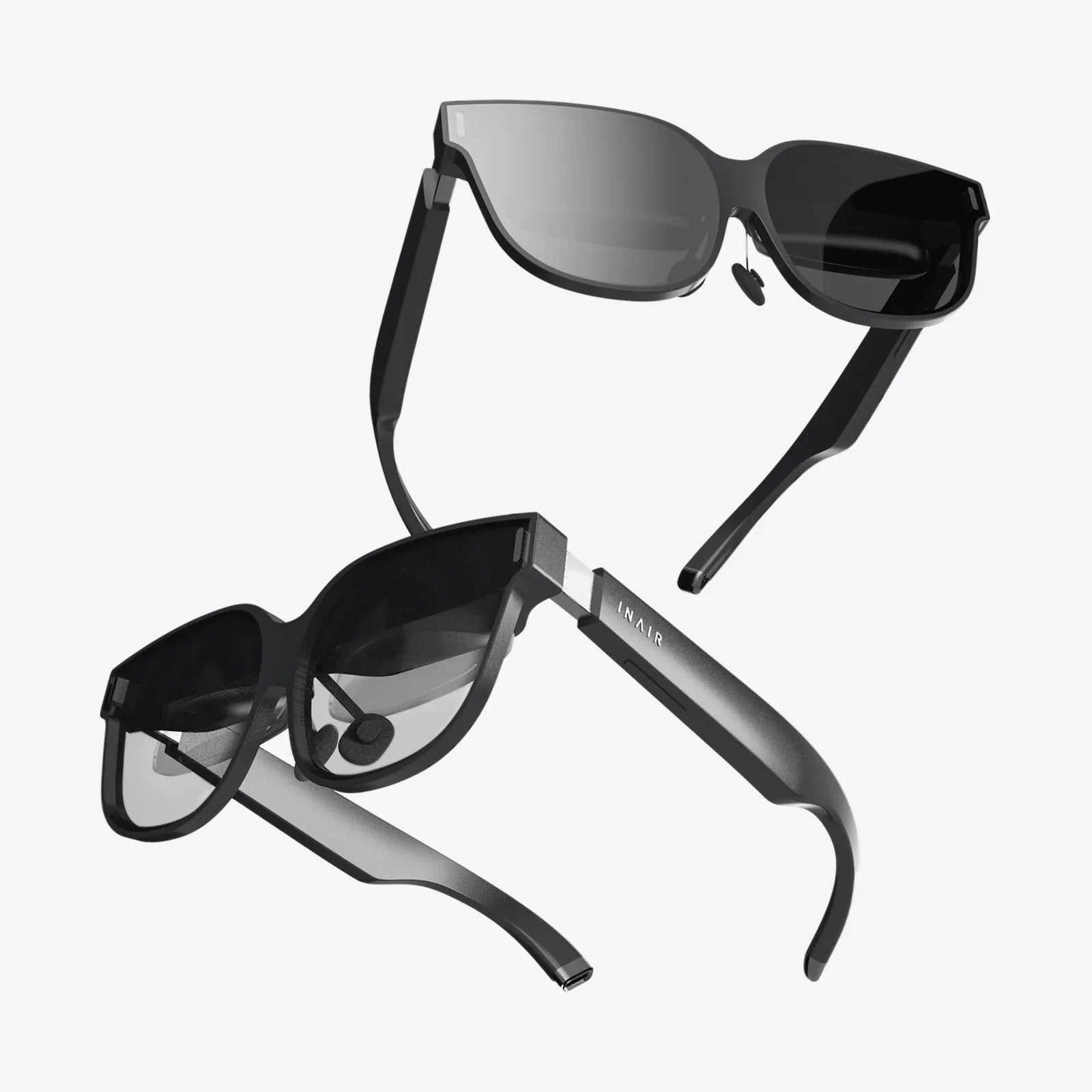
Imagine a world where digital information doesn't just live on a screen but is woven seamlessly into the fabric of your physical reality, enhancing everything you see, do, and experience. This is the captivating promise of Augmented Reality (AR), a technology that is rapidly moving from science fiction to an integral part of our daily lives. It’s more than just a fleeting trend; it represents a fundamental shift in how we interact with data and our environment, offering a glimpse into a future where the line between the digital and the physical is beautifully blurred.
The Foundational Principle: Superimposing the Digital Upon the Real
At its most fundamental level, Augmented Reality entails the real-time overlay of computer-generated perceptual information onto our physical environment. Unlike Virtual Reality (VR), which creates a completely immersive, digital world that replaces the real one, AR aims to augment—or add to—the reality we already perceive. The core objective is to enhance a user's current perception of reality rather than replacing it entirely. This is achieved through a sophisticated interplay of hardware and software designed to recognize the world and place contextual, interactive digital content within it in a way that feels cohesive and intuitive.
The magic of AR lies in its ability to make digital objects appear to coexist in the same space as physical objects. This requires a complex technological ballet that involves understanding the environment's geometry, tracking the user's position and perspective within it, and rendering digital content that obeys the real world's rules of lighting, perspective, and occlusion. When executed well, the result is a compelling and useful enhancement of a user's immediate surroundings.
Deconstructing the AR System: Core Components and Technologies
To fully grasp what AR entails, one must understand the essential technological components that make it possible. These systems work in concert to capture the real world, process it, and seamlessly integrate digital constructs.
Sensors and Cameras
These are the eyes of an AR system. A camera, often integrated into a headset, smart glasses, or a smartphone, continuously captures the live video feed of the user's environment. This visual data is the primary input. However, modern AR systems rely on a suite of additional sensors for greater accuracy and robustness. These can include:
- Depth Sensors: Measure the distance to objects, creating a 3D map of the environment.
- LiDAR (Light Detection and Ranging): Uses laser pulses to measure distances and create high-resolution 3D maps of the surroundings, crucial for precise occlusion (where digital objects can be hidden behind real ones).
- Inertial Measurement Units (IMUs): Comprising accelerometers and gyroscopes, they track the device's movement, rotation, and orientation in space.
- GPS: Provides coarse location data for outdoor, large-scale AR experiences.
Processing and Computing Power
The raw data from the sensors is meaningless without significant computational power to interpret it. This processing entails several critical tasks:
- Computer Vision: This is the brains of the operation. Computer vision algorithms analyze the video feed to identify objects, surfaces, and features. Techniques like SLAM (Simultaneous Localization and Mapping) are pivotal. SLAM allows the device to both map an unknown environment and simultaneously track its own location within that map in real-time.
- 3D Registration: This is the process of anchoring digital content to a specific point in the real world. The system must continuously adjust the position and orientation of the virtual object as the user moves, ensuring it stays locked in place, a phenomenon known as persistence.
- Rendering: Once registered, the digital content must be rendered. This involves generating the graphics, textures, and animations, ensuring they are lit consistently with the real-world environment and respect real-world physics (e.g., shadows are cast correctly, digital objects are occluded by real-world objects).
Display Technologies: The Window to Augmentation
How the augmented world is presented to the user is a defining characteristic of an AR system. Different display technologies offer varying levels of immersion and practicality.
- Handheld Displays (Smartphones and Tablets): This is the most common and accessible form of AR. The device's screen acts as a viewfinder, displaying the camera feed with digital overlays superimposed. While convenient, it requires the user to hold the device, limiting interactivity.
- Head-Mounted Displays (HMDs) - Smart Glasses: These are wearable glasses that project digital imagery onto transparent lenses (optical see-through) or use cameras to capture the real world and blend it with digital content on opaque displays (video see-through). They offer a hands-free experience and a more natural integration of AR into the user's field of view.
- Spatial AR (Projection Mapping): This method eschews personal displays altogether. Instead, digital light is projected directly onto physical surfaces and objects in the environment, effectively "painting" them with interactive content. This is often used for immersive art installations and retail displays.
The User Interface Paradigm Shift: Interaction in AR
AR entails a fundamental rethinking of human-computer interaction. Moving beyond the mouse, keyboard, and touchscreen, AR interfaces are spatial, contextual, and multimodal.
- Gesture Control: Users can interact with digital content using hand gestures and finger movements, pinching, dragging, and tapping virtual buttons mid-air.
- Voice Commands: Natural language processing allows users to control the AR experience and summon information through speech, a truly hands-free mode of interaction.
- Gaze Tracking: The system can track where the user is looking, enabling selection and interaction simply by focusing on a virtual element.
- Tangible Interfaces: Physical objects, such as a branded card or a specific toy, can be used as triggers or controllers for AR content, bridging the physical-digital divide.
This shift makes technology feel less like a tool and more like an intelligent extension of the user's own capabilities, responding intuitively to their actions and environment.
Beyond the Hype: The Expansive Real-World Applications of AR
The true measure of what AR entails is best understood through its practical, transformative applications across diverse sectors.
Transforming Industry and Manufacturing
In industrial settings, AR is a powerhouse for efficiency and accuracy. Technicians and engineers can use AR glasses to view digital schematics, repair instructions, or safety information overlaid directly onto the machinery they are working on. This provides hands-free access to critical information, reduces errors, and drastically shortens training times. Warehouse workers can be guided by AR visuals to the exact location of an item, optimizing the picking and packing process.
Revolutionizing Retail and E-Commerce
AR is solving one of online shopping's biggest drawbacks: the inability to try before you buy. Apps now allow users to project virtual furniture into their living room to check for size and style fit, or to virtually try on glasses, makeup, and clothes. This not only enhances consumer confidence and reduces return rates but also creates a novel and engaging shopping experience that blends the convenience of online with the assurance of physical retail.
Advancing Healthcare and Medicine
In healthcare, the implications are profound. Surgeons can use AR to visualize a patient's anatomy, such as CT scans or MRI data, projected directly onto their body during procedures, improving precision and outcomes. Medical students can learn complex anatomy through interactive 3D models. AR can also assist in physical therapy by guiding patients through exercises with proper form via superimposed avatars.
Redefining Education and Training
AR turns learning into an interactive, immersive adventure. Textbooks can come alive with 3D models of historical artifacts, planetary systems, or complex biological processes. Students can dissect a virtual frog or walk through a historical site reconstructed in their classroom. This experiential learning deepens understanding and retention far beyond what static images and text can achieve.
Enhancing Navigation and Wayfinding
Instead of looking down at a 2D map on a phone, AR navigation apps can overlay directional arrows, street names, and points of interest directly onto the real world through the device's camera. This intuitive guidance system makes navigating complex airports, city centers, or large campuses remarkably simple and contextually aware.
Challenges and Considerations on the Road to Ubiquity
Despite its immense potential, the widespread adoption of AR entails overcoming significant technical and social hurdles. Creating truly convincing and persistent AR requires immense processing power, long-lasting battery life, and miniaturized hardware that is both socially acceptable and comfortable to wear for extended periods. Current limitations in field of view, display resolution, and accurate environmental understanding can sometimes break the illusion of immersion.
Furthermore, the pervasiveness of AR raises critical questions about privacy and data security. These systems, by their very nature, are constantly scanning and analyzing our personal spaces, collecting vast amounts of visual and spatial data. Establishing clear ethical guidelines and robust security frameworks to govern how this data is used, stored, and protected is paramount to earning public trust. There is also the risk of digital vandalism, where malicious actors could deface public spaces with unwanted AR content, and the broader societal impact of further blending our digital and physical lives.
The Future Horizon: Towards a Pervasive AR World
The trajectory of AR points towards a future where digital information is not just accessible but ambient—always available and contextually relevant. The ultimate goal is the development of a seamless, always-on AR experience delivered through lightweight, stylish glasses that eventually replace the smartphone as our primary gateway to digital information. This vision, often referred to as the "Spatial Web" or "Mirrorworld," involves creating a 1:1 digital twin of our physical reality, a layer of information and experience that is inextricably linked to every person, place, and thing.
In this future, AR will become an invisible yet indispensable utility, like electricity or the internet, enhancing human perception, memory, and capability in ways we are only beginning to imagine. It will transform how we work, learn, socialize, and interact with the world around us on a fundamental level.
From overlaying helpful directions onto the street in front of you to enabling a mechanic to see the inner workings of an engine with X-ray vision, Augmented Reality is not merely a new type of display; it is a fundamental new layer of human experience. It’s a technology that promises to make us more knowledgeable, more efficient, and more connected to the digital realm without ever asking us to look away from the world we love. The journey into this augmented future is just beginning, and its potential to reshape our reality is truly limitless.
Share:
Augmented Reality Sector: The Invisible Layer Reshaping Our World
What Are the Advantages of Virtual Meetings: A Deep Dive into the Digital Transformation of Collaboration