


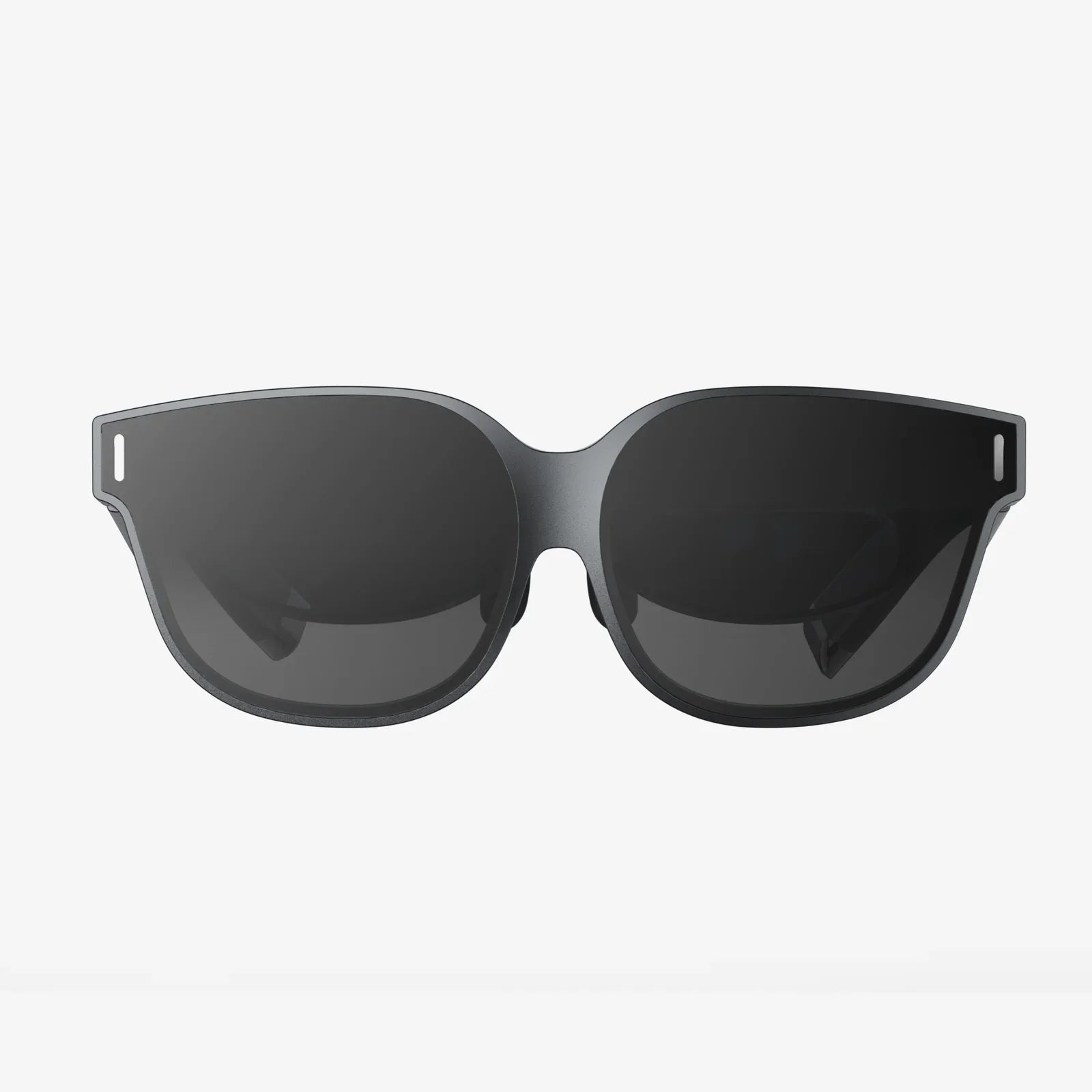
You’ve heard the term, seen the headsets, and maybe even experienced it for yourself, but a lingering question remains: what does VR truly mean for our lives, our work, and our very perception of reality? This isn't just about gaming or futuristic gadgets; it's about a fundamental shift in how we interact with information and with each other. The journey to understand VR is a journey to the forefront of human-computer interaction, and it's far more revolutionary than you might imagine.
Deconstructing the Term: A Simple Definition with Profound Implications
At its most basic, Virtual Reality (VR) is a computer-generated simulation of a three-dimensional environment that can be interacted with in a seemingly real or physical way by a person using special electronic equipment. But this sterile definition barely scratches the surface. To truly grasp what VR means, we must break down its two constituent words.
Virtual implies a near-reality, a digital representation that exists in essence but not in actual physical form. It’s a world made of bits and bytes, constructed by software and rendered by powerful processors.
Reality is our perception of the world, experienced through our senses. VR’s ultimate goal is to fool these senses—primarily sight and sound, but increasingly touch and even smell—into accepting the virtual world as genuine.
Therefore, VR is not merely a technology; it is an experience. It is the art and science of creating a convincing, interactive simulation that replaces the user’s real-world environment, transporting them somewhere else entirely. This experience is known as presence—the undeniable sensation of being physically present in a non-physical world. This psychological phenomenon is the holy grail of VR and is what separates it from all other media forms.
A Journey Through Time: The History and Evolution of VR
The concept of VR is not a 21st-century invention. Its roots stretch back decades, a testament to humanity’s long-held fascination with simulated experiences.
The seeds were sown in the 1950s and 60s with Morton Heilig’s Sensorama, a mechanical arcade cabinet that aimed to stimulate all the senses with short films, and Ivan Sutherland’s Sword of Damocles, a terrifyingly primitive head-mounted display that laid the foundational blueprint for all that would follow.
The term "Virtual Reality" itself was popularized in the late 1980s by Jaron Lanier, whose company VPL Research developed the first commercial goggles and datagloves. This era saw VR burst into the public consciousness, albeit with immense hype that its clunky, low-fidelity technology couldn’t possibly fulfill. The 1990s became a period of boom and bust, with VR appearing in movies and arcades but failing to deliver a comfortable or affordable consumer experience.
The modern renaissance began in the early 2010s. A pivotal moment was the creation of the Oculus Rift prototype by Palmer Luckey, which demonstrated that high-quality, low-latency VR could be achieved at a fraction of the previous cost. This kickstarted a new arms race, with major technology companies investing billions into research and development. The release of consumer-grade headsets, powerful graphics cards, and intuitive motion controllers finally provided the hardware necessary for true presence. VR had evolved from a science fiction dream into a tangible, accessible, and rapidly improving technology.
The Engine Behind the Illusion: Core Technologies Powering VR
Creating a believable virtual reality is a monumental technical challenge that relies on a symphony of integrated components.
Headsets and Displays
The head-mounted display (HMD) is the window into the virtual world. Modern HMDs use two high-resolution screens (one for each eye) to create a stereoscopic 3D effect. Key attributes include:
- Field of View (FOV): The angular extent of the visible world. A wider FOV (100 degrees or more) is crucial for immersion.
- Refresh Rate: Measured in Hertz (Hz), a high refresh rate (90Hz and above) ensures smooth motion and drastically reduces the latency that can cause motion sickness.
- Resolution: Higher resolutions (often referred to as pixels-per-degree) eliminate the "screen door effect," making the virtual world appear sharp and continuous.
Tracking Systems
For the illusion to hold, the virtual world must respond perfectly to the user’s movements. This is achieved through precise tracking:
- Rotational Tracking: Using gyroscopes and accelerometers to track the orientation of your head.
- Positional Tracking: Using external sensors (outside-in tracking) or cameras on the headset itself (inside-out tracking) to map your physical position in space and translate it into the virtual environment.
Audio and Haptics
Immersion is a multi-sensory experience. 3D spatial audio uses head-related transfer functions (HRTF) to make sounds appear to come from specific locations in the virtual space, such as above, behind, or far away. Haptic feedback, through controllers or advanced vests and gloves, provides the sense of touch, allowing users to feel the recoil of a virtual weapon, the impact of a virtual ball, or the texture of a virtual object.
Computational Power
Rendering two high-frame-rate, high-resolution views of a complex 3D world in real-time requires immense graphical processing power. This is why high-end VR often relies on powerful computers, though standalone headsets are incorporating increasingly capable processors to handle the load internally.
Beyond the Game: The Expansive Applications of VR
While gaming remains a primary driver of consumer VR, its applications extend far beyond entertainment, revolutionizing numerous professional fields.
Education and Training
VR offers unparalleled opportunities for experiential learning. Instead of reading about ancient Rome, students can walk through a faithfully reconstructed Forum. Medical students can practice complex surgical procedures on virtual patients without risk. Astronauts, pilots, and soldiers use highly sophisticated VR simulators to train for scenarios that would be too dangerous, expensive, or impractical to recreate in the real world.
Healthcare and Therapy
Therapeutic uses of VR are proving remarkably effective. It is used for exposure therapy, helping patients with phobias (like fear of heights or flying) confront their triggers in a safe, controlled environment. It aids in physical rehabilitation, turning exercises into engaging games to improve patient motivation and outcomes. VR is also being explored for pain management, distracting patients during painful procedures by immersing them in calming virtual worlds.
Design and Architecture
Architects and engineers are using VR for virtual walkthroughs of buildings before a single brick is laid. This allows for design flaws to be identified early and gives clients a true-to-life sense of scale and space that blueprints or static renders cannot provide. Automotive designers use VR to prototype and examine new vehicle designs at a 1:1 scale.
Remote Collaboration and Social Connection
VR has the potential to redefine remote work and socializing. Social VR platforms allow people from across the globe to meet, talk, and share experiences in a shared virtual space as if they were in the same room. For businesses, this means collaborating on 3D models, holding meetings on a virtual Mars, or training employees in a simulated store environment, all while saving on travel costs and time.
The Human Factor: Psychological and Social Considerations
The power of VR to induce presence carries significant psychological weight, raising important questions we are only beginning to address.
The Proteus Effect describes how individuals conform to the behavior and attitudes of their digital avatar. Embodiment in a tall avatar may make a user more confident, while a more attractive avatar may lead to more sociable behavior. This has profound implications for social interaction and identity exploration.
Furthermore, the line between the virtual and the real can sometimes blur. Intense experiences in VR can have real emotional and physiological effects, from joy and awe to fear and anxiety. The potential for addiction to idealized virtual worlds is a concern that ethicists are closely examining.
On a societal level, VR promises to make information and experiences more accessible to those with physical disabilities, allowing them to go places and do things otherwise impossible. However, it also risks creating a new digital divide between those who can afford access to high-quality VR and those who cannot.
Challenges and the Road Ahead
Despite rapid progress, VR still faces hurdles to mainstream adoption. Technical challenges include achieving perfect visual fidelity, eliminating motion sickness for all users, and developing smaller, lighter, and wireless hardware. The development of a robust and easy-to-use "killer app" beyond gaming is still underway.
On the horizon, the convergence of VR with Augmented Reality (AR) is leading to Mixed Reality (MR), where digital objects are seamlessly integrated into our physical world. The concept of the "metaverse"—a persistent network of interconnected virtual spaces—promises a future where our digital and physical lives are deeply intertwined.
Ultimately, the future of VR will be shaped not just by engineers, but by artists, storytellers, educators, and ethicists. It is a canvas for human creativity and a tool for human advancement.
So, what does VR mean? It means the end of the screen as we know it. It means the democratization of experience. It means new frontiers in human connection, creativity, and understanding. The headset is merely a tool; the true meaning of VR is found in the experiences it unlocks and the barriers it dissolves, offering a glimpse into a future where our reality is only the beginning.
Share:
Digital Product Innovation Digital Product Innovation Examples Reshaping Our World
Global Smart Wearable Market: A Deep Dive into Trends, Tech, and the Future on Your Wrist