


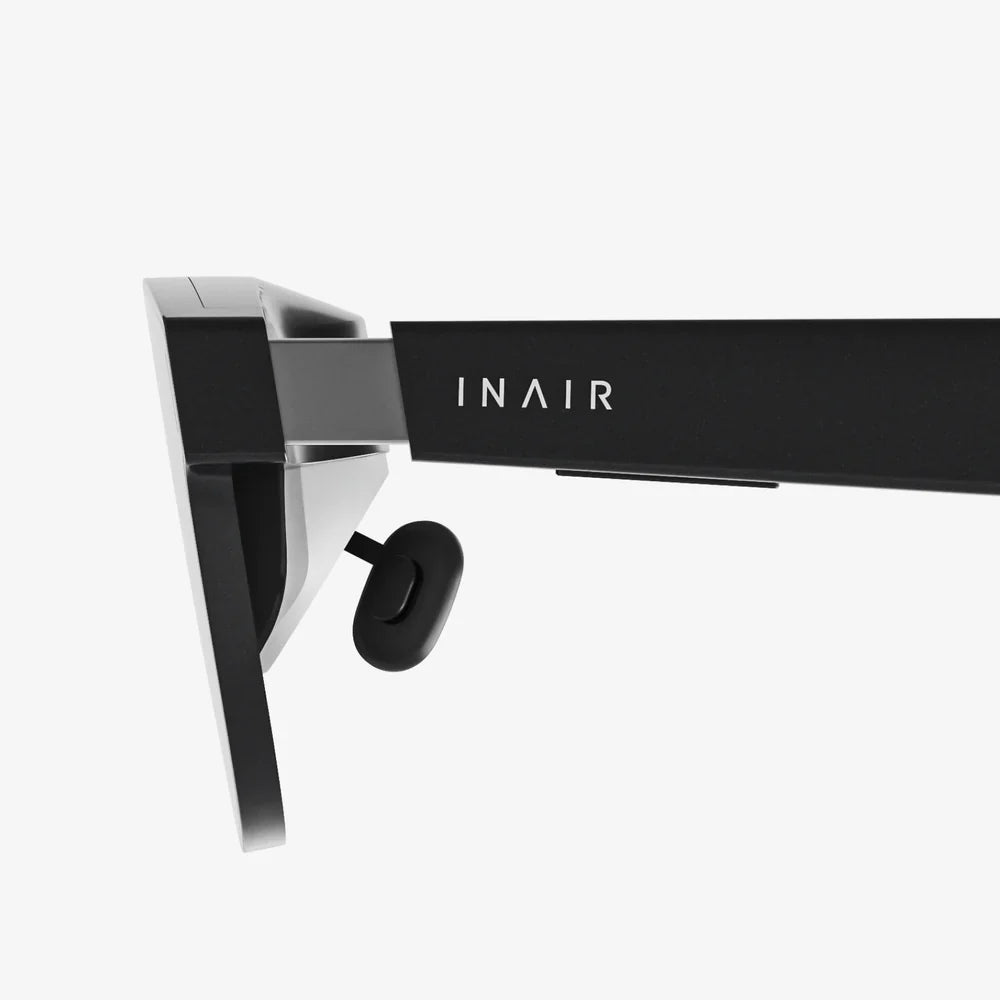
Imagine a world where digital images leap out of the screen, not as a flat illusion, but as a tangible, interactive presence you can almost reach out and touch. This is no longer the realm of science fiction; it is the captivating promise of modern 3D display technology, a field advancing at a breathtaking pace to fundamentally alter our visual experience.
The Core Principle: Tricking the Human Brain
At its heart, 3D display technology is not about creating three-dimensional objects, but about recreating the way human vision naturally perceives depth. Our brains construct a 3D model of the world based on the two slightly different two-dimensional images received from each of our eyes, a phenomenon known as stereopsis. The key to any 3D display is to deliver a unique image to each eye, convincing the brain that it is seeing a single, coherent object with volume and space.
A Spectrum of Depth: From Basic to Volumetric
Not all 3D is created equal. The technology exists on a spectrum, offering varying levels of immersion and realism.
Stereoscopic 3D: The Classic Approach
This is the most common and historically significant form of 3D technology. It relies on presenting two distinct images, one for the left eye and one for the right. The viewer must use some form of aid to ensure each eye sees only the image intended for it.
- Active Shutter Glasses: These electronic glasses synchronize with the display, which alternates rapidly between the left-eye and right-eye images. The lenses shutter open and closed in sync, allowing each eye to see its respective image at the correct moment, creating the 3D effect. This method offers high resolution and full-color perception.
- Passive Polarized Glasses: Made famous by modern cinemas, this method uses a filter on the display that projects the two images with different light polarizations (often circularly polarized). The inexpensive glasses have corresponding polarized lenses that filter the light, ensuring each eye receives only its designated image. While the glasses are cheaper and don't require power, the resolution is effectively halved.
- Anaglyph 3D (The Red and Blue Glasses): The oldest and simplest method, anaglyph uses color filters to separate the images. The left-eye image is filtered to one color (e.g., red) and the right-eye to another (e.g., cyan). The colored glasses ensure each eye sees the image filtered for it. While incredibly inexpensive, it severely compromises color accuracy and is rarely used for high-quality applications today.
Autostereoscopic 3D: Freedom from Glasses
The holy grail for consumer 3D has long been a technology that requires no eyewear. Autostereoscopic displays achieve this by building a mechanism into the screen itself that directs light to the viewer's eyes.
- Parallax Barrier: A layer placed in front of the LCD panel with precisely placed slits. This barrier acts like a venetian blind, directing the left-eye image pixels to the left eye and the right-eye pixels to the right eye. Its main drawback is that the viewer must be in a specific "sweet spot" to experience the effect.
- Lenticular Lens Array: This method uses an array of tiny, semi-cylindrical lenses (lenticules) layered over the display. Each lens refracts the light from the underlying pixels at different angles, sending a unique image to each eye. This technology is common on smaller devices and lenticular printing (like "holographic" trading cards). It also has a limited viewing angle but can be improved with eye-tracking.
- Advanced Autostereoscopic with Eye-Tracking: Modern iterations of this technology incorporate cameras that track the position of the viewer's eyes in real-time. The system then dynamically adjusts the parallax barrier or lenticular output to maintain the 3D effect across a wider viewing area, mitigating the "sweet spot" problem and allowing for limited head movement.
Volumetric Displays: True Depth in Space
While stereoscopic displays create an illusion of depth on a 2D plane, volumetric displays aim to create a true 3D image that occupies a physical volume of space. These images can be viewed from any angle, just like a real object. Techniques vary widely.
- Swept-Volume Displays: These displays rapidly rotate or translate a flat screen (often a diffuse panel) through a defined volume. A high-speed projector then illuminates the screen with a series of 2D "slices" of the 3D object as it moves. The persistence of vision blends these slices into a single, solid-looking 3D image floating in space.
- Static-Volume Displays: These systems use a solid, translucent material (like a special crystal or fog chamber) as the display volume. Lasers or focused light sources are used to excite voxels (volumetric pixels) at specific points within the material, causing them to emit light. This creates a glowing, ethereal 3D image suspended within the medium.
The Vanguard: Holographic and Light Field Displays
Pushing the boundaries even further, these technologies aim to replicate the way light behaves in the real world, offering the most realistic and comfortable 3D experience.
- Light Field Displays: Instead of sending two discrete images to the eyes, a light field display replicates the full "light field" of a scene—the intensity and direction of all light rays traveling in space. By capturing or synthesizing this data, the display can reconstruct the scene so accurately that the human visual system can focus on different depths within the image naturally, eliminating the vergence-accommodation conflict that causes eye strain in traditional 3D. This is often achieved using complex arrays of micro-lenses.
- Holographic Displays: True holography is the most complex form of 3D technology. It uses the principles of interference and diffraction of light to record and reconstruct an object's wavefront. Unlike other methods, a hologram recreates the exact light pattern that was scattered from the original object, allowing for perfect depth cues, parallax, and the ability to look around objects by moving your head. Most current "holographic" displays are actually sophisticated versions of other autostereoscopic or volumetric techniques, as pure digital holography requires immense computational power and display resolution.
Where 3D Displays Are Making Their Mark
The applications for this technology extend far beyond entertainment, permeating numerous professional and scientific fields.
- Cinema and Gaming: The most well-known application, providing immersive experiences that pull audiences into the action.
- Medical Imaging: Revolutionizing fields like surgery and diagnostics. Surgeons can examine 3D reconstructions of CT or MRI scans, understanding the precise spatial relationships of tumors, blood vessels, and organs before making an incision, greatly improving planning and outcomes.
- Engineering and Design (CAD/CAM): Designers and engineers can interact with 3D models of cars, aircraft, and products in real space, identifying design flaws and ergonomic issues long before a physical prototype is built.
- Education and Training: From exploring the molecular structure of a virus to walking through a historical site reconstructed in 3D, this technology offers unparalleled educational tools. It is also used for high-stakes training simulations for pilots, surgeons, and military personnel.
- Retail and Advertising: Virtual try-ons for clothes, glasses, or makeup, and interactive 3D advertisements that capture consumer attention in new ways.
- Data Visualization: Complex multidimensional data sets can be represented spatially, allowing scientists and analysts to identify patterns and correlations that would be invisible in 2D graphs.
The Challenges on the Horizon
Despite its potential, the widespread adoption of 3D display technology faces significant hurdles.
- The Vergence-Accommodation Conflict: This is the primary source of eye strain and fatigue. In the real world, our eyes converge (cross) and accommodate (focus) on the same point. In stereoscopic 3D, the eyes must converge on a virtual object seemingly behind or in front of the screen, but they must still focus on the physical screen plane. This mismatch confuses the brain. Light field and holographic displays promise to solve this fundamental issue.
- Hardware and Content: Creating high-resolution, high-quality 3D content is resource-intensive. Furthermore, the hardware for advanced displays like light field or holographic systems remains prohibitively expensive and complex for consumers.
- Standardization: A lack of universal standards can fragment the market and slow development.
- The "Gimmick" Factor: Past failures and poor implementations have, at times, led to consumer skepticism, demanding that new applications provide clear, undeniable value.
Gazing Into the Crystal Ball: The Future is Depth
The trajectory of 3D display technology is clear: moving beyond glasses, beyond fixed viewing angles, and towards natural, comfortable, and interactive visualizations. The convergence of faster processing power, advanced AI for content generation, and breakthroughs in nano-optics will drive this progress. We are moving towards a future where 3D interfaces are seamless—for remote collaboration, where a colleague's hologram sits across from you; for telemedicine, where a specialist can examine a patient in 3D from across the globe; and for our homes, where entertainment and information are not just watched but experienced in a space around us.
The screen as a window is becoming a doorway. 3D display technology is not merely an upgrade to our TVs and monitors; it is the foundational shift that will merge our digital and physical realities, unlocking new dimensions of creativity, communication, and understanding that we are only just beginning to imagine.
Share:
Definition Virtual Office Workplace: The Complete Guide to the Borderless Professional Era
Definition Virtual Office Workplace: The Complete Guide to the Borderless Professional Era