


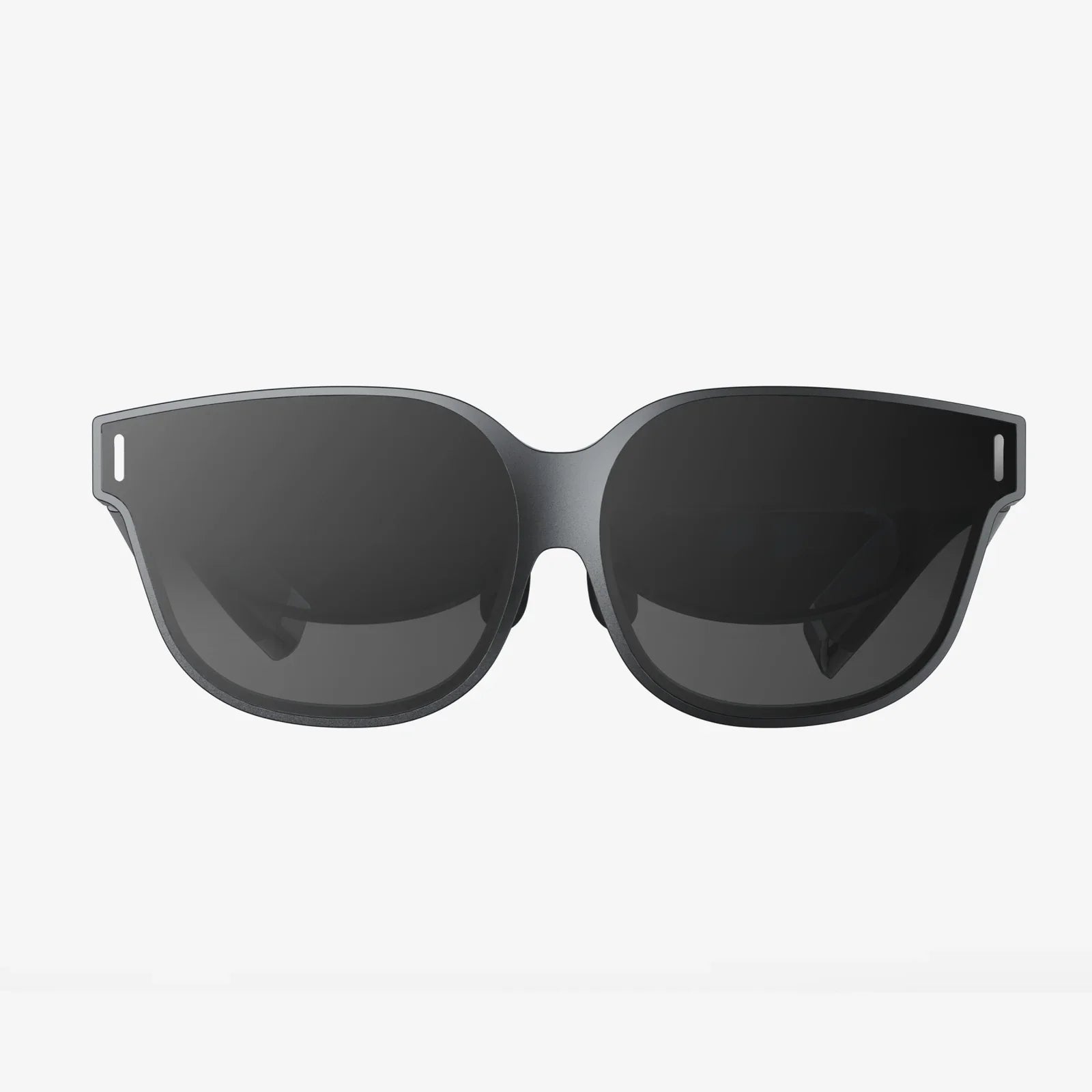
You put on a headset, and in an instant, the world around you dissolves. The familiar confines of your room are replaced by a breathtaking alien landscape, the nerve-wracking cockpit of a fighter jet, or a meticulously reconstructed ancient Roman forum. This is the promise of Virtual Reality—a technology that has captivated the human imagination for decades. But what truly separates a compelling VR experience from a simple 3D video game on a monitor? What is the fundamental characteristic, the essential ingredient, that makes VR not just a new way to see, but a new way to be? The answer lies not in a single piece of hardware but in a powerful, transformative psychological state: a profound and undeniable sense of Presence.
The Illusion of Being There: Defining Presence
At its core, the quintessential characteristic of virtual reality is its ability to induce a state known as "Presence." Often described as the "illusion of non-mediation," presence is the subjective, psychological phenomenon where a user's brain, despite knowing the experience is simulated, accepts the virtual environment as real. It is the suspension of disbelief made visceral. You don't just observe the digital world; you feel, on a fundamental level, that you are within it.
This is a far cry from simply watching a high-definition 360-degree video. True VR presence is an active state of being. It's the instinctual flinch when a virtual object is hurled toward your face, the subconscious step back when you find yourself on the edge of a virtual skyscraper, or the genuine feeling of awe when looking up at a digitally rendered dinosaur. This characteristic is what VR pioneers like Jaron Lanier were striving for—a form of communication that transcends information transfer and becomes experiential sharing.
The Technical Pillars of Presence
Presence is not a magical occurrence; it is a carefully engineered psychological response built upon several interdependent technical pillars. Remove or weaken any one of them, and the fragile illusion begins to crumble.
1. A Tracked, Stereoscopic 3D View
The foundation of presence is visual fidelity and perspective. Our brains are hardwired to understand our place in the world through binocular vision and parallax. VR systems leverage this by providing a unique image to each eye (stereoscopy), creating the depth and scale that a flat screen cannot. More importantly, this view is dynamically updated in real-time based on head-tracking. When you turn your head to the left, the world smoothly pans to the right. When you lean forward to examine an object, your viewpoint shifts accordingly. This 1:1 correlation between your physical movement and the virtual viewpoint is fundamental. Any lag or jitter in this tracking instantly shatters the illusion, often leading to discomfort. This seamless feedback loop convinces your vestibular and proprioceptive systems that the motion is real.
2. A Wide Field of View (FOV)
Humans have a nearly 180-degree horizontal field of view. Early VR attempts failed partly because they felt like looking through binoculars or a mail slot, constantly reminding the user of the technology's limitations. A wide FOV is critical for peripheral immersion. It allows for environmental cues to enter your vision naturally, making the virtual world feel expansive and encompassing rather than a small screen floating in front of you. It reduces the "goggle effect" and is a major factor in selling the scale and grandeur of a virtual space.
3. Spatialized Audio
Vision may be primary, but sound provides half the data our brains use to situate ourselves. If you close your eyes in a room, you can still point to where a voice is coming from or how far away a door slam occurred. VR replicates this with 3D or spatialized audio. Sounds are processed with Head-Related Transfer Functions (HRTFs), which mimic how our ears and head shape and filter sound waves based on their origin. In a VR experience, the chirp of a bird will sound like it's coming from a branch above and to your right. If you turn around, the sound will naturally shift to originate from behind you. This auditory anchoring is incredibly powerful for reinforcing the visual illusion and creating a coherent, believable space.
4. Low Latency
This is arguably the most critical technical challenge. Latency is the delay between your action and the system's response. In VR, this is the time between moving your head and the image on the screen updating to reflect that movement. The human brain is exquisitely sensitive to this delay. High latency, even as little as 20 milliseconds, can cause a disconnect between what your inner ear feels and what your eyes see, leading to simulator sickness, dizziness, and a complete breakdown of presence. Achieving near-photonic speed in rendering and display is a non-negotiable requirement for maintaining the illusion.
5. Interactivity and Agency
Finally, a world you cannot touch is a world you cannot believe in. Interactivity is the bridge between observation and participation. The characteristic of presence is solidified when a user can reach out and manipulate the virtual environment. This is achieved through motion-tracked controllers or, in more advanced systems, hand-tracking. The ability to push a button, pick up a virtual rock, wield a sword, or paint in 3D space grants the user agency. This agency transforms them from a passive spectator into an active agent within the simulation. The virtual world responds to their actions, creating a bidirectional relationship that is the hallmark of a truly immersive experience.
Beyond Technology: The Psychological Dimension
While technology enables presence, its ultimate power is psychological. It taps into our innate embodied cognition—the theory that our cognition is shaped by our bodily experiences. In a state of presence, your brain fires neurons as if the virtual events were actually happening. Studies using fMRI scanners have shown that the brain's threat-response system can be activated by a virtual precipice, even though the conscious mind knows it's not real. This is why VR is such a powerful tool for therapy (treating phobias, PTSD), training (surgical simulators, flight training), and empathy-building (experiencing life from another's perspective).
Presence vs. Immersion: A Critical Distinction
It is crucial to distinguish between immersion and presence. Immersion is a description of the technology's objective capabilities—the hardware's ability to shut out the physical world and present a convincing digital facsimile. A high-resolution headset with wide FOV and great audio is highly immersive. Presence, however, is the user's subjective psychological response to that technology. It is the feeling of "being there" that the immersive technology produces. You can have a highly immersive system that fails to create presence due to poor content design, and conversely, a less advanced system can sometimes evoke a strong sense of presence through brilliant storytelling and intuitive interaction.
Challenges and the Future of Presence
The pursuit of perfect presence continues to drive innovation. Current challenges include:
- Verisimilitude: Achieving photorealistic graphics in real-time remains computationally intensive.
- Haptic Feedback: Providing convincing touch sensation is the next frontier. Today's controllers rumble, but future tech like force feedback gloves and full haptic suits will allow users to feel the texture, weight, and resistance of virtual objects.
- Locomotion: Moving through vast virtual spaces while physically confined to a small room is a persistent design puzzle, with solutions ranging from teleportation to treadmill-like devices.
- Social Presence: Creating a genuine sense of being with another human avatar, with realistic eye contact and body language, is key for the future of social VR and the metaverse.
The ultimate goal is what some technologists call the "Star Trek Holodeck"—a perfect simulation indistinguishable from reality. While that may be a distant dream, the relentless improvement in resolution, field of view, haptics, and artificial intelligence will continue to deepen the characteristic that defines this medium.
So, the next time you see someone lost in a virtual world, gesticulating with invisible objects and reacting to unseen stimuli, understand that you are witnessing more than just someone playing a game. You are seeing a human mind experiencing one of the most profound and unique characteristics of our digital age: the uncanny, exhilarating, and transformative state of Presence. It is the magic trick that convinces the soul it has been teleported, and it is the very essence of what makes virtual reality not just a new technology, but a new realm of human experience waiting to be explored.
Share:
Fully Immersive Virtual Reality: Stepping Through the Digital Looking Glass
Fully Immersive Virtual Reality: Stepping Through the Digital Looking Glass