


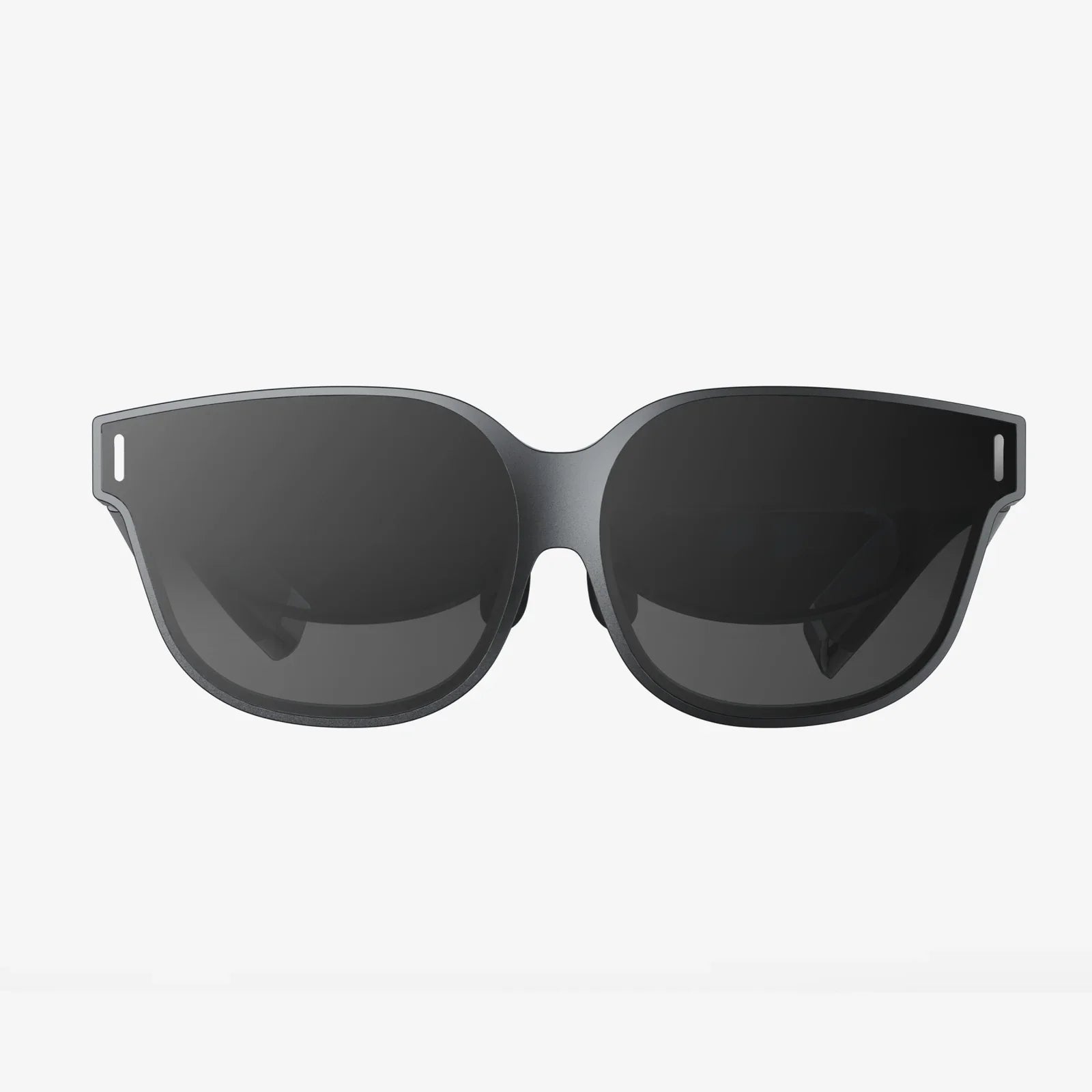
Imagine a world where digital information and stunningly realistic 3D objects float freely in your living room, where you can walk around a virtual prototype as if it were physically present, and where doctors can peer into a patient’s anatomy without making a single incision. This is not a scene from a science fiction film; it is the imminent future promised by the rapid evolution of holographic display technology. This groundbreaking visual medium is poised to shatter the flat, two-dimensional confines of our current screens, offering a revolutionary way to interact with the digital realm. The journey to understand this technology is a dive into the very nature of light, perception, and the future of human-computer interaction.
The Science of Light and Perception
At its core, a holographic display is a device that creates a three-dimensional optical representation of an object using the principles of light diffraction and interference. Unlike a conventional 3D display, which often relies on stereoscopy to trick the brain into perceiving depth (by showing slightly different images to each eye), a true hologram reconstructs the actual light field that is scattered by the original object. This means it replicates how light would travel and behave if the object were truly there, allowing for a more natural and immersive experience that doesn't require special glasses and doesn't cause viewer fatigue.
The fundamental process is rooted in the work of physicist Dennis Gabor, who invented holography in 1947. The magic begins with a laser beam split into two separate paths: the object beam and the reference beam. The object beam is directed at the subject, and the light scattered from this subject interferes with the reference beam. This intricate pattern of interference, which contains all the information about the phase and amplitude of the light waves, is recorded on a high-resolution recording medium. When this recorded pattern, known as a hologram, is later illuminated by a light source similar to the original reference beam, it diffracts the light to reconstruct the exact wavefront of the original object. To the observer, this reconstructed wavefront is indistinguishable from the light that would have come from the original object, creating a breathtakingly realistic three-dimensional image.
Key Technologies Powering Holographic Displays
Translating this laboratory principle into a dynamic, digital display requires sophisticated engineering. Several technological approaches are currently being pioneered to achieve this goal.
Computer-Generated Holography (CGH)
This is the digital heart of modern holographic displays. Instead of physically recording light interference patterns from a real object, CGH uses algorithms to computationally simulate these patterns. Powerful processors calculate the complex wavefronts that would be created by a virtual 3D model, generating a digital hologram. This digital pattern is then imprinted onto a wavefront modulator, a device that can precisely control the phase and amplitude of a light beam passing through it. The modulator, illuminated by a coherent light source like a laser, then physically reconstructs the computed wavefront, bringing the virtual object to life in three dimensions.
Spatial Light Modulators (SLMs)
These are the workhorses that make digital holography possible. An SLM is an electronic device, often based on liquid crystal technology, that can alter the phase, amplitude, or both of a light wave across a two-dimensional plane. It acts as a dynamic, programmable "film" for the digital hologram. Each pixel on the SLM can introduce a controlled delay (phase shift) in the light passing through it. By precisely coordinating these delays across millions of pixels, the SLM sculpts the incoming coherent light into the complex wavefront required to form the 3D image. The resolution and speed of the SLM are critical factors in determining the quality, size, and field of view of the resulting hologram.
Volumetric and Light Field Displays
While not strictly holographic in the wavefront-reconstruction sense, these technologies are often grouped together as they also produce glasses-free 3D imagery. Volumetric displays create images by illuminating points in a true 3D volume of space, for example, by rapidly projecting onto a spinning screen or exciting particles in a plasma volume. Light field displays use an array of micro-lenses or other optics to project multiple rays of light into different directions, recreating the light field of a scene so that the viewer's eyes can focus at different depths. These approaches offer compelling 3D effects but typically cannot replicate the same level of realism and wavefront accuracy as true holographic displays.
Overcoming the Immense Computational Hurdle
One of the single greatest challenges in creating real-time holographic video is the staggering computational power required. A hologram is not a simple 2D picture; it is a complex interference pattern. To calculate the pattern for a single frame of a high-resolution, full-color hologram requires performing trillions of calculations. This is because the algorithm must simulate the interaction of light waves from every point on the 3D object to every point on the hologram plane—a problem that scales exponentially with resolution. Researchers are tackling this through specialized hardware, novel algorithms like look-up tables and point-cloud methods, and the integration of artificial intelligence to predict and optimize these patterns, making real-time computation increasingly feasible.
A World Transformed: Applications Across Industries
The potential applications for this technology extend far beyond novelty and entertainment, promising to revolutionize numerous professional fields.
Medicine and Healthcare
Holographic displays could provide a paradigm shift in medical imaging and surgery. Surgeons could examine a patient’s organs, bones, or tumors as a precise, interactive 3D hologram hovering over the operating table, allowing for unparalleled preoperative planning and intraoperative guidance. Medical students could learn anatomy by dissecting and exploring life-sized, detailed holographic models, accelerating their understanding in ways textbooks and 2D screens never could.
Engineering, Design, and Manufacturing
The design process would be utterly transformed. Engineers and architects could collaboratively interact with life-sized holographic prototypes of cars, buildings, or complex machinery, identifying design flaws and testing ergonomics long before physical models are built. This would drastically reduce development time and costs. On the factory floor, assembly instructions could be projected as holographic arrows and annotations directly onto the physical components workers are handling, streamlining complex manufacturing and maintenance procedures.
Communication and Collaboration
Telepresence and teleconferencing would leap into a new dimension. Instead of seeing colleagues on a flat screen, you could share a virtual room with their life-like, full-bodied holograms, enabling natural eye contact and nonverbal communication. This sense of "co-presence" could make remote collaboration feel as natural as being in the same physical space, reshaping the future of work and social interaction.
Education and Training
From elementary schools to advanced technical training, holography can make learning experiential. Students could journey through the human bloodstream, witness historical events unfold in their classroom, or manipulate complex molecular structures, turning abstract concepts into tangible, interactive experiences that dramatically improve comprehension and retention.
Entertainment and Retail
The entertainment industry will be redefined. Video games and films will become immersive experiences where viewers are inside the story. In retail, customers could see a holographic representation of how a piece of furniture would look in their home or how a garment would fit on their body before making a purchase, reducing returns and enhancing the shopping experience.
Challenges on the Path to Mainstream Adoption
Despite the exciting progress, significant hurdles remain before holographic displays become as commonplace as televisions. The primary constraints are often summarized by the "SWAP" factors: Size, Weight, Area (aperture), and Power. Creating large-scale, bright holograms with a wide field of view currently requires massive computational power and physically large, expensive hardware setups. Consumer-grade devices need to become smaller, more affordable, and more energy-efficient. Furthermore, achieving photorealistic quality with a wide color gamut and overcoming issues like speckle noise (a grainy pattern inherent in coherent light sources) are active areas of research. Finally, a new ecosystem of content—from capture devices to creation software and distribution formats—needs to be developed to feed these new displays.
The Horizon of Possibility
The future of holographic displays is inextricably linked with advancements in adjacent fields. The integration with artificial intelligence will be crucial for solving computational problems and creating dynamic, responsive content. Augmented Reality (AR) glasses represent the ultimate destination for this technology—the goal of projecting seamless, high-quality holograms into the wearer’s real-world environment. As the underlying technologies of optics, computation, and materials science continue their rapid advance, the line between the digital and the physical will increasingly blur.
We stand at the precipice of a visual revolution. Holographic display technology is more than just a new way to watch movies; it is a fundamental new tool for seeing, understanding, and interacting with information. It promises to augment human capability, break down geographical barriers, and unlock new forms of creativity and expression. The screen, as we know it, is about to vanish, replaced by a world where light itself becomes the ultimate canvas.
Share:
AR for Websites: The Ultimate Guide to Transforming Digital Engagement
Create AR: A Comprehensive Guide to Building Your Own Augmented Reality Experiences