


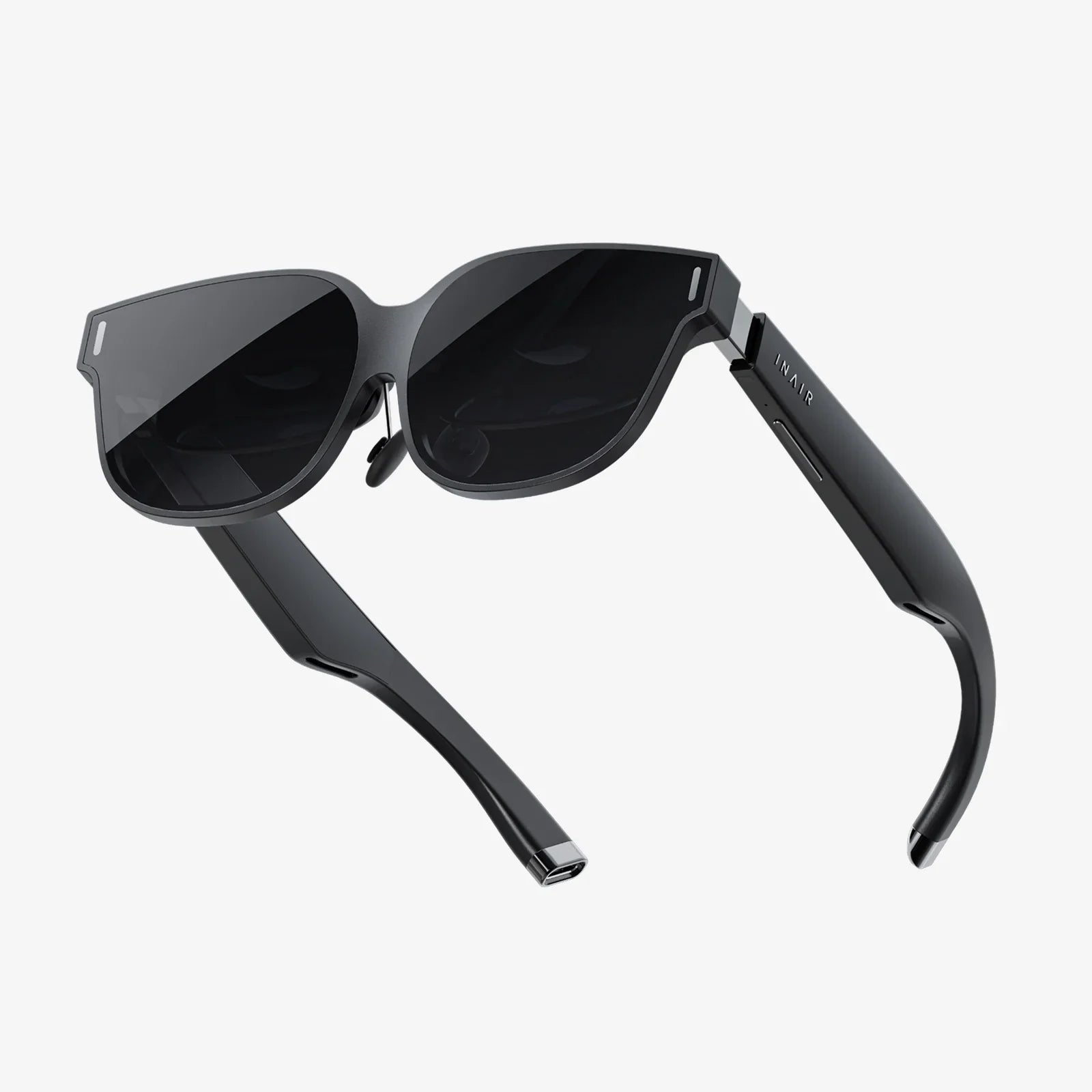
Imagine a world where the digital and the physical are no longer separate realms but a single, unified experience. A world where information, guidance, and wonder are painted directly onto the fabric of your reality, accessible with a simple glance. This is no longer the stuff of science fiction; it is the promise and the rapidly unfolding present of augmented reality. This technology is quietly poised to become as integral to our daily lives as the smartphone, fundamentally altering how we work, learn, play, and connect. The journey to understanding this transformative force starts with a single, compelling question.
Demystifying the Core Concept: Beyond Science Fiction
At its simplest, augmented reality (AR) is a technology that superimposes a computer-generated overlay—comprising images, sounds, text, and other data—onto a user's view of the real world. Unlike Virtual Reality (VR), which creates a completely immersive, digital environment that replaces the real one, AR enhances your existing reality by adding a digital layer to it. The key differentiator is that AR experiences are rooted in and interact with the real-world environment in real-time. If VR transports you to a new world, AR brings digital elements into your world.
The goal of AR is not to escape but to augment—to make reality richer, more informative, and more interactive. It acts as a dynamic lens, providing context and data that would otherwise be invisible. This digital overlay can be experienced through a variety of devices, from the smartphones in our pockets to specialized glasses and headsets, all designed to blend the line between what's real and what's computer-generated.
The Technological Pillars: How AR Builds a New Reality
Creating a seamless and convincing augmented experience is a complex feat of engineering that relies on several core technologies working in concert.
Sensors and Cameras
These are the eyes of any AR system. Cameras capture the user's surroundings, feeding this visual data to the AR software for processing. Meanwhile, a suite of sensors—including accelerometers, gyroscopes, and magnetometers—work together to precisely track the device's orientation, tilt, and movement in three-dimensional space. This is crucial for anchoring digital objects convincingly in the real world.
Processing Power
AR is computationally intensive. The device's processor must analyze the camera feed in real-time, identify surfaces and objects, execute complex algorithms for tracking, and then render high-fidelity digital graphics. This requires significant processing power, which is why early AR was limited to high-end systems but is now increasingly possible on mobile devices.
Projection and Display Systems
This is how the digital overlay is presented to the user. Methods vary widely:
- Smartphone/Tablet Displays: The most common method, using the device's screen as a viewport to see the real world with digital elements added.
- Smart Glasses: These use miniature projectors and waveguides or semi-transparent mirrors to beam images directly onto the user's retina, allowing them to see digital content overlaid on their natural field of view without holding a device.
- Heads-Up Displays (HUDs): Project information onto a transparent surface, like a car's windshield, to show data like speed or navigation without the driver looking away.
Tracking and Registration
This is the magic that makes digital objects appear stable in the real world. Using techniques like SLAM (Simultaneous Localization and Mapping), the AR system continuously maps the environment and tracks the user's position within it. This allows it to "pin" a digital object to a specific physical point, ensuring that if the user moves, the object's perspective and position change accordingly, maintaining the illusion that it is truly there.
A Spectrum of Experience: Marker-Based vs. Markerless AR
Not all AR is created equal. The method used to trigger and anchor the digital content defines the user experience.
Marker-Based AR
This older, simpler form of AR relies on a specific visual trigger, often called a "fiducial marker"—a distinct pattern or image (like a QR code). The device's camera scans this marker, and the software uses its precise location and orientation to display the associated digital content on top of it. It's highly reliable but requires pre-planned markers.
Markerless AR
This is the more advanced and flexible form of AR that is becoming the standard. It uses the aforementioned SLAM technology to understand and map the environment without predefined markers. This allows digital content to be placed on any suitable surface—a table, the floor, or a wall. Markerless AR includes:
- Projection-Based AR: Projecting artificial light onto physical surfaces, sometimes creating interactive surfaces.
- Location-Based AR: Using GPS, compass, and other sensors to pin digital content to specific geographic locations, enabling experiences like treasure hunts or historical tours.
- Superimposition-Based AR: Recognizing an existing object and either replacing it entirely or partially with a digital version, useful in fields like medicine or mechanics.
The Hardware Landscape: How We Access Augmented Worlds
The gateway to AR is evolving from held devices to worn appliances.
Mobile Devices (Smartphones and Tablets)
These are the undisputed engines of AR's democratization. Their powerful processors, high-resolution cameras, and ubiquitous nature have made AR experiences accessible to billions. Users simply view the world through their device's camera to see the augmentation on the screen. This is the platform that popularized AR for the masses.
Smart Glasses and Headsets
This form factor represents the future of AR, aiming for a truly hands-free, always-available experience. Smart glasses are designed to look like regular eyewear but project information into the user's field of view. They offer a more natural and immersive experience than holding up a phone, making them ideal for enterprise applications and all-day use.
Specialized AR Systems
In specific industries, more robust systems exist. These can include advanced headsets with greater processing power, field of view, and tracking capabilities for complex design, military, or medical applications.
Transforming Industries: The Practical Power of AR
While gaming brought AR fame, its true revolution is happening in enterprise and practical applications.
Education and Training
AR is revolutionizing pedagogy. Students can dissect a virtual frog, watch historical battles unfold on their desk, or explore the solar system in their classroom. For training, mechanics can see repair instructions overlaid on an engine, and surgeons can practice complex procedures on virtual patients, reducing risk and improving outcomes.
Retail and E-Commerce
Try before you buy is being redefined. Shoppers can use their phones to see how a sofa would look in their living room, how a new shade of paint would change a wall, or how a pair of glasses fits their face. This bridges the gap between online shopping and physical inspection, reducing returns and increasing consumer confidence.
Manufacturing and Maintenance
On factory floors, technicians wearing smart glasses can see schematics, instructions, and safety information overlaid directly on the machinery they are repairing. This provides hands-free access to crucial information, reduces errors, speeds up complex assembly processes, and improves remote expert assistance.
Healthcare
AR assists in everything from complex surgery to patient education. It can project 3D scans of a patient's anatomy onto their body to guide a surgeon's incision, help nurses find veins more easily, or allow a patient to visualize a medical condition and understand their treatment plan.
Navigating the Challenges and The Road Ahead
Despite its potential, AR faces significant hurdles. Technical challenges include improving battery life for wearable devices, creating more natural and intuitive user interfaces, and solving complex problems like occlusion (having digital objects realistically pass behind real-world objects). Social and ethical concerns are equally important, including issues of privacy, data security, digital distraction, and the potential for reality blurring and addiction.
The future of AR is inextricably linked with other technological advancements. The rollout of faster, lower-latency 5G networks will enable more complex, cloud-rendered AR experiences. Advances in Artificial Intelligence will make object recognition and contextual understanding far more powerful. Ultimately, the goal is to move toward lightweight, socially acceptable glasses that can deliver a rich, persistent AR layer over our entire visual field, a concept often referred to as the "metaverse" or the "spatial web."
The line on your screen is not just a digital filter; it's a gateway. It’s the beginning of a fundamental shift from a world where we look down at devices for information to one where information rises up to meet us, contextually woven into the very fabric of our lives. This invisible layer of intelligence, waiting to be unlocked, will redefine expertise, reshape cities, and re-enchant the ordinary world around us, making every sidewalk a potential classroom and every task a collaborative masterpiece. The future is not somewhere else; it’s right here, waiting to be augmented.
Share:
Future of Augmented Reality: Blurring the Lines Between Digital and Physical Realms
Augmented Reality Data: The Invisible Fuel Powering Our Immersive Future