


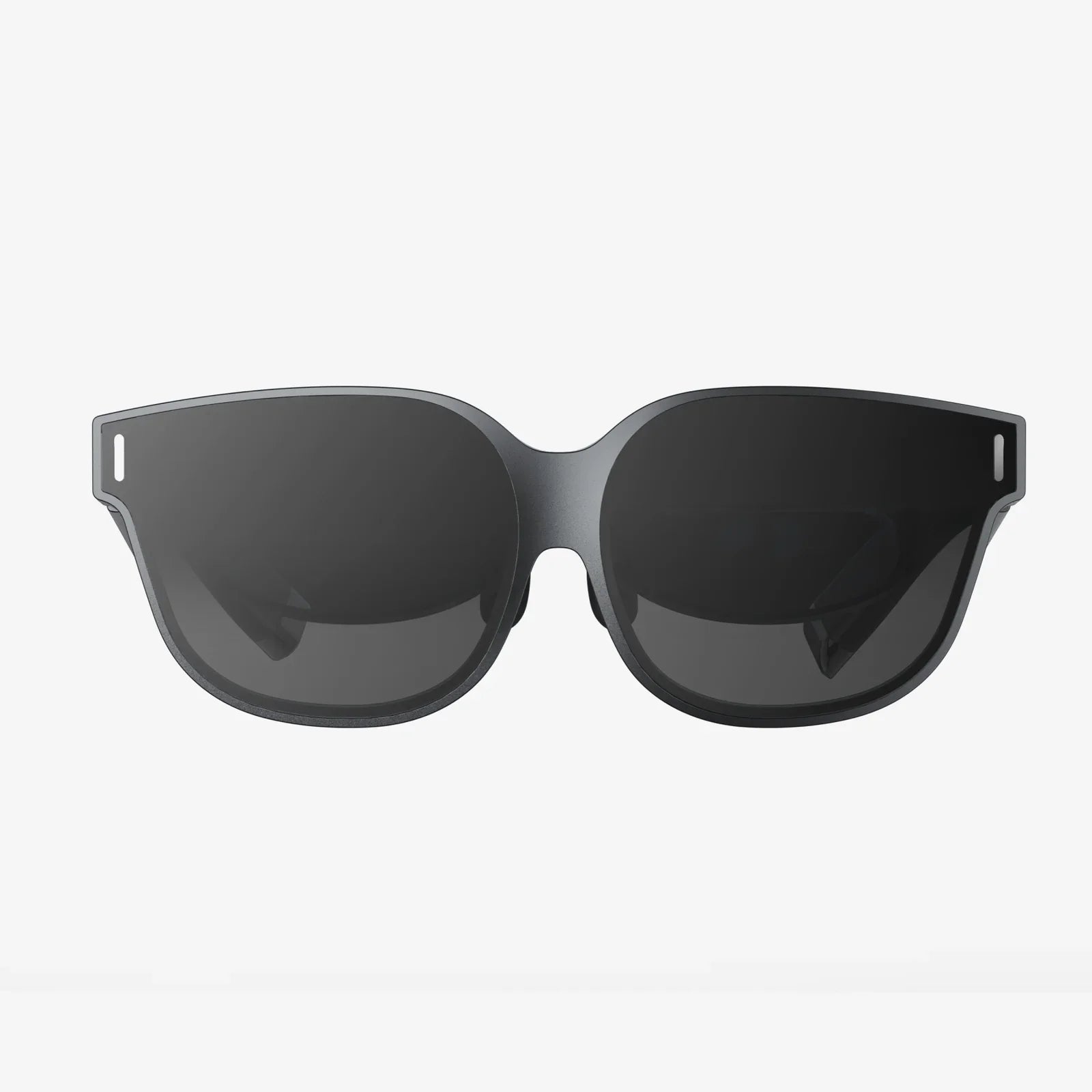
Imagine a world where your digital life isn't confined to a flat screen but envelops you, interacts with your living room, and overlays crucial information onto the very fabric of reality. This isn't a distant sci-fi fantasy; it's the imminent future being built today, and at the heart of this revolution lies a powerful, yet often misunderstood, technological force: Android XR. This deep dive will unravel everything you need to know about the platform poised to redefine our relationship with technology.
Demystifying the Acronym: More Than Just Reality
To understand Android XR, we must first decode the "XR." It stands for Extended Reality, an umbrella term that encompasses the entire spectrum of immersive technologies. Think of it not as a single thing, but as a continuum:
- Virtual Reality (VR): A fully digital, immersive experience that completely replaces your visual field, transporting you to a computer-generated world. Users are fully immersed in a digital environment, isolated from the physical world.
- Augmented Reality (AR): The overlaying of digital information, images, or objects onto the user's view of the real world. Think of navigation arrows painted onto the street in front of you or a virtual dinosaur stomping through your park.
- Mixed Reality (MR): A more advanced form of AR where digital objects not only overlay the real world but can interact with it in a physically believable way. A virtual character could sit on your real sofa, casting a digital shadow, and you could walk around it.
Android XR is the foundational software framework designed to power devices across this entire spectrum. It's the bridge between the hardware—the headsets, sensors, and controllers—and the breathtaking experiences developers create.
The Architectural Core: How Android XR Works
Android XR isn't a standalone operating system you download. Instead, it's a sophisticated suite of APIs (Application Programming Interfaces), services, and platform enhancements that are built into the core Android Open Source Project (AOSP). This modular approach is its genius.
Think of standard Android as the perfect OS for a 2D window into the digital world (your smartphone). Android XR expands this foundation to support 3D, deeply immersive experiences. Its architecture is built around several critical pillars:
1. The Runtime and System Services
This is the engine room. Android XR manages the extreme performance demands of rendering two high-resolution displays (one for each eye) at a high, stable frame rate—often 90Hz or higher to prevent motion sickness. It handles the complex sensor fusion from cameras, gyroscopes, accelerometers, and magnetometers to track the precise position and rotation of the user's head (head-tracked rendering) and, often, their hands and controllers.
2. The Perceptual Framework
This is where the magic of blending realities happens. Key components include:
- Passthrough: Using the headset's external cameras to feed a real-time video feed of your surroundings into the display, creating a base layer for AR and MR experiences. Android XR provides the low-latency, high-fidelity pipeline essential for this to feel natural.
- Spatial Mapping: The ability for the device to understand the geometry of the physical space around you. It creates a 3D mesh of your room, allowing digital objects to collide with real-world surfaces or for virtual boundaries (Guardian systems) to be drawn.
- Positional Tracking Using a combination of inside-out cameras and sensors to map your position in space, letting you walk around a virtual object or your physical room while maintaining a stable experience.
3. Input and Interaction
Interacting in XR goes far beyond a touchscreen. Android XR supports a variety of input paradigms:
- 6-Degree-of-Freedom (6DoF) Controllers: These controllers are tracked in both position and rotation, allowing for precise, natural manipulation of the digital world.
- Hand Tracking: Using computer vision to track the user's bare hands, enabling intuitive interactions like pinching, grabbing, and gesturing without any hardware.
- Eye Tracking: A advanced feature that allows the system to know precisely where you are looking. This enables foveated rendering (drastically increasing performance by rendering only where you're looking in high detail) and new forms of UI interaction.
4. The Developer Toolkit
For developers, Android XR provides a standardized set of tools, primarily through the OpenXR API. OpenXR is a royalty-free, open standard developed by a consortium of industry leaders. Its adoption within Android XR is crucial because it allows developers to write their immersive application once and have it run across a wide range of XR hardware that supports the standard, dramatically reducing fragmentation and development time.
Why Android XR Matters: The Strategic Advantage
The development of Android XR is a strategic masterstroke in the platform wars for the next computing era. Its significance is multi-layered:
For the Ecosystem: Fighting Fragmentation
The early days of VR and AR were a wild west of proprietary platforms. Each headset had its own OS, its own store, and its own development requirements. This fragmentation stifled innovation, as developers couldn't justify building for a small user base on a single device. Android XR, by offering a unified, open-source base, provides a common ground. It allows hardware makers to focus on building innovative headsets without also having to build an entire operating system from scratch, much like how Android unified the smartphone market.
For Developers: A Familiar Playground
Millions of developers already know how to build apps for Android. Android XR leverages this existing talent pool. Developers can use familiar languages and tools, and the OpenXR framework provides a consistent target. This dramatically lowers the barrier to entry for creating immersive content, which is essential for building a rich and diverse software library that attracts consumers.
For Users: A Coherent Experience
Ultimately, this benefits the user. A less fragmented ecosystem means more apps, more accessories, and a more coherent experience across different devices. It promises the kind of seamless integration we enjoy with smartphones—where your apps, identity, and purchases can potentially move with you across different manufacturers' devices that share the same platform foundation.
The Current Landscape and Real-World Applications
While the full vision of a single, unified Android XR platform is still evolving, its principles are already active in the market. Several major standalone VR and MR headsets are powered by heavily customized versions of the Android Open Source Project, incorporating the core tenets of the Android XR framework.
These devices are moving beyond niche gaming and entertainment into profound professional and social applications:
- Enterprise & Training: Surgeons practice complex procedures on virtual patients, mechanics receive remote expert guidance with AR diagrams overlaid on machinery, and architects walk clients through virtual building designs long before ground is broken.
- Social Connection: Platforms exist where users, represented by avatars, can meet, watch movies, play games, and collaborate in shared virtual spaces, making physical distance irrelevant.
- Design and Visualization: Artists sculpt in 3D space and designers configure products like cars or furniture in their real-world environment at life-like scale before making a purchase.
Challenges and The Road Ahead
The path forward for Android XR is not without its hurdles. The technology demands immense processing power while needing to be contained in a lightweight, comfortable, and thermally efficient headset form factor. Battery life remains a constant challenge. Furthermore, solving the "social acceptance" question—creating glasses that are socially acceptable to wear in public—is a key milestone for mass AR adoption.
Looking ahead, the integration of Artificial Intelligence will be the next great leap. AI will power more natural interaction, smarter scene understanding, and the generation of complex digital worlds on the fly. The ultimate goal is a pair of sleek glasses that can effortlessly switch between VR immersion and AR contextual awareness, all powered by a ubiquitous, platform-agnostic cloud.
The development of Android XR is a clear signal that the industry is betting big on a future beyond the rectangle. It represents a collective effort to build the foundational layer for the spatial computing era. It’s not about if this future will arrive, but how quickly we will get there. The building blocks are now in place, the developer tools are maturing, and the hardware is improving at a breakneck pace. The seamless blend of our digital and physical realities is no longer a question of possibility, but one of implementation, and Android XR is the framework aiming to make it a ubiquitous, accessible, and profoundly transformative reality for everyone.
This isn't just an upgrade to your phone; it's the blueprint for a new layer of human experience, waiting just beyond the screen for you to step through.
Share:
Android XR News Today: The Open Ecosystem's Bold Challenge to a Walled Garden Future
Recent Studies on Augmented Reality Reveal a Future Reshaping Our Reality