


- by wangfred
What Is AP AR Experience: A Deep Dive Into The Future Of Perception
- by wangfred
Imagine a world where your living room floor becomes a prehistoric landscape with dinosaurs roaming freely, where your car’s engine reveals its inner workings through a digital overlay, or where historical figures step out of textbooks to narrate their stories right before your eyes. This is not a distant science fiction fantasy; it is the tangible, awe-inspiring promise of the AP AR experience, a technological revolution that is fundamentally altering the very fabric of human perception and interaction with reality.
To truly understand the AP AR experience, we must first dissect its name. The term is a compound of two powerful technological concepts: AP and AR.
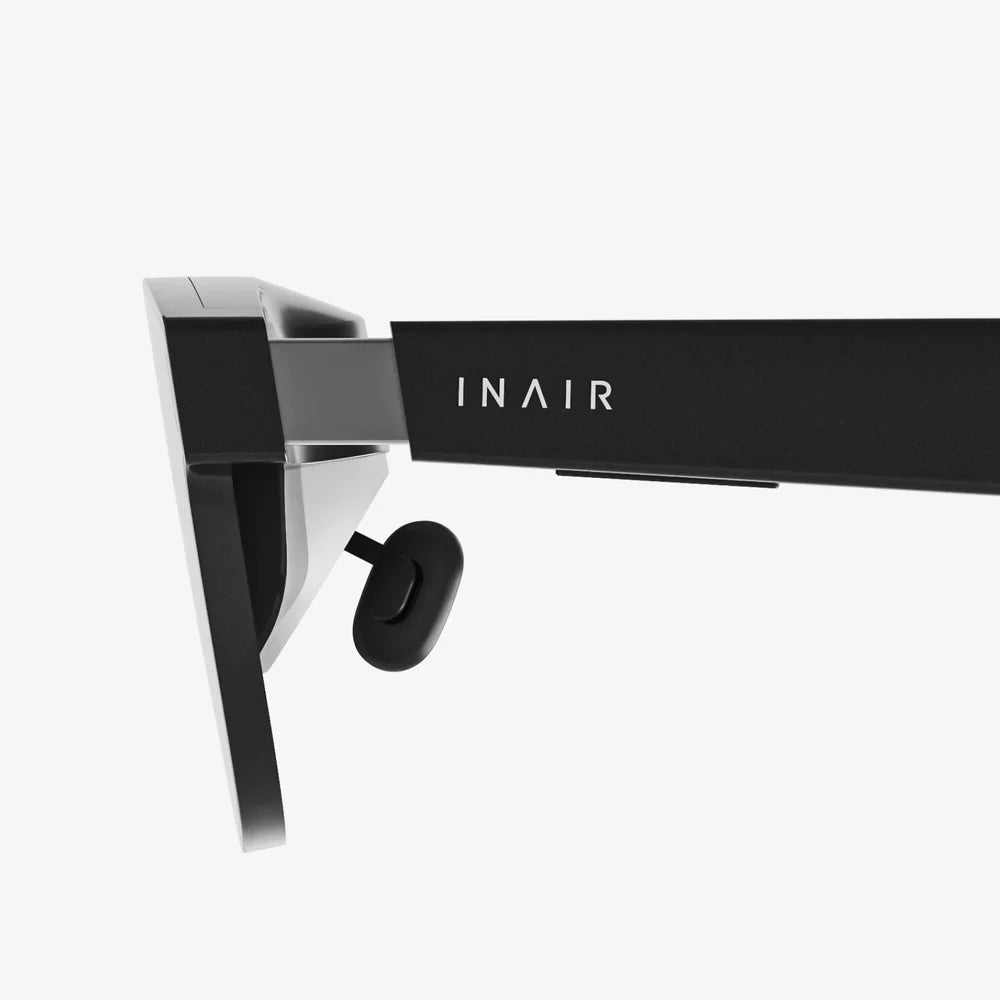
Augmented Reality (AR) is a technology that superimposes computer-generated sensory input—such as sound, video, graphics, or GPS data—onto a user's view of the real world. Unlike Virtual Reality (VR), which creates a completely artificial environment, AR uses the existing environment and overlays new information on top of it. The key principle is augmentation, not replacement. It enhances one's current perception of reality rather than substituting it entirely. This is typically achieved through devices like smartphones, tablets, smart glasses, and heads-up displays (HUDs).
The 'AP' component is where the concept elevates itself. While it can stand for 'Advanced Placement' in an educational context, within the technological sphere, it most compellingly translates to Advanced Perception or Assisted Perception. This signifies a move beyond simple graphical overlays. An AP AR experience is not just about seeing a digital monster in your room; it's about a system that understands the room's geometry, lighting, and physics to make that monster interact with your environment in a believable way. It’s about context-aware computing that assists and advances human perception.
Creating a seamless and immersive AP AR experience is a complex dance of hardware and software, all working in concert to bridge the digital and physical divide.
The foundation of any AR system is its ability to perceive and understand the environment. This is accomplished through a suite of sophisticated sensors:
The raw data from the sensors is meaningless without powerful processing. This is where the magic happens:
Finally, the processed digital content must be presented to the user. This occurs through various display methods:
The true power of the AP AR experience is revealed in its practical applications, which are already disrupting numerous industries.
AP AR is turning abstract concepts into tangible, interactive models. Medical students can practice complex surgical procedures on detailed, layered holograms of the human body. Engineering students can disassemble and reassemble a virtual jet engine, understanding the interplay of each component. History lessons can transform into immersive time-travel experiences, walking students through ancient Roman streets. This hands-on, visual learning dramatically improves comprehension and retention.
On the factory floor, the AP AR experience is a powerful tool for efficiency and accuracy. Technicians wearing smart glasses can see assembly instructions, wiring diagrams, or safety warnings overlaid directly onto the machinery they are repairing. Warehouse workers can have the most efficient picking routes and item locations highlighted in their vision, streamlining logistics. Architects and construction managers can visualize full-scale building plans on an empty plot of land, identifying potential design clashes before a single brick is laid.
The 'try before you buy' paradigm has been completely reimagined. Shoppers can use their smartphones to see how a new sofa would look in their living room, accurately scaled and colored. They can virtually try on glasses, makeup, or even clothes. This reduces purchase hesitation and product returns, creating a more confident and satisfying consumer journey. It blurs the line between the convenience of online shopping and the certainty of in-store evaluation.
Beyond training, AP AR is assisting in live patient care. Surgeons can have critical patient data, such as heart rate or a 3D model of a tumor from a recent MRI, displayed in their field of view during an operation without looking away from the patient. It can guide needle placements for biopsies with pinpoint accuracy. It can also be used for physiotherapy, providing patients with real-time visual feedback on their movements to ensure correct form during exercises.
Despite its immense potential, the widespread adoption of high-fidelity AP AR experiences faces significant hurdles.
Hardware Limitations: For truly seamless experiences, devices need to be lightweight, have all-day battery life, offer a wide field of view, and possess immense processing power—all at a consumer-friendly price point. We are not quite there yet.
Precision and Latency: Any lag between a user's movement and the movement of the digital overlay can cause discomfort or nausea. Achieving sub-millimeter accuracy and near-zero latency is technically demanding.
Environmental Understanding: While SLAM is impressive, reliably understanding complex, dynamic environments with changing lighting and moving people remains a challenge.
Privacy: AR devices, with their always-on cameras and sensors, constantly scan and record our environments. This raises profound questions about data ownership, surveillance, and consent. Who has access to this data, and how is it used?
Digital Addiction and Reality Blur: As experiences become more compelling, there is a risk of further blurring the lines between the digital and physical worlds, potentially leading to new forms of addiction or social isolation.
Safety: Walking around with a partially obscured field of vision presents obvious physical dangers in everyday settings like crossing the street or navigating stairs.
The ultimate evolution of the AP AR experience is its disappearance. The goal is not to create a device we look at, but a technology that fades into the background, becoming an invisible layer of assistance integrated into our daily lives. This vision, often called Ubiquitous Computing or the Spatial Web, envisions a world where information is contextually available everywhere, accessible through lightweight, socially acceptable wearables—perhaps even contact lenses. It will be less about apps we open and more about an ambient digital layer that enhances our reality on demand.
The journey into this augmented future has already begun, not with a loud explosion, but with a quiet overlay. From the simple joy of seeing a cartoon character hop onto your coffee table to the life-saving precision guiding a surgeon’s hand, the AP AR experience is proving to be one of the most transformative technologies of our generation. It challenges us to reimagine the limits of human potential, asking not what we can create in a virtual space, but how we can enhance the incredible world that already exists. The boundary between the atoms of our reality and the bits of our digital imagination is dissolving, and on the other side awaits a new, assisted way of seeing, learning, and being.
Share:
Small Portable Laptop Computers: The Ultimate Guide to Power and Portability
Small Portable Laptop Computers: The Ultimate Guide to Power and Portability