


Imagine pointing your iPhone at your living room and seeing a virtual sofa perfectly scaled to see if it fits, watching a historic battlefield unfold on your kitchen table, or having a life-sized dinosaur roar as it walks through your backyard. This isn't science fiction; it’s the everyday magic of Augmented Reality on iPhone, a technology that’s quietly revolutionizing how we play, learn, shop, and connect. The power to overlay digital information onto our physical world is not in some distant future—it’s in your pocket right now, waiting to be unlocked.
The Core Technology: More Than Just a Camera Trick
At its simplest, Augmented Reality (AR) is a technology that superimposes a computer-generated image or a layer of information onto a user's view of the real world. Unlike Virtual Reality (VR), which creates a completely artificial environment, AR enhances your existing reality by blending digital elements with your immediate surroundings. The iPhone is uniquely positioned as a powerhouse for this technology, not because of one single component, but due to a sophisticated fusion of hardware and software working in perfect harmony.
The primary engine for AR on iPhone is ARKit, a robust framework developed to allow creators to build immersive AR experiences. With each iteration, ARKit has become more powerful, but its core functions rely on the iPhone's sophisticated hardware:
- Advanced Cameras: The high-resolution cameras act as the eyes of the AR system, continuously capturing the environment.
- LiDAR Scanner (on Pro models): This is a game-changer. It measures how long it takes light to reflect back from surfaces, creating a incredibly detailed depth map of a room instantly. This allows for faster and more accurate placement of virtual objects and realistic occlusion (where virtual objects can be hidden behind real-world ones).
- Gyroscope and Accelerometer: These sensors track the precise movement and orientation of the iPhone in space, ensuring the digital content stays locked in place as you move around.
- Powerful Processors: The A-series and M-series chips provide the immense computational power needed to process all this visual and sensor data in real-time, without a hint of lag.
Together, this suite of technology enables three critical AR capabilities: motion tracking (so the phone knows where it is), scene understanding (so it can detect floors, walls, and tables), and light estimation (so virtual objects can cast believable shadows).
A World of Applications: From Gaming to Practical Utility
The true testament to AR's value is its staggering range of applications, moving far beyond novelty to become a genuinely useful tool.
Retail and E-Commerce: Try Before You Buy
One of the most immediate and practical uses of AR is in shopping. Furniture retailers allow you to place true-to-scale 3D models of couches, lamps, and tables directly in your home. You can walk around them, see how the color works with your lighting, and ensure it fits perfectly in the space before committing to a purchase. Similarly, cosmetic brands offer virtual try-ons for sunglasses and makeup, while sneaker companies let you see how the latest kicks look on your feet. This drastically reduces purchase anxiety and product return rates.
Education and Learning: Bringing History and Science to Life
AR transforms learning from a passive to an active experience. Educational apps can bring textbook diagrams to life—a student can point their iPhone at a image of the solar system and watch the planets orbit in their room, or explore a detailed, interactive 3D model of a human heart. History apps can recreate ancient ruins on a classroom desk, and museum exhibits can use AR to provide additional context, animations, and information when viewed through a phone.
Gaming and Entertainment: Play in Your World
The viral sensation of a game that placed virtual creatures in real-world locations proved the massive appeal of AR gaming. It encouraged exploration and social interaction on an unprecedented scale. But it goes beyond that. Tabletop games can become animated battlefields, and horror games can use your own environment to create a uniquely terrifying experience. AR turns the entire world into a potential playground.
Productivity and Design: Visualizing the Future
For professionals, AR is a powerful visualization tool. Architects and interior designers can walk clients through a virtual remodel before a single wall is torn down. Engineers can project schematics onto machinery for assisted repairs. Measurement apps use the camera to quickly gauge the dimensions of a room or object with surprising accuracy, turning the iPhone into a high-tech tape measure.
Navigation and Exploration: A New Layer on the City
Mapping applications are beginning to integrate AR for more intuitive walking directions. Instead of staring at a blue dot on a 2D map, you can hold up your phone and see arrows and directions overlaid on the live view of the street, showing you exactly which way to turn. This can also be used to find nearby points of interest, like restaurants or transit stations, simply by panning your phone across the cityscape.
Getting Started: How to Access and Use AR on Your iPhone
The beauty of AR on iPhone is its accessibility. You don’t need to be a tech expert to dive in. The experience is primarily app-driven. To get started, simply open the App Store and search for AR apps in categories that interest you—"AR games," "AR shopping," "AR education." Many popular apps you already use may have AR features built-in. When you open an AR app, it will typically ask for camera access. Once granted, just point your camera at a well-lit, flat surface (like a floor or a table) and follow the on-screen instructions to place and interact with the digital content. Move around your device to view the objects from different angles—the immersion is the key to the experience.
The Future is Now: Where Mobile AR is Headed
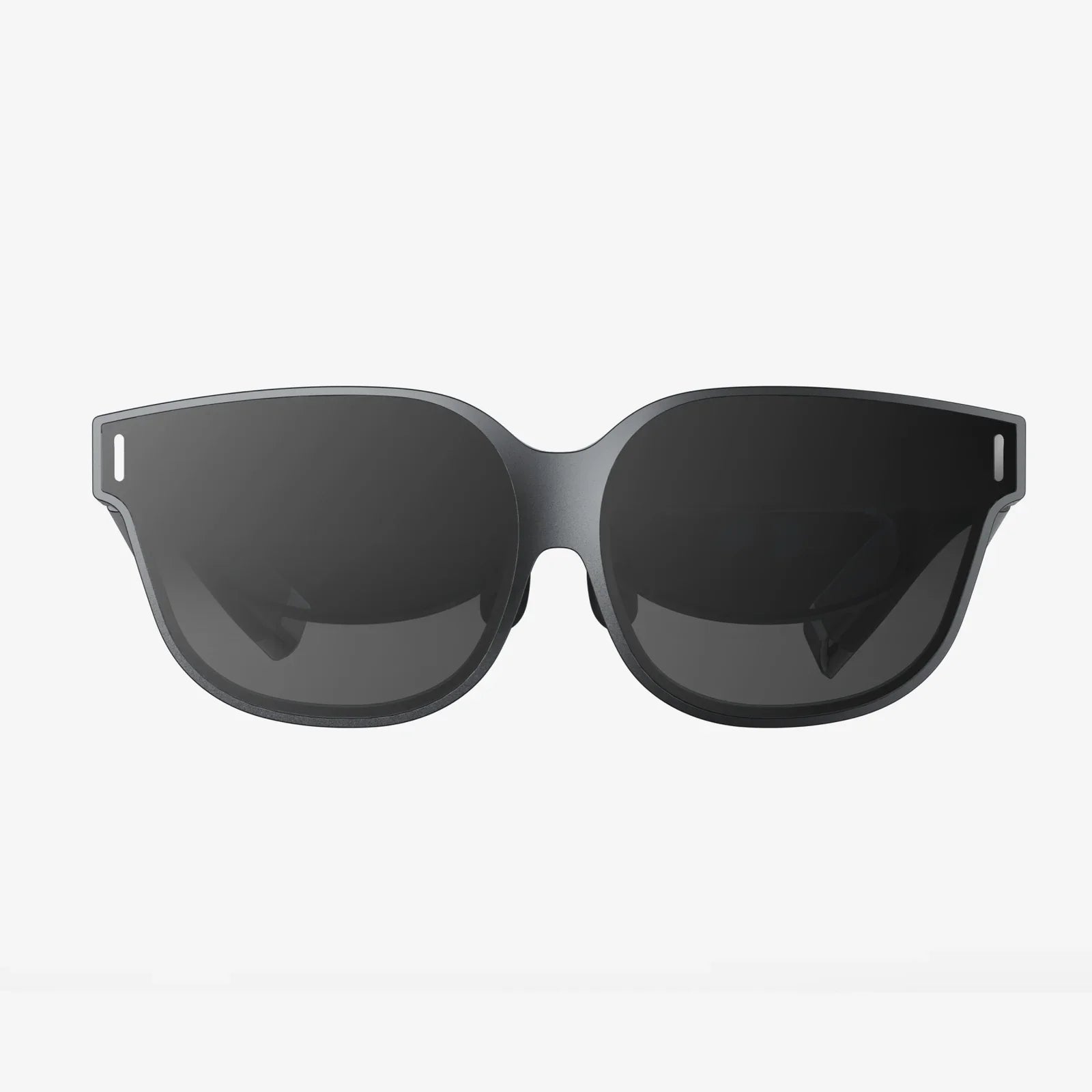
The trajectory of AR on iPhone points toward even deeper integration into our daily lives. The rumored development of AR glasses that could work in tandem with the iPhone would liberate the technology from the screen, allowing for a truly hands-free, always-available experience. Advances in ARKit will continue to improve object recognition, allowing apps to not just see a table, but understand that it's a wooden table with a specific design. Furthermore, the convergence of AR with Artificial Intelligence (AI) will lead to context-aware applications that can provide information and interactivity based on a deep, real-time understanding of what you’re looking at. The line between the digital and the physical will continue to blur, creating a world where information is not something we go to find, but something that is seamlessly presented within our environment.
From a playful filter that adds cartoon ears to your selfies to a professional tool that helps a surgeon visualize a procedure, the spectrum of AR is vast and growing. It represents a fundamental shift in human-computer interaction, moving us away from staring down at a screen and towards a future where the digital world enhances our perception of reality itself. The iPhone is the vehicle bringing this future to the masses, one camera view at a time. So the next time you pick up your device, remember you're not just holding a phone; you're holding a window to a world enriched with data, imagination, and endless possibility. The only question left to ask is: what will you create with it?
Share:
How Does a VR Headset Cost: A Deep Dive into the Price of Immersion
How Does a VR Headset Cost: A Deep Dive into the Price of Immersion