


You’ve likely seen it in blockbuster movies, heard it hyped in tech keynotes, or perhaps even experienced it through a popular mobile game that had millions of people chasing virtual creatures in their local parks. The term "AR" is thrown around constantly, a buzzword synonymous with the future. But if you've ever stopped to ask, what is AR stand for, and more importantly, what does it truly mean for our world, you're about to embark on a journey into one of the most transformative technologies of our time. This is more than just a definition; it's a portal to understanding how the very fabric of our reality is being rewoven with digital threads.
Decoding the Acronym: The Literal Meaning
At its most fundamental level, AR stands for Augmented Reality. This is the foundational key that unlocks the entire concept. Unlike its close relative, Virtual Reality (VR), which aims to replace your surroundings with a completely digital environment, Augmented Reality has a different, more integrative mission. Its goal is not to remove you from your world but to enhance it. It seeks to superimpose or layer digital information—be it images, sounds, text, or 3D models—onto your live view of the physical environment around you. Think of it as a technological filter that sits between your perception and the real world, enriching your experience with contextually relevant data and graphics.
Beyond the Definition: The Core Principle of Augmentation
Understanding what the acronym stands for is just the first step. To truly grasp its significance, one must understand the principle of augmentation. This is the heart of the technology. The real world remains the foundation, the stage upon which digital elements perform. This blending is done in real-time and, in its most advanced forms, is interactive and registered accurately in three-dimensional space. This means a digital dinosaur can appear to hide behind your real sofa, or a navigation arrow can seem painted onto the actual road ahead of you. The magic lies in the seamless fusion, creating a unified experience where the boundaries between what's real and what's computer-generated become beautifully blurred.
How Does It Work? The Technology Behind the Magic
The seemingly effortless overlay of digital content is powered by a sophisticated symphony of hardware and software components working in perfect harmony. While the user experience is designed to be intuitive, the underlying mechanics are complex.
Sensors and Cameras: The Eyes of AR
The first step is for the system to see and understand the world. This is primarily achieved through cameras, which capture the user's environment. But a simple video feed isn't enough. Advanced sensors, including depth sensors, LiDAR (Light Detection and Ranging) scanners, and accelerometers, work together to scan the surroundings, map surfaces, and measure distances. This sensor fusion creates a rich spatial map, allowing the device to comprehend the geometry of the space—where the floor, walls, and objects are located.
Processing: The Brain of the Operation
The raw data from the sensors is just noise without a brain to interpret it. This is where powerful processors and specialized algorithms come into play. Using a technique called simultaneous localization and mapping (SLAM), the device simultaneously constructs a map of the unknown environment while keeping track of its own location within that map. Computer vision algorithms analyze the camera feed to identify flat surfaces (like a table or the floor), recognize objects, or even track specific images (known as markers). This continuous processing ensures the digital content can be placed and anchored persistently in the real world.
Projection and Display: Painting the Digital Layer
Once the environment is understood and the digital content is ready, it must be displayed to the user. This is the final, crucial step. There are several methods for this:
- Smartphone and Tablet Screens: The most accessible form, using the device's screen as a viewport to see the real world with digital overlays.
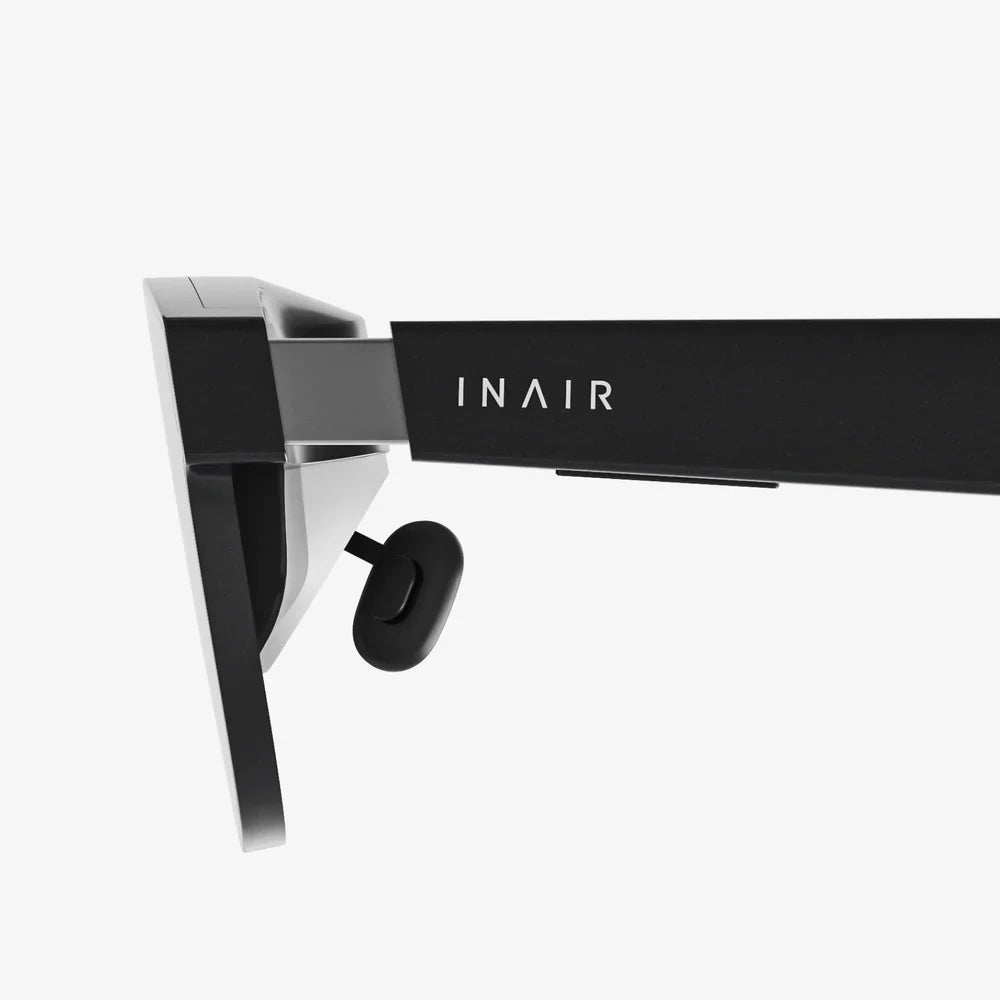
- Smart Glasses and Headsets: Wearable devices that use transparent lenses or screens to project images directly into the user's field of vision, allowing for a hands-free experience.
- Projection-Based AR: Less common for personal use, this method projects digital light directly onto physical surfaces, effectively turning any wall or table into a display.
AR vs. VR vs. MR: Navigating the Reality Spectrum
It's impossible to discuss what AR stands for without differentiating it from other immersive technologies. They exist on a spectrum often called the "Virtuality Continuum."
Virtual Reality (VR): The Complete Escape
VR stands at the opposite end of the spectrum from the real world. It fully immerses the user in a computer-generated environment, completely blocking out the physical world. Using a head-mounted display (HMD), users are transported to a digital universe, whether it's a fantasy game, a simulated training scenario, or a virtual social space. The key differentiator is replacement; VR replaces your reality.
Augmented Reality (AR): The Enhanced Reality
As established, AR enhances the real world by adding digital elements to it. The physical environment remains central to the experience. You are still present in your room; you just have a digital pet sitting on your real carpet.
Mixed Reality (MR): The Blended Frontier
Mixed Reality is often considered the next evolution of AR. While AR simply overlays content, MR involves digital objects that can interact with the real world in a believable way. A MR experience would allow a virtual character to jump onto your real coffee table, knowing it's a solid surface, and then hide behind your real sofa, understanding it's an obstacle. The line between AR and MR is blurry, but MR implies a deeper level of integration and interaction between the digital and the physical.
The Real-World Impact: Applications of Augmented Reality
The power of AR isn't confined to entertainment; its practical applications are vast and are already revolutionizing numerous sectors.
Transforming Retail and E-Commerce
The "try before you buy" dilemma is being solved. AR allows customers to visualize products in their own space and on their own bodies. You can see how a new sofa would fit in your living room, how a pair of glasses would look on your face, or even how a new shade of paint would transform your walls. This reduces purchase uncertainty and has drastically reduced return rates for forward-thinking retailers.
Revolutionizing Education and Training
AR brings textbooks and manuals to life. Instead of reading about the human heart, medical students can explore a beating, interactive 3D model hovering over their textbook. Mechanics can see repair instructions overlaid directly on the engine they are fixing. This contextual, interactive learning significantly improves comprehension and retention of complex information.
Advancing Healthcare and Medicine
In healthcare, AR is moving from a novelty to a critical tool. Surgeons can use AR overlays to visualize a patient's anatomy, such as veins, tumors, or surgical plans, directly onto their body during procedures, improving precision and safety. It can also assist in complex medical training, patient education, and physical therapy by guiding movements and tracking progress.
Powering Industrial Design and Manufacturing
Engineers and designers use AR to prototype and interact with 3D models at full scale before any physical prototype is built. Factory workers can receive assembly instructions overlaid on their workstation, reducing errors and speeding up training. Technicians can see diagnostic data and wiring diagrams superimposed on the machinery they are servicing.
The Future is Augmented: What Lies Ahead?
The current state of AR is impressive, but it is merely the foundation for a future that is even more integrated. We are moving towards lighter, more socially acceptable wearable glasses that we might wear all day, much like we wear smartphones today. The concept of the spatial web is emerging—an internet where information is not trapped on pages but is anchored to places and objects in the real world. The potential is staggering: a world where your surroundings are constantly infused with helpful, personalized, and contextual information, fundamentally changing how we work, learn, socialize, and interact with our environment.
Challenges and Considerations
This future is not without its hurdles. Widespread adoption depends on solving significant technical challenges like improving battery life, developing more powerful and efficient processors, and creating displays that work perfectly in all lighting conditions. Beyond the tech, serious societal questions about privacy, data security, digital addiction, and the potential for reality distortion need to be addressed thoughtfully and proactively.
So, the next time you hear the term, you'll know it's far more than a acronym or a fleeting trend. It represents a fundamental shift in human-computer interaction, a new lens through which we will perceive and interact with our world. From the way we shop and learn to how we heal and build, Augmented Reality is poised to weave itself into the very tapestry of our daily lives, offering a glimpse into a future where our reality is limited only by our imagination. The question is no longer just what is AR stand for, but rather, what incredible things will we stand for it to do next?
Share:
Buy Wearable Devices Online: The Ultimate Guide to Smart Shopping in the Digital Age
Smart Glasses Best Smart Glasses 2025: The Ultimate Guide to the Future on Your Face