


Imagine a world where the digital and the physical are no longer separate realms but a single, intertwined experience. A world where learning to repair an engine means interactive holographic instructions floating over the machinery, where navigating a new city means arrows and information painted directly onto the streets through your glasses, and where a simple glance at a restaurant menu reveals floating reviews and dietary icons. This is not a distant future; it is the promise of Augmented Reality (AR) technology, a seismic shift in how we perceive and interact with the information that surrounds us. It’s a layer of intelligence, context, and magic superimposed onto our reality, and it’s poised to change everything.
Beyond the Buzzword: Defining the Digital Overlay
At its core, Augmented Reality (AR) is an interactive experience that enhances the real world by overlaying digital information—such as images, text, sounds, and 3D models—onto a user's view of their physical environment. Unlike Virtual Reality (VR), which creates a completely immersive, computer-generated simulation that replaces the real world, AR augments reality. It adds to it, building upon the existing world rather than replacing it. Think of it as a heads-up display for life itself.
The key differentiator is presence. In VR, you are transported elsewhere. In AR, you remain firmly in your own space, but that space is now enhanced with a digital layer. This layer can be simple and informational, like the live speedometer projected onto a car's windshield, or it can be complex and experiential, like a life-sized dinosaur seemingly walking through your living room. The goal is to blend digital components into the real world in a way that they are perceived as an immersive part of the environment, creating a unified and enriched experience.
The Engine Behind the Magic: How AR Technology Works
Creating a seamless blend of the real and the virtual is a complex technological dance. It requires a sophisticated combination of hardware and software working in perfect harmony. The process generally involves three key steps: capturing the real world, processing that information, and then projecting the digital content back to the user.
1. Sensing the World: Cameras and Sensors
An AR device, whether a smartphone or a pair of smart glasses, acts as a set of digital eyes. It uses a camera to capture a live feed of the user's surroundings. But vision alone isn't enough. To understand the world in three dimensions, AR systems rely on a suite of sensors:
- Accelerometers and Gyroscopes: These measure the device's orientation, rotation, and velocity—essentially figuring out which way is up, down, and sideways.
- GPS (Global Positioning System): For outdoor applications, GPS provides coarse location data, placing the user on a map.
- LiDAR (Light Detection and Ranging) and Depth Sensors: These are the true game-changers. They fire out invisible lasers to measure the exact distance to surrounding surfaces, creating a detailed 3D depth map or "point cloud" of the environment. This allows digital objects to accurately occlude (be hidden behind) and interact with real-world geometry.
2. Processing and Understanding: The Digital Brain
The raw data from the sensors is meaningless without interpretation. This is where sophisticated algorithms and computer vision come into play. The system must perform a critical task known as simultaneous localization and mapping (SLAM). In simple terms, SLAM allows the device to both map the environment (understand the geometry of the room) and localize itself within that map (know its own position and orientation within the room) in real-time.
Other processing techniques include:
- Object Recognition: Using machine learning, the system can identify specific objects, like a chair, a coffee mug, or a historical monument, and trigger relevant AR content.
- Plane Detection: The software identifies horizontal surfaces (like floors and tables) and vertical surfaces (like walls) to serve as anchors for placing digital objects.
- Image Tracking: The device recognizes a specific 2D image (a "marker" or "target") and uses it as a precise anchor point for AR content.
3. Projecting the Illusion: Display Technologies
Once the digital content is prepared and aligned, it must be presented to the user. This is achieved through various display methods:
- Smartphone and Tablet Screens: The most common and accessible form of AR, where the camera feed is shown on the screen with the digital overlay composited on top.
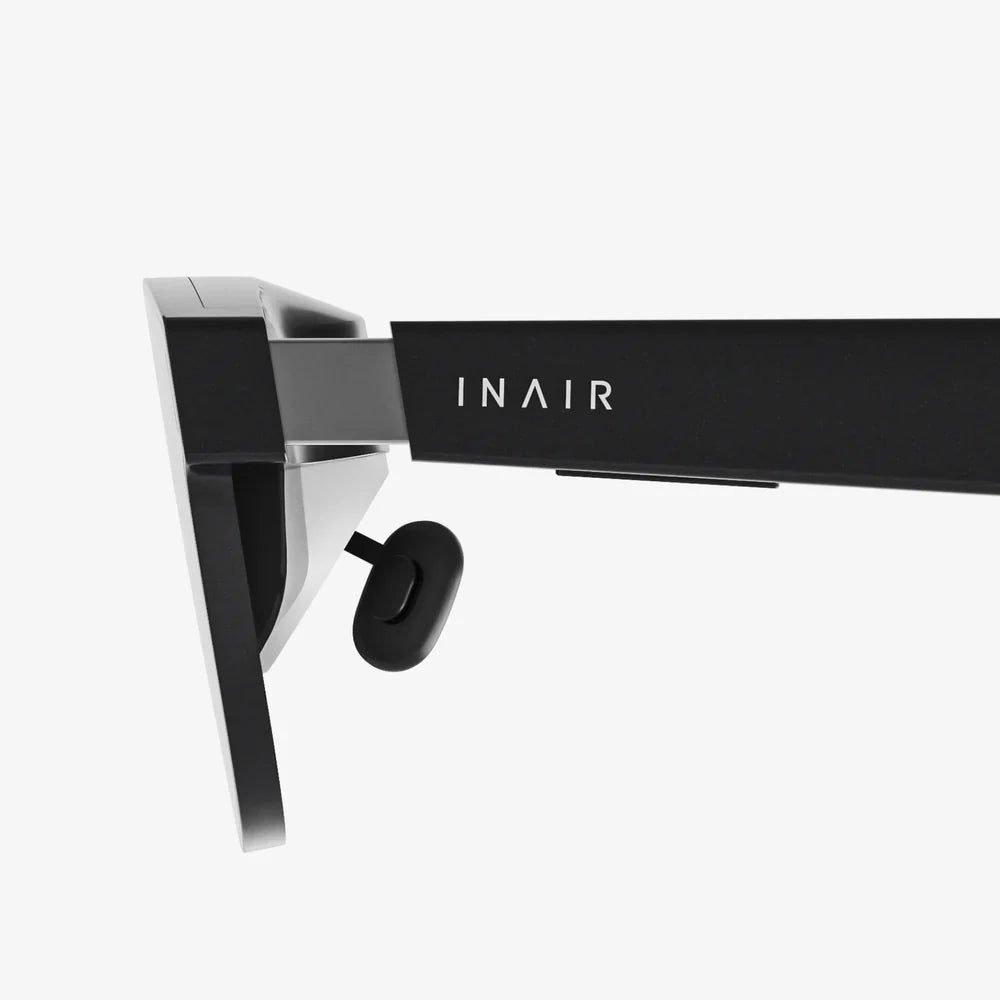
- Smart Glasses and Headsets: These use either optical see-through or video see-through displays. Optical see-through uses semi-transparent mirrors or waveguides to project light directly into the user's eyes, allowing them to see the real world naturally with graphics superimposed. Video see-through uses cameras to capture the real world and then displays the combined real-and-digital feed on internal screens.
- Heads-Up Displays (HUDs): Project information directly onto surfaces like car windshields or cockpit canopies.
A Spectrum of Experience: Marker-Based vs. Markerless AR
Not all AR experiences are created equal. They can be broadly categorized based on how they anchor digital content to the real world.
Marker-Based AR (Recognition-Based)
This is one of the earliest forms of AR. It requires a predefined visual marker—often a black-and-white QR-like code or a specific image—to trigger the digital experience. The device's camera scans the marker, recognizes it, and uses its position and orientation to correctly place and anchor the 3D model or animation on top of it. While reliable and precise, it is limited by its dependence on these physical triggers.
Markerless AR (Location-Based and Projection-Based)
This is the more advanced and flexible form of AR, which uses the device's sensors (GPS, accelerometer, LiDAR) to place content without a physical marker.
- Location-Based AR: Ties digital content to a specific geographic location. For example, pointing your phone at a street to see historical photos layered over the modern view, or finding virtual creatures in a specific park in a popular game.
- Projection-Based AR: Projects artificial light onto real-world surfaces, sometimes allowing that projected light to interact with the physical environment (e.g., creating a touch-sensitive projected keyboard).
- Superimposition-Based AR: Uses object recognition to replace the original view of an object with an augmented view. For instance, a medical AR app might replace a view of a patient's leg with an augmented X-ray view of the bone structure.
The Real-World Impact: AR Applications Transforming Industries
While playful filters and games brought AR to the masses, its true power lies in its practical, transformative applications across nearly every sector.
Revolutionizing Retail and E-Commerce
AR is solving the "try before you buy" problem for online shoppers. Customers can now use their phones to see how a new sofa would look in their living room, accurately scaled and placed. They can "try on" glasses, makeup, and even clothes virtually, dramatically reducing return rates and increasing consumer confidence. In physical stores, pointing a phone at a product can reveal additional information, reviews, or compatible items.
Enhancing Education and Training
AR turns abstract concepts into tangible, interactive experiences. Students can dissect a virtual frog, watch historical battles unfold on their desk, or explore the solar system in the middle of their classroom. For industrial training, it's a game-changer. Mechanics can see wiring diagrams overlaid on an engine, surgeons can practice complex procedures on virtual anatomy, and field technicians can receive remote, expert guidance with instructions visually pinned to the equipment they are repairing.
Empowering Healthcare and Medicine
Beyond training, AR is directly improving patient care. It can help nurses locate veins more easily for injections. Surgeons can use AR headsets to see critical patient data, like heart rate or a 3D reconstruction of a tumor, directly in their field of view during an operation without looking away at a monitor. It also offers powerful tools for patient education, helping them visualize their condition and understand procedures.
Driving Industrial Design and Manufacturing
Engineers and designers use AR to visualize and interact with 3D prototypes at full scale before any physical model is built, saving immense time and resources. On the factory floor, assembly line workers can have step-by-step instructions overlaid onto their tasks, reducing errors and speeding up complex assembly processes. AR can also be used for remote maintenance, allowing an expert to see what a field technician sees and provide visual annotations in real-time.
Challenges and the Road Ahead: The Future of AR
Despite its rapid advancement, AR technology still faces significant hurdles on its path to ubiquity.
- Hardware Limitations: For AR glasses to become an all-day wearable, they need to be socially acceptable (lightweight and fashionable), have all-day battery life, and offer a wide field of view with high-resolution displays. Current technology often forces a trade-off between these factors.
- Social and Privacy Concerns: Pervasive, always-on cameras and sensors raise serious questions about privacy, data security, and digital etiquette. The potential for constant recording and facial recognition in public spaces is a major societal concern that needs careful regulation and ethical consideration.
- The Digital Divide: As with any advanced technology, there is a risk that AR could exacerbate social inequalities, creating a gap between those who can afford and access these new tools and those who cannot.
Looking forward, the convergence of AR with other technologies like 5G (for high-speed, low-latency data streaming) and Artificial Intelligence (for smarter, context-aware content) will unlock even more powerful experiences. The concept of the "spatial web" or "metaverse" envisions a future where the internet is not something we look at on a screen, but a layer of context and experience integrated into our physical lives. AR is the foundational technology that will make this vision possible.
The line between what is real and what is digital is not just blurring; it is being deliberately and productively woven together. What is AR technology? It is the loom. It is the toolset we are using to build a new kind of human-computer interaction, one that is more intuitive, more contextual, and more deeply integrated into the fabric of our daily lives than ever before. This is just the beginning of a journey into a world where our reality is limited only by our imagination, and the next time you look around, you might just see something extraordinary.
Share:
3D AR HUD: The Next Revolution in How We See the Road
AR Goggles Price - A Comprehensive Guide to Navigating the Cost of Immersive Technology