


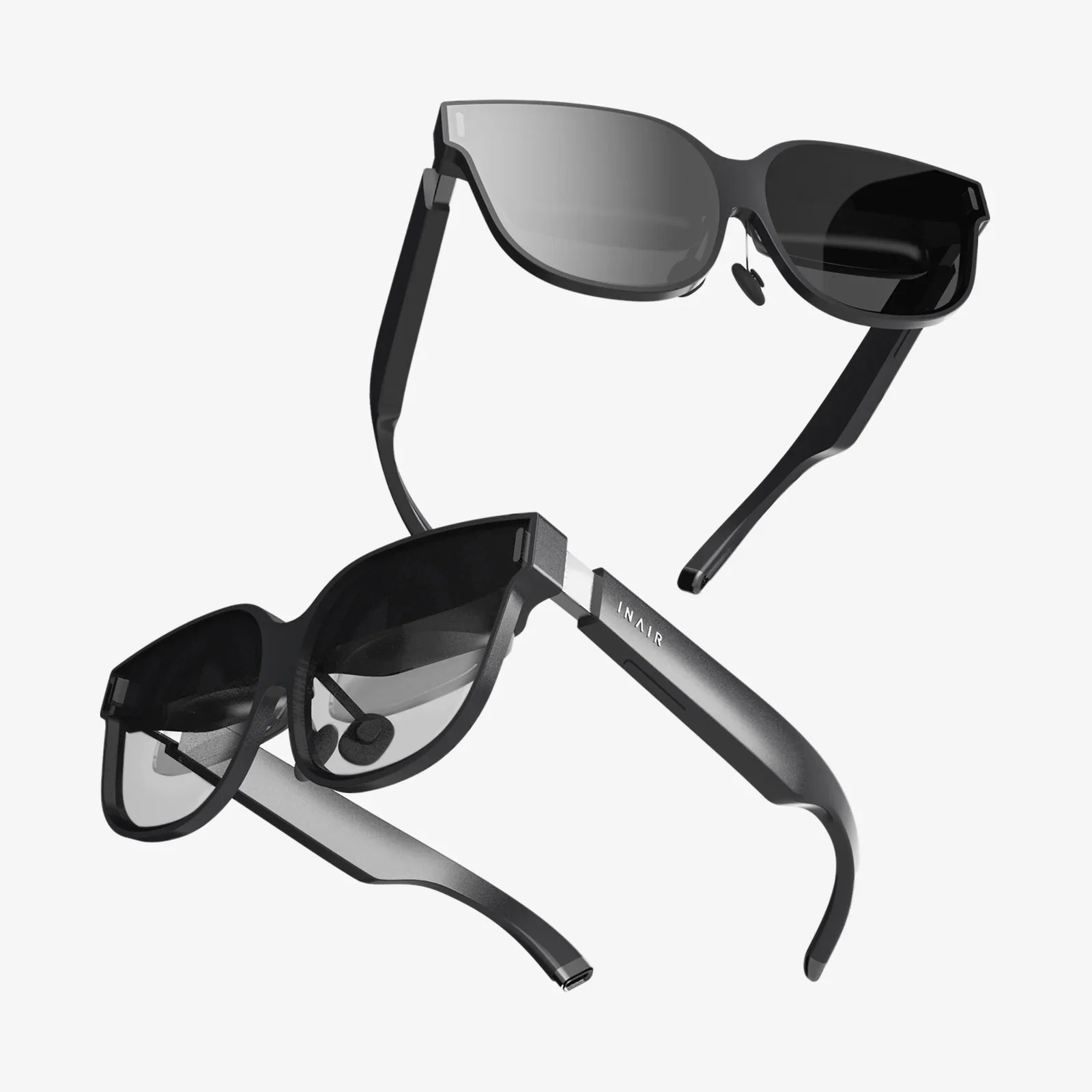
Imagine walking through a historic city, pointing your device at an ancient ruin, and watching it rebuild itself before your eyes, stone by stone. Envision a mechanic peering under the hood of a car and seeing animated arrows and labels pinpointing exactly which component needs servicing. Picture a surgeon viewing a real-time, holographic overlay of a patient's anatomy during a complex procedure. This is not science fiction; this is the world being reshaped by Augmented Reality. It’s a technological leap that promises to fundamentally alter how we work, learn, play, and connect with the world around us, and it’s already here.
The Core Concept: More Than Just a Filter
At its simplest, Augmented Reality is a technology that layers computer-generated enhancements atop an existing reality to make it more meaningful and interactive. The key differentiator from its cousin, Virtual Reality (VR), is that AR does not replace your world—it adds to it. Where VR requires a headset to transport you to a completely digital environment, AR allows you to remain present in your own space while digital content is integrated within it.
This integration happens in real-time, creating a unique experience that is both contextual and personal. The digital enhancements can be anything from simple text notifications and floating 3D models to complex, interactive holograms. The magic lies in the seamless blending, making the digital elements appear as if they truly coexist with the physical objects in your environment.
How Does Augmented Reality Actually Work?
The seemingly effortless overlay of digital content is powered by a sophisticated symphony of hardware and software working in perfect harmony. The process can be broken down into a few critical steps:
1. Sensing and Perception
An AR system first needs to understand its environment. This is achieved through a suite of sensors, most commonly the camera on a smartphone or specialized glasses. But the camera alone isn't enough. Advanced AR systems employ a combination of technologies to perceive the world in three dimensions:
- Cameras: Capture the live video feed of the user's surroundings.
- Sensors: Accelerometers, gyroscopes, and magnetometers (compasses) work together to precisely track the device's orientation, tilt, and movement in space.
- LiDAR (Light Detection and Ranging): Used in more advanced systems, LiDAR scanners fire out millions of laser points to create a precise depth map of the environment, understanding the exact distance and shape of objects. This is crucial for placing digital objects behind or in front of real-world obstacles.
- GPS: For outdoor, location-based AR experiences, GPS provides coarse location data to anchor digital content to a specific place on the globe.
2. Processing and Alignment
The data from these sensors is fed into powerful processors that run complex algorithms. This is where the real computational heavy lifting occurs. The system uses a technique called simultaneous localization and mapping (SLAM). SLAM allows the device to both map the unknown environment (creating a digital mesh of the space) and simultaneously track its own location within that map. This is what enables a digital dinosaur to stay rooted to a spot on your living room floor even as you walk around it.
3. Projection and Display
Once the digital content is properly aligned within the spatial map, it must be displayed to the user. This happens through various methods:
- Smartphone and Tablet Screens: The most common and accessible form factor. The device's screen displays the combined view of the camera feed and the digital overlay.
- Smart Glasses and Headsets: These wearable devices use miniature projectors and waveguides or semi-transparent mirrors to beam images directly onto the user's retina, allowing them to see digital content superimposed on the real world without holding up a screen.
- Heads-Up Displays (HUDs): Common in aviation and increasingly in automotive applications, these project information like speed or navigation onto a transparent screen in the user's line of sight.
Marker-Based vs. Markerless AR: Knowing Where to Place the Magic
AR experiences are often categorized by how they anchor digital content to the real world.
Marker-Based AR (Recognition-Based)
This was the early foundation of AR. It relies on a specific, predefined visual object—a "marker"—to trigger the digital display. This marker is usually a distinct black-and-white pattern or a QR code that the device's camera can easily recognize. When the camera identifies the marker, it uses it as an anchor point to position and orient the 3D model or animation. While reliable, this method is limited to the presence of the physical marker.
Markerless AR (Location-Based or Projection-Based)
This is the more advanced and flexible form of AR, empowered by SLAM and GPS. It doesn't need a special marker. Instead, it uses the natural features of the environment itself to place content.
- Surface Detection: The AR system identifies horizontal planes (like a table or floor) or vertical planes (a wall) to place furniture, art, or information.
- Object Recognition: The system can recognize specific objects, like a product package or a machine part, and attach relevant information to it.
- Geolocation: Digital content is tethered to specific GPS coordinates, enabling experiences like historical tours or gaming that unfold in your local park.
The Vast Ecosystem of AR Applications: Beyond Gaming Filters
While viral social media filters and a certain global phenomenon game brought AR into the mainstream consciousness, its applications extend far deeper into our professional and personal lives.
Revolutionizing Retail and E-Commerce
AR is solving one of online shopping's biggest drawbacks: the inability to try before you buy. Customers can now use their smartphones to see how a piece of furniture would look in their home, how a new shade of paint would transform a room, or how a pair of glasses would fit their face. This "see-it-in-your-space" functionality drastically reduces purchase uncertainty and return rates, creating a more confident and engaging shopping experience.
Transforming Education and Training
AR brings abstract concepts to life. Instead of reading about the solar system, students can watch planets orbit around them in their classroom. Medical students can practice complex surgical procedures on detailed, interactive 3D holograms of the human body without risk. Field technicians can receive remote, expert guidance with digital arrows and annotations overlaid directly onto the machinery they are repairing, improving knowledge retention and accelerating skill development.
Enhancing Industrial and Manufacturing Workflows
In complex assembly lines, AR glasses can provide workers with real-time, hands-free instructions, diagrams, and safety information superimposed directly on their task. This reduces errors, speeds up training, and improves overall efficiency. Designers and architects can use AR to visualize and interact with full-scale 3D models of their projects before a single physical resource is spent, facilitating better collaboration and decision-making.
Reimagining Navigation and Tourism
Imagine walking through a foreign city and having directional arrows painted onto the sidewalk through your phone or glasses, guiding you to your destination. Historical sites can be annotated with information, and ancient structures can be digitally reconstructed, offering a rich, immersive learning experience that static plaques cannot match.
The Flip Side: Challenges and Ethical Considerations
As with any powerful technology, the rise of AR is not without its significant challenges and concerns.
Privacy in an Augmented World
AR devices, by their very nature, are equipped with always-on cameras and sensors constantly scanning their environment. This raises profound privacy questions. Who has access to this continuous stream of data about your home, your workplace, and the public spaces you frequent? The potential for unauthorized surveillance, data harvesting, and the creation of detailed behavioral profiles is a serious concern that requires robust legal and ethical frameworks.
The Digital Divide and Accessibility
High-quality AR experiences currently require relatively powerful and expensive hardware, from modern smartphones to dedicated smart glasses. This risks creating a new digital divide, where access to augmented layers of information, education, and entertainment is limited to those who can afford it, potentially exacerbating existing social and economic inequalities.
Real-World Safety and Distraction
Overlaying captivating digital content onto the real world creates a inherent risk of distraction. Users engrossed in an AR experience may fail to notice real-world hazards like traffic, obstacles, or other people. Establishing norms and safety protocols for using AR in public spaces will be crucial to preventing accidents.
Reality Blurring and Mental Health
As the line between the digital and physical becomes increasingly blurred, there are concerns about the long-term psychological effects. Could constant augmentation lead to a diminished appreciation for unadulterated reality? Might it exacerbate issues for individuals who already struggle to distinguish between reality and fiction? The impact on social interaction and our connection to the natural world is a territory that we are only beginning to explore.
The Future is Augmented: What Lies Ahead?
The trajectory of AR points toward more seamless, intuitive, and powerful integration into our daily lives. We are moving toward lightweight, socially acceptable glasses that offer all-day battery life and high-fidelity displays. The development of the "AR cloud"—a persistent, shared digital layer over the entire world—will enable collaborative experiences and context-aware information that is always available. Eventually, AR may evolve into a form of always-available contextual intelligence, an invisible assistant that provides the right information at the right time, fundamentally changing our relationship with computing from something we actively use to something we passively wear.
The door to a world where information is not just at our fingertips but woven into the very fabric of our perception is now open. The potential to enhance human capability, democratize knowledge, and solve complex problems is staggering. But navigating this new frontier demands not just technological innovation, but also thoughtful discourse on the ethics, policies, and social structures that will define our augmented future. The next great interface isn't on a screen in your hand; it's the world itself, waiting to be unlocked.
Share:
VR Headset Cons: The 7 Significant Downsides You Must Consider Before You Buy
VR Headset Cons: The 7 Significant Downsides You Must Consider Before You Buy