


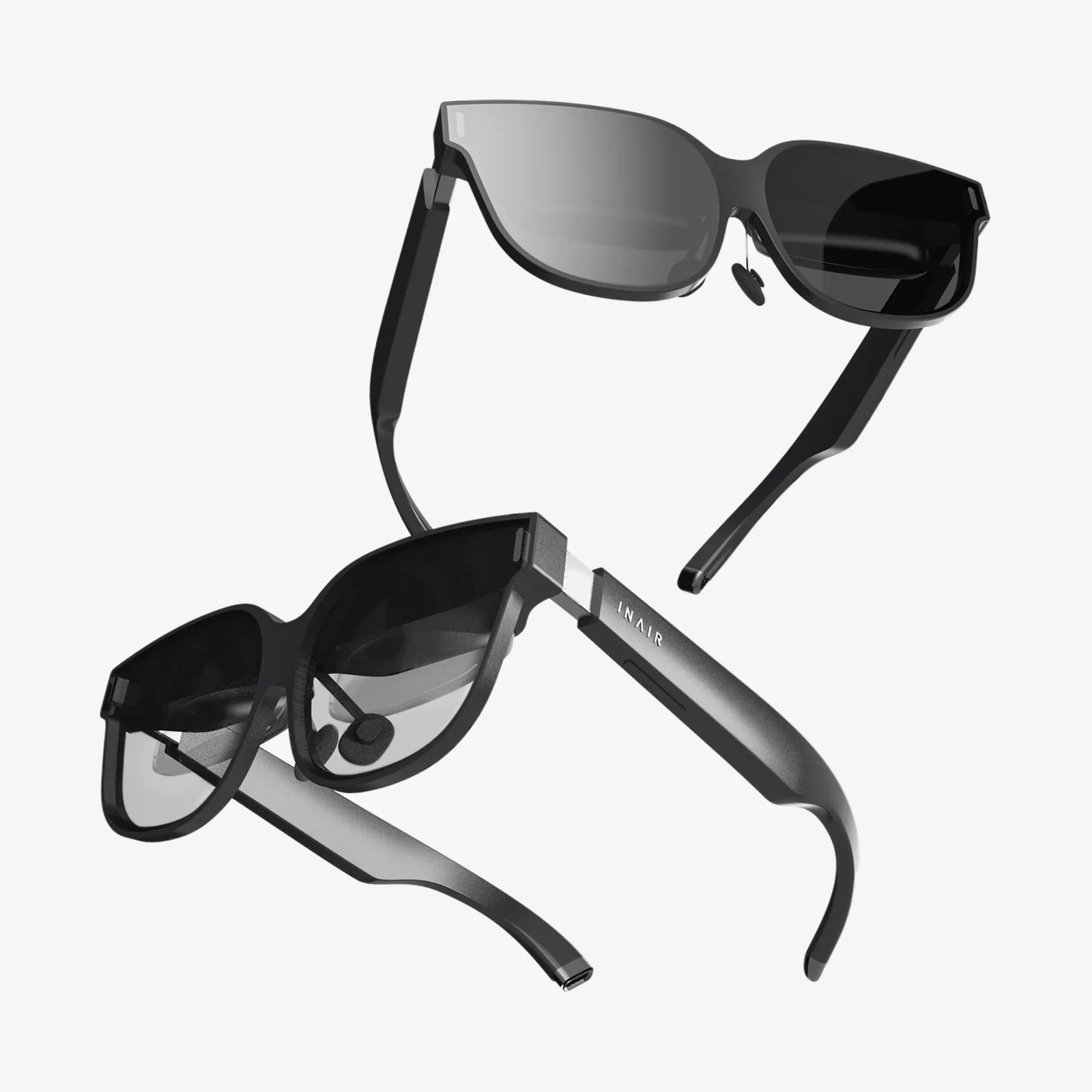
Imagine a world where the line between the digital and the physical isn't just blurred—it's seamlessly erased. Where you can train for complex heart surgery without a patient, collaborate with colleagues as if they were in the same room from across the globe, or step inside a historical event to experience it firsthand. This is not a distant science fiction fantasy; it is the imminent future being built today through the power of Extended Reality solutions. This deep dive will pull back the curtain on this revolutionary technology, revealing its mechanics, its immense potential, and how it is poised to redefine every facet of our lives.
The XR Spectrum: Understanding the Core Trinity
Extended Reality is not a single, monolithic technology. Instead, it is an umbrella term that encompasses a spectrum of immersive technologies, each with its own distinct characteristics and applications. To understand XR, one must first grasp its three primary components.
Virtual Reality (VR): Total Immersion
Virtual Reality is the most well-known pillar of XR. It creates a completely computer-generated, digital environment that entirely replaces the user's real-world surroundings. By wearing a head-mounted display, users are visually and audibly transported to a simulated world. This world can be a photorealistic recreation of a real place, a fantastical game environment, or an abstract data visualization space. The key differentiator of VR is its immersive nature; it blocks out the physical world to fully engage the user's senses in a virtual one.
Augmented Reality (AR): Enhancing the Real World
If VR replaces reality, Augmented Reality enhances it. AR technology superimposes digital information—such as images, text, or 3D models—onto the user's view of the physical world in real-time. Unlike VR, AR does not require a fully immersive headset; it is often experienced through smartphone cameras, tablets, or smart glasses. This allows users to interact with digital content while maintaining a connection to their actual environment. A common example is using a mobile app to see how a new piece of furniture would look in your living room before purchasing it.
Mixed Reality (MR): The Best of Both Worlds
Mixed Reality sits at the most advanced point on the spectrum, blending the physical and digital worlds to create environments where physical and digital objects co-exist and interact in real-time. MR goes beyond simple overlay; it involves an understanding of the physical space so that digital objects can be occluded by real-world objects, respond to changes in the environment, and allow for natural user interactions. For instance, a user wearing an MR headset could place a virtual television on their real wall, and it would stay anchored there even if they walked around the room.
The Technological Engine Powering XR
The magic of XR doesn't happen by chance. It is the result of a sophisticated convergence of several cutting-edge technologies working in perfect harmony.
Advanced Display Systems
At the heart of any XR experience is the display. These are not ordinary screens. They are high-resolution, high-refresh-rate panels designed to be worn inches from the user's eyes. Technologies like OLED and micro-OLED provide deep blacks and vibrant colors, while innovations in pancake lenses make devices smaller and lighter. For passthrough AR and MR, high-fidelity cameras capture the real world and display it on the internal screens with minimal latency, crucial for maintaining user comfort and preventing motion sickness.
Precision Tracking and Sensors
To make digital content feel real, XR systems must understand the user's position and movements with extreme precision. This is achieved through a suite of sensors:
- Inside-Out Tracking: Cameras on the device itself track the environment, creating a map of the room and understanding the headset's position within it without the need for external base stations.
- Eye Tracking: Infrared sensors monitor where the user is looking. This enables foveated rendering (which prioritizes graphic detail where the user is looking to save processing power), more intuitive UI navigation, and lifelike avatars in social applications.
- Hand Tracking: Cameras and sensors allow users to use their bare hands as controllers, enabling natural gestures like pinching, grabbing, and pointing to interact with digital content.
Spatial Computing and 3D Engines
Spatial computing is the foundational software that allows a device to understand and interact with the three-dimensional space around it. It processes data from all the sensors to create a digital twin of the physical environment. This environment is then brought to life by powerful 3D game engines, which render complex graphics and physics in real-time, making interactions feel tangible and believable.
Transforming Industries: The Practical Applications of XR
The true value of XR solutions lies not in their novelty, but in their profound practical applications. They are moving out of the lab and onto the factory floor, into the operating room, and the corporate boardroom.
Revolutionizing Education and Training
XR is dismantling the barriers of traditional learning. Medical students can practice intricate surgical procedures on virtual patients, making mistakes without consequence. Mechanics can train on the internal systems of a jet engine without needing access to a multi-million-dollar physical asset. History students can take a guided tour of ancient Rome, walking its streets and witnessing its grandeur. This "learning by doing" in a safe, scalable, and repeatable environment dramatically improves knowledge retention and skill acquisition.
Supercharging Enterprise and Manufacturing
In the enterprise world, XR is a powerhouse for efficiency and innovation.
- Design and Prototyping: Engineers and designers can collaborate on life-size 3D models of new products, examining every detail and making changes in real-time, drastically reducing the time and cost of physical prototyping.
- Remote Assistance and Guidance: A field technician wearing smart glasses can stream their view to an expert thousands of miles away. The expert can then annotate the technician's real-world view with arrows, diagrams, and instructions, guiding them through a complex repair.
- Logistics and Warehousing: AR can visually guide warehouse workers to the exact shelf location of an item, display picking instructions, and verify that the correct product has been selected, streamlining operations and reducing errors.
Redefining Healthcare and Therapy
The impact of XR on healthcare is already saving lives and improving outcomes. Surgeons use AR to overlay CT scans and vital signs directly onto their field of view during operations, keeping their focus on the patient. VR is being used for exposure therapy, helping patients with phobias or PTSD confront and manage their triggers in a controlled setting. It is also a powerful tool for pain management, distracting patients during painful procedures with calming or engaging virtual environments.
Creating the Future of Retail and Commerce
XR is set to fundamentally change how we shop. Customers can use AR on their phones to "try on" clothes, glasses, or makeup virtually. They can place true-to-scale 3D models of furniture and appliances in their homes to see how they fit and look with their existing décor. This immersive, try-before-you-buy experience not only enhances customer confidence but also significantly reduces return rates for retailers.
Navigating the Challenges on the Path to Adoption
Despite its immense potential, the widespread adoption of XR solutions faces several significant hurdles that developers and industries must overcome.
The Hardware Conundrum: Form Factor and Accessibility
For XR to become ubiquitous, the hardware must evolve. High-end devices are still often bulky, expensive, and tethered to powerful computers. The industry is racing toward all-in-one devices that are lightweight, comfortable for all-day wear, socially acceptable, and affordable. Advances in battery life, processing power, and wireless technology are critical to this evolution.
Ensuring User Comfort and Safety
Prolonged use of XR can cause visual fatigue, motion sickness (often due to latency between head movement and display update), and even psychological effects. Creating comfortable, safe, and ethically designed experiences is paramount. This includes developing better optics, minimizing latency, and establishing clear guidelines for user well-being in immersive environments.
The Imperative of Privacy and Security
XR devices are data collection powerhouses. They have cameras, microphones, and sensors that constantly map and analyze the user's environment—including their home, office, and even their own biometrics. This raises profound questions about data ownership, privacy, and security. Protecting this incredibly personal data from breaches and establishing transparent, user-centric data policies are non-negotiable prerequisites for building trust.
The Horizon: What Lies Ahead for XR
The trajectory of XR points toward a future where the technology becomes as integrated into our daily lives as the smartphone is today. We are moving toward hyper-realistic visuals powered by ever-more powerful processors and cloud streaming. Haptic feedback suits and gloves will add the sense of touch to virtual interactions. The concept of the "metaverse"—a persistent network of interconnected virtual spaces—will likely be accessed primarily through XR, becoming a new platform for work, social connection, and entertainment. Ultimately, the goal is to make the technology itself invisible, allowing us to focus purely on the experience and the human connection it facilitates.
The journey into the spatial computing era is just beginning, and the possibilities are as vast as human imagination itself. The question is no longer if Extended Reality solutions will change the world, but how quickly we can adapt to harness their transformative power and shape a future where our digital and physical realities are not separate worlds, but a single, enhanced continuum of human experience.
Share:
Extended Reality Companies Are Reshaping Our World Beyond the Hype
iPhone Glasses: The Future of Personal Computing on Your Face