


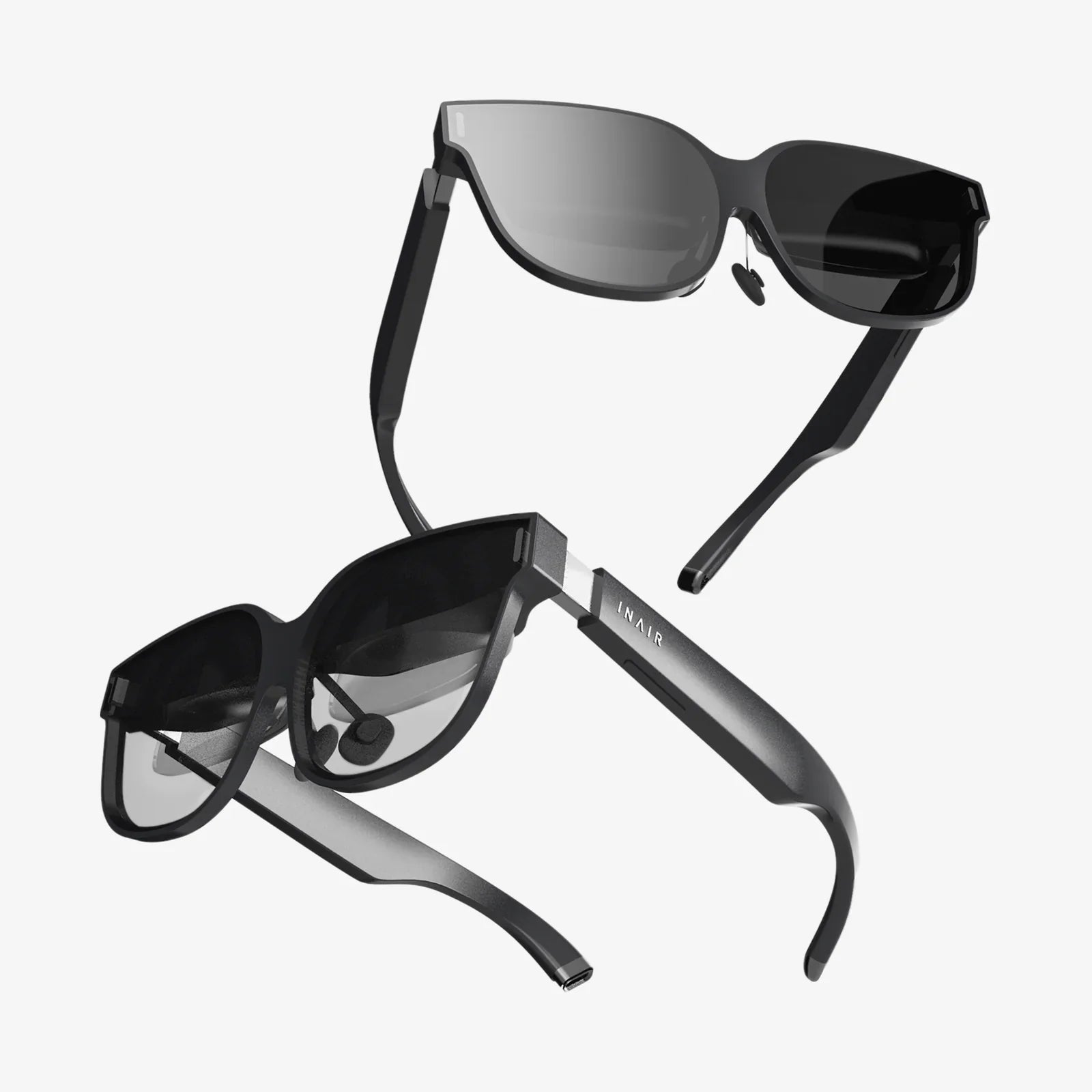
Imagine a world where the line between the digital and the physical isn't just blurred—it's erased. Where you can learn, work, play, and connect in environments limited only by imagination, not by geography or physics. This is the promise of Extended Reality, a technological revolution quietly unfolding around us, poised to change everything from how we shop to how surgeons train. It’s not a distant sci-fi fantasy; it’s here, and it’s more accessible than you might think.
Demystifying the Extended Universe: A Definition
At its core, Extended Reality (XR) is an umbrella term encapsulating all combined real-and-virtual environments generated by computer technology and wearables. It refers to all immersive technologies that extend the reality we experience by either blending the virtual and real worlds or creating a fully immersive experience. XR is the superset that includes its more famous cousins: Augmented Reality (AR), Virtual Reality (VR), and Mixed Reality (MR). Think of XR not as a single technology but as a spectrum of immersive experiences, each with its own unique characteristics and applications.
Deconstructing the Spectrum: AR, VR, and MR
To truly understand what XR is, we must break down its constituent parts. They exist on a continuum, often referred to as the Virtuality Continuum, which ranges from the completely real environment to a fully virtual one.
Virtual Reality (VR): The Complete Digital Immersion
Virtual Reality is the most immersive end of the XR spectrum. It completely replaces the user's real-world environment with a simulated, digital one. Using a head-mounted display (HMD) that covers the user's entire field of vision, along with headphones and motion-tracking sensors, VR transports the user into a computer-generated world. This world can be a realistic simulation of a place too dangerous, expensive, or distant to visit (like the surface of Mars), or it can be a completely fantastical environment born from pure creativity.
The key differentiator of VR is its power to create a profound sense of presence—the convincing feeling of being physically present in that non-physical world. This is achieved through sensory feedback; when you turn your head, the world turns with you. When you move your hands (tracked by controllers or gloves), your digital hands move in perfect sync.
Example of Virtual Reality in Action
Consider the field of medical training. Traditionally, surgeons train for years, observing procedures and eventually practicing on cadavers or under strict supervision. VR revolutionizes this. A medical student can now put on a headset and enter a hyper-realistic simulation of a human body. They can practice a complex procedure like laparoscopic surgery countless times, with zero risk to a patient. The software can provide haptic feedback, simulating the resistance of tissue, and can even simulate complications, training the student's response to emergencies. This is not a theoretical concept; such simulations are already in use, drastically reducing the learning curve and improving patient safety.
Augmented Reality (AR): Overlaying Digital onto Physical
If VR replaces your world, Augmented Reality enhances it. AR overlays digital information—images, text, 3D models, animations—onto the user's view of the real world. Unlike VR, which requires complete immersion, AR allows the user to remain connected to their physical environment. The digital content is context-aware, meaning it interacts with and is anchored to the real-world objects in view.
AR experiences are most commonly accessed through everyday devices like smartphones and tablets, where the screen becomes a window to an augmented view. More advanced AR is delivered through specialized glasses, which project digital imagery directly onto the lenses, allowing for a hands-free experience.
Example of Augmented Reality in Action
A powerful and increasingly common example is in the retail and interior design space. Imagine you want to buy a new sofa, but you're unsure how it will look in your living room, or if it will even fit through the door. With an AR application on your smartphone, you can select the sofa from a digital catalog. The app uses your phone's camera to scan your room, understand its dimensions, and then project a photorealistic, 3D model of the sofa into the space. You can walk around it, see it from every angle, and even change its fabric color in real-time. This eliminates the guesswork and buyer's remorse, transforming the shopping experience from one of uncertainty to confident decision-making.
Mixed Reality (MR): The Next Evolution
Mixed Reality is often confused with AR, but it represents a significant technological leap. While AR simply overlays digital content, MR allows that digital content to interact with the real world in a believable way. It is a hybrid environment where physical and digital objects co-exist and interact in real-time.
In MR, the virtual objects are not just placed in your environment; they are aware of it. A digital character can jump onto your real-world coffee table and hide behind your physical lamp. A virtual ball can bounce off your real wall. This requires sophisticated understanding of the environment—depth, spatial mapping, and occlusion (where real objects block virtual ones). This is typically achieved through advanced headsets equipped with a multitude of sensors and cameras to constantly scan and understand the surroundings.
Example of Mixed Reality in Action
The potential for remote collaboration and design is staggering. An architect in one city and an engineer in another can both put on MR headsets. They are transported into a shared digital space that is a full-scale, holographic model of a building they are designing. They can walk around the model as if it were physically present, make changes to the digital blueprint in real-time, and see the implications instantly. The engineer can point to a structural beam, and the architect can see a label and stress-test data overlaid on it. They can even simulate natural light at different times of day. This collaborative, immersive process can identify problems and spark innovations that would be impossible with traditional 2D blueprints and video calls.
Beyond the Buzz: The Technology Powering XR
The magic of XR doesn't happen by accident. It's powered by a sophisticated stack of converging technologies.
- Sensors and Cameras: These are the eyes of an XR device, constantly scanning the environment to understand depth, track motion, and map surfaces.
- Processing Power: The immense amount of data from sensors must be processed in milliseconds to maintain immersion and avoid user discomfort (like motion sickness). This requires immense computing power, often split between the device itself and cloud servers.
- Display Technology: High-resolution, high-refresh-rate displays are crucial for creating believable virtual worlds. For see-through AR/MR devices, waveguides and other projection systems beam light onto the retina.
- Haptics: This technology simulates the sense of touch through vibrations, force feedback, and even air pressure, making digital interactions feel tangible.
- Artificial Intelligence (AI) and Machine Learning: AI is the brain. It powers object recognition (so the device knows what a chair is), spatial understanding, gesture recognition, and the creation of intelligent digital characters.
The XR Impact: Transforming Industries and Human Experience
The applications for XR extend far beyond gaming and entertainment. It is a foundational technology poised to reshape society.
Education and Training
XR turns abstract concepts into tangible experiences. History students can take a virtual field trip to ancient Rome. Biology students can take a journey through the human bloodstream. Mechanics can train on a virtual engine, disassembling and reassembling it without the cost of physical parts. This learning-by-doing in a risk-free environment dramatically improves retention and understanding.
Healthcare and Therapy
From the surgical training example in VR to AR overlays that show veins through the skin for easier injections, XR is a boon for medicine. It's also used for exposure therapy, helping patients with phobias confront their fears in a controlled, virtual setting. MR is used for physical rehabilitation, turning exercises into engaging games.
Enterprise and Manufacturing
Factories use AR glasses to provide workers with hands-free instructions, diagrams, and remote expert guidance, reducing errors and speeding up complex assembly tasks. Designers can use VR for virtual prototyping, saving millions on physical models.
Remote Work and Collaboration
As demonstrated in the MR example, XR has the potential to create the ultimate "work from anywhere" setup, building a sense of shared presence that video conferencing cannot match. Virtual offices where colleagues can interact as avatars are becoming a reality.
Challenges and the Road Ahead
Despite its potential, XR faces hurdles. Hardware needs to become lighter, more comfortable, and more affordable. Network latency must be eliminated for perfect synchronization, a challenge being addressed by 5G and edge computing. There are also significant concerns around privacy, data security (these devices collect immense amounts of personal and environmental data), and the potential for societal issues like addiction and the blurring of reality.
The future of XR is not just about better graphics; it's about moving towards more intuitive interfaces—moving beyond controllers to gesture, gaze, and voice control. It's about the concept of the "metaverse," a persistent network of shared, interconnected virtual spaces. Ultimately, the goal is for the technology to become so seamless and integrated into our lives that it fades into the background, simply becoming a new layer of our reality. We are standing at the precipice of this new era, where our physical and digital selves will merge in ways we are only beginning to imagine. The question is no longer if this will happen, but how quickly we will adapt to a world where every reality is extended.
Share:
What VR Headset to Buy: The Ultimate 2024 Buyer's Guide
What VR Headset to Buy: The Ultimate 2024 Buyer's Guide