


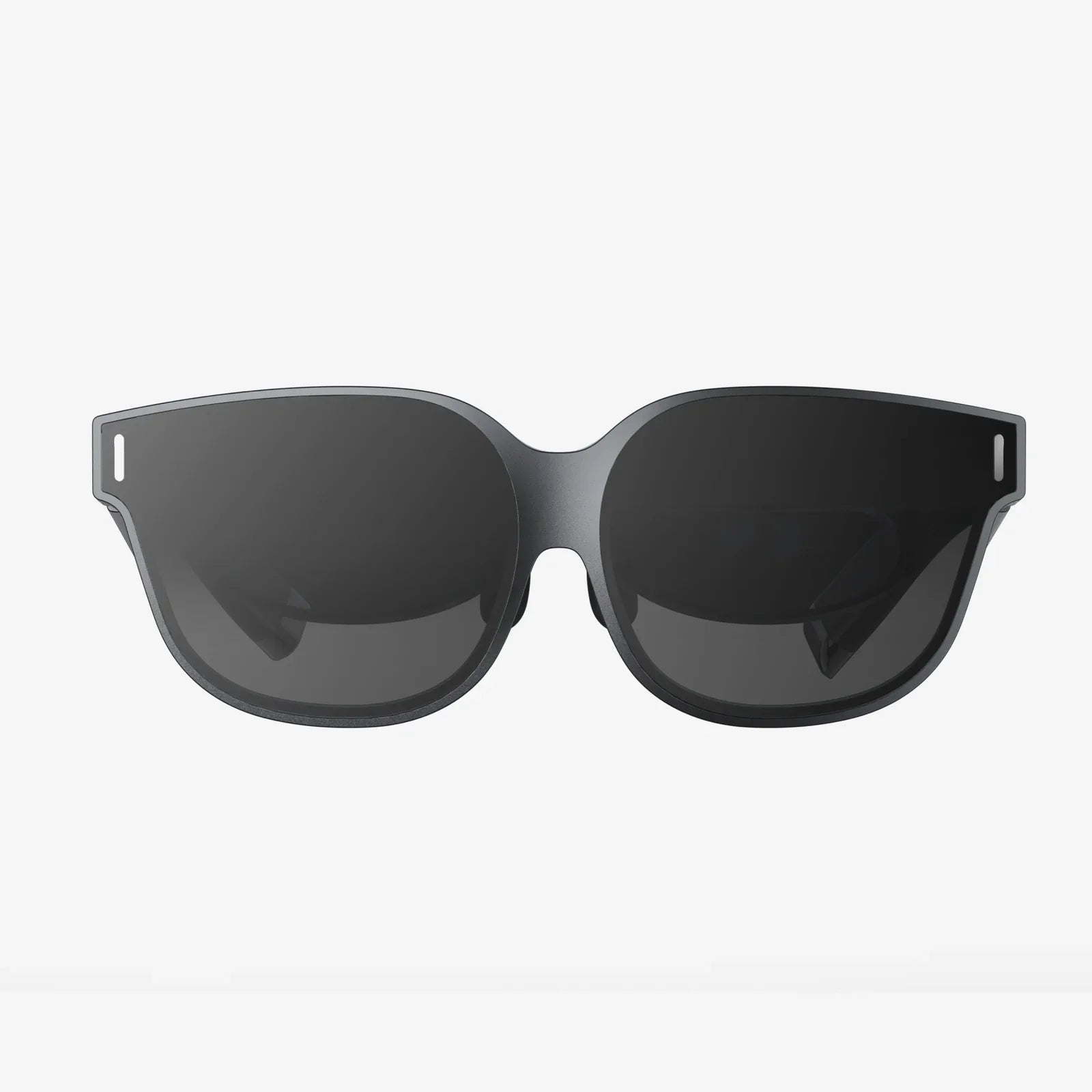
Have you ever stopped to truly consider the magic happening at your fingertips? Every tap, swipe, glance, or spoken command is not a simple action but a word in a silent, rapid-fire conversation with the technology that permeates your life. This conversation, this intricate dance between human and machine, is the very essence of a field that quietly dictates the quality of our modern existence. Unraveling its layers reveals not just how we use technology, but how it, in turn, shapes us.
Beyond the Button: A Deeper Definition
At its most superficial level, interaction in Human-Computer Interaction (HCI) can be mistaken for the mere physical act of pressing a key or clicking a mouse. But this is like describing a Shakespearean play as "people talking." It misses the profound depth, nuance, and meaning embedded within the exchange.
True interaction is a bidirectional process of communication and mutual influence between a user and a computational system. It is a closed-loop cycle where:
- The Human Initiates: A user has a goal, an intention, or a need. This intention is translated into an action—an input.
- The System Receives and Processes: The computer's sensors (hardware and software) perceive this input. The system's internal logic, its programming, interprets this signal.
- The System Responds: Based on its interpretation, the system executes a function and generates an output—a change of state.
- The Human Perceives and Evaluates: The user perceives this output (visually, audibly, haptically), interprets its meaning, and evaluates whether it brings them closer to their original goal. This evaluation then informs their next action, closing the loop.
This entire process is imbued with meaning. The "click" isn't just a click; it's a command meaning "open this." The spinning wheel isn't just an animation; it's a message meaning "I am working." Interaction, therefore, is the channel through which goals are achieved, information is transferred, and meaning is co-created.
The Pillars of Effective Interaction
For this dialogue to be successful and not a source of endless frustration, it rests upon several foundational pillars, often distilled into core usability goals.
- Effectiveness: Can the user accurately achieve their specified goal? Can a writer finish their document? Can a pilot successfully navigate? This is the bare minimum of functional utility.
- Efficiency: Once effective, can the goal be achieved with an appropriate amount of effort and resources? This is measured in time, number of steps, and cognitive load. A process that is effective but requires 20 unnecessary clicks is inefficient.
- Engagement: Beyond mere function, is the interaction satisfying, enjoyable, and even pleasurable? Does it inspire curiosity and a desire for further use? Engagement is what transforms a utilitarian tool into a beloved product.
- Error Tolerance: A system must be resilient. Can it prevent errors from happening in the first place? And when errors inevitably occur, can users easily understand what went wrong and recover without catastrophic loss? Good interaction design anticipates human fallibility.
- Learnability: How easy is it for a new user to grasp the basic mechanics and begin accomplishing tasks? Can they remember how to use the system after a period of absence? A system that is powerful but inscrutable fails this test.
The Evolution of the Interactive Language
The "language" of this human-computer dialogue has evolved dramatically, expanding our vocabulary and grammar far beyond the punch card.
From Command Lines to Direct Manipulation
The earliest interactions were linguistic and abstract. Users communicated with machines through command-line interfaces (CLIs), requiring the memorization of a precise syntactic vocabulary. This was a conversation for experts only. The paradigm shift came with the advent of the Graphical User Interface (GUI) and the concept of Direct Manipulation, pioneered by visionaries like Douglas Engelbart and Alan Kay. Suddenly, the conversation became visual and spatial. Users could manipulate graphical objects on a screen with a pointing device, creating a powerful illusion of interacting with a tangible world. This "language" of buttons, menus, and icons was far more intuitive and learnable, democratizing computing.
The Rise of Natural and Perceptual Interaction
The next evolutionary leap was moving away from artificial intermediaries like the mouse towards more Natural User Interfaces (NUIs). This paradigm aims to leverage skills we already possess from interacting with the physical world. The explosion of multi-touch technology on smartphones is a prime example. Pinching, zooming, and swiping are direct, physical, and immediately understandable gestures. Similarly, voice interaction through intelligent assistants uses the most natural interface of all: spoken language. This represents a quest to make the computer itself invisible, leaving users with the pure feeling of manipulating information directly.
Even more immersive are systems utilizing perceptual computing. Cameras, depth sensors, and microphones allow computers to "see" and "hear" the user and their environment. This enables interaction through body posture, gaze tracking, and gesture control, moving the conversation beyond the screen and into the room itself.
Theoretical Lenses: How We Understand the Dialogue
To properly study and design interaction, researchers and designers employ various theoretical frameworks that act as lenses to focus on different aspects of the dialogue.
The Information Processing Model (Cognitivism)
This model views the human user as an "information processor," akin to a computer. It breaks down interaction into a series of stages: perceptual input, cognitive processing, and motor output. This lens is incredibly useful for identifying bottlenecks. For instance, Fitts's Law, which predicts the time to move to a target area, is a classic example of this model in action, helping designers size and place buttons optimally. However, its weakness is its overly mechanistic view, often neglecting the emotional, social, and contextual aspects of use.
Embodied Interaction
Proposed by Paul Dourish, this theory argues that interaction is not just a cognitive process happening inside the head, but a physical and embodied experience deeply rooted in the surrounding world. We don't just think about tapping a screen; we feel it. We understand a heavy virtual object because our real-world experience tells us that heavy things move slowly. This perspective is crucial for designing tangible interfaces, virtual reality (VR), and augmented reality (AR), where the physicality of the interaction is paramount.
Activity Theory
This framework forces us to zoom out from the immediate human-computer dialogue and look at the broader context. It posits that interaction cannot be understood in isolation. Instead, it is a single component within a larger activity motivated by a human need, mediated by tools (the computer), governed by social rules, and involving a community. Designing a medical device isn't just about the nurse interacting with a screen; it's about the activity of patient care, involving doctors, hospital protocols, time pressures, and the high-stakes environment. This holistic view is essential for designing systems that work in complex real-world settings.
The Invisible Becomes Visible: Feedback and Affordances
Two concepts are so vital to the interactive dialogue that they deserve special emphasis: feedback and affordances.
Feedback is the system's side of the conversation. It is any indication that the computer has received, is processing, and has responded to the user's input. Without clear and immediate feedback, the user is left talking into a void, unsure if their message was received. This breeds anxiety and error. Effective feedback can be visual (a button depressing, a progress bar filling), auditory (a click sound, a confirmation chime), or haptic (a vibration on a phone). It tells the user, "I heard you, and this is what I'm doing about it."
Affordances, a term coined by psychologist James Gibson and adopted by design legend Don Norman, are the perceived properties of an object that suggest how it can be used. A button affords pushing. A handle affords pulling. A scroll bar affords sliding. In HCI, good design creates clear perceived affordances. A graphical button on a screen should look "pushable" through shading, depth, and color. When affordances are clear, the user instantly knows how to begin the conversation without needing a manual. The object itself "speaks" its function.
The Future: Where is the Dialogue Heading?
The frontier of interaction is pushing beyond screens and into the fabric of our reality, making the dialogue more seamless, contextual, and pervasive.
- Ubiquitous Computing and Calm Technology: The goal is for computing to weave itself into the environment, creating an ecosystem of interconnected devices that sense and respond to our needs without demanding our constant focus. The interaction becomes ambient and peripheral, only moving to the center of our attention when truly necessary—a concept known as "calm technology."
- Adaptive and Predictive Interaction: Powered by artificial intelligence and machine learning, systems are becoming proactive partners rather than passive tools. They learn from our patterns and anticipate our needs, initiating the dialogue before we even ask. This shifts interaction from explicit commands to implicit, smooth collaboration.
- Brain-Computer Interfaces (BCI): The ultimate goal of making the interface invisible is the development of BCIs, which aim to translate neural activity directly into commands. This would represent the most intimate form of interaction yet, turning thought itself into action and potentially redefining the very boundary between human and computer.
This incredible journey, from typing commands on a blank screen to potentially controlling systems with a thought, underscores one immutable truth: the quality of our future will be inextricably linked to the quality of our interactions with the technology we create. It is a dialogue we must strive to make more humane, more intuitive, and more empowering than ever before.
Imagine a world where your environment anticipates your needs, where technology understands not just your words, but your context and intent, responding not as a machine, but as a seamless extension of your own will. This isn't science fiction; it's the logical endpoint of a decades-long quest to refine the most fundamental language of the digital age. The next time your device responds to your touch or your voice, remember—you're not just using a tool, you're engaging in a conversation that is constantly being rewritten, and the next chapter promises to be the most astonishing yet.
Share:
What Is Digital Reality - Exploring the Spectrum from Virtual to Augmented Worlds
What is AR in Business: The Ultimate Guide to Augmented Reality