


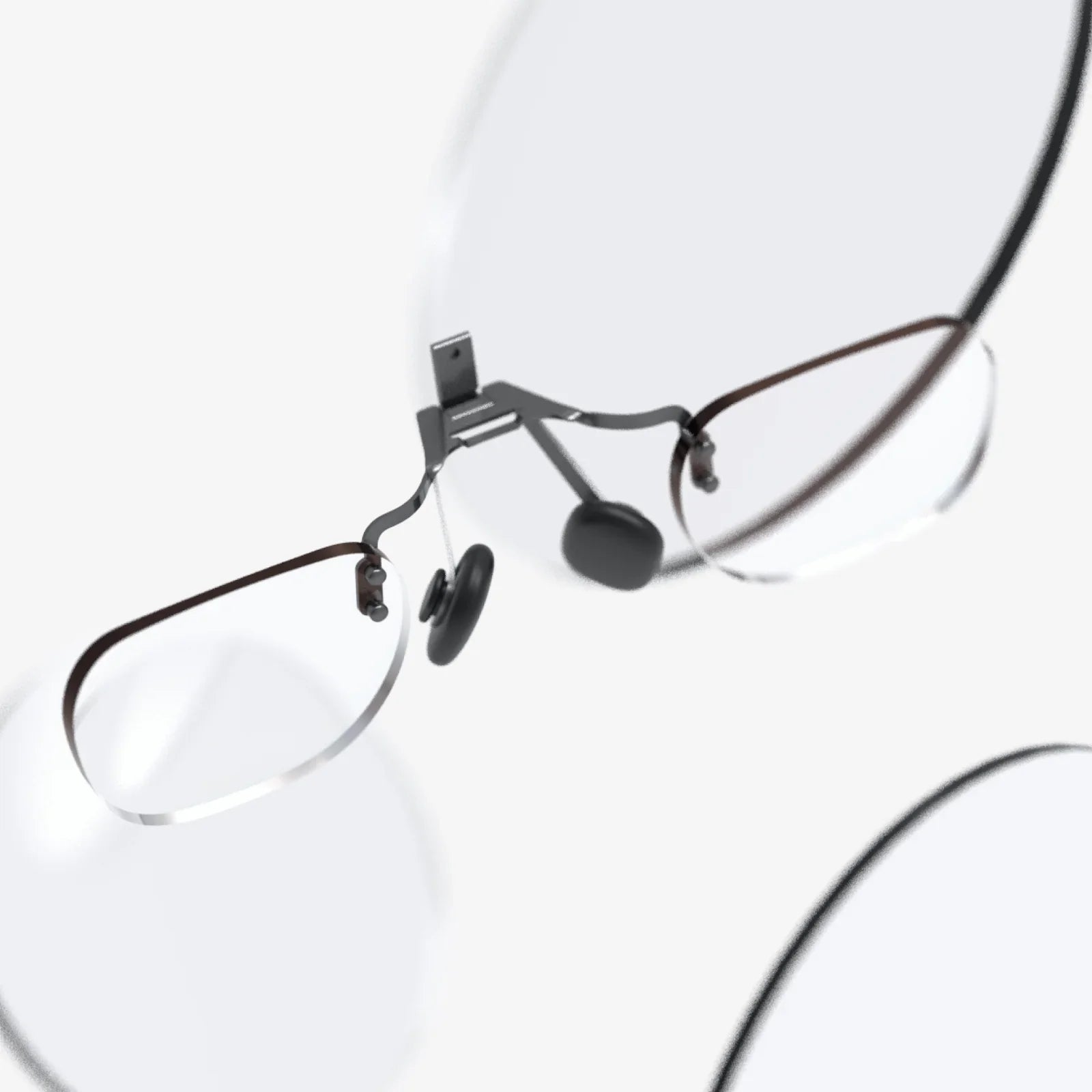
Imagine a world where information floats effortlessly before your eyes, where digital overlays enhance your physical reality, and your vision is protected from the relentless glow of screens. This isn't a scene from a science fiction film; it's the burgeoning reality made possible by a revolutionary category of wearable technology known as Internet Glasses. This ultimate guide will demystify this transformative technology, exploring its core functions, the profound benefits it offers, and the exciting future it promises to shape.
Beyond Frames and Lenses: Deconstructing the Technology
At first glance, a pair of Internet Glasses might resemble traditional eyewear. However, beneath the familiar form factor lies a sophisticated array of technologies working in concert. Understanding these components is key to appreciating their capabilities.
The Digital Retina: Micro-Displays and Optical Systems
The most critical component is the mechanism that projects digital information into the user's field of view. This is typically achieved through one of two methods:
- Micro-OLED Displays: Tiny, high-resolution screens are mounted inside the lenses or on the arms of the glasses. These displays generate the digital image, which is then relayed to the user's eye through a complex system of waveguides, mirrors, or holographic optical elements (HOEs). This system bends the light, making the small image appear as a large, floating screen in the user's periphery or central vision.
- Laser Beam Scanning (LBS): A more advanced method uses miniature lasers to project images directly onto the user's retina. This technology can create incredibly sharp and bright images with low power consumption, though it involves more complex engineering.
The result is a seamless blend of the real world and the digital one, often referred to as "augmented reality" (AR) or "mixed reality" (MR).
The Brain: Onboard Processing and Connectivity
For these glasses to be truly "smart," they require computational power. This can be handled in two ways:
- Integrated Compute: Higher-end models feature a dedicated system-on-a-chip (SoC), similar to a smartphone processor, embedded within the frame. This allows the glasses to run applications, process data from sensors, and handle complex AR rendering independently.
- Tethered Processing: Many designs act as a display terminal, wirelessly connecting via Bluetooth or Wi-Fi to a nearby smartphone or computer. The powerful device handles the heavy computational lifting, streaming the visual output to the glasses. This allows for a lighter, more energy-efficient design.
The Senses: Cameras, Sensors, and Microphones
Internet Glasses perceive the world to interact with it. They are often equipped with:
- High-Resolution Cameras: For capturing photos and video from a first-person perspective, enabling live translation by reading text, or for mapping the environment for AR placement.
- Spatial Sensors: Accelerometers, gyroscopes, and magnetometers work together to precisely track the user's head movements and orientation, ensuring digital objects remain locked in place in the real world.
- Depth Sensors: Time-of-flight (ToF) sensors or stereoscopic cameras measure distances, creating a 3D map of the surroundings. This is crucial for understanding where to place a virtual object so it appears behind a real-world table or in front of a wall.
- Audio Array: Built-in microphones allow for voice commands and phone calls, while miniature speakers can deliver spatial audio that feels like it's coming from the environment itself.
A Spectrum of Sight: Categories and Core Functions
The term "Internet Glasses" is an umbrella that covers several distinct categories, each with a primary focus.
1. Augmented Reality (AR) Glasses: The Future on Display
These are the most advanced and talked-about type. AR glasses are designed to superimpose digital information—text, images, 3D models, animations—onto the user's view of the physical world. Their applications are vast and transformative:
- Navigation: Directional arrows and street names can be overlaid onto the road ahead, making it impossible to get lost without looking down at a phone.
- Information Access: Look at a landmark to see its history, glance at a restaurant to see its reviews and menu, or view real-time data and metrics during a workout.
- Remote Collaboration: A expert in another country can see what a field technician sees and draw digital arrows and annotations directly into their vision to guide them through a complex repair.
- Gaming and Entertainment: Virtual characters and objects can interact with your living room, creating immersive gaming experiences or allowing you to place a virtual television on your wall.
2. Blue Light Filtering & Computer Glasses: The Wellness Protectors
This category represents a more pragmatic and immediately accessible form of Internet Glasses. Their primary function is not to add digital content, but to protect the user from the negative effects of prolonged screen exposure.
- Blue Light Filtration: Digital screens emit high-energy visible (HEV) blue light, which studies suggest can contribute to digital eye strain, disrupt sleep patterns by suppressing melatonin production, and cause potential long-term retinal damage. These glasses feature special lenses with coatings that selectively filter out a portion of this blue light.
- Vision Comfort: Many also incorporate a slight magnification power (a "computer prescription") optimized for the specific distance between your eyes and your monitor, reducing the focusing strain on your eyes throughout the workday.
While not "smart" in the computational sense, they are a direct response to the "Internet" age and are a crucial tool for digital wellness.
3. Smart Audio Glasses: Discreet Connectivity
This variant prioritizes audio integration over visual displays. They look like standard fashion glasses but have miniature speakers built into the arms, directing sound directly into the user's ears while leaving them open to hear ambient noise.
- Hands-Free Communication: They act as a sophisticated headset for taking calls, listening to music, podcasts, and audiobooks, or interacting with a voice assistant, all without inserting anything into the ear canal.
- Social Acceptability: Their primary advantage is their discreet, non-intrusive design, making them more socially acceptable to wear in meetings or public spaces compared to bulkier AR headsets or obvious headphones.
The Unseen Impact: Benefits Beyond Novelty
The value of Internet Glasses extends far beyond technological wow-factor. They offer tangible benefits that can enhance productivity, health, and accessibility.
- Increased Productivity and Contextual Computing: By providing information contextually and hands-free, they eliminate the constant need to shift attention to a phone or computer screen. A mechanic can see a repair manual while keeping their hands on an engine. A surgeon can view patient vitals without looking away from the operating table. This creates a state of "flow" and dramatically improves efficiency.
- Enhanced Digital Wellness: As discussed, blue light filtering glasses directly combat digital eye strain and sleep disruption. Furthermore, by moving notifications and information into a more subtle, glanceable format, they could potentially help users break the cycle of addictive phone-checking, promoting a healthier relationship with technology.
- Revolutionizing Accessibility: For individuals with visual or hearing impairments, Internet Glasses can be life-changing. Real-time captioning of conversations can be displayed for those who are hard of hearing. AI-powered object recognition and narration can describe surroundings for those with limited vision, identifying obstacles, reading signs, and recognizing faces.
- Seamless Connectivity: They represent a step towards ambient computing, where technology fades into the background of our lives. Information is available when you need it, without the friction of unlocking a device and opening an app.
Navigating the Challenges: Barriers to Widespread Adoption
Despite their potential, Internet Glasses face significant hurdles before they become as ubiquitous as smartphones.
- Social Acceptance and the "Glasshole" Stigma: Early attempts at this technology were met with social resistance, primarily due to privacy concerns. The constant presence of cameras made people uncomfortable, leading to a negative cultural stigma. Overcoming this requires elegant, fashionable designs and clear social norms around their use.
- Privacy and Ethical Quandaries: This is the paramount challenge. The ability to record video and audio discreetly, coupled with facial recognition, presents profound privacy risks. Robust ethical frameworks, clear user indicators (like recording lights), and perhaps even geofencing technology to disable recording in sensitive areas will be essential.
- Technical Limitations: Battery life remains a constraint, as powerful processing and bright displays are energy-intensive. The field of view for AR projections is often still limited, creating a "keyhole" effect. Finally, creating a design that is both lightweight, comfortable for all-day wear, and powerful enough is an immense engineering challenge.
- Cost and Accessibility: Advanced AR glasses are currently prohibitively expensive for the average consumer, placing them in the domain of enterprise and developers initially.
The Horizon of Sight: What the Future Holds
The evolution of Internet Glasses is accelerating. In the near future, we can expect to see these devices become more powerful, more discreet, and more integrated into our daily lives. We are moving towards a form factor that is indistinguishable from regular glasses, with all the necessary technology miniaturized into the lenses and frame. Advancements in battery technology, such as solid-state batteries, and low-power processors will enable all-day use. The ultimate goal is a device that you forget you're wearing until you need it, providing a constant, subtle layer of useful intelligence over your world. They will evolve from a separate device into a primary interface for the metaverse and the next iteration of the internet—the spatial web—where digital and physical realities are inextricably linked.
The journey to a future where your field of view is your operating system has already begun. From protecting our eyes from the digital world to augmenting that very world with a layer of magic, Internet Glasses are poised to become the most personal and transformative piece of technology we have ever worn. The question is no longer if they will become mainstream, but how quickly we will adapt to and shape the new realities they make possible.
Share:
AR Headset HoloLens: Redefining Reality and the Future of Human-Computer Interaction
VR Headset for Teenager: The Ultimate Guide to Safety, Benefits, and Smart Choices