


- by wangfred
What Is Meant By Virtual Reality - A Journey Into Digital Realms
- by wangfred
Imagine stepping through your screen into a world limited only by imagination, a digital realm where you are not just an observer but an active participant. This is the tantalizing promise of virtual reality, a technology that has captured the global zeitgeist and is rapidly reshaping industries, from entertainment to education and healthcare. The concept, once confined to the pages of science fiction, is now a tangible, evolving force, beckoning us to redefine our very perception of reality itself. It’s a portal to experiences previously deemed impossible, and understanding its essence is the first step into a future already unfolding before our eyes.
At its most fundamental level, virtual reality (VR) is a simulated experience that can be similar to or completely different from the real world. It is a computer-generated environment that aims to completely immerse the user, creating a persuasive illusion that they have stepped inside a digital universe. This is achieved by employing a suite of technologies designed to trick the human senses—primarily sight and sound, but increasingly touch and even smell—into accepting the digital realm as authentic.
The key differentiator between VR and other forms of media is the concept of presence. Presence is the psychological phenomenon where the user's brain suspends disbelief and accepts the virtual environment as real. It is the feeling of "being there," a sensation that transcends simple observation and becomes an experience. This is accomplished through three core principles, often called the "I's" of VR: Immersion, Interaction, and Imagination.
While VR feels like a modern invention, its conceptual roots are surprisingly deep. The quest to simulate reality artistically can be traced back to 360-degree murals of the 19th century, designed to envelop the viewer. However, the technological lineage began in the mid-20th century.
In 1962, filmmaker Morton Heilig created the Sensorama, a mechanical arcade cabinet that offered multisensory experiences like riding a motorcycle through Brooklyn, complete with stereo sound, wind, and even smells. It was a primitive but visionary prototype for immersive cinema. Shortly after, in 1968, computer scientist Ivan Sutherland and his student Bob Sproull created the Sword of Damocles, widely considered the first head-mounted display (HMD) system. It was a terrifyingly rudimentary device that displayed simple wireframe graphics, but it established the foundational model for all VR headsets to come.
The term "virtual reality" itself was popularized in the late 1980s by Jaron Lanier, whose company VPL Research developed some of the first commercial goggles and datagloves. The 1990s saw a wave of consumer interest, fueled by hype and early, clunky arcade systems and home consoles, but the technology was ultimately too expensive and limited to sustain itself, leading to a period of dormancy.
The modern renaissance began in the 2010s, driven by two key factors: the proliferation of powerful, affordable smartphone technology (which provided high-resolution screens and motion sensors perfect for VR) and the landmark success of the Oculus Rift Kickstarter campaign in 2012. This proved there was massive consumer and developer demand for high-quality, immersive VR, catalyzing a new arms race in the technology sector and bringing us to the sophisticated, accessible systems we have today.
The magic of virtual reality is not magic at all, but a carefully orchestrated symphony of hardware and software engineering designed to hijack the human perceptual system.
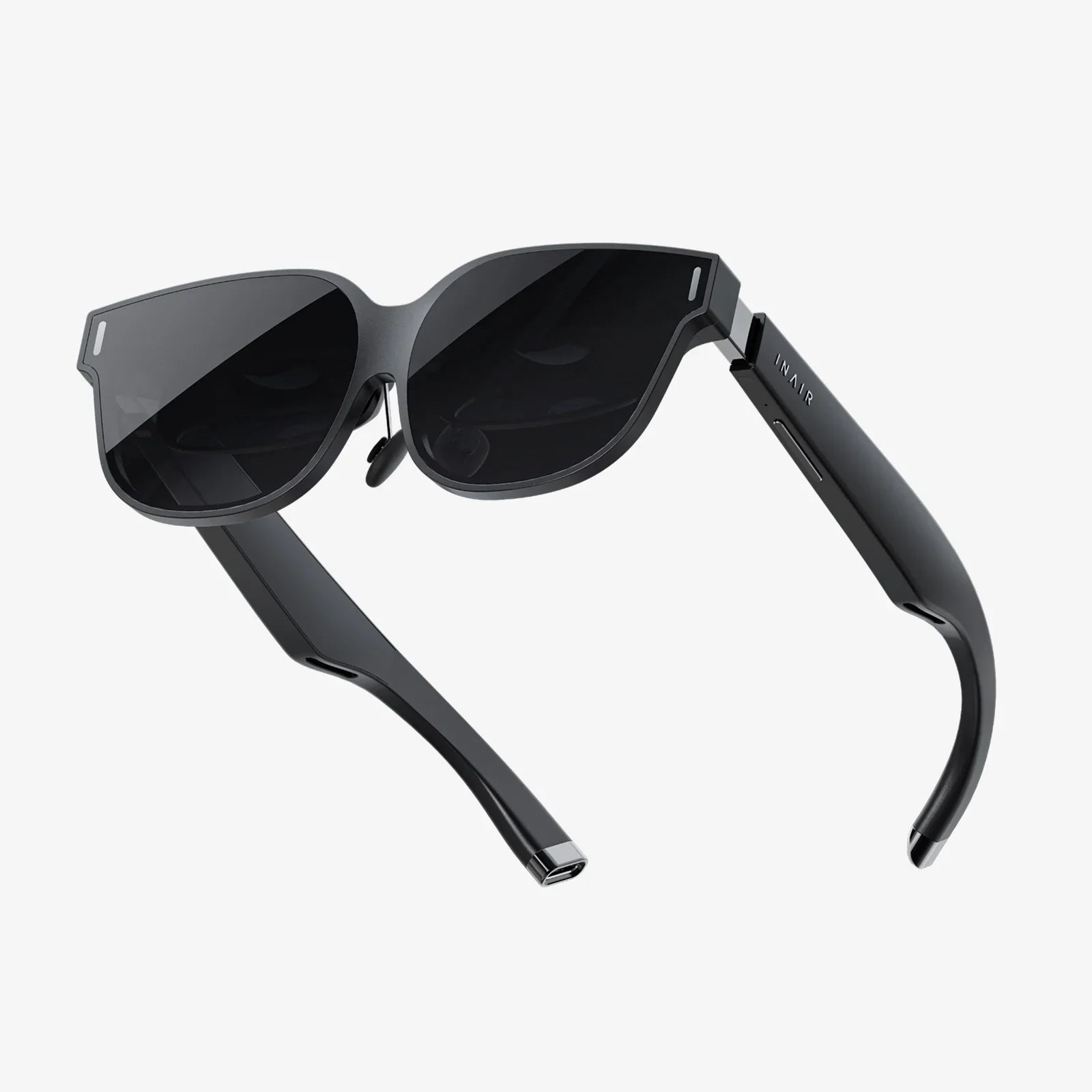
The most recognizable piece of VR hardware is the head-mounted display (HMD). This device is essentially a computer monitor worn on the head, but its functionality is far more complex. Inside, you typically find:
Hardware is useless without software to bring worlds to life. VR applications are built using powerful game engines like Unity and Unreal Engine, which are capable of rendering complex 3D environments at the exceptionally high frame rates (90fps or higher) required to prevent motion sickness and maintain presence.
Beyond rendering, VR software must handle complex physics simulations, advanced artificial intelligence for virtual characters, and most importantly, low-latency integration with the hardware sensors. The term latency—the delay between a user's movement and the corresponding update on the screen—is the enemy of VR. Even a delay of 20 milliseconds can break presence and induce discomfort. The entire software stack is optimized to minimize this latency at all costs.
While gaming and entertainment are the most visible drivers of consumer VR, the technology's true potential lies in its transformative applications across countless other fields.
VR offers an unparalleled tool for experiential learning. Instead of reading about ancient Rome, students can take a guided tour through a historically accurate reconstruction. Medical students can practice complex surgical procedures on virtual patients without any risk, allowing for unlimited repetition and mistake-making. Astronauts, pilots, and soldiers use highly detailed VR simulators to train for scenarios that would be too dangerous, expensive, or logistically impossible to recreate in the real world.
Therapeutic uses for VR are growing rapidly. It is being used for exposure therapy, helping patients with phobias (like fear of heights or flying) confront their triggers in a safe, controlled setting. It's also effective in pain management, distracting burn victims during painful wound care procedures with immersive, calming experiences. Furthermore, VR is a powerful tool for physical rehabilitation, turning repetitive exercises into engaging games that improve patient motivation and outcomes.
Architects and engineers are using VR for virtual walkthroughs of buildings and prototypes long before ground is broken. This allows for early detection of design flaws and gives clients a true sense of scale and space. Companies use VR for virtual meetings and collaboration, bringing together employees from across the globe into a shared digital workspace where they can interact with 3D models and data in ways a video call could never allow.
Social VR platforms are emerging as new venues for human interaction. Users embodied as avatars can meet, talk, play games, watch movies, and attend live events like concerts or conferences together, fostering a sense of shared presence that transcends traditional digital communication. For storytellers, VR represents a new narrative medium, often called "cinematic VR," where the viewer is placed inside the story, empowered to look around and explore the narrative environment, creating a deeply personal and emotional connection.
Despite its rapid advancement, VR technology still faces significant hurdles. High-end systems can be expensive, and issues like motion sickness (technically known as cybersickness) still affect a portion of users. The form factor of headsets needs to become smaller, lighter, and wireless to achieve mass adoption. Furthermore, creating high-quality VR content remains a complex and costly endeavor.
Beyond technical challenges, VR raises profound ethical and societal questions. As these digital worlds become more realistic and persistent, issues of data privacy, security, and psychological effects need careful consideration. What are the long-term psychological impacts of spending significant time in virtual environments? How do we prevent the creation of addictive or manipulative experiences? How is identity and behavior shaped by the freedom of an avatar? Establishing norms and guidelines for this new frontier is as important as the technological development itself.
The trajectory of VR points toward a future of even greater integration into our daily lives. We are moving towards hyper-realistic graphics powered by evermore powerful computing, eye-tracking technology that allows for more intuitive interaction and more efficient rendering, and haptic technology that will evolve from simple vibrations to full-body suits capable of simulating complex physical sensations.
The ultimate evolution of VR is its convergence with augmented reality (AR) and the concept of the metaverse—a persistent, shared, and interconnected universe of virtual spaces. In this vision, the line between the digital and physical will blur, and our virtual identities and assets will hold tangible significance. Virtual reality, as the most immersive gateway into this future, is not just about putting on a headset; it is about building the foundational layer for the next major computing platform and a new era of human experience.
The journey into virtual reality is a journey into the very nature of experience and perception. It challenges our definitions of reality and connection, offering a canvas for human creativity that is literally boundless. From its humble beginnings as a scientific curiosity to its current status as a disruptive technological force, VR has proven it is far more than a passing trend. It is a key that unlocks doors to impossible worlds, empowers us to learn and heal in profound new ways, and ultimately, offers a mirror reflecting our endless desire to explore, create, and connect—whether the universe is made of atoms or bits. The headset is merely the telescope; the vast digital cosmos awaits.