


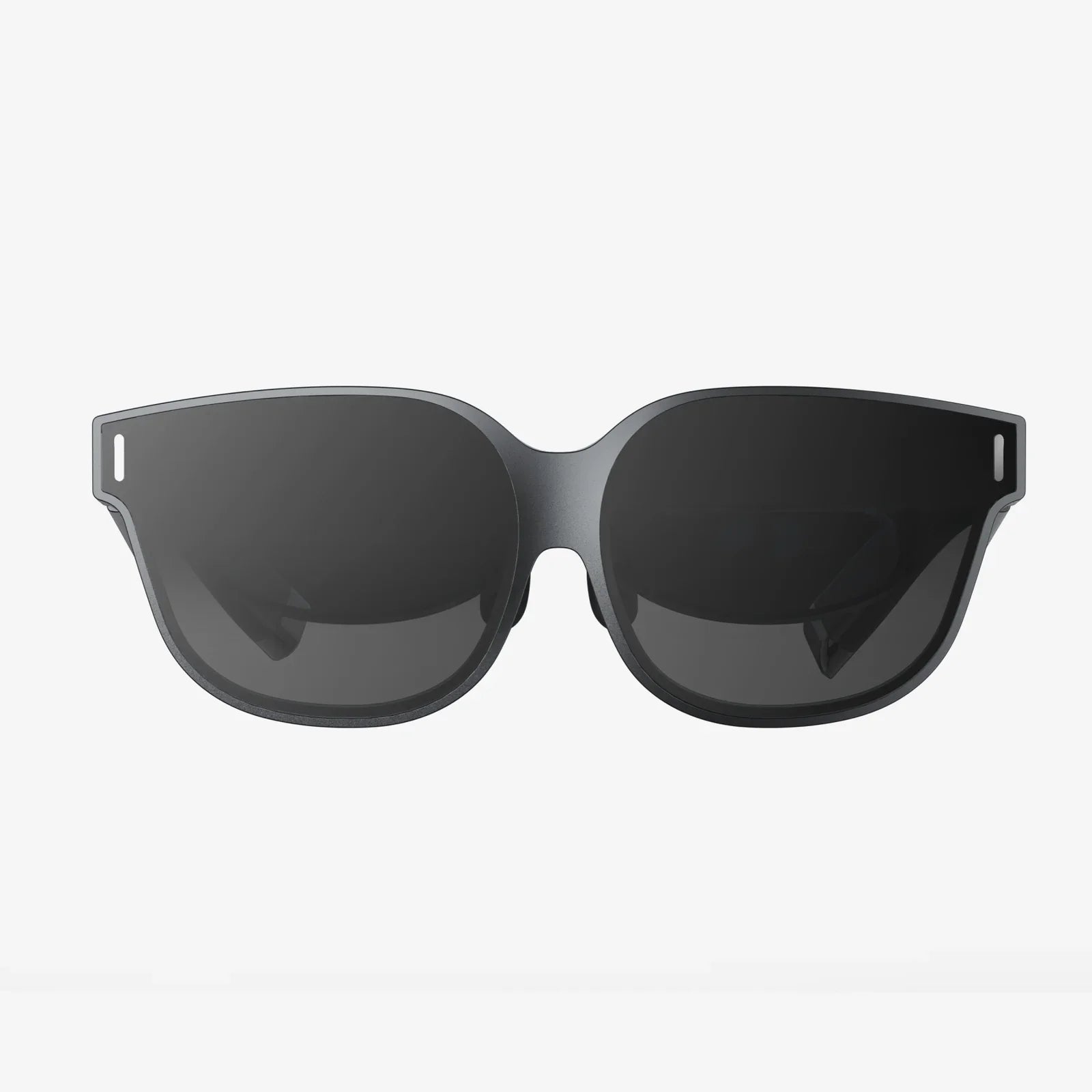
Imagine stepping into a game where you can physically dodge attacks, or visualizing a new sofa in your living room before you buy it, or collaborating with a colleague's hologram from across the globe. These aren't scenes from a distant sci-fi future; they are the realities being built today through immersive technologies. But with terms like Virtual Reality (VR) and Mixed Reality (MR) often used interchangeably, the digital frontier can feel confusing. Understanding the distinct capabilities of each is the first step to grasping how they will reshape our world, from how we work and learn to how we connect and play.
Defining the Realities: The Core Concepts
At its heart, the difference between MR and VR is defined by one crucial factor: the user's connection to their physical environment. Does the technology transport you elsewhere, or does it bring digital elements into your here and now?
Virtual Reality (VR): The Total Escape
Virtual Reality is the technology of complete immersion. Its primary goal is to shut out the physical world entirely and transport the user to a fully simulated, digital environment. This is achieved through a head-mounted display (HMD) that blocks your field of view, replacing it with a computer-generated landscape. Advanced systems incorporate headphones for 3D spatial audio and motion-tracking controllers that allow your real-world movements to be mirrored within the virtual space.
The key characteristics of VR are:
- Immersion: The user's visual and auditory senses are completely engaged by the digital world.
- Isolation: The physical environment is obscured, creating a sense of presence elsewhere.
- Interactivity: Users can navigate and manipulate the virtual environment through controllers, hand-tracking, or other input devices.
When you strap on a VR headset, your living room ceases to exist. You might find yourself standing on the surface of Mars, piloting a starship, or painting in a 3D canvas that stretches infinitely in all directions. The experience is all-encompassing and discrete from your actual location.
Mixed Reality (MR): The Blended Frontier
Mixed Reality sits on a more complex part of the spectrum. Rather than replacing reality, it seeks to augment it by seamlessly blending digital objects and information with the user's physical surroundings. This is the crucial differentiator. MR devices are not blinders; they are sophisticated windows. They use a combination of cameras, sensors, and advanced algorithms to understand the geometry of the room you're in—the walls, floors, tables, and chairs.
This environmental understanding allows MR to:
- Anchor digital objects: Place a virtual television on your real wall or a digital pet that hides under your physical sofa.
- Enable occlusion: A digital character can walk behind your real table, disappearing from view as it would in reality.
- Interact with the real world: Use your real hands to push a virtual button or see weather data overlaid onto your window.
MR doesn't create a new world; it enhances your existing one with a persistent digital layer that understands and respects physical boundaries.
The Technology Divide: How They Achieve Their Magic
The fundamental difference in purpose between MR and VR drives a significant divergence in their underlying technology. While both use headsets, what's inside them tells a different story.
The VR Toolkit: Immersion Through Isolation
VR technology is primarily focused on rendering high-fidelity, convincing worlds and tracking user movement within them. The components are optimized for this closed-loop system:
- Displays: High-resolution, fast-refresh-rate screens placed mere centimeters from the eyes to create a wide field of view.
- Tracking: Systems using external sensors (outside-in tracking) or built-in cameras (inside-out tracking) to precisely monitor the position of the headset and controllers in 3D space.
- Computing Power: Requires significant graphical processing power (GPU) to render two distinct perspectives (one for each eye) at a high enough frame rate to prevent motion sickness and maintain immersion.
The goal is fidelity and responsiveness within the virtual bubble, with little need to process the external environment beyond defining a safe play area.
The MR Toolkit: Perception Through Sensors
MR headsets are, in many ways, more complex computational devices. They must be world-literate. Their components are designed for outward perception as much as inward display:
- Sensors: A suite of cameras including standard RGB cameras, depth sensors (like time-of-flight sensors), and tracking cameras. These constantly scan the environment to build a real-time 3D map.
- Transparent Lenses: Often called "optical see-through" displays, these allow users to see their real environment directly through the lenses, upon which digital images are projected. Some systems use cameras to pass through a video feed of the real world (video see-through).
- Processing: Requires immense processing for simultaneous localization and mapping (SLAM). The device must understand where it is in the room (localization) while continuously updating its internal 3D map of the room (mapping), all while rendering complex holograms that interact with that map.
This sensor-heavy approach makes MR devices powerful scanners of reality, turning the physical world into a canvas for digital innovation.
The Spectrum of Experience: It's Not Always Black and White
It's helpful to think of these technologies not as separate boxes but as points on a continuum known as the Reality-Virtuality Continuum, a concept pioneered by researchers Paul Milgram and Fumio Kishino in 1994. This spectrum spans from the completely real environment to the completely virtual one.
On one end, you have the un-augmented Real Environment—the physical world as you naturally perceive it. On the opposite end, you have the fully synthetic Virtual Reality. The space between these two poles is where MR resides, encompassing both Augmented Reality (AR) and true Mixed Reality.
Augmented Reality (AR) is often considered a subset of MR. It overlays digital information onto the real world but typically lacks advanced environmental understanding. A simple AR experience on a smartphone, like placing a cartoon character on your table, doesn't understand that the table has edges or that there's a cup on it. The digital object floats on top of the camera feed without interacting with the geometry of the space.
True Mixed Reality is the pinnacle of this blend. It represents experiences where digital and physical objects coexist and interact in real-time with a deep understanding of the environment. The hologram knows to stop at the wall, and the virtual ball can bounce off your real floor. This is the key distinction that separates basic AR overlays from context-aware, persistent MR experiences.
Applications: Transforming Industries and Everyday Life
The unique strengths of VR and MR make them suited for different applications, though there is some overlap.
Virtual Reality's Domain: Simulation and Deep Focus
VR excels in situations that require complete focus or are impossible, dangerous, or expensive to replicate in the real world.
- Gaming and Entertainment: This is VR's most famous application. It offers unparalleled immersion, placing you directly inside the narrative.
- Training and Simulation: From training surgeons for complex procedures to preparing soldiers for combat missions or teaching astronauts to spacewalk, VR provides a risk-free, repeatable, and cost-effective training ground.
- Architectural Visualization and Design: Architects and clients can "walk through" a building before a single brick is laid, allowing for design changes in a fully scalable model.
- Therapy and Rehabilitation: VR is used for exposure therapy to treat phobias, for physical rehab by turning exercises into engaging games, and for managing pain through distraction.
Mixed Reality's Domain: Contextual Enhancement and Collaboration
MR shines in applications that benefit from enhancing the user's immediate physical context with digital information.
- Remote Assistance and Collaboration: An expert can see what a field technician sees and annotate the real world with arrows, instructions, or diagrams, guiding them through a complex repair in real-time.
- Design and Manufacturing: Engineers can examine a full-scale 3D prototype of a new engine part overlaid onto a physical chassis, checking for fit and function without manufacturing a physical model.
- Education: Students can dissect a holographic frog on their desk or watch historical events unfold as holograms in their classroom, blending curriculum with tangible examples.
- Retail and Interior Design: The classic example: visualizing how a new appliance or piece of furniture would look and fit in your actual home before making a purchase.
The Future is Blended: Where Are These Technologies Headed?
The trajectories of VR and MR are both pointing toward a more seamless, powerful, and integrated future. We are moving towards devices that may not be strictly one or the other but capable of switching across the spectrum based on the task at hand. Imagine a headset that can opaque its lenses for deep VR work and then become transparent for an MR meeting, all while understanding your environment.
Key advancements to watch for include:
- Improved Form Factors: Lighter, smaller, more comfortable, and ultimately glasses-like devices will be crucial for all-day wear and mass adoption.
- Advanced Haptic Feedback: Technology that allows users to not just see but also feel digital objects, bridging the sensory gap between virtual and physical.
- Neural Interfaces: Moving beyond controllers to using brain-computer interfaces for more intuitive control and feedback, potentially blending imagined actions with digital outcomes.
- The Spatial Web: A future iteration of the internet where digital information is mapped onto the physical world, accessible and interactive through MR devices. Your home could have its own digital layer of smart controls, art, and information persistent only to you.
The line between the digital and the physical is not just blurring; it's being deliberately redrawn. This isn't about choosing one reality over another, but about having the tools to create the right reality for the moment. The ultimate potential lies not in VR or MR alone, but in a flexible spectrum of compute that empowers us to enhance our human experience in ways we are only beginning to imagine. The next era of computing won't be confined to a screen in your hand or on your desk; it will be woven into the very fabric of the space around you, waiting to be unlocked.
Share:
Screen That Can Only Be Seen With Glasses: The Future of Privacy and Immersive Tech
Benefits of VR Headset: Unlocking Immersive Potential in Modern Life