


- by wangfred
What Is Performance AR: Blending Digital Realities with Human Potential
- by wangfred
Imagine a world where the line between human intuition and digital intelligence blurs into a seamless partnership, where your reality is not replaced but enhanced, supercharged with a layer of dynamic, context-aware information that makes you smarter, faster, and more capable. This isn't a scene from a science fiction novel; it's the emerging reality forged by Performance Augmented Reality, a technological revolution poised to redefine how we work, learn, and interact with the physical world around us.
To understand Performance AR, we must first move beyond the popular conception of augmented reality. For many, AR is synonymous with social media filters that place cartoon ears on your head or mobile games that have you chasing digital creatures in the park. While these are valid applications of AR technology, they represent its most nascent and entertainment-focused form. Performance AR is something far more profound and utilitarian.
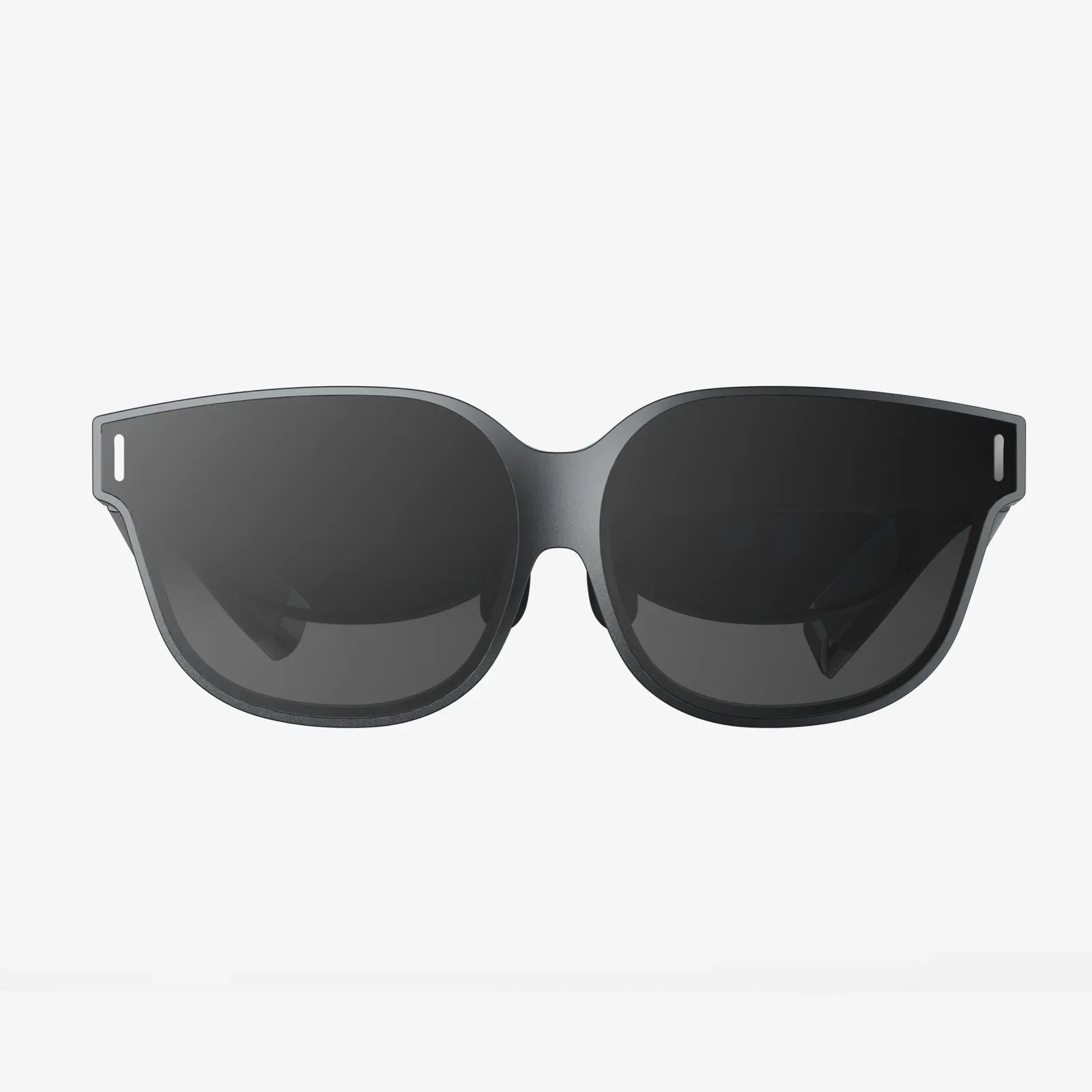
At its core, Performance Augmented Reality is the specialized application of AR technology to enhance human performance in completing specific, often complex, tasks. It is a tool for doing, not just seeing. It leverages head-worn displays (HMDs), smart glasses, or even handheld tablets to overlay precisely anchored digital information—such as 3D models, text, arrows, animations, and vital data streams—directly onto the user’s field of view of the real-world environment. The key differentiator is intent: the primary goal is to improve efficiency, accuracy, safety, and learning outcomes in professional and high-stakes scenarios.
For Performance AR to work effectively, it relies on a sophisticated technological stack that creates a stable and believable fusion of the digital and the physical. This framework consists of several critical components:
The final step is presenting the digital overlay to the user. Performance AR devices use optical see-through or video see-through displays. Optical see-through, common in many smart glasses, uses waveguides or semi-transparent mirrors to project imagery directly onto the user's retina, allowing them to see the real world with their own eyes, enhanced with digital graphics. Video see-through uses cameras to capture the real world and then blends digital elements into that video feed before displaying it on a screen inside the headset. Each method has advantages in terms of visual realism, immersion, and safety.
The true power of Performance AR is revealed in its practical applications, where it is already delivering staggering returns on investment and fundamentally altering workflows.
This is perhaps the most mature domain for Performance AR. Technicians equipped with AR glasses can see digital work instructions superimposed directly onto the complex machinery they are assembling or repairing. Animated arrows can point to specific components, torque values can be displayed next to bolts, and safety warnings can highlight potential hazards. This hands-free guidance drastically reduces errors, cuts training time for new hires, and improves first-time fix rates. Remote experts can see what the on-site technician sees and draw annotations into their field of view, enabling knowledge transfer across thousands of miles without the cost and delay of travel.
In healthcare, Performance AR is a life-saving tool. Surgeons can visualize critical patient data, such as heart rate or blood pressure, without looking away from the operating field. More advanced systems can project 3D reconstructions of a patient's anatomy from CT or MRI scans directly onto their body, acting as an X-ray vision tool for precise incisions and navigation. For training, medical students can practice procedures on virtual patients overlayed onto mannequins, receiving real-time feedback and gaining invaluable experience in a risk-free environment.
Architects and interior designers are using Performance AR to step inside their creations before a single brick is laid. They can walk through a full-scale, holographic model of a building, assessing spatial relationships, lighting, and flow in a way that a 2D screen or physical model could never allow. Clients can see and interact with proposed designs, making informed decisions and requesting changes early in the process, when alterations are least costly.
In massive distribution centers, AR can transform order picking and inventory management. Warehouse workers wearing glasses receive orders visually, with the most efficient route mapped out in their vision. Digital indicators lead them directly to the correct bin and even show the exact number of items to pick, minimizing walking time and virtually eliminating mis-picks. This leads to a dramatic increase in fulfillment speed and accuracy.
Performance AR's value isn't just logistical; it's deeply cognitive. It effectively creates a cognitive offload, freeing the user's brain from memorizing complex sequences or constantly cross-referencing paper manuals. This reduces cognitive load, minimizes mental fatigue, and allows the user to focus their attention on higher-order problem-solving and execution. It also facilitates embodied learning, where knowledge is acquired through physical action and visual-spatial context, leading to better retention and understanding compared to traditional learning methods.
Despite its promise, the path forward for Performance AR is not without obstacles. Hardware limitations, such as battery life, field of view, display brightness in outdoor environments, and device comfort for all-day wear, remain significant hurdles. The "social acceptance" of wearing conspicuous technology in public settings is another barrier. Furthermore, serious concerns regarding data security, privacy (especially with always-on cameras), and the potential for digital distraction in safety-critical scenarios must be addressed through robust design and clear protocols.
Looking ahead, the convergence of Performance AR with other transformative technologies will unlock new possibilities. The integration of Artificial Intelligence will make AR systems predictive and prescriptive, not just descriptive. Imagine an AR system for a mechanic that not only shows the repair steps but also uses machine learning to diagnose the fault based on visual inspection. The advent of 5G and edge computing will enable the rendering of incredibly complex, photorealistic holograms in real-time by offloading heavy computation. And the development of more advanced haptic feedback systems will eventually allow users to not only see digital information but also feel it, completing the loop of digital-physical interaction.
The ultimate evolution points towards the concept of the Ambient Intelligence—a world where AR fades into the background, becoming an invisible, ubiquitous layer of contextual computing that empowers us without demanding our constant attention. It will be less about the device on your face and more about the enhanced capability it silently enables.
We stand at the precipice of a new era of human-computer interaction, one where technology ceases to be a separate tool we pick up and put down, and instead becomes an integrated extension of our own capabilities. Performance AR is the bridge to that future, offering a glimpse of a world where our physical reality is infused with a dynamic digital consciousness, not to escape our world, but to truly see it—and ourselves—in an entirely new, more powerful light.
Share:
Professional Digital Video Production: The Ultimate Guide to Mastering the Craft
Computer Solutions: The Strategic Backbone of Modern Business and Innovation