


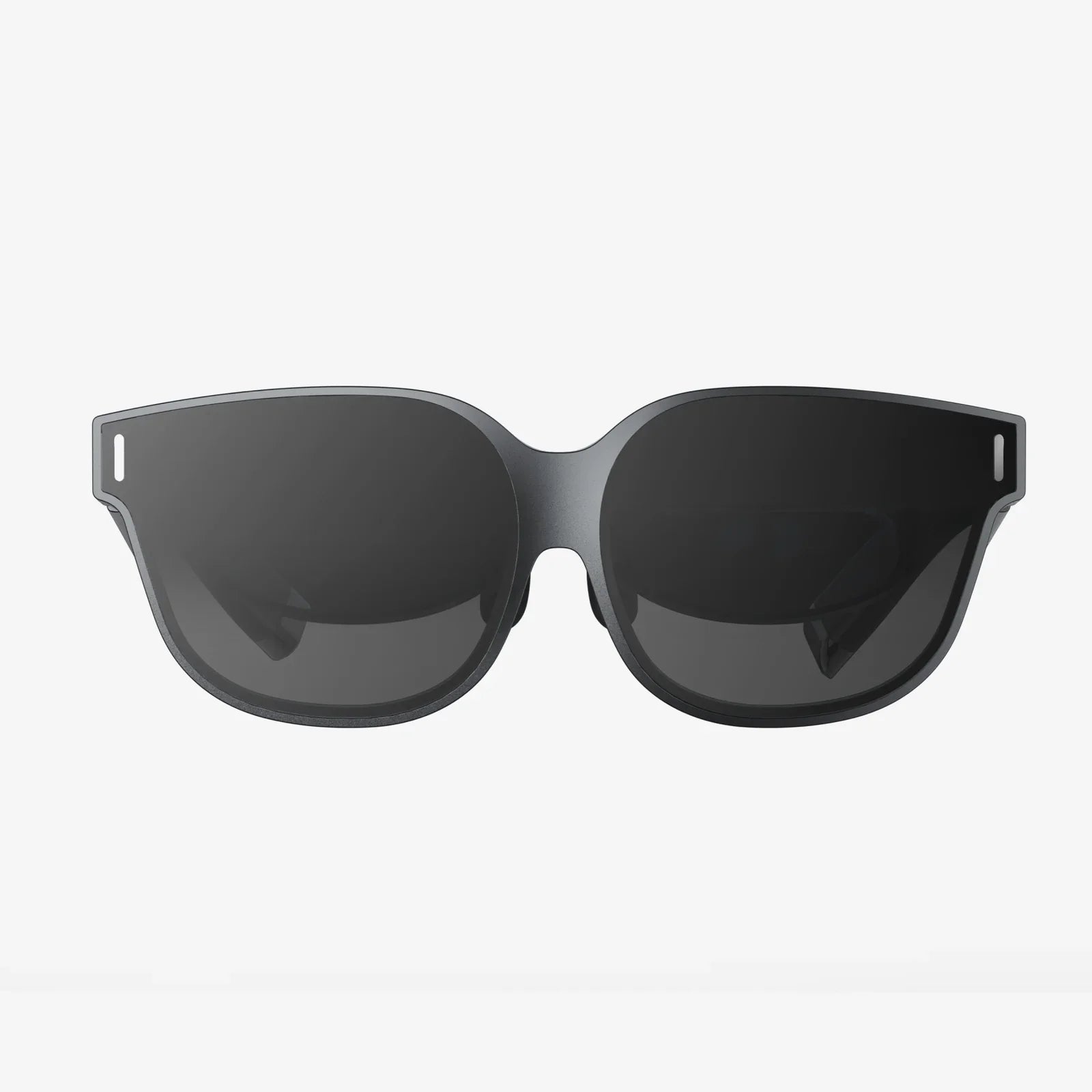
You’ve strapped on the headset, heard the whir of the fans, and are transported to another world—only to be greeted by a distracting screen door effect and blurry text that shatters the illusion. This is the frustration that has plagued early VR adopters for years, and it’s the very problem that the relentless pursuit of higher resolution seeks to solve. The quest for the perfect, lifelike image is the holy grail of virtual reality, but the answer to what constitutes the ‘best’ resolution is far more complex and fascinating than a simple numbers game. It’s a deep dive into the intricate dance between pixels, optics, and human perception.
Beyond the Megapixels: It's Not Just About the Numbers
When consumers ask "what is the best resolution VR headset," they are typically looking for a single number to crown the winner. However, judging a VR display by its stated resolution alone is like judging a car solely by its top speed—it’s a important metric, but it ignores handling, acceleration, safety, and comfort. The raw resolution figure, often quoted as something like "2880 x 2720 per eye," tells only a small part of the story. To truly understand visual clarity, we must introduce the most critical metric: Pixels Per Degree (PPD).
PPD measures how many pixels are packed into one degree of your field of view. The human eye, with its incredible density of photoreceptors, is estimated to have a resolution of approximately 60 PPD or even higher in the central fovea. This means that for a virtual image to appear truly "retina" or indistinguishable from reality, a VR headset must approach this number. A headset with a massive 4K per-eye display might sound impressive, but if that display is stretched across an extremely wide field of view (FOV), the PPD—and thus the perceived sharpness—could be lower than a headset with a "lesser" resolution but a narrower FOV.
The Supporting Cast: Key Factors Influencing Visual Fidelity
Resolution and PPD are the stars of the show, but they cannot perform without a strong supporting cast. Ignoring these factors will leave you with an incomplete picture of a headset's visual performance.
- Field of View (FOV): This is the diagonal measurement of what you can see inside the headset, typically between 90 and 120 degrees for most consumer devices. A wider FOV increases immersion dramatically, making you feel truly surrounded by the virtual world. However, as mentioned, it dilutes pixel density if the resolution isn't high enough to compensate. The eternal trade-off is between a wide, immersive FOV and a sharp, high-PPD image. The best headsets find an optimal balance.
- Display Technology: The type of panel used is crucial. Fast Switch LCDs are common, offering high resolutions and good reliability, but they can struggle with contrast. OLED panels deliver perfect blacks and incredible contrast, making darks truly dark and colors pop, which is vital for space sims or horror games. However, they have historically faced challenges with pixel persistence (leading to smearing) and achieving the very highest pixel densities. Newer technologies like Micro-OLED are now emerging, offering the best of both worlds: incredibly high pixel density, perfect blacks, and fast response times, albeit at a higher cost.
- Lens Quality and Optical Stack: The lenses are the window to the digital world. Poor-quality Fresnel lenses, used in many earlier headsets, can cause god rays, glare, and chromatic aberration, which degrade the image regardless of the underlying resolution. The industry is now rapidly moving towards pancake lenses, which are more compact and, crucially, provide a much larger "sweet spot"—the area where the image is perfectly in focus. This means edge-to-edge clarity is significantly improved, making the high-resolution panel actually usable across the entire view.
- Render Resolution & Performance: This is the monumental hardware challenge. A headset's native panel resolution is one thing, but your computer or mobile processor must render the 3D environment at a high enough resolution to feed it. Pushing more pixels requires exponentially more graphical processing power. Running a high-resolution headset without a sufficiently powerful graphics card often means you have to lower the render resolution, effectively negating the benefit of the high-resolution display and introducing upscaling artifacts. A smooth, consistent framerate (90Hz and above) is also non-negotiable for comfort, further increasing the performance burden.
- Software Enhancements: Upscaling and Foveated Rendering
Thankfully, raw GPU power isn't the only solution. Two software technologies are pivotal in making high-resolution VR feasible.
Advanced Upscaling (e.g., DLSS, FSR): These technologies are nothing short of a revolution for VR. They allow the software to render the game at a lower, more manageable internal resolution and then use AI or complex algorithms to intelligently reconstruct the image to the headset's native resolution. The result is a massive performance boost with a minimal, often imperceptible, loss in image quality. For high-resolution headsets, this technology is not just a bonus; it is essential.
Eye-Tracked Foveated Rendering (ETFR): This is the killer app for high-resolution VR. ETFR uses built-in cameras to track where your eyes are looking. It then renders only the very center of your vision (the fovea) at full resolution. The peripheral areas, which your eyes cannot perceive in detail anyway, are rendered at a progressively lower resolution. This can reduce the GPU workload by over 50% or more without the user ever noticing. For pushing the boundaries of resolution, ETFR is the most important innovation on the horizon.
The Practical Realities: Choosing Your Clear Winner
With the theory established, how does this translate to the real world? The "best" resolution headset for you depends heavily on your priorities, budget, and existing hardware.
The High-End PC VR User
For the enthusiast with a top-tier graphics card, the current pinnacle of consumer VR resolution involves headsets boasting near-4K per-eye displays, often combined with pancake lenses and high PPD figures. These devices offer stunning clarity, razor-sharp text, and the virtual world finally starts to lose its digital sheen, feeling more tangible. The key differentiator in this tier is often the inclusion of eye-tracking for foveated rendering, making these high-resolution beasts actually manageable for even the most powerful gaming PCs.
The Standalone VR User
The standalone market has seen incredible leaps in resolution. Modern standalone devices now feature resolutions that rival or even surpass older PC-powered headsets. However, the mobile processors inside them face a tremendous challenge. They leverage every trick in the book—fixed foveated rendering, aggressive optimization, and increasingly, advanced upscaling techniques—to deliver a clean and clear image. The best standalone headsets offer a fantastic balance of convenience and visual fidelity, providing a sharp experience for immersive media consumption and games designed for their hardware.
The Sim Enthusiast
For flight and racing simulators, where reading tiny dials, spotting distant enemies, and achieving maximum immersion is paramount, resolution and PPD are often the single most important factors. These users are often willing to sacrifice a wide FOV for a higher PPD and will invest in the GPU horsepower needed to drive it. For them, the "best" headset is unequivocally the one with the highest usable PPD, excellent contrast for night flying, and the comfort for long sessions.
The Future is Clear: What's Next for VR Resolution?
The trajectory is clear: more pixels, better optics, and smarter rendering. We are rapidly approaching the point where the screen door effect will be a forgotten relic of the past. The next frontier is not just adding more pixels, but making them more efficient and effective. Micro-OLED displays will become more prevalent, offering unprecedented pixel density and contrast. Varifocal lenses, which can dynamically adjust focus to match the depth of the virtual object you're looking at, will solve the vergence-accommodation conflict, making long-term VR use more comfortable and the illusion more perfect. These technologies, combined with ever-improving resolution, will finally close the gap between reality and simulation.
Imagine putting on a headset and being unable to distinguish the digital display from the real world you just left behind. The text is as crisp as a printed book, the colors are vibrant and true, and you can focus on objects near and far with natural ease. This is the destination of the industry's journey—not just a high-resolution display, but a perfectly perceptual one. The journey to find the best resolution VR headset is ultimately a journey towards visual perfection, where the technology disappears entirely, leaving only the experience.
Share:
First Popular VR Headset: The Prototype That Captured a Generation's Imagination
Best VR Headset Under $100 2025: The Ultimate Buyer's Guide