


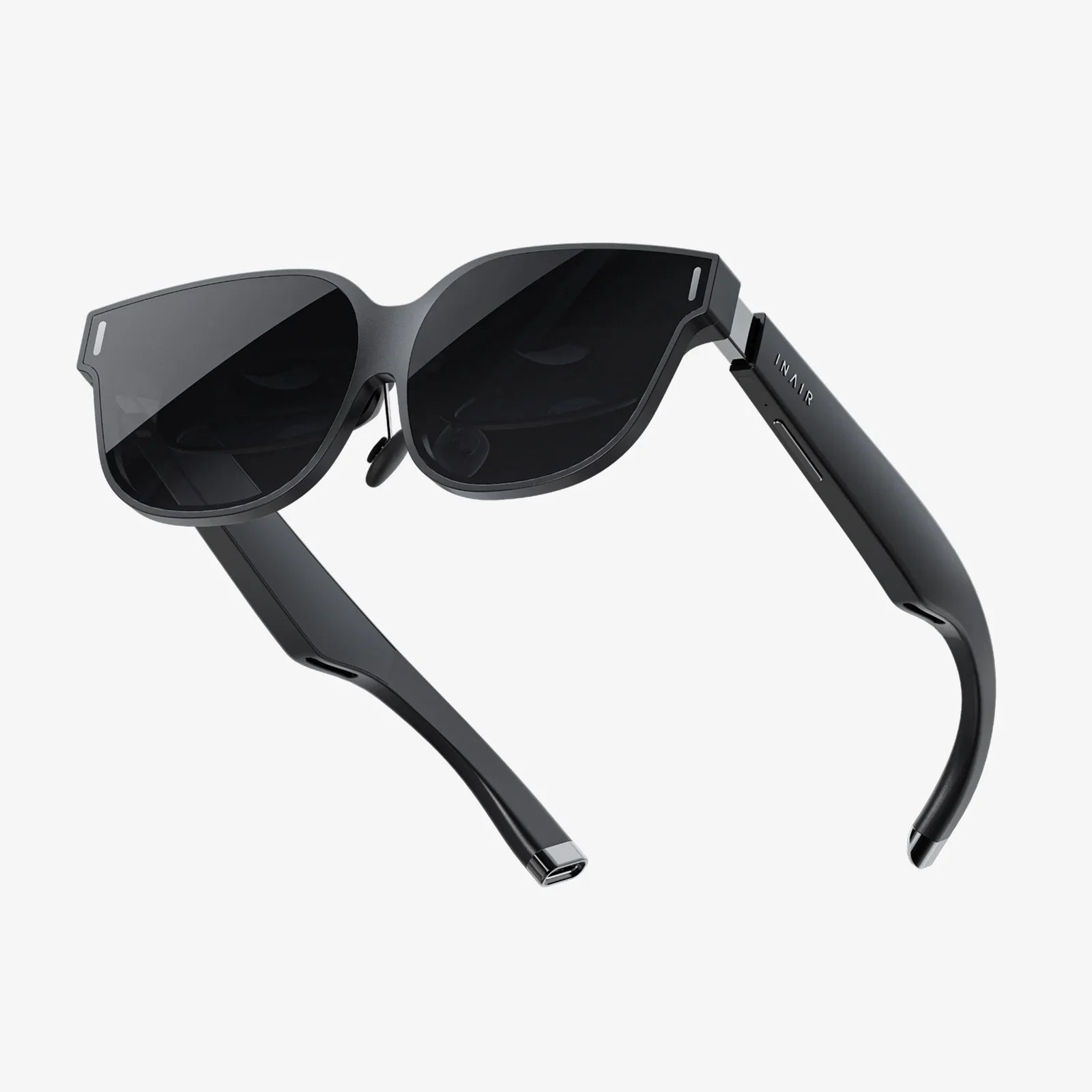
Close your eyes and imagine a world limited only by your imagination—a realm where you can climb Everest, explore the depths of the ocean, or walk on Mars, all from your living room. The quest to find the best virtual reality experience is more than a search for hardware; it's a journey to discover the most profound, moving, and utterly convincing digital realities available today. It’s a promise of escape, education, and exhilaration that beckons millions. But what truly separates a good VR session from a life-altering one? The answer is as multidimensional as the technology itself.
The Pillars of a Truly Great VR Experience
To define the "best," we must first deconstruct the very essence of what makes VR powerful. It's not a single feature but a symphony of elements working in perfect harmony. When these pillars align, the headset on your face and the controllers in your hands vanish, leaving only the experience itself.
Visual Fidelity and Immersion
The gateway to presence—the feeling of actually being in a virtual space—is through the eyes. Visual quality is paramount. This encompasses several critical factors:
- Resolution and Pixel Density: A high-resolution display with a high pixel-per-degree (PPD) count is crucial. The goal is to eliminate the "screen door effect," where users can discern the gaps between pixels, which instantly shatters immersion. The best experiences offer crisp, clear imagery where text is legible and distant objects are sharp.
- Field of View (FoV): Our natural field of view is approximately 210 degrees. While most consumer devices haven't reached that benchmark, a wider FoV creates a more encompassing experience, reducing the sensation of looking through binoculars. The best experiences push the boundaries of FoV to make the virtual world feel vast and unbounded.
- Refresh Rate: A high refresh rate, typically 90Hz or above, is non-negotiable for comfort and smoothness. It ensures that motion within the virtual world is fluid and lifelike. Low refresh rates can lead to latency, which is a primary contributor to motion sickness. The most seamless experiences run at 120Hz or even higher, making virtual movement feel as natural as real-world movement.
Auditory Excellence: The Unseen World-Builder
If visuals build the world, 3D spatial audio fills it with life. Sound is arguably half of the immersion equation. High-quality headphones or integrated audio solutions that deliver precise spatial audio are essential. This technology allows you to hear exactly where a sound is coming from—behind you, above you, or far away to your left. In a horror game, hearing the faint, unsettling whisper directly in your ear can be paralyzingly effective. In a social application, being able to distinguish who in a virtual room is speaking based on the direction of their voice creates an uncanny sense of togetherness. The best VR experiences treat audio not as an accompaniment but as a fundamental layer of the reality they are constructing.
Intuitive Interaction and Haptic Feedback
A world you cannot touch is a world you cannot believe in. The quality of interaction is what transforms a passive viewing experience into an active participation.
- Controller Design and Tracking: The best controllers feel like an extension of your hands. They are ergonomically designed, accurately tracked (whether by external sensors or inside-out tracking), and offer a full range of inputs—buttons, joysticks, triggers, and grips. Finger-tracking technology, which maps your individual finger movements onto a virtual hand, represents the pinnacle of this, enabling natural gestures like pointing, waving, or giving a thumbs-up.
- Haptic Feedback:
Rumble motors are a start, but advanced haptics are a game-changer. This refers to technology that provides tactile feedback. It can range from a simple vibration when you pull a trigger to sophisticated sensations that mimic the feeling of tapping a surface, feeling the recoil of a weapon, or even the resistance of pulling a bowstring. The most immersive experiences use haptics to sell the illusion that virtual objects have weight, texture, and physical presence.
Content: The Heart and Soul of the Experience
The most powerful hardware is meaningless without compelling software to run on it. Content is the soul of VR, and it comes in many forms:
- Gaming: This is the most mature VR sector. The best VR games are those built from the ground up for the medium, not simple ports of flat-screen titles. They leverage the unique properties of VR—presence, scale, and physical interaction—to create gameplay that is impossible elsewhere. From rhythm games that make you move your entire body to intricate puzzle games where you manipulate objects with your own hands, the potential is boundless.
- Social and Collaborative Platforms: VR has the profound ability to collapse distance. The best social experiences allow you to meet with friends, family, or colleagues in a shared virtual space as lifelike avatars. You can watch a movie together on a giant screen, collaborate on a 3D design project, or simply hang out in a virtual world, all while feeling the palpable sense that you are truly together.
- Creative and Productivity Tools: Imagine sculpting a statue in 3D space with virtual clay or designing an architectural model at human scale. VR is revolutionizing creative and professional workflows, offering an intuitive and immersive way to create and visualize complex data and designs.
- Experiential and Educational Content: This is where VR truly transcends entertainment. You can take a guided tour of ancient Rome, step inside a human heart to understand its anatomy, or experience a documentary from the perspective of the subject. The best educational VR experiences create powerful empathetic and memorable learning moments that are impossible to replicate through books or videos.
Beyond the Spec Sheet: The Intangible Factors
Technical specifications only tell part of the story. The "best" experience is also deeply personal and subjective, influenced by intangible factors.
Comfort and Accessibility
An experience cannot be the best if it's uncomfortable to use. Factors like headset weight distribution, padding materials, and ease of adjustment are critical for longer sessions. Furthermore, the best experiences are inclusive, offering a wide range of accessibility options like adjustable movement modes (teleportation vs. smooth locomotion), comfort tunings, and customizable control schemes to ensure as many people as possible can enjoy them.
The Emotional Impact
Ultimately, we don't remember specs; we remember feelings. The best VR experience is the one that leaves a lasting emotional impression. It might be the awe of witnessing a cosmic event, the thrill of overcoming a great challenge, the laughter shared with friends in a virtual space, or the profound empathy felt from walking in someone else's shoes. This emotional resonance is the true marker of a superlative virtual reality experience.
Finding Your Best Fit
There is no single "best" experience for everyone. A hardcore gamer's ideal will differ from an architect's or a educator's. Your perfect VR experience depends on your individual goals, interests, and physical space. The journey involves understanding these pillars of immersion and seeking out the hardware and content that best align with them to create your own personal window into another world.
The search for the ultimate virtual reality is a journey into the future of human connection and perception. It’s about finding that perfect alignment of sight, sound, and touch that doesn't just show you a new world, but makes you believe, for a moment, that you are truly there. The technology is merely the vessel; the real magic lies in the unforgettable moments of wonder, connection, and pure, unadulterated escapism it unlocks. Your next great adventure is waiting—all you have to do is put on the headset and decide where to go.
Share:
Immersive 3D Visualization: The Future of How We See and Interact with Digital Worlds
Immersive 3D Visualization: The Future of How We See and Interact with Digital Worlds