


- by wangfred
What Is The Concept Of Virtual Reality - A Journey Into Immersive Digital Worlds
- by wangfred
Imagine a world where the only limit is your imagination, where you can climb Mount Everest, walk on Mars, or explore the depths of the ocean, all from the comfort of your living room. This is the promise of virtual reality, a technology that has captured the global imagination and is poised to redefine the very fabric of human experience, communication, and creativity. The concept is no longer confined to the realms of science fiction; it is a tangible, rapidly evolving field that is already transforming industries and unlocking new dimensions of human potential. The journey to understand it is a journey into the future itself.
At its absolute core, the concept of virtual reality (VR) is deceptively simple: it is a computer-generated simulation of a three-dimensional environment that can be interacted with in a seemingly real or physical way by a person using special electronic equipment. However, this basic definition barely scratches the surface of what constitutes a true VR experience. The concept is built upon several foundational pillars that distinguish it from other forms of media.
First and foremost is immersion. This refers to the sensation of being physically present in a non-physical world. The goal is to create a persuasive, all-encompassing environment that engages the user's senses so completely that the real world fades into the background. This is achieved by providing a continuous stream of stimuli—primarily visual and auditory, but increasingly haptic (touch) and even olfactory (smell)—that replaces the stimuli from the user's actual surroundings.
Closely tied to immersion is the principle of presence. Often described as the "holy grail" of VR, presence is the psychological phenomenon where the user's brain, despite knowing it is in a simulated environment, accepts it as real. It is the feeling of "being there." Achieving presence is a complex interplay of technology and human perception. It requires a high degree of realism, responsive interactivity, and the seamless tracking of a user's movements to maintain the illusion. When presence is achieved, the experience is no longer something a user is merely observing; it is something they are in and a part of.
The third critical pillar is interactivity. Unlike watching a film or reading a book, a VR experience is not a passive observation. It is an active exploration. The virtual world must respond to the user's actions. If a user reaches out to touch a virtual object, the environment must provide appropriate visual and sensory feedback. This interactivity is what gives the user agency, making them an active participant rather than a passive consumer, and is fundamental to creating a believable and engaging simulation.
The concept of virtual reality remains an abstract idea without the sophisticated technology that makes it possible. This hardware and software work in concert to trick the human sensory system, creating the illusion of reality.
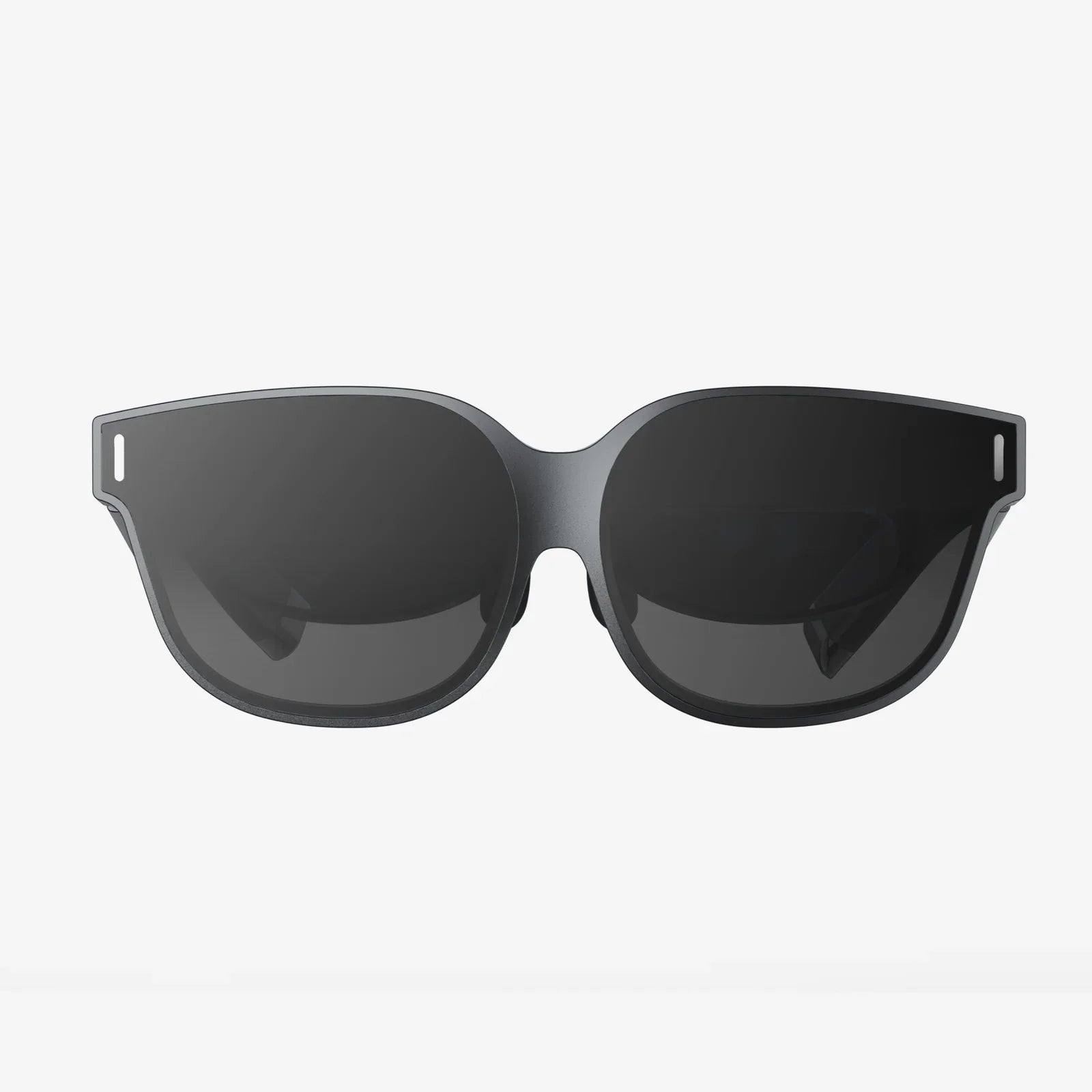
The most recognizable piece of VR technology is the head-mounted display (HMD). This device, worn over the eyes like a pair of goggles, is the primary window into the virtual world. Modern HMDs contain high-resolution screens (one for each eye) that display the computer-generated imagery. They also house a critical technology called stereoscopy. By presenting slightly different images to each eye, much like how human vision works in the real world, the brain is tricked into perceiving depth, creating a convincing 3D effect.
To sell the illusion of a stable world, the HMD must also incorporate precise head-tracking technology. Using a combination of internal sensors like gyroscopes, accelerometers, and external cameras or lasers, the system constantly monitors the position and orientation (together known as "pose") of the user's head. When the user turns their head to look left, the virtual scene renders the view to the left in real-time, with imperceptible latency. Any delay, known as lag, can break the sense of immersion and even cause discomfort or motion sickness.
Beyond vision, audio plays a paramount role. Spatial or 3D audio is used to create a convincing soundscape. Sounds in a VR environment have properties that change based on their location relative to the user. A sound originating from behind the user will be perceived differently than one coming from the front, precisely mimicking how sound waves interact with the human head and ears. This auditory cue is incredibly powerful for selling the reality of the space.
Finally, input devices enable the crucial element of interactivity. These range from simple handheld controllers with buttons and joysticks to more advanced gloves that can track finger movements and provide haptic feedback. These tools are the user's hands in the virtual world, allowing them to manipulate objects, push buttons, gesture, and interact with the environment in a natural and intuitive way.
The concept of virtual reality is often discussed alongside other related terms like augmented reality (AR) and mixed reality (MR). It is helpful to view these not as separate ideas but as points on a spectrum, often referred to as the reality-virtuality continuum.
On one end of this spectrum is the real environment—the physical world as we naturally perceive it. On the opposite end is a fully virtual environment—a completely computer-generated world with no elements from the physical world. This is the purest form of VR.
Between these two extremes lies augmented reality (AR). AR overlays digital information—images, text, or 3D models—onto the user's view of the real world. The primary environment remains the physical world, which is simply enhanced or "augmented" with digital details. A common example is using a smartphone camera to see how a piece of virtual furniture would look in your actual living room.
Moving further along the spectrum is mixed reality (MR). This is a more advanced form of augmentation where digital and physical objects not only coexist but can interact with each other in real-time. In an MR experience, a virtual ball could bounce off a real-world table, or a digital character could sit on a physical couch. The line between what is real and what is virtual becomes blurred, creating a hybrid environment.
True VR, as a concept, sits at the far end of this spectrum, offering a fully digital experience that is isolated from the immediate physical surroundings of the user. It is a total replacement of reality, rather than a supplement to it.
While gaming and entertainment are the most visible and consumer-friendly applications of VR, the concept's potential extends far beyond. Its ability to simulate any environment safely, repeatably, and at a low cost is revolutionizing numerous professional fields.
In medicine and healthcare, VR is a powerful tool for both treatment and training. Surgeons can practice complex procedures on virtual patients, eliminating risk and allowing for the rehearsal of rare and complicated cases. VR is also being used for exposure therapy to treat phobias and post-traumatic stress disorder (PTSD), allowing patients to confront and manage their fears in a controlled, safe setting. Furthermore, it is used for physical rehabilitation, turning repetitive exercises into engaging games to improve patient motivation and outcomes.
The education and training sectors have been profoundly impacted. Imagine history students taking a virtual field trip to ancient Rome, or astronomy students standing on the surface of Pluto. VR provides experiential learning that is impossible to achieve through textbooks. For vocational training, employees can learn to operate heavy machinery, respond to emergency situations, or perform complex technical tasks in a risk-free virtual environment before ever doing it in the real world.
In architecture and design, VR allows architects and their clients to walk through a building long before the foundation is ever poured. This provides an unparalleled understanding of scale, space, and design, enabling changes to be made quickly and cheaply during the planning phase. Similarly, product designers can interact with full-scale 3D models of their prototypes, examining every angle and testing ergonomics in a virtual space.
Other applications include virtual tourism, allowing people to visit otherwise inaccessible locations; remote collaboration, where colleagues from across the globe can meet and interact with 3D models in a shared virtual boardroom; and retail, where customers can try on clothes or test products virtually before making a purchase.
As with any transformative technology, the advancement of the VR concept is not without its challenges and ethical dilemmas. Technologically, there is still progress to be made. Achieving photorealistic graphics in real-time requires immense computing power. The form factor of HMDs needs to become smaller, lighter, and wireless to be truly comfortable for prolonged use. Furthermore, the issue of simulator sickness, caused by a mismatch between visual motion and physical stillness, remains a hurdle for some users.
Beyond the technical, more profound ethical questions are emerging. The concept of data privacy and security takes on a new dimension in VR. These systems can collect unprecedented amounts of biometric and behavioral data—precise eye-tracking, gait analysis, emotional responses, and even subconscious reactions. Who owns this data, and how is it used? The potential for manipulation and targeted advertising is significant.
There are also concerns about the psychological and social effects of long-term immersion in virtual worlds. Could prolonged escapism into idealized virtual realities lead to a neglect of the physical world and real-world relationships? The concept of "VR addiction" is already a topic of discussion among researchers.
Finally, the concept raises questions about reality and authenticity. As simulations become indistinguishable from reality, how does that affect our shared understanding of truth? The potential for hyper-realistic misinformation or propaganda created in VR is a serious concern for the future. Establishing ethical frameworks and guidelines for the development and use of this powerful technology is a critical task that must accompany its technical evolution.
The concept of virtual reality is still in its relative infancy, but its trajectory points toward a future where the lines between the digital and physical are increasingly porous. The next evolution, often referred to as the "metaverse," envisions a persistent network of interconnected virtual worlds, a seamless continuum of spaces where we will work, socialize, learn, and play.
Future advancements will likely focus on engaging more senses to achieve deeper levels of immersion. Haptic feedback suits that simulate touch and pressure, and technologies that can simulate taste and smell, are already in development. Brain-computer interfaces represent a more distant but profound frontier, potentially allowing us to navigate and interact with virtual environments through thought alone, bypassing traditional controllers entirely.
The ultimate expression of the VR concept may be a world where the technology itself becomes invisible—where the headset disappears, and we can summon and interact with digital information and experiences as naturally as we interact with physical objects. It will become less of a device we put on and more of a layer of reality we can access.
This technology holds the mirror to our own reality, challenging our perceptions and expanding the boundaries of human experience. It is a tool for unparalleled empathy, allowing us to see the world through another's eyes, and a canvas for limitless creativity. The journey to perfect the illusion is just beginning, and its ultimate impact on society, culture, and the human condition is a story that has yet to be written.
The door to these boundless digital dimensions is now open, offering a glimpse into a future where our physical location is no longer a limit to our potential for exploration, connection, and creation. The next time you strap on a headset, you are not just trying a new piece of technology; you are stepping into the next chapter of human interaction and experiencing the profound power of a concept that will undoubtedly shape the century to come.
Share:
How Does Virtual Reality Affect Society: A Deep Dive into the Digital Metamorphosis
Virtual Reality in 2050: The Invisible Fabric of a New Reality