


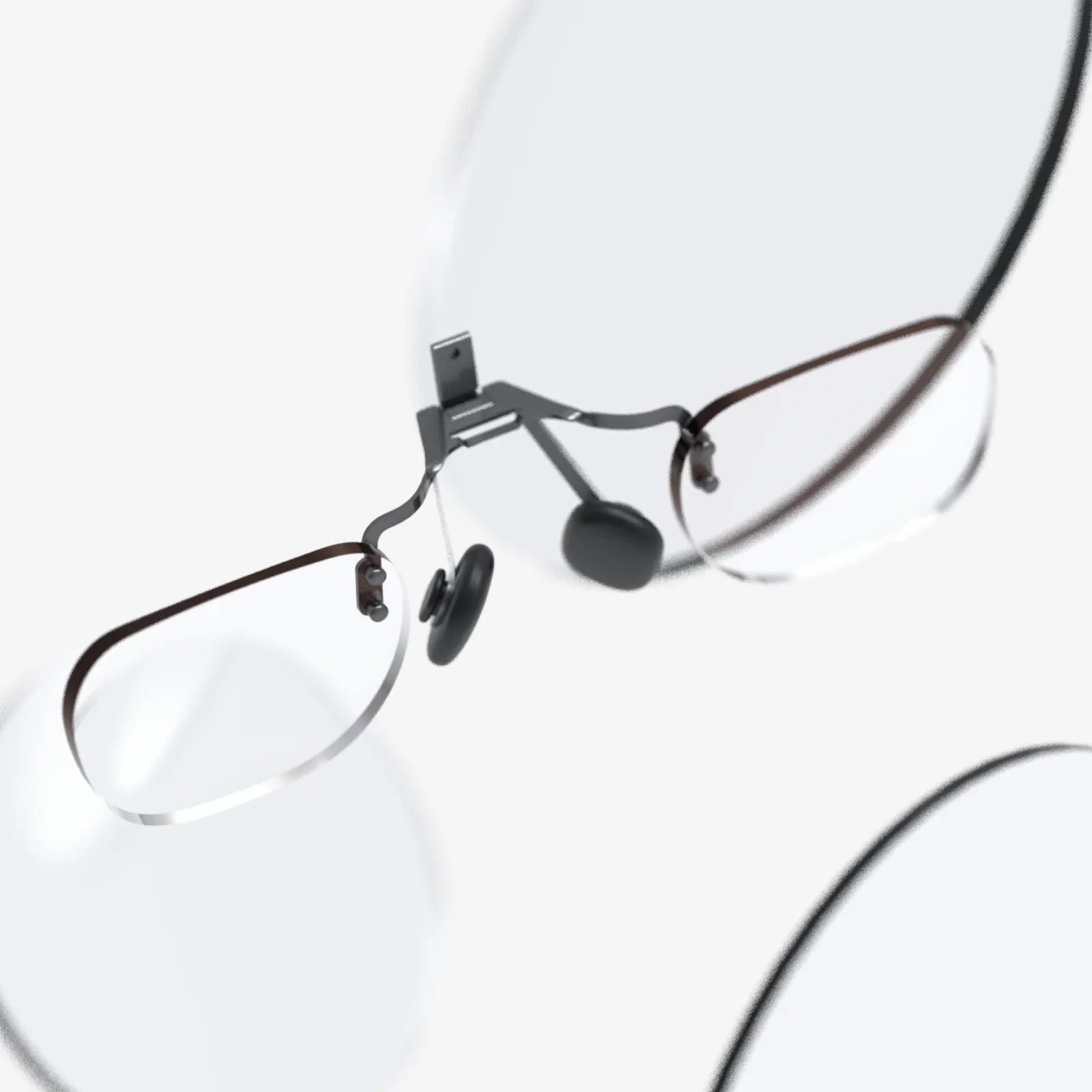
You’ve probably seen the viral videos: someone wearing a sleek headset, gesturing wildly in their living room at digital objects only they can see, or using their smartphone to see a fantastical creature sitting on their coffee table. These glimpses into blended digital realities are no longer the stuff of science fiction. They are here, powered by two technologies that are poised to revolutionize how we work, play, and connect. But while they are often mentioned in the same breath, Augmented Reality and Virtual Reality offer profoundly different journeys. Understanding the chasm between them is the first step into this new frontier.
Defining the Realms: Augmentation vs. Immersion
At its most fundamental level, the difference between AR and VR is a question of your relationship with the physical world around you.
Augmented Reality (AR): The Digital Overlay
Augmented Reality enhances your real-world environment by superimposing digital information—images, text, 3D models, animations—onto your view of it. Think of it as a high-tech layer of perception. You remain grounded in your actual surroundings; the digital elements simply add context, information, or entertainment to what you are already seeing. A classic and accessible example is using a smartphone app to see how a new piece of furniture would look in your room before you buy it. The room is real; the furniture is a digital projection placed within it.
Virtual Reality (VR): The Digital Universe
Virtual Reality, in stark contrast, is all about immersion. It completely replaces your real-world environment with a simulated, digital one. By wearing a headset that blocks out your physical surroundings and tracks your head movements, you are transported to a computer-generated world. This could be a realistic simulation of a faraway place, a fantastical game environment, or a virtual meeting room. The key principle is isolation from reality. You are not just seeing a digital object on your table; you are inside the computer.
The Core Technological Divide: How They Work
The philosophical difference between augmentation and immersion dictates the hardware and software required to power each experience.
The AR Toolkit: Cameras, Sensors, and Transparency
AR technology is built on seeing and understanding the real world. Its core components include:
- Cameras and Sensors: These act as the eyes of the device, continuously scanning the environment. They identify surfaces (like floors and walls), track objects, and understand depth and spatial relationships. This is often achieved through technologies like Simultaneous Localization and Mapping (SLAM).
- Processing: Powerful processors analyze the camera feed in real-time to precisely place and anchor digital content within the physical space.
-
Display: AR can be experienced through various screens:
- Smartphone and Tablet Screens: The most common entry point, using the device's camera to show an augmented view on its display.
- Smart Glasses and Headsets: These often use transparent lenses (optical see-through) or camera feeds (video see-through) to project digital images onto the user's field of view, allowing for a more hands-free experience.
- Heads-Up Displays (HUDs): Project information directly onto a surface, like a car's windshield showing navigation prompts.
The VR Toolkit: Headsets, Tracking, and Isolation
VR technology is built on creating and convincing your senses of a new reality. Its core components are:
-
The Head-Mounted Display (HMD): This is the heart of the system. It contains:
- High-Resolution Displays: One for each eye, creating a stereoscopic 3D effect.
- Lenses: Positioned between the eyes and the screens, they focus and reshape the image for a wide field of view.
- Head Tracking: Using gyroscopes, accelerometers, and external or internal cameras (inside-out tracking), the system constantly monitors the orientation and position of your head, updating the view in the virtual world accordingly to create a seamless experience.
- Input Devices: These range from simple controllers with buttons and joysticks to advanced gloves or full-body tracking suits that translate your real movements into the virtual space, allowing you to interact with the digital world.
- Audio: Spatial 3D audio is critical. Sounds change based on your head position, making a noise behind you in the virtual world actually seem like it's coming from behind you, deepening the immersion.
A Spectrum of Experience: From AR to VR and the Mixed Middle
While AR and VR are distinct concepts, they exist on a spectrum known as the reality-virtuality continuum. Between the purely real environment and the purely virtual environment lies Mixed Reality (MR). MR is a more advanced form of AR where digital objects don't just overlay the real world; they interact with it in a believable way. A virtual character in MR might jump off your real desk and hide behind your real couch, understanding the geometry of your room. The line between high-end AR and MR is often blurry, with MR representing the most immersive and interactive end of the augmented spectrum.
Transforming Industries: Unique Applications
The different strengths of AR and VR make them suited for specific tasks across various sectors.
Where Augmented Reality Excels
- Retail and E-commerce: Virtual try-ons for clothes, accessories, and makeup. Placing furniture and appliances in your home to visualize scale and style.
- Manufacturing and Repair: Providing technicians with hands-free, superimposed instructions and diagrams while they work on complex machinery. Highlighting parts and displaying torque specs directly on the equipment.
- Healthcare: Assisting surgeons by overlaying critical patient data, like ultrasound imagery, directly onto their field of view during procedures. aiding in vein visualization for injections.
- Navigation: Superimposing directional arrows and street names onto a live view of the road through a smartphone or car windshield.
- Education: Bringing textbooks to life—pointing a device at a diagram of the human heart could make it beat and animate in 3D.
Where Virtual Reality Excels
- Gaming and Entertainment: Providing fully immersive gaming experiences where you are inside the game world. Virtual concerts and 360-degree films.
- Training and Simulation: Safe, realistic training for high-risk professions like pilots, surgeons, and soldiers. They can practice complex procedures in a consequence-free virtual environment.
- Architecture and Real Estate: Allowing architects and clients to walk through a full-scale, immersive model of a building before the foundation is even poured. Offering virtual property tours to remote buyers.
- Therapy and Rehabilitation: Used for exposure therapy to treat phobias (fear of heights, flying) in a controlled setting. aiding in physical rehab by making exercises more engaging through gamification.
- Remote Collaboration: Creating virtual meeting rooms where participants, represented by avatars, can interact with 3D models and data as if they were in the same physical space.
The Human Factor: Psychological and Social Implications
The experience of using these technologies also differs profoundly on a human level.
AR is inherently a social technology. Because you are still present in the real world, it can be a shared experience. Multiple people can look at the same smartphone screen or wear glasses to see and discuss the same digital object in their shared physical space. It enhances collaboration and shared understanding.
VR, by its nature, is an isolating experience. The headset creates a literal barrier between you and your surroundings. While you can meet others in a virtual space, you are isolated from the people physically near you. This can lead to a powerful sense of "presence"—the feeling of actually being in the virtual environment—but it also requires a conscious effort to be social within that digital confines.
Choosing Your Reality: A Matter of Purpose
So, which technology is "better"? The answer is entirely dependent on the goal.
Choose AR when: You need to enhance a real-world task, add a layer of information to your immediate surroundings, or want to maintain a connection with the physical world and the people in it. Its strength is in annotation and assistance.
Choose VR when: You need complete focus, total immersion, or to simulate an environment that is impossible, expensive, or dangerous to experience in real life. Its strength is in transportation and simulation.
The Future is Blended: Convergence and Evolution
The future of these technologies may not be a choice between AR or VR, but a fusion of both. We are already seeing the emergence of headsets that can switch between a full VR immersion and a high-fidelity AR pass-through mode, using cameras to display the real world inside the headset with digital overlays. This points to a future where a single device can span the entire spectrum of the reality-virtuality continuum, allowing users to seamlessly blend the digital and physical based on their needs at any given moment. The ultimate goal is a pair of comfortable, socially acceptable glasses that can either augment our world or replace it on command, fundamentally changing the nature of computing, communication, and human experience itself.
Imagine a world where your entire field of vision becomes a canvas for information, creativity, and connection. The path to that future isn't through a single technology, but through understanding the powerful, distinct magic of both augmentation and immersion. The door to these new worlds is open; knowing the difference is your key.
Share:
Augmented Reality Updates Today: The Invisible Revolution Reshaping Our World
Gaming Headset for Glasses: The Ultimate Guide to Uncompromised Comfort and Performance