


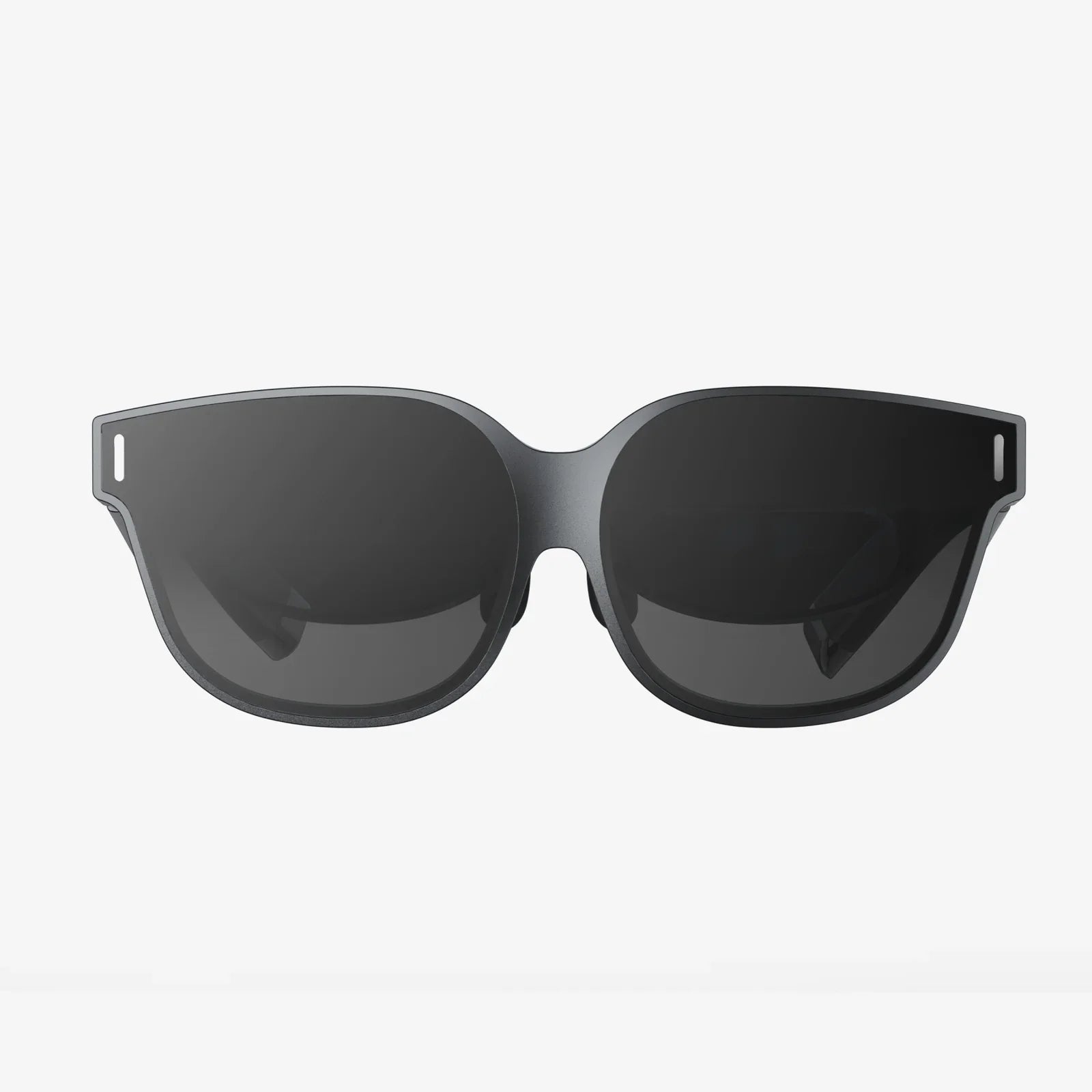
You strap on a headset and are instantly transported to a fantastical game world, a virtual meeting room with colleagues from across the globe, or the surface of Mars. This is the promise of immersive technology that has captured the world's imagination. But as you dive into the market, you're bombarded with terms like Virtual Reality (VR), Augmented Reality (AR), and the newest contender, Mixed Reality (MR). They all seem to involve headsets and digital content, so what truly sets them apart? The confusion is real, and the distinction is critical—it’s the difference between escaping reality and enhancing it. Understanding this divide is not just for tech enthusiasts; it’s the key to unlocking the future of how we will work, learn, and play. This deep dive will cut through the hype to clearly define, compare, and contrast these revolutionary technologies, empowering you to navigate the next wave of digital transformation.
Defining the Realms: Core Concepts Unveiled
Before we can contrast them, we must first establish a clear, foundational understanding of each technology on its own terms. They exist on a spectrum often referred to as the "Virtuality Continuum," with our physical reality on one end and a fully digital environment on the other.
Virtual Reality (VR): The Complete Digital Escape
Virtual Reality is the technology of total immersion. Its primary goal is to isolate the user from the physical world and transport them to a completely computer-generated simulation. When you don a VR headset, your visual and auditory connection to your living room or office is severed, replaced by a 360-degree digital landscape.
Key Characteristics of VR:
- Full Immersion: VR headsets utilize opaque displays and positional tracking to make the user feel physically present inside a software-generated world.
- Isolation: By design, VR blocks out the physical environment. This is often achieved with headsets that fully enclose the user's field of view.
- Computer-Generated Environments: Everything the user sees and hears is synthetic, created entirely from code and digital assets. This can range from photorealistic simulations to abstract, artistic worlds.
- Input Methods: Interaction within these worlds is handled through specialized motion controllers, hand-tracking technology, or other peripherals that map your real-world movements into the digital space.
The quintessential VR experience is one of presence—the convincing feeling of "being there" in the virtual environment. This makes it the perfect medium for applications like immersive gaming, virtual tourism, and flight simulators where the goal is to forget your physical surroundings.
Mixed Reality (MR): The Seamless Blend of Real and Virtual
If VR is about escape, Mixed Reality is about enhancement. MR sits at the most complex and technologically advanced point on the Virtuality Continuum. It doesn't just overlay digital content onto the real world (like simpler AR); it enables authentic interactions between digital objects and the physical environment.
Key Characteristics of MR:
- Spatial Anchoring: This is the magic of MR. Digital objects are not just floating screens; they are anchored to a specific point in your physical space. A virtual monitor can be placed on your real wall, and a digital character can sit on your actual sofa.
- Environmental Understanding: MR headsets use advanced sensors, cameras, and algorithms to continuously scan and understand the geometry of the room around you. They create a 3D map of your environment, recognizing surfaces (floors, walls, tables), obstacles, and lighting conditions.
- Occlusion: This is a critical differentiator from basic AR. If a real-world object moves in front of a digital object, the digital object will be realistically hidden or "occluded" behind it. For example, your physical table will block the view of a virtual pet running behind it, reinforcing the illusion that the digital content is truly present in your room.
- Seamless Interaction: You can interact with holographic content using your own hands or through controllers, and those digital objects can interact with your world. You can push a virtual ball off a real table and watch it bounce on the real floor.
In essence, MR requires the digital and physical to coexist and interact in real-time. It’s not about viewing a layer of information on top of the world; it’s about bringing interactive digital objects into your world as if they were really there.
The Crucial Divide: A Side-by-Side Comparison
Now that we have clear definitions, the differences become stark. The confusion often arises because MR hardware can usually run VR software (by simply displaying a digital environment and ignoring the real world), but true VR hardware cannot achieve MR.
| Feature | Virtual Reality (VR) | Mixed Reality (MR) |
|---|---|---|
| Primary Goal | Immersion & Isolation | Integration & Enhancement |
| Environment | Fully digital and synthetic | Blend of physical and digital |
| User Awareness | Opaque to the real world; unaware of surroundings | Transparent or video pass-through; highly aware of surroundings |
| Hardware | Opaque headset, external/internal tracking, controllers | See-through lenses or high-fidelity cameras, depth sensors, powerful onboard computing |
| Interaction | With purely digital objects via controllers | Between digital objects and the physical world via hands, controllers, etc. |
| Example Use Case | Playing a game set in a fantasy realm | Designing a virtual car prototype and walking around it in your garage |
The Role of Augmented Reality (AR)
It's impossible to discuss this topic without mentioning Augmented Reality. AR is often mistakenly used interchangeably with MR, but they are distinct. AR simply overlays digital information onto the user's view of the real world. Think of smartphone filters that put dog ears on your head or navigation arrows displayed on your car's windshield. The digital content does not interact with or understand the environment; it exists as a layer on top of it. MR is considered the next evolution of AR—a more sophisticated, interactive, and environmentally aware form of augmentation.
Under the Hood: The Technology Powering the Experience
The dramatic difference in experience is driven by equally dramatic differences in hardware and software capabilities.
VR Technology Stack
VR technology is primarily focused on convincing your senses you are somewhere else.
- Display: High-resolution, fast-refresh-rate OLED or LCD screens placed very close to the eyes, with lenses that focus the image and create a wide field of view.
- Tracking: Uses external base stations (Lighthouse tracking) or internal cameras (Inside-Out tracking) to precisely monitor the position and rotation of the headset and controllers in 3D space to update the view accordingly.
- Audio: Immersive 3D spatial audio is crucial for selling the illusion, making sounds appear to come from specific locations in the virtual space.
- Input: Dedicated motion controllers with haptic feedback (vibrations) to simulate touch and interaction.
MR Technology Stack
MR builds upon VR's foundation but adds a suite of advanced sensors to perceive the real world.
- Display: Utilizes either optical see-through (OST) displays, which use semi-transparent lenses to blend light from projectors with light from the real world, or video see-through (VST) displays, which use high-resolution cameras to capture the real world and display it on screens inside the headset with digital elements composited in. VST is more common in modern MR devices as it allows for more advanced effects like realistic occlusion.
-
Sensing: This is the heart of MR. An array of sensors is employed, including:
- Depth Sensors: Often time-of-flight (ToF) sensors or structured light projectors that actively scan the environment to create a precise 3D mesh of the room.
- Cameras: Multiple grayscale and RGB cameras track the user's hand movements and gestures with high fidelity for natural interaction.
- Inertial Measurement Units (IMUs): Accelerometers and gyroscopes track head movement with low latency.
- Eye-Tracking Cameras: Used for foveated rendering (which boosts performance by rendering only the area you're looking at in high detail) and more intuitive UI interaction.
- Processing: The need to process all this sensor data in real-time demands immense computing power, often provided by a dedicated processing unit within the headset itself.
Shaping Industries: Practical Applications Today and Tomorrow
The unique strengths of VR and MR naturally lend themselves to different professional and consumer applications.
Where Virtual Reality Excels
- Gaming and Entertainment: This is VR's flagship domain. It offers unparalleled immersion for video games, interactive storytelling, and virtual concerts.
- Training and Simulation: VR is perfect for high-risk, high-cost training in a safe, controlled environment. Pilots, surgeons, soldiers, and heavy machinery operators can practice complex procedures without real-world consequences.
- Therapy and Rehabilitation: Used for exposure therapy to treat phobias (fear of heights, flying), PTSD, and for physical rehab through gamified exercises.
- Virtual Tourism and Real Estate: Allows people to explore faraway locations or walk through a property for sale from the comfort of their home.
Where Mixed Reality Transforms
- Design and Manufacturing: Engineers and designers can collaborate on life-size 3D holographic models (e.g., a car engine or a building's plumbing) placed directly in their workspace, enabling them to identify design flaws before any physical prototype is built.
- Remote Assistance and Collaboration: A field technician wearing an MR headset can receive real-time visual guidance from an expert remotely. The expert can draw holographic arrows and instructions directly into the technician's field of view, pointing to specific components on a broken machine.
- Healthcare: Surgeons can overlay patient scans (like MRI data) directly onto the patient's body during a procedure for precise guidance. Medical students can practice on interactive holographic anatomy models.
- Retail and Interior Design: Customers can visualize how a virtual piece of furniture would look and fit in their actual living room, or try on virtual clothes and accessories.
Choosing Your Reality: Which One is Right for You?
Your choice between VR and MR hinges entirely on your intended use case.
Choose Virtual Reality if: Your goal is complete escapism, deep immersion in games and narratives, or you need to simulate an environment that is entirely separate from your physical space (like a flight cockpit or a surgical theater). It is generally more accessible and affordable for consumers.
Choose Mixed Reality if: Your goal is to enhance your productivity, visualize digital content in the context of your real world, or enable collaboration that merges the physical and digital. It is currently more prevalent in enterprise and professional settings due to its higher cost and complexity, but this is rapidly changing.
The line between these technologies will continue to blur. The ultimate destination for spatial computing is a single device capable of seamlessly transitioning across the entire spectrum—from full VR immersion to contextual MR enhancement—based on the user's needs in the moment. This device will be your portal to the metaverse, a persistent digital world intertwined with our own. But for now, understanding the fundamental difference between mixed reality's empowering integration and virtual reality's captivating escape is the first step in claiming your place on this new digital frontier. The future isn't just about seeing a new world; it's about building a better one, right where you are.
Share:
Immersion 3D: The Future of Experience and How It's Reshaping Reality
Future Technology 2050: A Glimpse Into the Next Technological Revolution