


- by wangfred
What Is the Future of AR and VR - A Glimpse Into the Next Digital Revolution
- by wangfred
Imagine a world where the digital and the physical are no longer separate realms, but a single, intertwined experience that enhances every facet of our lives—from how we work and learn to how we connect and play. This is not a distant science fiction fantasy; it is the imminent future being forged by the rapid and convergent evolution of Augmented Reality (AR) and Virtual Reality (VR). The journey beyond the screen is already underway, promising a revolution more profound than the smartphone, and it’s a future everyone will be a part of.
For years, AR and VR have been discussed as separate entities. Virtual Reality offers a complete immersion into a digital environment, shutting out the physical world, typically experienced through a head-mounted display. Its primary power lies in transportation—allowing users to be anywhere, from the surface of Mars to the depths of the ocean. Augmented Reality, conversely, layers digital information—images, data, animations—onto our view of the real world through devices like smart glasses or even smartphone cameras. Its strength is contextual enhancement, providing relevant information exactly when and where it's needed.
The future, however, lies not in their separation, but in their inevitable convergence. We are moving towards a spectrum of experiences, often referred to as Mixed Reality (MR) or the broader term, XR (Extended Reality). Future devices will likely not be exclusively AR or VR but will dynamically shift along this spectrum based on the user's need. You might start your morning in a fully immersive VR meeting with colleagues who appear as lifelike avatars, then flip a switch to an AR transparency mode to see your actual coffee cup and take notes on a virtual pad that rests on your real desk. This fluidity will be the hallmark of next-generation hardware, powered by increasingly sophisticated sensors, spatial mapping, and intuitive user interfaces.
The path to mass adoption is paved with technological innovation. Current generations of headsets, while powerful, are often bulky, expensive, and tethered to a powerful computer or have limited battery life. The future of AR and VR hardware is focused on solving these fundamental barriers.
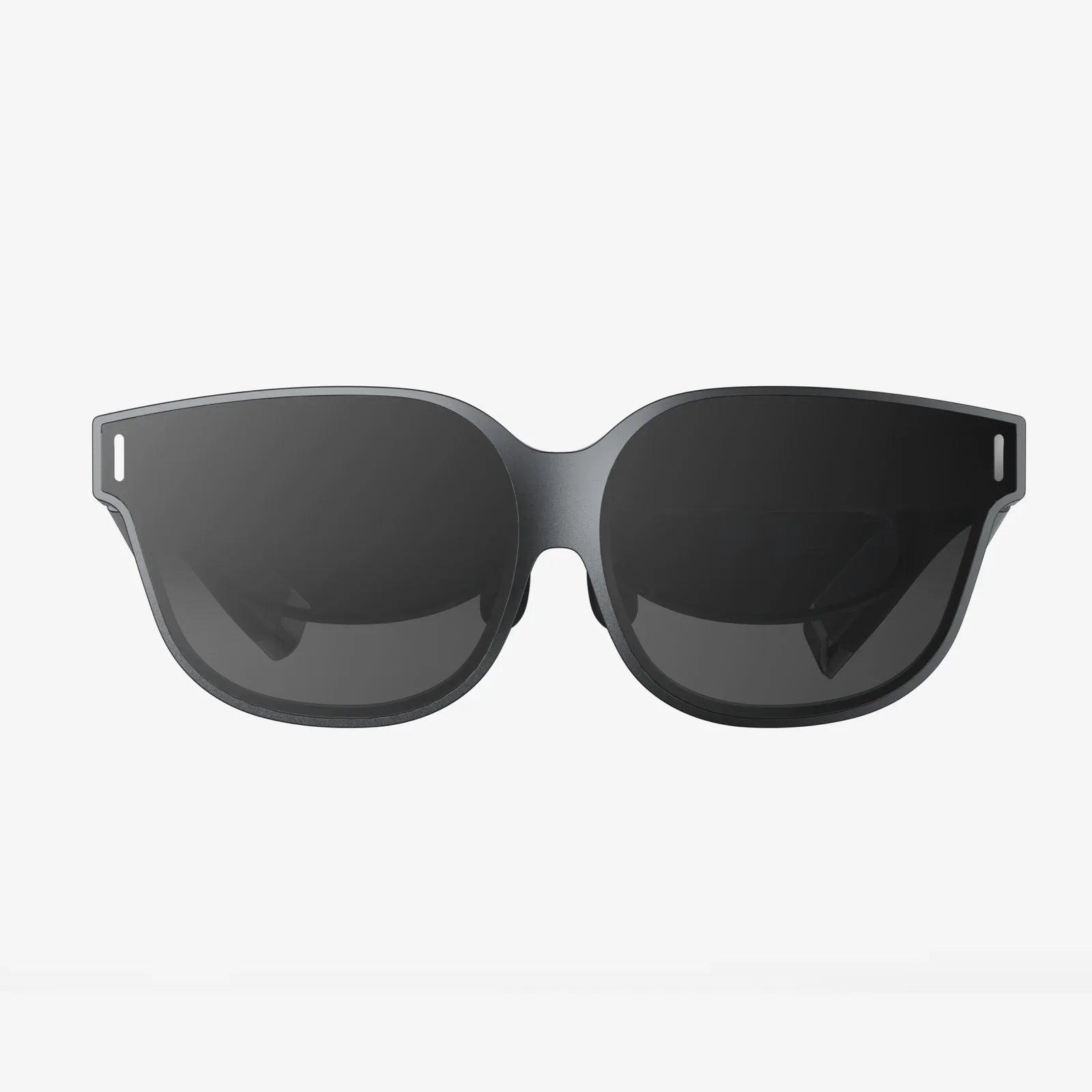
We are racing towards a form factor that resembles everyday eyewear. Advances in micro-OLED displays, waveguide optics, and miniaturized components will shrink the technology into something socially acceptable and comfortable for all-day wear. The goal is not just to make the devices smaller, but to make them disappear—both physically and from the user's conscious thought.
Furthermore, interaction will evolve beyond handheld controllers. The future interface is you. Eye-tracking, hand-tracking, voice commands, and even emerging research into brain-computer interfaces (BCIs) will allow for more natural and intuitive control. Imagine selecting a virtual object simply by looking at it and pinching your fingers, or navigating a data dashboard with subtle voice commands. This shift will make the technology accessible to a far broader audience, reducing the learning curve and creating a more magical user experience.
Powerful hardware is useless without a rich and interconnected software ecosystem. The future of AR and VR is not in isolated apps but in a persistent, shared digital layer over the world—often called the Spatial Web or the Metaverse.
This will be enabled by several key technologies:
This foundation will support a new economy of digital goods, services, and experiences, all interacting within a coherent spatial framework.
While consumer applications often capture the headlines, the most immediate and profound impact of AR and VR is happening within enterprise and industrial sectors. This is where the return on investment is clearest and the applications are revolutionizing workflows.
These enterprise applications are not just proving the technology's value; they are funding the research and development that will eventually trickle down to consumer-grade devices and experiences.
As this technology permeates society, its impact will extend far beyond productivity and entertainment. It will fundamentally reshape human interaction, education, and our perception of reality itself.
Education will be transformed. Instead of reading about ancient Rome, students will be able to walk its streets in VR. Complex scientific concepts will become tangible 3D models that students can dismantle and explore from every angle. AR can bring textbook diagrams to life, creating a deeply engaging and immersive learning experience that caters to different learning styles.
Social connection will take on a new dimension. Distance will become less of a barrier as shared VR spaces allow for gatherings, concerts, and family events that feel palpably real. This has the potential to alleviate loneliness and create new forms of community. However, it also raises critical questions. Will we risk neglecting our physical relationships and environments for curated digital ones? Could a vastly enhanced digital world make our physical reality seem dull by comparison?
The future of AR and VR is not without its perils. The very power of these technologies introduces a host of ethical dilemmas that society must grapple with proactively.
Prolonged use raises questions about its effects on our brains, eyesight, and social development. Issues like simulator sickness, eye strain, and the psychological impact of living between two worlds need continued study. Furthermore, the potential for addiction to hyper-stimulating virtual environments is a real concern that must be addressed through design ethics and user education.
Looking decades ahead, the trajectory points towards a future where the line between human and computer, physical and digital, becomes increasingly blurred. We are moving towards a state of symbiotic existence with technology.
Neural interfaces may evolve to a point where we can experience digital sensations directly through our nervous system, creating experiences of unparalleled realism. AR could evolve into a permanent cognitive layer, an always-available second brain that provides instant information recall, language translation, and enhanced memory. This could augment human intelligence and capability in ways we can barely imagine.
Ultimately, the future of AR and VR is not just about better games or more efficient factories. It is about the next great computing platform, one that is inherently human-centric. It’s about context, presence, and immersion. It’s about enhancing our reality, not replacing it. The technology will become a seamless extension of our own senses and capabilities, fundamentally altering the human experience in the 21st century and beyond. The question is no longer if this future will arrive, but how we will choose to shape it.
The door to this blended world is creaking open today, offering a tantalizing preview of a reality limited only by our collective imagination. The choices we make now—in design, policy, and ethics—will determine whether this powerful technology becomes a force for universal empowerment or a new source of division, crafting a legacy that will resonate for generations to come. The next chapter of human-computer interaction is being written, and it’s a story we will all experience firsthand.
Share:
Augmented Reality Headset Definition: The Ultimate Guide to Seeing the World Differently
Augmented Reality Production Technology is Reshaping the Modern Industrial Landscape