


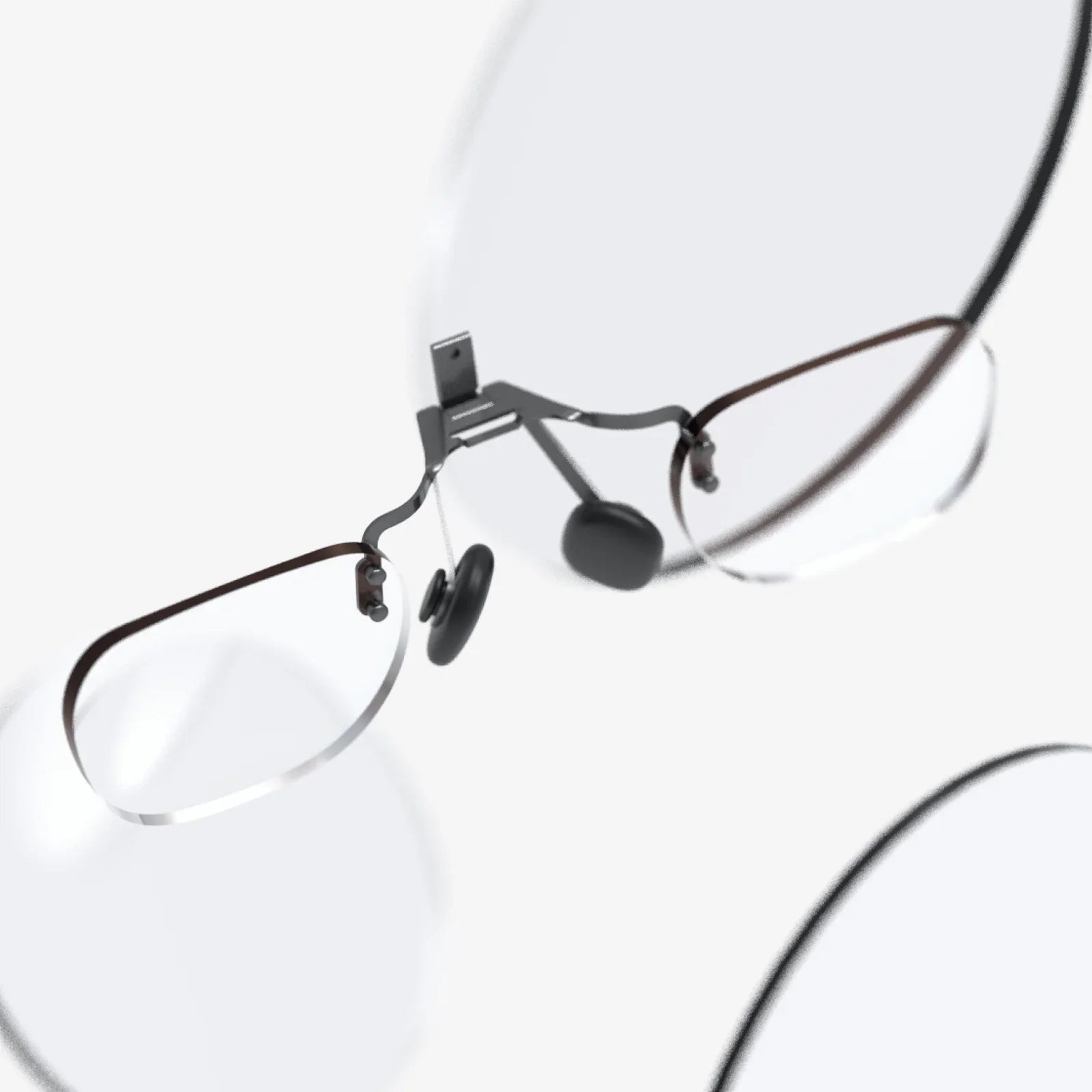
Imagine a world where the digital and the physical are no longer separate realms, but a seamless, interactive tapestry. A world where information, stories, and experiences are not confined to screens but are woven directly into the fabric of your reality. This is not a distant science fiction fantasy; it is the burgeoning promise of augmented reality, a technology poised to fundamentally reshape how we work, learn, play, and connect. The question of its meaning extends far beyond a technical specification—it is an inquiry into a new way of being and perceiving.
Beyond the Buzzword: Defining the Core Principle
At its most fundamental level, augmented reality (AR) is a technology that superimposes a computer-generated overlay—comprising digital images, sounds, haptic feedback, and other sensory inputs—onto a user's real-world view in real-time. Unlike Virtual Reality (VR), which creates a completely immersive, artificial environment, AR enhances the real world by adding a digital layer to it. The key differentiator is that AR does not replace your surroundings; it enriches them. This core principle is what gives AR its profound meaning: it is an integrative technology, not a substitutive one. It seeks to augment human capabilities and enhance our natural environment with contextually relevant data and experiences.
The magic of AR lies in its ability to bridge the gap between abstract information and tangible reality. A technical manual becomes an interactive, 3D hologram guiding a repair. A historical street corner reveals ghostly images of its past. Complex architectural blueprints are projected onto an empty construction site. The meaning of AR, therefore, is found in its function as a contextual bridge, making the invisible visible and the intangible tangible.
The Technological Symphony: How AR Creates Illusion
For this digital augmentation to feel seamless and convincing, a sophisticated orchestra of technologies must work in perfect harmony. Understanding these components is crucial to appreciating the engineering marvel that AR represents.
Sensors and Cameras: The Eyes of the System
The first step is for the AR device to perceive and understand the physical world. This is achieved through a suite of sensors. Cameras capture the live video feed of the user's environment. Depth sensors, like time-of-flight cameras or LiDAR scanners, measure the distance to objects, creating a detailed 3D map of the space. This spatial mapping allows digital objects to understand the geometry of the room—they can sit on a table, hide behind a sofa, or occlude correctly with real-world objects. Other sensors, such as accelerometers, gyroscopes, and magnetometers (collectively known as an Inertial Measurement Unit or IMU), track the device's precise position, orientation, and movement in space.
Processing and Computer Vision: The Brain
The raw data from the sensors is then processed by powerful algorithms. This is where computer vision, a field of artificial intelligence, takes center stage. Computer vision algorithms analyze the camera feed to perform several critical tasks:
- Object Recognition: Identifying specific objects, logos, or images (often called markers in marker-based AR).
- Surface Detection: Distinguishing horizontal planes (floors, tables) from vertical planes (walls).
- Simultaneous Localization and Mapping (SLAM): This is the holy grail of AR tracking. SLAM technology allows the device to simultaneously map an unknown environment and track its own location within that map in real-time, without the need for pre-programmed markers. This is essential for persistent AR experiences that remain locked in place.
Display Technologies: The Canvas
Once the environment is understood and the digital content is prepared, it must be displayed to the user. This is achieved through various methods:
- Smartphone and Tablet Displays: The most accessible form of AR, using the device's screen as a viewport into the blended world.
- Smart Glasses and Headsets: These wearable devices use optical see-through or video see-through displays. Optical see-through uses semi-transparent mirrors or waveguides to project light into the user's eyes, allowing them to see the real world directly with digital elements superimposed. Video see-through uses cameras to capture the real world and then blends the digital content with that video feed on an opaque display.
- Projection-Based AR: Instead of displaying content on a screen worn by the user, this method projects digital light directly onto physical surfaces, turning any wall or object into an interactive display.
A Spectrum of Experience: Marker-Based vs. Markerless AR
AR experiences can be broadly categorized based on how they anchor digital content to the real world.
Marker-Based AR (Recognition-Based)
This was the early foundation of AR. It relies on a specific, predefined visual marker—often a black-and-white QR-like code or a distinct image—to trigger the digital overlay. The device's camera identifies the unique pattern of the marker, which acts as a anchor point and tells the system exactly where and how to display the 3D model or animation. While less common now for advanced applications, it remains highly reliable for specific use cases like interactive packaging or museum exhibits.
Markerless AR (Position-Based)
This is the modern, more powerful paradigm of AR. It uses the technologies described above (SLAM, GPS, digital compass) to understand the environment and place content without a predefined marker. This allows for far more flexible and immersive experiences. There are several types:
- Projection AR: As mentioned, projecting light onto surfaces.
- Superimposition AR: Replacing the original view of an object with an augmented view of that same object (e.g., using AR to see a patient's anatomy during surgery).
- Location-Based AR: Using GPS and other location data to pin digital content to specific geographic coordinates, creating a persistent layer of information over a city or landscape, popularized by games and tourism apps.
The Real-World Impact: Applications Transforming Industries
The true meaning of a technology is revealed through its application. AR is not a solution in search of a problem; it is a versatile tool solving real challenges across numerous sectors.
Revolutionizing Retail and E-Commerce
AR is dissolving the final barrier to online shopping: the inability to try before you buy. Furniture retailers allow customers to place true-to-scale 3D models of sofas and tables in their living rooms. Fashion brands offer virtual try-on for clothes, glasses, and makeup. This not only enhances consumer confidence and reduces return rates but also creates a engaging, interactive shopping experience that blends the convenience of online with the assurance of physical retail.
Empowering Industry and Manufacturing
In industrial settings, AR is a powerhouse for efficiency and safety. Technicians wearing AR glasses can see schematics, instructions, and safety warnings overlaid directly on the machinery they are repairing, allowing them to work hands-free. Complex wiring or assembly processes can be visualized step-by-step, reducing errors and training time. Remote experts can see what an on-site worker sees and annotate their field of view to guide them through a procedure, saving immense time and travel costs.
Transforming Education and Training
AR brings learning to life. Instead of reading about the solar system, students can walk around a scale model of it in their classroom. Medical students can practice procedures on detailed, interactive holograms of the human body. History lessons can be transformed into immersive time-travel experiences. This shift from passive absorption to active, experiential learning dramatically improves engagement and knowledge retention.
Enhancing Healthcare
Beyond training, AR is directly improving patient care. Surgeons use AR overlays to visualize critical information like tumor location or blood vessels during operations, essentially giving them "X-ray vision." It aids in precise needle placement for injections and biopsies. It can also be used for physiotherapy, providing patients with real-time visual feedback on their movements to ensure correct form.
The Human-Computer Interface Reimagined
The meaning of AR is deeply intertwined with the evolution of how we interact with computers. We have moved from punch cards to command lines, to the graphical user interface (GUI) with its windows, icons, and mouse pointer. AR represents the next paradigm shift: the pervasive user interface (PUI) or spatial computing.
In this new paradigm, the entire world becomes the interface. Instead of clicking icons on a screen, we interact with digital information that behaves like physical objects in our space. We might resize a virtual screen with a pinch gesture, open an app by tapping a virtual button on our wall, or scroll through a document with a wave of our hand. This promises a more intuitive, natural, and human-centric form of computing, one that works on our terms in our environment, rather than requiring us to enter its confined, 2D world.
Navigating the Challenges and Ethical Considerations
For all its potential, the path to a truly augmented world is not without significant hurdles and profound questions.
- Technical Limitations: For AR to become ubiquitous, hardware must become smaller, lighter, more powerful, and have all-day battery life. Display technology needs to achieve perfect visual fidelity in all lighting conditions. The "holograms" need to be photorealistic and interact with light and shadow correctly to be truly convincing.
- Privacy and Data Security: AR devices, with their always-on cameras and microphones, are arguably the most intimate data collection devices ever conceived. They see what we see and hear what we hear. This raises enormous privacy concerns. Who has access to this continuous stream of environmental and personal data? How is it stored and used? The potential for surveillance is unprecedented.
- Social Acceptance and Digital Addiction: Will constant digital overlays enhance our lives or distract us from genuine human connection and the beauty of the un-augmented world? The specter of a society where people are glued to AR feeds, ignoring each other and their surroundings, is a legitimate concern. Establishing digital etiquette and finding a healthy balance will be critical.
- The Reality-Value Gap: As the line between what is real and what is digital blurs, philosophical questions emerge. If an AR experience is shared and consistent for multiple users, does that make it a form of shared reality? How do we assign value to digital objects that are persistent in our physical space?
The Future is Layered: Where Do We Go From Here?
The trajectory of AR points towards a future where the technology becomes as seamless and indispensable as the smartphone is today. We are moving towards advanced AR contact lenses and eventually neural interfaces that could project information directly into our visual cortex. The concept of the Metaverse—a persistent network of shared, real-time 3D virtual spaces—is deeply reliant on AR as the primary gateway, blending the digital universe with our physical one.
In this future, AR will become the foundational layer for how we access information and experience the world. It will redefine communication, allowing us to share not just text or video, but shared spatial experiences. It will transform cities into living, breathing information hubs. It will change art, storytelling, and social interaction in ways we are only beginning to imagine.
The journey into this augmented age is already underway. It promises a future of heightened understanding, boundless creativity, and unprecedented efficiency. But its ultimate meaning will not be defined by the technology itself, but by how we, as a society, choose to build it, regulate it, and integrate it into the human experience. The power to augment our reality comes with the profound responsibility to ensure it enhances our humanity, rather than diminishes it. The next chapter of our reality is being written, and we are all holding the pen.
Share:
Why Would You Choose AR Over VR: The Unfiltered Reality of Immersive Tech
Augmented Reality Mobile Development: A Comprehensive Guide to Building the Future