


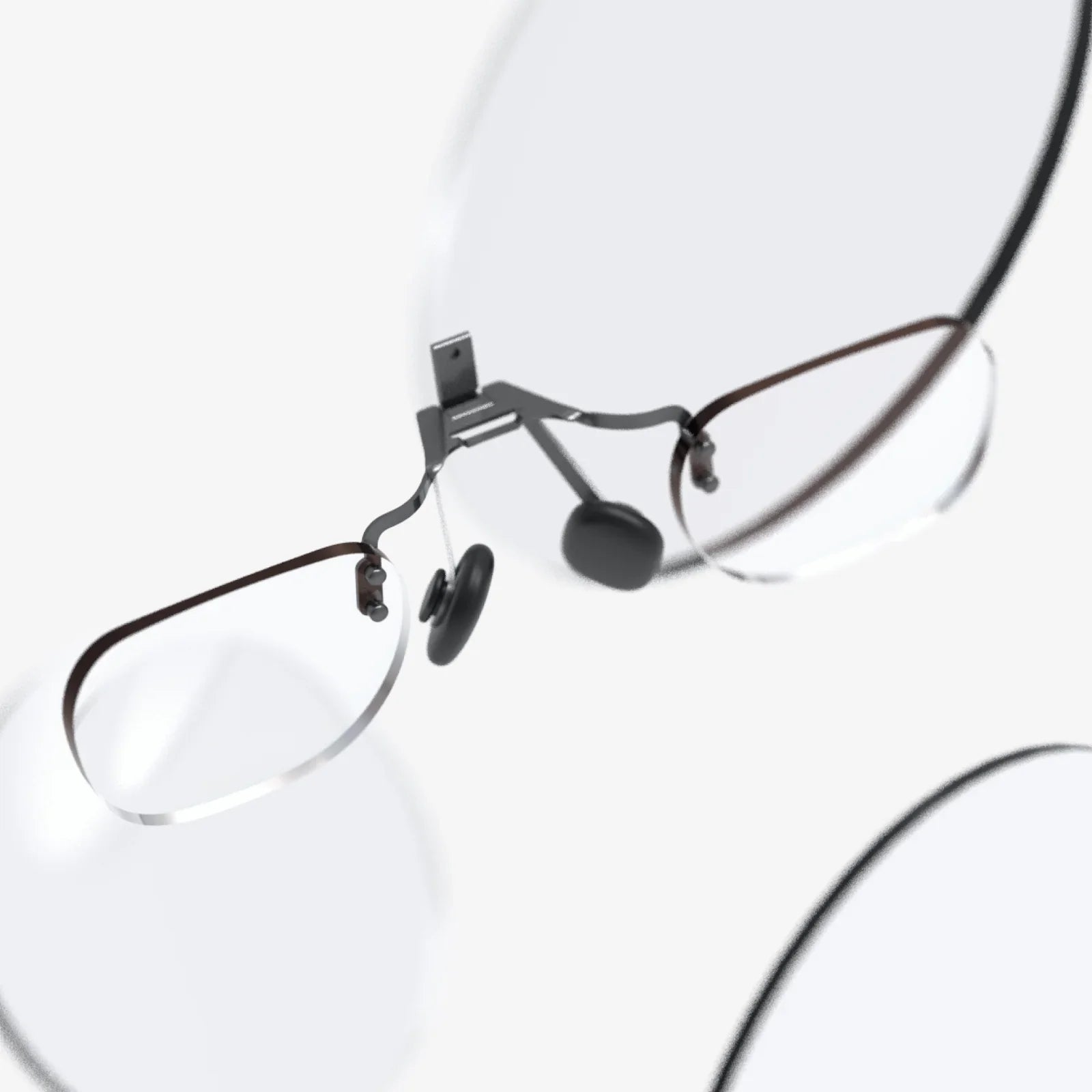
The shimmering promise of a digital frontier, a gateway to worlds unbound by physics or finance, beckons just beyond the periphery of our current screens. For years, virtual reality has tantalized us with its potential, yet a question perpetually hangs in the air, whispered by enthusiasts and skeptics alike: what comes next? The quest for the next VR headset is not merely a search for a new piece of hardware; it is a journey to discover the missing pieces that will finally transport this technology from a compelling novelty to an indispensable part of our daily lives. It’s a pursuit of the invisible, the seamless, and the truly immersive. The next headset won't just be an upgrade; it will be a revelation, and its contours are already beginning to take shape on the horizon.
Beyond Resolution: The Pursuit of Visual Fidelity and Comfort
The first and most obvious frontier for any new hardware is the display. While current devices offer impressive visuals, the next generation will tackle the lingering barriers to true believability: the screen-door effect, pixel density, and the physiological challenge of vergence-accommodation conflict.
The goal is no longer just "high resolution," but retinal resolution—a pixel density so high that the human eye cannot distinguish individual pixels, making the digital image as smooth and continuous as reality itself. This will be achieved through micro-OLED and eventually micro-LED displays, offering incredible brightness, perfect blacks, and a dramatic reduction in power consumption and size.
However, resolution is only part of the story. A more profound leap will come from solving the vergence-accommodation conflict. In the real world, our eyes naturally converge (cross or uncross) and accommodate (change focus) in tandem when looking at objects at different distances. In today's VR, the focal distance is fixed, forcing our eyes to decouple these two actions, which is a primary source of eye strain and a subtle but persistent reminder that we are in a simulation.
The next VR headset will likely incorporate some form of varifocal or liquid crystal lens technology, dynamically adjusting focus based on where the user is looking. This, combined with advanced eye-tracking, will not only eliminate discomfort but also enable foveated rendering—a revolutionary rendering technique that drastically reduces the computational load by rendering only the precise center of the user's gaze in full detail, while the peripheral vision is rendered at a lower resolution. This single innovation is a key that unlocks the door to photorealistic graphics without requiring a supercomputer strapped to your face.
The Invisible Computer: Processing Power and the Shift to Hybrid Architectures
Photorealistic graphics demand immense processing power. The bulky tethers and external processing boxes of past generations are antithetical to the freedom VR promises. The next headset must resolve this paradox: how to deliver supercomputing-level performance in a sleek, wireless form factor.
The answer lies in a hybrid processing architecture. Instead of relying solely on onboard chips or a distant desktop PC, the next generation will intelligently split the workload. Complex rendering tasks, especially those enhanced by foveated rendering, will be handled by a powerful, miniaturized System-on-a-Chip (SoC) within the headset itself, designed specifically for spatial computing. This onboard processor will handle tracking, inside-out positioning, and the core user interface with ultra-low latency.
For the most demanding applications—like AAA gaming or complex professional simulations—the headset will seamlessly offload work. This won't be a clumsy wired connection, but a robust, high-bandwidth wireless link to a local console or PC, or even more intriguingly, to the cloud. Cloud rendering and streaming represent the ultimate endgame. By leveraging edge computing data centers, the headset becomes a sophisticated window, with the vast number-crunching happening miles away. This model promises users access to infinite computing power and constantly updated software without ever needing to purchase new hardware. The headset itself becomes a perpetual portal, always connected to the latest and greatest capabilities.
Breaking the Barrier: The Leap Towards Natural Interaction
Visuals are only one sensory channel. For true presence—the undeniable feeling of "being there"—the next VR headset must engage our other senses and enable interaction as intuitive as using our own hands.
Today's motion controllers are clever but crude abstractions. The next generation will move towards direct, controller-less interactionmarkerless hand-tracking systems, capable of understanding not just the position of your hands, but the subtle nuances of finger placement, pressure, and even micro-gestures. You will reach out and manipulate a virtual object with the same natural dexterity you use to pick up a coffee cup.
This will be augmented by the next frontier of VR peripherals: haptic feedback. We are moving beyond simple rumble motors to technologies like ultrasonic arrays that create tactile shapes in mid-air, allowing you to feel the texture of a virtual stone wall or the weight of a digital tool. Haptic gloves will provide localized feedback to each finger, simulating the resistance of pressing a button or the recoil of a trigger. Full-body haptic suits, while perhaps not mainstream immediately, will become more accessible, allowing users to feel rain, wind, or even the impact of a virtual punch.
The Merging of Realities: Passthrough AR and the Metaverse
The grand dichotomy between Virtual Reality (completely digital) and Augmented Reality (digital overlays on the real world) is destined to collapse. The next VR headset will not be just for VR; it will be a mixed reality (MR) device by default.
High-resolution, color-accurate video passthrough, powered by advanced depth-sensing cameras, will transform the headset from a blindfold into a lens. With a simple voice command or gesture, you will be able to fade from a fully immersive game to seeing your physical room, with digital objects anchored perfectly within it. This isn't just about overlaying a virtual screen on your real wall; it's about creating persistent digital layers atop our reality.
This capability is the hardware foundation for the often-hyped but poorly understood metaverse. The metaverse isn't a single virtual world; it's a constellation of interconnected digital spaces and experiences that can be persistently accessed and, crucially, integrated with our physical lives. The next headset will be your passport to this continuum. It will allow an architect to walk clients through a full-scale, holographic model of a building before a single brick is laid, or a mechanic to see repair instructions overlaid directly onto a faulty engine block. It will enable virtual social gatherings where friends from across the globe can appear as lifelike avatars in your living room, sharing a virtual movie on your very real sofa.
The Form Factor Revolution: From Facebox to Fashion
For all the technological marvels inside, a device that is uncomfortable, socially isolating, or simply uncool will never achieve mass adoption. The next VR headset must undergo a radical transformation in design philosophy.
The goal is visual and social acceptability. This means a shift away from the current ski-goggle design towards something resembling sleek sunglasses. This will be enabled by the advancements in pancake lenses and micro-displays, which drastically reduce the distance between the screen and the eye, slimming down the entire profile.
Materials will become lighter and more breathable. Battery life, a constant constraint, will be addressed not just by more efficient chips and displays, but by innovative solutions like swappable battery packs or a distributed model where a small battery pack is worn on the hip, balancing weight and extending usage time.
Perhaps most importantly, these devices will incorporate forward-facing displays or other methods to project a user's eyes or a friendly avatar onto the outside of the headset. This solves the "island in the room" problem, allowing others to see your reactions and creating a bridge between the user's immersive experience and the social environment around them.
The Software Ecosystem: The Content That Will Define the Hardware
A headset is nothing without compelling experiences. The next generation of hardware will catalyze a new wave of software that is impossible on current devices.
We will see the rise of true killer apps beyond gaming. Imagine professional "digital twin" software for engineers and designers, allowing for real-time collaboration on 3D models in mixed reality. Medical students will practice complex surgeries on hyper-realistic virtual patients. Travel and tourism will be redefined through photorealistic virtual tours.
Social platforms will evolve from cartoonish avatars in generic spaces to codec avatars—ultra-realistic digital replicas of ourselves, driven by real-time facial and eye tracking, enabling conversations in VR that feel as genuine and nuanced as face-to-face interaction. The line between a video call and a virtual meeting will blur into insignificance.
This software will not live in walled gardens. Interoperability and open standards will be crucial. The ability for your avatar and digital possessions to move seamlessly from one experience to another will be a defining feature of the mature metaverse, and the next headset will be built to facilitate this open digital existence.
The shimmering promise of that digital frontier is no longer a distant mirage. The next VR headset is coalescing in research labs and design studios around the world, not as a single product, but as a new archetype for human-computer interaction. It will be lighter, smarter, more powerful, and more intuitive than anything we have yet experienced. It will erase the lines between the digital and the physical, between work and play, between here and there. It won't just be a device you use; it will be a lens through which you see and shape your world. The gateway is about to open wider than ever before, and what lies on the other side will redefine our reality.
Share:
Most Comfortable VR Headset 2025: The Ultimate Ergonomic Revolution
Smartphone Compatible VR Headset Five Below: Your Portal to Virtual Worlds on a Budget