


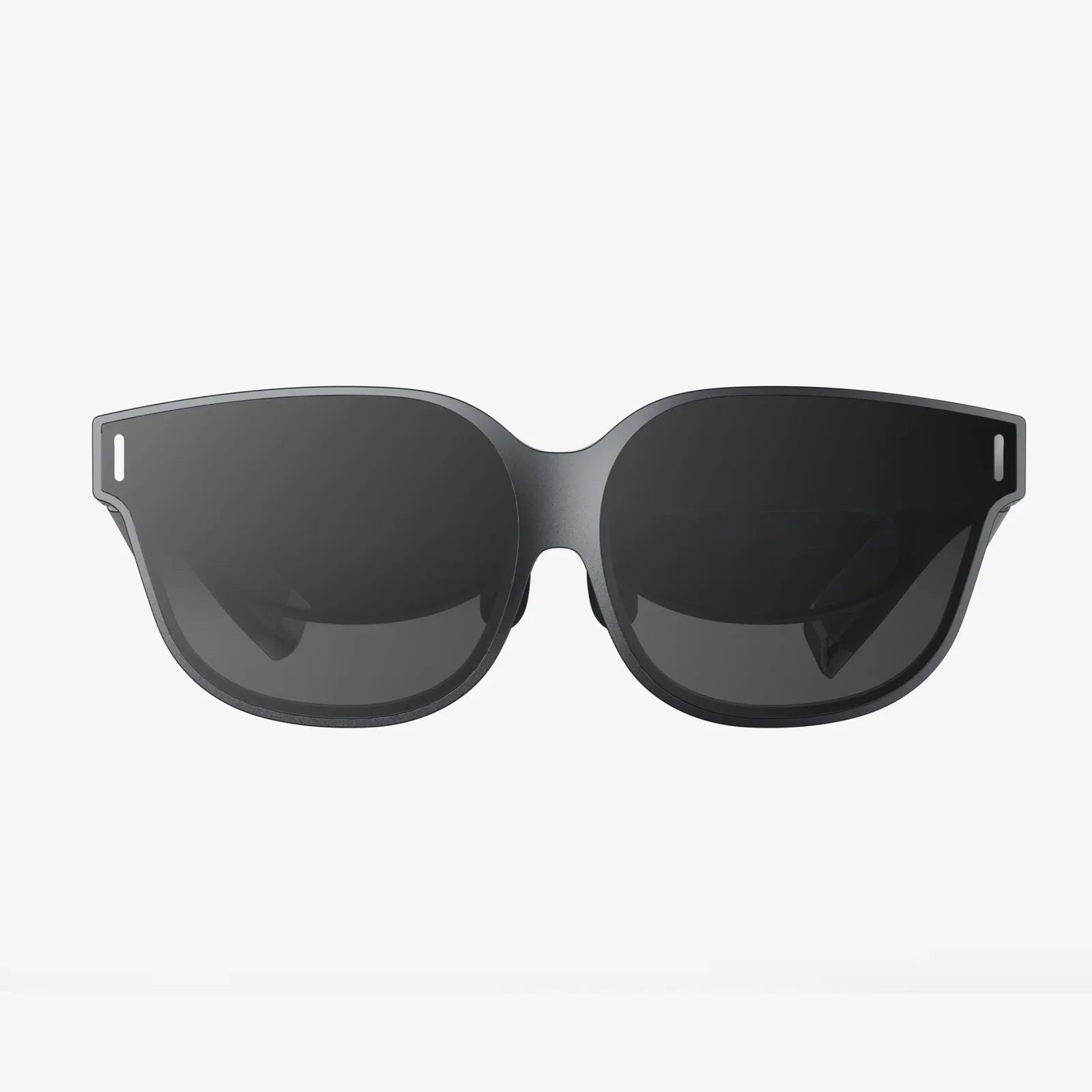
Imagine stepping through a portal into another world, a universe crafted not of atoms but of bits and pixels, where the only limit is imagination. This is the promise of virtual reality, a technology that has vaulted from the pages of science fiction into our daily lives, poised to reshape everything from how we play and learn to how we heal and connect. The journey into this digital frontier is more than a technological evolution; it's a fundamental shift in human experience, offering a glimpse into a future where the line between the physical and the virtual becomes beautifully, brilliantly blurred.
The Essence of the Experience: Defining Virtual Reality
At its core, Virtual Reality (VR) is a simulated experience that can be similar to or completely different from the real world. It is a three-dimensional, computer-generated environment that can be explored and interacted with by a person. That person becomes part of this virtual world, immersed within it, and can manipulate objects or perform a series of actions. The key differentiator between VR and other digital experiences, like watching a video on a screen, is the profound sense of immersion and presence.
Immersion refers to the technical capability of the hardware to isolate the user from their physical surroundings and present a convincing digital reality. This is achieved through a combination of specialized equipment. A head-mounted display (HMD) is the most recognizable component, housing high-resolution screens just inches from the user's eyes. This visual component is complemented by stereoscopic sound, delivering audio cues that change dynamically as the user moves their head, enhancing the believability of the environment. Finally, tracking systems—using cameras, sensors, and lasers—monitor the user's head and, often, hand positions, updating the visual display in real-time to match their perspective. This low latency, the delay between a user's movement and the corresponding update on the screen, is critical. Any significant lag can break the illusion and even cause discomfort.
Presence is the psychological outcome of successful immersion. It is the elusive, magical feeling of "being there," the suspension of disbelief where the user's brain accepts the digital world as their reality. When presence is achieved, the user stops thinking about the hardware and simply exists within the experience. This combination of immersion and presence is what makes VR a uniquely powerful medium, distinct from any that has come before it.
The Hardware That Builds Worlds: A Look at the Technology
Creating a believable virtual reality requires a sophisticated suite of technologies working in harmony. The journey begins with the Head-Mounted Display (HMD), the helmet or goggles that serves as the primary window into the virtual world. Modern HMDs contain two high-refresh-rate OLED or LCD screens, one for each eye, which display slightly different images to create a stereoscopic 3D effect, providing depth perception. Lenses placed between the eyes and the screens focus and reshape the image for a wide field of view.
Beyond sight, audio is paramount. Spatial audio, or 3D audio, technology mimics how sound waves interact with the human head and ears in the real world. Sounds can appear to come from above, below, behind, or at any distance, making a creaking door in a virtual haunted house feel terrifyingly real. For interaction, a variety of controllers exist. Standard handheld controllers, often tracked by the system, allow users to manipulate virtual objects, push buttons, and gesture. More advanced systems use haptic feedback gloves that provide a sense of touch, allowing users to feel the shape, texture, and weight of digital objects. Full-body tracking suits can even capture a user's entire movement, translating their real-world motions perfectly into the virtual space.
These systems are powered by powerful computing units, often a high-end personal computer or a gaming console, which renders the complex graphics in real-time. However, the rise of standalone, all-in-one VR headsets has made the technology more accessible by building the necessary computing power directly into the headset, untethering the user from cables and external hardware.
Beyond the Game: The Expansive Applications of VR
While often associated with immersive gaming, the applications of virtual reality extend far beyond entertainment, permeating numerous professional fields and revolutionizing traditional practices.
Revolutionizing Healthcare and Therapy
The medical sector has embraced VR for its unparalleled ability to simulate complex scenarios and create controlled environments. Surgeons now use VR for pre-operative planning, allowing them to "walk through" a complex procedure using a 3D model built from a patient's CT or MRI scans. This practice enhances precision and reduces operating time. Medical students can practice surgeries and anatomical exploration in a risk-free virtual space, accelerating their learning curve dramatically.
In therapy, VR has proven to be a groundbreaking tool. It is extensively used in exposure therapy, where patients with phobias (like fear of heights, flying, or spiders) or PTSD can be gradually and safely exposed to their triggers within a controllable virtual environment. Similarly, VR is used for physical rehabilitation, where patients recovering from strokes or injuries engage in game-like exercises that encourage movement and motor control, making the often-repetitive process more engaging and measurable.
Transforming Education and Training
VR is dismantling the walls of the traditional classroom. Instead of reading about ancient Rome, students can take a virtual field trip to walk its streets. Instead of watching a video about the solar system, they can stand on the surface of Mars. This experiential learning boosts retention and engagement by creating memorable, impactful experiences.
In corporate and industrial training, the implications are immense. From training mechanics to repair complex jet engines to preparing police officers for high-pressure situations, VR provides a safe, repeatable, and cost-effective training ground. Trainees can make mistakes without real-world consequences, building muscle memory and critical decision-making skills in a realistic yet safe simulation.
Redefining Enterprise and Design
Architects, engineers, and designers are using VR as the ultimate prototyping tool. Rather than looking at blueprints or 3D models on a screen, they can step inside their designs at a 1:1 scale. An architect can walk a client through a virtual building before a single brick is laid, allowing for changes to be made easily and cheaply. Car designers can sit inside the chassis of a new vehicle model to assess ergonomics and aesthetics. This "virtual prototype" process saves millions in development costs and drastically shortens design cycles.
Expanding Social Connection and Remote Collaboration
VR is evolving into a new platform for social interaction. Social VR platforms allow users, represented by customizable avatars, to meet, talk, play games, and watch events together in a shared virtual space. This offers a sense of shared presence that video conferencing cannot match, making it feel like you are truly in the same room with someone on the other side of the planet.
This has profound implications for remote work. Teams distributed across the globe can collaborate in a virtual boardroom, interacting with 3D data models as if they were physical objects. This level of collaboration can enhance creativity and streamline complex projects that involve three-dimensional design.
Powering New Frontiers in Retail and Real Estate
The retail industry is leveraging VR to create immersive shopping experiences. Customers can "try on" clothes using their virtual avatar or see how a new piece of furniture would look and fit in their actual living room through augmented reality overlaps. Similarly, real estate agents offer virtual tours of properties, allowing potential buyers to explore every corner of a home at their convenience, regardless of geographic location.
Navigating the Challenges and Ethical Considerations
Despite its immense potential, the path of VR is not without obstacles. A significant portion of users experiences cybersickness, a form of motion sickness caused by a disconnect between visual motion cues and the body's vestibular sense. While improving hardware and software is mitigating this, it remains a barrier for some.
Furthermore, the very power of VR—its immersive nature—raises ethical questions. Prolonged use in highly immersive environments could potentially lead to psychological effects, such as reality blurring or addiction. Data privacy is another critical concern; VR systems can collect incredibly intimate data, including biometric information like eye-tracking, movement patterns, and even emotional responses. Establishing robust ethical frameworks and data protection standards will be crucial as the technology becomes more pervasive.
The Future is Virtual: What Lies Ahead
The horizon of VR is expanding rapidly. The convergence of VR with Augmented Reality (AR) is leading to the development of Mixed Reality (MR) devices, which seamlessly blend digital objects into the real world. Advancements in haptics will soon allow us to feel virtual textures and resistance with startling realism. Brain-computer interfaces, though further out, hint at a future where we could control virtual environments with our thoughts. As the technology becomes lighter, more affordable, and more powerful, its integration into our social, professional, and personal lives will only deepen.
The door to these boundless digital realms is now open, inviting us not just to observe, but to step inside and participate. The applications we see today are merely the first brushstrokes on a vast, empty canvas, and the next decade will see this technology weave itself into the very fabric of society, redefining human potential in ways we are only beginning to imagine.
Share:
What Can Virtual Reality Be Used For: Beyond Gaming Into Our Future
Working of Touch Sensor: The Invisible Technology Powering Our Modern World