


- by wangfred
What Is Virtual Reality in AI: The Symbiotic Future of Immersion and Intelligence
- by wangfred
Imagine stepping into a world that is as responsive, unpredictable, and nuanced as our own, a digital realm where characters remember your past conversations, environments adapt to your emotional state, and challenges evolve in real-time to match your skill level. This is no longer the realm of science fiction; it is the burgeoning reality being forged at the intersection of two of the most transformative technologies of our time: Artificial Intelligence and Virtual Reality. While VR constructs the stage, AI is breathing life into it, moving beyond pre-scripted experiences to create living, breathing digital ecosystems that learn, predict, and interact. The fusion of these technologies is not merely an upgrade; it is a fundamental redefinition of what virtual experiences can be, promising to unlock applications we are only beginning to conceive. This deep dive explores the intricate tapestry of AI and VR, unraveling how intelligence is being woven into the very fabric of immersion.
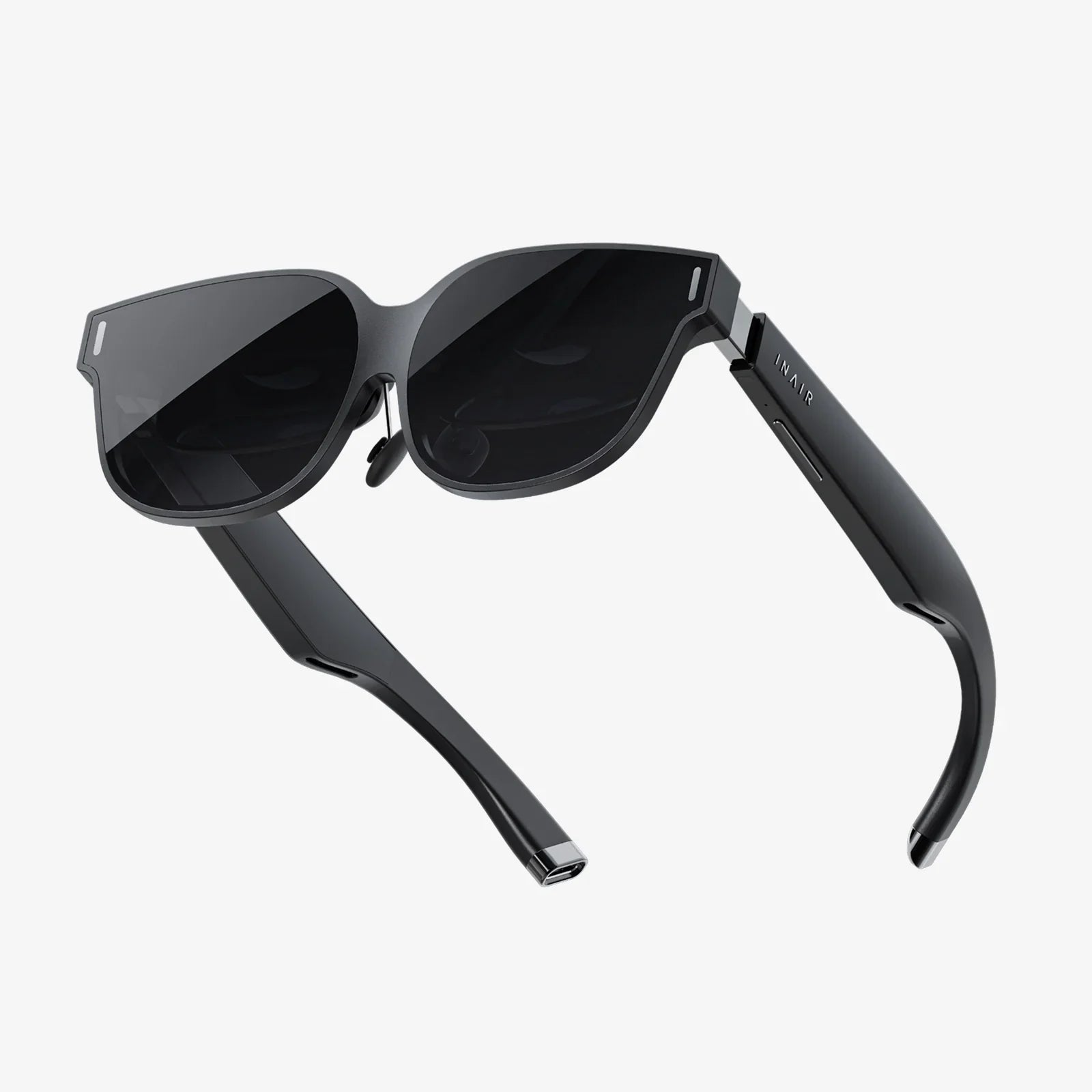
Before we can appreciate their synergy, we must first establish a clear understanding of the two core components. Virtual Reality, at its essence, is a simulated digital experience that can either mimic the real world or create entirely fantastical ones. Its primary goal is immersion—the sensation of being physically present in a non-physical space. This is achieved through a combination of head-mounted displays (HMDs), motion tracking, and sensory feedback, effectively hijacking the user's visual and auditory systems to create a convincing illusion.
Artificial Intelligence, on the other hand, is a broad field of computer science dedicated to creating systems capable of performing tasks that typically require human intelligence. This includes learning from data (machine learning), recognizing patterns (computer vision), understanding language (natural language processing), and solving complex problems. AI is the engine of cognition, enabling machines to perceive, reason, and act with a degree of autonomy.
For decades, VR and AI developed largely on parallel tracks. VR focused on the hardware and graphical fidelity required to fool the senses, while AI focused on algorithms and data processing. It is only recently that their paths have converged, creating a symbiotic relationship where each technology dramatically amplifies the capabilities of the other.
The integration of AI into VR is transforming static, predetermined virtual environments into dynamic, responsive, and intelligent simulations. This transformation occurs across several critical fronts.
In traditional VR, interactions with computer-controlled characters are often wooden and repetitive, governed by simple scripted dialogues and behaviors. This instantly shatters the illusion of a living world. AI shatters this limitation. Through techniques like Natural Language Processing (NLP) and Reinforcement Learning, AI-powered NPCs can engage in unscripted, context-aware conversations. They can understand the intent behind a user's speech, respond with emotionally appropriate dialogue, and remember past interactions, creating a sense of genuine relationship and history.
Beyond conversation, AI enables complex behavioral modeling. NPCs can now navigate dynamic environments, make decisions based on changing circumstances, and exhibit goals and personalities. In a medical training VR simulation, an AI patient can present nuanced symptoms, react realistically to a student's diagnosis, and even simulate worsening conditions based on incorrect treatment, providing an unparalleled training tool that adapts to the learner.
One of the most significant challenges in VR is creating vast, engaging content. Manually designing every asset and scenario is incredibly time-consuming and limits scope. AI, specifically through Generative Adversarial Networks (GANs) and other procedural algorithms, can solve this. AI can automatically generate entire landscapes, urban layouts, intricate 3D models, and even musical scores tailored to the VR experience.
More importantly, this generation can be dynamic. The virtual world can evolve in real-time based on the user's actions. A path not taken might cease to exist, while a city might grow and change architecture based on in-game economic choices made by the user. This creates a truly unique experience for every user, a world that feels alive and not just a pre-recorded set piece.
AI excels at pattern recognition. In VR, AI algorithms can analyze a user's behavior in real-time: where they look, how they move, their heart rate (via biometric sensors), and their choices. This data becomes fodder for personalizing the experience. The difficulty of a puzzle can subtly adjust to maintain a state of "flow," avoiding frustration or boredom. A horror experience might intensify its scares when it detects a user's heart rate has normalized, or a educational module might present information in a visual or auditory style best suited to the learner's demonstrated preferences.
This adaptive learning is transformative. It moves VR from a one-size-fits-all medium to a deeply personal journey that responds and morphs to individual psychology and performance.
AI is also revolutionizing the visual fidelity of VR. Techniques like DLSS (Deep Learning Super Sampling) use AI to intelligently upscale lower-resolution images in real-time, allowing for highly detailed graphics without the immense computational cost. This is crucial for making high-fidelity VR more accessible.
Furthermore, computer vision AI can be used for more natural user interfaces. Instead of clunky controllers, AI can enable full hand-tracking and gesture recognition, allowing users to interact with the virtual world using their natural movements. It can also be used for eye-tracking, which not only allows for foveated rendering (drastically improving performance by rendering only the user's focal point in high detail) but also provides invaluable data on user attention and engagement.
In professional and scientific contexts, the combination of VR and AI creates powerful simulation sandboxes. Architects and urban planners can place AI-driven human agents ("digital twins") inside a VR model of a new building or city square. The AI can then simulate crowd flow, emergency evacuations, or traffic patterns, identifying potential design flaws long before construction begins. This application of AI agents within a VR environment allows for the testing of countless scenarios that would be impossible, too dangerous, or too expensive to test in the real world.
The theoretical fusion of AI and VR is already yielding practical, groundbreaking applications across numerous sectors.
AI-enhanced VR is a powerful tool for exposure therapy, allowing therapists to create controlled, dynamic environments for patients with phobias or PTSD. The AI can monitor patient stress levels and adapt the exposure intensity in real-time for optimal therapeutic effect. It is also revolutionizing surgical training, providing a risk-free environment for surgeons to practice complex procedures on AI patients that bleed, react, and present complications.
Imagine a history lesson where students can converse with an AI-driven historical figure, asking any question and receiving educated, contextual responses. Or a corporate training module for public speaking where an AI audience reacts realistically, showing signs of boredom or engagement, and providing personalized feedback. This moves learning from passive absorption to active, experiential participation.
The vision of a persistent, shared virtual space (often called the metaverse) is entirely dependent on AI. AI will be needed to manage these vast digital worlds, moderate content, create engaging environments, and power the digital avatars that represent us. AI-driven translation in real-time could allow people from different languages to collaborate seamlessly in a shared VR workspace, breaking down the final barrier to global teamwork.
This powerful convergence is not without its profound ethical challenges. The data collected in VR—biometric, behavioral, and even neurological—is incredibly sensitive. The potential for manipulative experiences, hyper-realistic propaganda, or even psychological harm is significant. The line between reality and simulation may become increasingly blurred, raising questions about identity, agency, and consent within these intelligent environments. Establishing robust ethical frameworks and privacy-preserving AI will be paramount to ensuring this technology develops responsibly.
The path forward is one of continued convergence. We will see the development of more sophisticated AI models specifically designed for real-time interaction within virtual worlds. Haptic feedback technology will evolve to provide tactile sensations that match the intelligent visual and auditory stimuli, completing the immersion loop. As the hardware becomes lighter, faster, and more affordable, and the AI becomes more nuanced and powerful, the experiences will become indistinguishable from magic—or perhaps, from reality itself.
The ultimate promise of AI in VR is the creation of a mirror world—not just a visual replica of our reality, but a digital twin imbued with a form of cognition. It is a world that understands us, learns from us, and challenges us, serving as the ultimate tool for exploration, connection, and understanding, both of the universe around us and the minds within us. We are not just building new worlds; we are endowing them with a spark of life, and in doing so, we are redefining the very nature of experience itself.