


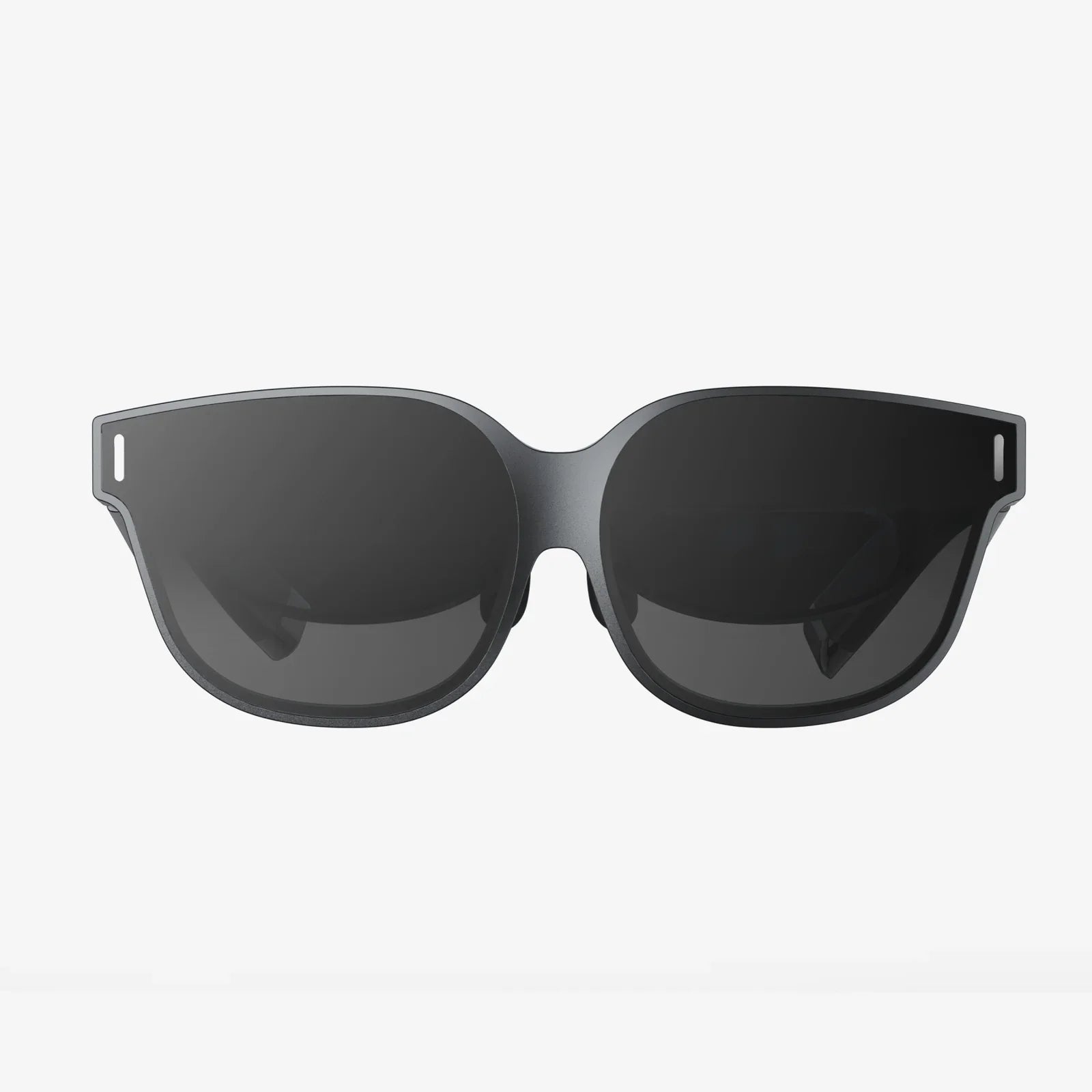
Imagine stepping through your screen into a world limited only by imagination, where the digital and physical converge to create experiences that feel tangibly real. This is the promise of virtual reality, a technological frontier that has captivated scientists, developers, and dreamers for decades. Far more than just advanced gaming, VR represents one of the most profound and complex challenges in modern computer science, pushing the boundaries of what we believe is possible in human-computer interaction. It’s a field where hardware and software merge to create the ultimate illusion, and its implications are set to reshape everything from medicine to education, manufacturing to social connection.
The Foundational Principles: Defining the Virtual
In computer science, virtual reality (VR) is a simulated, computer-generated experience that can either replicate the real world or create an entirely fictional one. It is a multidisciplinary field that sits at the intersection of computer graphics, human-computer interaction, simulation, and sensor technologies. The core objective is to create a convincing, interactive, three-dimensional artificial environment that users perceive as real through the use of specialized hardware. This is fundamentally different from a traditional user interface; instead of observing a screen in front of them, users are immersed and able to interact with 3D worlds. The computer science behind this illusion is what transforms code and data into a perceived reality.
The Pillars of Immersion: Presence, Interaction, and the Hardware Trinity
The ultimate goal of any VR system is to induce a state known as "presence"—the user's subjective psychological experience of being in the digital environment, even while physically present in another. Achieving presence is the holy grail of VR development and relies on three core technological pillars, often referred to as the "Trinity" of VR: tracking, rendering, and display.
1. Tracking: Knowing Where You Are
At its heart, VR is a data-intensive feedback loop. The system must constantly know the position and orientation (together known as "pose") of the user's head and, often, their hands. This is accomplished through a variety of sensors. Inertial Measurement Units (IMUs), containing accelerometers and gyroscopes, track rapid movements. For greater precision and to combat "drift" (where the virtual world slowly shifts due to tiny sensor errors), external or onboard cameras are used for outside-in or inside-out tracking, creating a spatial map of the environment. This continuous, high-speed data stream is the first critical input for the VR simulation, ensuring that the virtual world reacts instantly and accurately to the user's physical movements.
2. Rendering: Building the World in Real-Time
Once the system knows the user's viewpoint, the graphics engine must generate the appropriate stereoscopic view for each eye. This is one of the most computationally demanding tasks in all of computer science. Unlike pre-rendered movie CGI, VR rendering must happen in real-time, at a minimum of 90 frames per second (and often higher) to maintain smoothness and avoid inducing motion sickness. Techniques like foveated rendering, which leverages eye-tracking to render only the center of the user's gaze in high detail, are crucial innovations for managing this immense processing load. The physics engine also runs simultaneously, calculating object interactions, gravity, and collisions to make the world behave believably.
3. Display: Filling Your Field of View
The rendered images are then sent to a high-resolution display housed within a head-mounted display (HMD). The screens are placed very close to the eyes, with lenses in between that focus and warp the image to fill the user's field of view. This wide field of view is critical for immersion, preventing the "binoculars effect" of early VR systems. Low-persistence display technology is also used, where the screen flashes each frame briefly instead of staying constantly lit, drastically reducing motion blur as the user turns their head. This combination of optics and display technology is what transforms the flat, rendered images into a seemingly deep, three-dimensional space.
The Software Architecture: The Engine of Illusion
Beneath the hardware lies a complex stack of software that makes VR possible. This includes low-level drivers that communicate with the sensors and displays, middleware that provides core VR functionality, and the game engines that most developers use to build experiences.
Game Engines and SDKs
Modern VR development is predominantly built upon powerful game engines. These engines provide the tools for modeling environments, scripting interactions, applying textures and lighting, and, most importantly, integrating with VR Software Development Kits (SDKs). An SDK standardizes access to the hardware, providing a unified API for developers to handle tracking data, controller input, and communication with the HMD. This abstraction layer is vital, as it allows developers to create one application that can run across a variety of different VR hardware platforms without needing to write custom code for each device.
The Graphics Pipeline and 3D Asset Creation
The journey of a virtual object to the user's eyes is a marvel of computer graphics. It begins with 3D models—meshes of polygons created in digital content creation tools. These models are given properties through materials and textures. The engine's graphics pipeline then takes these assets, along with virtual lights and the user's viewpoint, and processes them through a series of mathematical stages. This includes transformation (placing objects in the world), rasterization (converting 3D shapes into 2D pixels), and shading (calculating the color of each pixel based on lighting and texture). All of this happens billions of times per second to create a single, fluid VR experience.
Overcoming the Great Challenge: Latency and Simulator Sickness
The single greatest technical enemy of VR is latency—the delay between a user's movement and the corresponding update on the display. Even a delay of 20 milliseconds can shatter the illusion of presence and, worse, induce simulator sickness (a form of motion sickness). The human vestibular system in the inner ear, which senses motion, becomes conflicted with the visual system, which sees motion, and this sensory mismatch causes discomfort. Computer scientists combat this through a relentless focus on optimization at every level: from writing highly efficient rendering code and using predictive algorithms to guess head movement a few milliseconds into the future, to ensuring the entire hardware-software pipeline is streamlined for speed. This fight against latency is a constant driver of innovation in real-time systems programming.
Applications Far Beyond Entertainment
While gaming is the most visible application, the true power of VR in computer science is its utility as a tool for simulation, visualization, and training.
- Medical Training and Therapy: Surgeons practice complex procedures on virtual anatomy, eliminating risk. VR is also used for exposure therapy, helping patients confront phobias in a safe, controlled environment, and for physical rehabilitation, turning exercises into engaging games.
- Architectural Design and Engineering: Architects and clients can "walk through" a building long before the foundation is poured. Engineers can visualize complex machinery from the inside out, identifying potential design flaws and planning maintenance procedures.
- Education and Research: Students can take field trips to ancient Rome, the bottom of the ocean, or the surface of Mars. Scientists can visualize and interact with massive datasets, from molecular models to astrophysical simulations, gaining insights that would be impossible from a 2D graph.
- Remote Collaboration and Telepresence: With the rise of remote work, VR offers the potential for "holoportation," where colleagues from around the world can meet in a shared virtual space as lifelike avatars, interacting with 3D models and data as if they were in the same physical room.
The Future Horizon: Challenges and Emerging Frontiers
The path forward for VR in computer science is paved with both exciting possibilities and significant hurdles. Research is ongoing into haptic feedback technology that will allow users to truly "feel" virtual objects, using forces, vibrations, and even ultrasonic waves. The concept of the "metaverse," a persistent network of interconnected virtual worlds, presents immense challenges in networking, data synchronization, and scalability. Furthermore, the pursuit of photorealistic graphics in real-time continues to push the limits of processing power, driving demand for more advanced algorithms and hardware. As the technology matures, computer scientists will also need to grapple with critical ethical questions surrounding data privacy, psychological effects, and accessibility to ensure this powerful tool benefits all of humanity.
The journey into the virtual is just beginning. What started as a niche field of academic research has exploded into a powerhouse of innovation, challenging our very definitions of reality and interaction. As the hardware becomes more comfortable, the software more intelligent, and the experiences more compelling, the line between our physical and digital lives will continue to blur. This isn't about escaping reality; it's about augmenting it, enhancing our human capabilities to learn, create, and connect in ways we are only starting to envision. The next time you see someone immersed in a headset, know that you are witnessing not just a game, but the nascent stages of a fundamental shift in computing, a silent revolution built upon decades of computer science research that is finally ready to change everything.
Share:
3D Interaction The Future of How We Connect with Digital Worlds
My AR Glasses Can See Various State: A New Era of Perception