


- by wangfred
What Is Virtual Reality Simple Definition: A Deep Dive Into The Digital Universe
- by wangfred
Imagine strapping a device to your head and instantly being transported. You're no longer in your living room; you're walking on the surface of Mars, examining dusty red rocks under a pinkish sky. You're standing on the edge of a skyscraper, feeling a visceral lurch in your stomach as you peer down at miniature cars below. You're inside the human bloodstream, a colossal voyager navigating past giant red and white blood cells. This is the immediate, awe-inspiring power of Virtual Reality, a technology that promises not just to show you a new world, but to make you believe, on a fundamental level, that you are actually within it. But to truly grasp its potential, we must first answer the foundational question: what is virtual reality simple definition?
At its most fundamental level, a simple definition of Virtual Reality (VR) is: a computer-generated simulation of a three-dimensional environment that can be interacted with in a seemingly real or physical way by a person using special electronic equipment. This definition, while accurate, is a seed from which a vast and complex tree of technology and experience grows. Let's break down the key components that make this definition come alive.
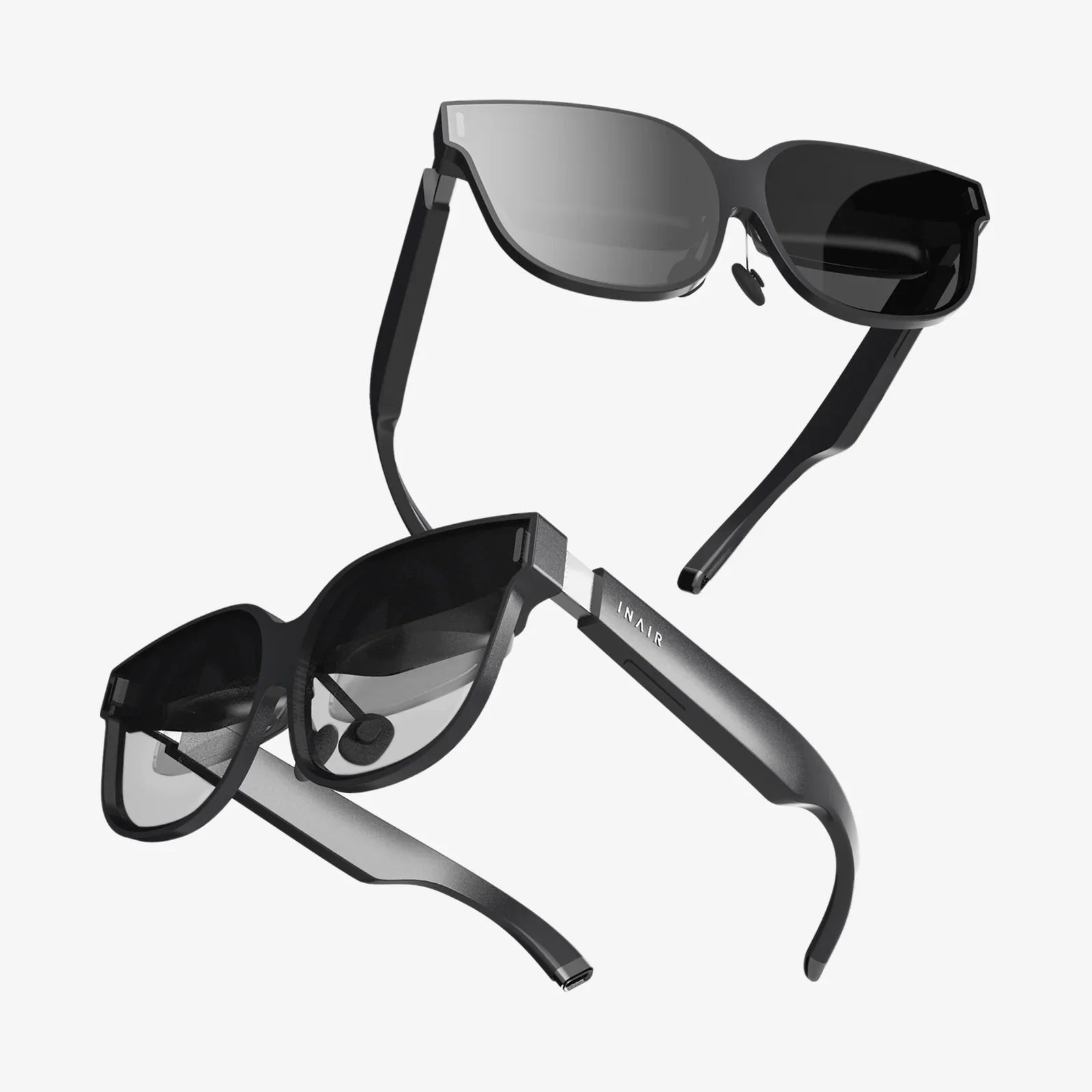
The first and most critical element is immersion. Immersion is the technical magic trick of convincing your brain that the digital world it's perceiving is your current reality. This is achieved primarily through a head-mounted display (HMD), more commonly known as a VR headset. These devices contain small high-resolution screens placed just inches from your eyes, filling your entire field of view with the virtual environment. This visual isolation is paramount; by blocking out your physical surroundings, the headset becomes a gateway to another place.
However, a visual scene alone is not enough to create a believable illusion. This leads to the second pillar: interactivity. Unlike watching a 3D movie where you are a passive observer, true VR allows you to interact with the digital world. This is where motion tracking and controllers come into play. Sophisticated sensors—which can be external cameras or built inside the headset itself—constantly monitor the position and orientation of your head and, crucially, your hands. When you move your head up, the view in the headset pans upward. When you reach out with a motion-tracked controller to pick up a virtual object, you see your digital hand mimic your action, and you may even feel a haptic “click” or vibration in the controller, simulating touch. This real-time feedback loop between your actions and the environment's reaction is what transforms a panoramic video into a virtual reality.
Creating a seamless and comfortable VR experience is a ballet of complex technologies working in perfect harmony. It's a feat of engineering designed to trick the most sophisticated system we know: the human sensory system.
Human vision is stereoscopic. We have two eyes, each seeing a slightly different image, and our brain combines them to perceive depth. VR headsets replicate this by displaying two slightly different images, one for each eye, on the internal screens. This creates a powerful sense of depth and scale, making objects appear solid and exist in three-dimensional space. Furthermore, a wide field of view (typically over 100 degrees) is essential to sell the illusion. A narrow field of view feels like looking through binoculars, constantly reminding you of the device on your face. A wide field of view, however, more closely matches human vision, pulling you deeper into the experience.
For the virtual world to respond to you, the system must know your precise position and orientation in real-time. This is done through a technology called six degrees of freedom (6DoF). This means the headset tracks not just your rotational movements (like turning your head left/right or nodding yes/no—three degrees of freedom) but also your positional movements (leaning side-to-side, ducking, moving forward/backward—the other three degrees). Early consumer VR used 3DoF, which felt limited. Modern 6DoF tracking, achieved through external lasers (like Lighthouse basestations) or inside-out cameras on the headset itself, allows you to physically walk around, crouch behind virtual cover, or peek around corners, making the experience profoundly more natural and immersive.
Perhaps the most technically demanding aspect of VR is the need for extremely low latency. Latency is the delay between your physical movement and the corresponding update of the image in the headset. If you turn your head and the view takes even a few dozen milliseconds to catch up, it can cause disorientation, eye strain, and simulator sickness—a feeling similar to motion sickness. To avoid this, VR systems must run at very high frame rates (90 frames per second or higher) and have total motion-to-photon latency of less than 20 milliseconds. This requires immense processing power to render complex scenes twice (once for each eye) at these blistering speeds, which is why powerful computing hardware is often recommended.
Not all virtual reality is created equal. The level of immersion and interactivity can vary significantly, leading to different categories of VR experiences.
This is the gold standard, what most people imagine when they hear “VR.” It utilizes a head-mounted display with full positional tracking (6DoF), motion controllers, and often additional peripherals like haptic vests or omnidirectional treadmills. This setup provides the highest level of immersion, allowing for complete freedom of movement and interaction within the digital world. It's used for high-end gaming, professional simulation, and advanced social spaces.
This might sound like a contradiction, but it's actually the most common form of virtual environment. A standard video game played on a monitor is a non-immersive VR experience. You are controlling a character in a virtual world, and you are mentally engaged, but you lack the sensory immersion of a headset. Your physical surroundings remain your primary reality.
This category sits in the middle. Think of a flight simulator used for pilot training. It may feature a large, curved projection screen that fills a significant portion of your field of view, a realistic cockpit replica you can sit in and touch, and a motion platform that physically tilts and shakes. You are partially immersed in the visual and physical experience, but you are still aware of the real world around the edges of the screen. Large-scale visualization systems used by architects and engineers also fall into this category.
This is less about the hardware and more about the application. This emerging facet of VR focuses on creating shared virtual spaces where people, represented by digital avatars, can meet, interact, and collaborate as if they were physically together. This extends the simple definition from a solitary experience to a communal one, with profound implications for remote work, education, and social connection.
While gaming is the most visible and commercially successful application of VR, the technology's potential stretches into nearly every facet of modern life.
VR offers the ultimate interactive textbook. Instead of reading about ancient Rome, history students can take a guided tour through a digitally reconstructed Forum. Medical students can practice complex surgical procedures on virtual patients, making mistakes without consequences. Mechanics can learn to repair a new engine model by taking it apart and putting it back together in VR first. This “learning by doing” in a safe, repeatable, and cost-effective environment is transformative.
Therapeutic applications of VR are vast and growing. It is used for exposure therapy, helping patients with phobias (like fear of heights or flying) confront their triggers in a controlled, gradual way. It's used for physical rehabilitation, turning repetitive exercises into engaging games. It can also serve as a powerful distraction tool for patients suffering from acute pain or undergoing stressful treatments, immersing them in calming environments to reduce their perceived pain and anxiety.
Architects and designers are using VR to step inside their creations long before the first brick is laid. They can walk through a building at human scale, checking sightlines, lighting, and spatial flow in a way blueprints or static 3D models could never allow. Car designers can sit in the driver's seat of a vehicle that only exists as data, evaluating the dashboard layout and ergonomics. This prevents costly mistakes and leads to better, more human-centric design.
The future of remote work may not be a grid of video calls, but a shared virtual office. Colleagues from across the globe could meet around a virtual whiteboard, manipulating 3D models with their hands as naturally as if they were in the same room. This sense of “presence”—the feeling of actually being with someone—is something flat screens cannot replicate, potentially rebuilding the social and collaborative fabric of distributed teams.
For all its promise, VR is not without its challenges. The technology can be expensive, creating a barrier to entry. Prolonged use can cause eye strain, simulator sickness, or disorientation for some users, though these issues are diminishing with each new hardware generation. There are also broader social and ethical questions about data privacy in these immersive platforms and the long-term psychological effects of spending significant time in synthetic worlds. Furthermore, creating high-quality VR content remains a complex and resource-intensive endeavor.
So, what is virtual reality simple definition? It is the art and science of building a convincing lie, a digital reality so compelling that our senses accept it as truth. It is a portal, a tool, and a new medium for human experience that is rapidly evolving from a science fiction trope into a tangible part of our present. It is the culmination of decades of research in computer graphics, human-computer interaction, and sensory psychology, all focused on one goal: to break the final screen and let us step through.
The journey into virtual reality is just beginning. As the headsets become lighter, the graphics more photorealistic, and the haptic feedback more nuanced, the line between the digital and the physical will continue to blur. We are moving towards a future where VR is not just about escaping our reality, but about enhancing it—attending a concert with friends from a thousand miles away, learning a new skill through embodied practice, or exploring the boundaries of human creativity in spaces limited only by imagination. The simple definition is merely the starting point; the true story of VR is the one we are all about to write together.