


Imagine stepping through your living room wall and into the heart of a Jurassic jungle, feeling the mist from a waterfall on your skin and hearing the distant cry of a pterodactyl. Or picture yourself standing on the surface of Mars, looking up at the faint, small sun, your boots crunching on the red dust. This is the promise, the magic, and the sheer transformative power of Virtual Reality technology. It’s not just another screen; it’s a passport to impossible places, and it’s reshaping our world from the inside out.
The Core Principle: Crafting Convincing Digital Realities
At its simplest, Virtual Reality (VR) is a computer-generated simulation of a three-dimensional environment that can be interacted with in a seemingly real or physical way by a person using special electronic equipment. But that dry definition barely scratches the surface. The true goal of VR is not just to show you a new world, but to make you believe you are within it. This state is known as presence – the undeniable, subconscious feeling of being transported to another place.
This illusion is achieved through a sophisticated combination of hardware and software designed to hijack your senses, primarily sight and sound, and increasingly touch and even smell. It’s a feat of technological deception that requires immense computational power and clever engineering to feel seamless.
A Brief Stroll Through The History Of Virtual Worlds
The dream of virtual worlds is not new. In the 1950s, cinematographer Morton Heilig created the Sensorama, a bulky mechanical arcade cabinet that played short films while engaging multiple senses with stereo sound, wind, and even odors. He called it the "cinema of the future." In 1968, computer scientist Ivan Sutherland and his student Bob Sproull created The Sword of Damocles, widely considered the first head-mounted display (HMD) system. It was so heavy it had to be suspended from the ceiling and offered only simple wireframe graphics, but the concept was born.
The term "Virtual Reality" was popularized in the late 1980s by Jaron Lanier, whose company developed some of the first commercial goggles and haptic gloves. The 1990s saw a wave of consumer excitement and subsequent disappointment as the technology proved too immature and costly. It wasn't until the 2010s, with the advent of powerful smartphones (which provided high-resolution displays and motion sensors) and a renewed push from independent developers, that affordable and compelling VR headsets finally entered the mainstream market, launching a new era of development.
Deconstructing The Hardware: How A VR Headset Works
A modern VR headset is a marvel of miniaturization, packing a suite of technologies that work in concert to create immersion.
The Display and Lenses
Your eyes are the first gateway. Inside the headset, a high-resolution screen (or two, one for each eye) is placed mere centimeters from your face. Between your eyes and the screen are specialized lenses that focus and reshape the image, making it fill your entire field of view (FOV). A wide FOV is critical for immersion, preventing the "binoculars effect" where you feel you are looking into a world rather than being surrounded by it. These lenses also allow your eyes to relax, as they focus on the image as if it were several feet away, not inches.
Tracking: The Magic of Movement
This is the heart of the VR experience. For the illusion to hold, the virtual world must respond to your movements with perfect, lag-free precision. This is achieved through precise tracking.
- Rotational Tracking: This is handled by an Inertial Measurement Unit (IMU), which includes a gyroscope, accelerometer, and magnetometer. It tracks the orientation of your head—whether you're looking up, down, or turning side to side.
- Positional Tracking: Knowing which way you're facing isn't enough; the system must also know if you're crouching, leaning, or walking around. This is done either by external sensors (called base stations) placed in the room that track lights on the headset, or via inside-out tracking. Inside-out tracking uses tiny cameras on the headset itself to look at the real world, identify features, and triangulate its position in space, all without external hardware.
Audio and Input
3D Spatial Audio is arguably as important as the visual. Sounds in VR come from specific points in the 3D space. If a robot beeps behind your right shoulder, you will hear it in your right ear. This auditory cue is incredibly powerful for selling the reality of a space. Input is handled through dedicated motion controllers, which are also tracked in 3D space. These controllers have buttons, triggers, and haptic feedback motors that let you reach out, grab objects, and feel a subtle vibration when you interact with the virtual world. More advanced systems even track your individual fingers, allowing for expressive gestures.
The Software That Breathes Life Into The Machine
Hardware is nothing without software. The core software that makes VR possible is the rendering engine. This engine has to draw two slightly different perspectives for your eyes (stereoscopic vision) at an exceptionally high frame rate—typically 90 frames per second (FPS) or higher. If the frame rate drops, it can cause latency (a delay between your movement and the screen updating), which is a primary cause of motion sickness.
To maintain this performance, developers use clever techniques like foveated rendering, which leverages eye-tracking technology to render only the area you are directly looking at in full detail, while the peripheral vision is rendered at a lower resolution. This drastically reduces the computational load.
Beyond Gaming: The Expansive Applications Of VR
While gaming is the most famous application, the uses for VR extend far beyond entertainment, revolutionizing numerous professional fields.
Education and Training
VR offers a safe, cost-effective, and incredibly effective training environment. Medical students can practice complex surgical procedures on virtual patients, making mistakes without consequence. Astronauts use VR to simulate spacewalks. Mechanics can train on virtual engines, and firefighters can rehearse navigating burning buildings. The power of "learning by doing" in a simulated environment drastically improves retention and skill acquisition.
Healthcare and Therapy
Therapists are using VR for exposure therapy, helping patients with phobias (like fear of heights or flying) confront their triggers in a controlled, gradual way. It's also used for pain management, where immersive experiences can distract patients during painful procedures, and for physical rehabilitation, where exercises can be turned into engaging games.
Design and Architecture
Architects and interior designers are using VR to create walkthroughs of unbuilt structures. Clients can don a headset and literally walk through their future home, experiencing the scale of a room and the flow of a space long before the first brick is laid. This allows for changes to be made at the design stage, saving immense time and resources.
Social Connection and Remote Work
The concept of the "metaverse" is predicated on VR as a platform for social interaction. Virtual meeting spaces allow colleagues from across the globe to collaborate as if they were in the same room, using whiteboards, 3D models, and avatars that convey body language. It’s a step beyond video conferencing, offering a sense of shared presence that flat screens cannot provide.
The Challenges On The Road To Perfection
Despite its advances, VR technology still faces significant hurdles. The issue of motion sickness, or "sim sickness," affects a portion of users, often caused by a mismatch between what the eyes see and what the inner ear feels. Reducing latency and improving visual fidelity are key to solving this.
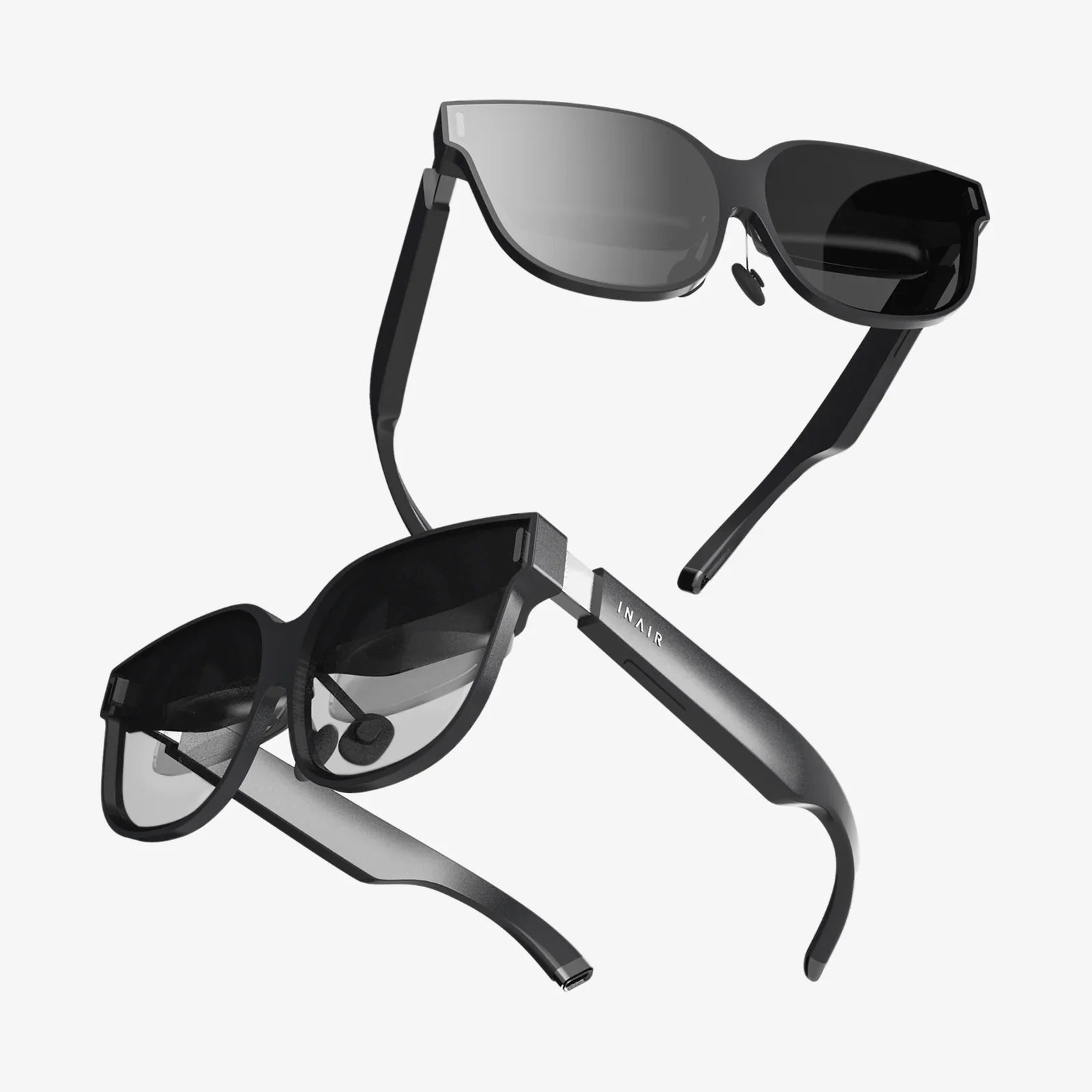
There are also questions of accessibility, cost, and social acceptance. Headsets are becoming lighter and more comfortable, but the ideal form factor—something akin to a pair of sunglasses—is still years away. Furthermore, the long-term psychological and social effects of spending significant time in virtual spaces are still being studied.
Peering Into The Crystal Ball: The Future Of VR
The trajectory of VR points towards greater realism, deeper immersion, and more seamless integration into daily life. We are moving towards haptics that go beyond simple vibration to simulate the feel of textures and resistance, and varifocal displays that dynamically adjust to where your eyes are focused, making long sessions more comfortable.
The ultimate goal is what many call the "holodeck" experience—a perfect simulation indistinguishable from reality, achieved through direct neural interfaces. While that remains in the realm of science fiction, the progress is relentless. VR is evolving from a niche gadget into a fundamental computing platform, a new medium for human experience that will transform how we learn, work, connect, and understand reality itself.
The wall between the physical and the digital is not just thinning; it's becoming a door. And with every technological leap, that door swings wider open, inviting us to step across a threshold into limitless possibility. The question is no longer what is VR technology, but rather, where will you go first?
Share:
Super AI Tools Are Reshaping Our World, Here's How and Why
Best AR Glasses for Developers 2025: The Ultimate Guide to Coding in a New Dimension