


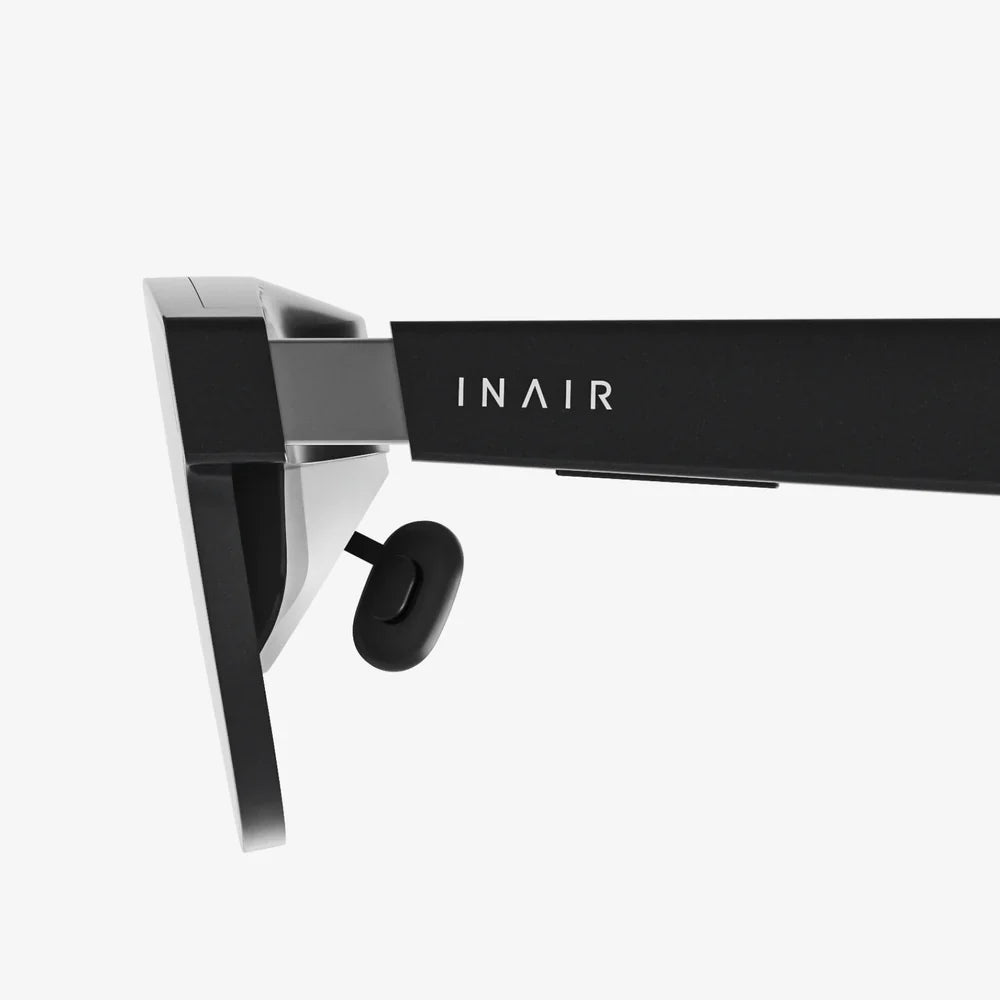
Imagine a world where the digital universe doesn’t live on a screen in your pocket or on your desk, but is seamlessly woven into the very fabric of your perception. A world where information, communication, and computation are available instantly, hands-free, and in the context of your immediate surroundings. This is no longer the realm of science fiction; it is the emerging reality made possible by wearable computer glasses, a revolutionary technology poised to redefine our relationship with information and with each other. This is the next great leap in personal computing, and it’s happening right before our eyes.
Beyond Science Fiction: Defining the Modern Wearable Computer
At its core, wearable computer glasses are a head-mounted device that superimposes digital information—such as text, images, videos, and 3D models—onto the user's field of view. Unlike virtual reality (VR) headsets that create a fully immersive, artificial environment, or augmented reality (AR) applications on a smartphone that require looking through a small window, computer glasses are designed to keep the user present in their real-world environment while augmenting it with contextual data. They are a form of optical head-mounted display (OHMD), representing a convergence of optics, miniaturized computing, sensor technology, and advanced software.
The fundamental components that make these devices possible include:
- Micro-displays: Tiny, high-resolution screens, often using technologies like Liquid Crystal on Silicon (LCoS) or MicroLED, that project the digital imagery.
- Waveguide Optics: Sophisticated transparent lenses or prisms that act as a combiner, reflecting the projected light from the micro-displays into the user’s eye while allowing ambient light to pass through. This creates the illusion that the digital content is floating in space several feet away.
- Onboard Compute Unit: A miniaturized processing system, often including a Central Processing Unit (CPU), Graphics Processing Unit (GPU), and memory, which powers the device’s operations. This can be housed within the glasses frame itself or in a separate, small companion device that connects wirelessly.
- Sensor Suite: A critical array of sensors that understand the environment and the user. This typically includes inertial measurement units (IMUs) for tracking head movement, cameras for computer vision, ambient light sensors, microphones, and often depth sensors or LiDAR for spatial mapping.
- Connectivity: Modules for Wi-Fi and Bluetooth allow the glasses to connect to the internet and to other devices, such as smartphones or keyboards.
- Battery: A compact, high-density battery that provides the necessary power, with advancements constantly being made to extend usage time.
- Audio System: Innovative solutions like bone conduction transducers or miniature directional speakers provide private audio without obstructing the ear, allowing the user to hear both digital sounds and the real world simultaneously.
A Spectrum of Form and Function: From Assisted Reality to Full Augmentation
Not all wearable computer glasses are created equal. They exist on a spectrum, often categorized by their level of immersion and computational intensity.
- Assisted Reality (aR): These devices typically feature a small, monochrome display in the corner of the user’s vision. Their primary function is to deliver timely, glanceable information—like text messages, navigation arrows, or workflow instructions—without overwhelming the user. They are designed for all-day wear, focusing on utility and efficiency in specific professional tasks, and often have longer battery life.
- Augmented Reality (AR): This category represents the full vision of the technology. AR glasses feature richer, often full-color displays that can overlay complex 3D graphics and animations onto the real world. They rely heavily on their sensor suite to understand and map the environment, allowing digital objects to interact with physical surfaces. The experience is more immersive and computationally demanding, which often impacts battery life and form factor.
The Real-World Impact: Applications Transforming Industries Today
The theoretical potential of this technology is vast, but its practical applications are already delivering tangible value across numerous sectors. The hands-free, context-aware nature of computer glasses makes them uniquely suited for tasks where efficiency, accuracy, and safety are paramount.
Revolutionizing Field Service and Manufacturing
In industrial settings, technicians and assemblers are using computer glasses to access digital work instructions, schematics, or video tutorials overlaid directly on the machinery they are repairing or assembling. This eliminates constant looking back and forth between a physical manual or a tablet, reducing errors and dramatically speeding up complex procedures. Remote experts can see what the on-site worker sees through a live video feed and annotate the worker's real-world view with arrows and notes, enabling expert guidance from anywhere in the world without the cost and delay of travel.
Enhancing Healthcare and Surgery
Surgeons can have vital patient statistics, ultrasound images, or 3D anatomical models projected within their line of sight during procedures, allowing them to maintain focus on the patient without turning away from the operating table. Nurses and clinicians can use the glasses for hands-free access to electronic health records, medication information, and dosage calculations, improving patient safety and workflow efficiency.
Logistics and Warehouse Management
In massive distribution centers, pickers and packers receive order information and optimal routing directions directly in their glasses, guiding them to the correct bin locations with visual cues. This streamlines the fulfillment process, increases picking accuracy, and allows workers to keep their hands free for handling packages, leading to significant gains in productivity.
New Frontiers in Training and Education
Imagine a medical student practicing a complex procedure on a holographic cadaver, or a mechanic learning to repair a new engine model with interactive 3D instructions layered over the physical components. Wearable computer glasses enable immersive, interactive learning experiences that are far more effective than textbooks or videos, allowing for learning by doing in a risk-free environment.
Navigating the Challenges: The Road to Mass Adoption
Despite the exciting progress, several significant hurdles must be overcome for wearable computer glasses to achieve widespread consumer adoption.
- Form Factor and Social Acceptance: The classic challenge of "glasshole" stigma persists. For many, wearing bulky, obvious technology on their face feels socially awkward and aesthetically unappealing. The ultimate goal is a device that is indistinguishable from regular eyeglasses—lightweight, stylish, and comfortable for all-day wear. Current technology often forces a trade-off between capability and form factor.
- Battery Life: Powering a high-resolution display, multiple sensors, and a powerful processor is incredibly demanding. Many advanced prototypes struggle to offer more than a few hours of active use, which is insufficient for a device meant to be worn throughout the day. Breakthroughs in battery technology and power efficiency are critical.
- User Interface (UI) and Interaction: How does one interact with a screen that is projected onto their retina? Touchscreens are not an option. Developing intuitive, seamless, and socially acceptable input methods is a major focus. Current solutions include voice commands, touchpads on the temple, gesture recognition using onboard cameras, and even emerging technologies like neural interfaces.
- Privacy and Security: Devices with always-on cameras and microphones understandably raise serious privacy concerns for both wearers and non-wearers. Establishing clear social norms, robust ethical guidelines, and ironclad security measures to prevent unauthorized access and data harvesting is not just a technical challenge but a societal imperative.
- Digital Eye Strain and Health: The long-term effects of having a bright digital display constantly in one's field of vision are not yet fully understood. Issues like eye fatigue, headaches, and the potential impact of blue light exposure need to be thoroughly researched and mitigated through advanced optical design.
The Future in Focus: Where Do We Go From Here?
The trajectory of wearable computer glasses points toward a future of even deeper integration into our daily lives. We can anticipate several key developments:
- The Disappearance of the Device: The technology will continue to shrink, becoming lighter, more powerful, and ultimately fading into the background of a standard eyeglass form factor.
- The Rise of the Spatial Web: Computer glasses will be the primary interface for the spatial web—a version of the internet where digital information is mapped to specific locations and objects in the physical world. The world itself will become the user interface.
- Contextual and Predictive Intelligence: With advanced AI, the glasses will evolve from a passive display to an active assistant, anticipating your needs and presenting the right information at the right time based on your location, schedule, and behavior.
- Revolutionized Social Connection: Communication could shift from flat video calls to shared augmented spaces where holographic representations of people can interact with shared 3D objects as if they were in the same room.
The journey of wearable computer glasses is just beginning. They represent more than just a new gadget; they are a fundamental shift in the paradigm of human-computer interaction. They promise to unlock new levels of human potential, enhance our capabilities, and deepen our understanding of the world around us. The boundary between the digital and the physical is blurring, and the view through these lenses is showing us a glimpse of a truly extraordinary future.
We stand at the precipice of a new sensory dimension, where the line between helper and hologram, between assistant and augmentation, is set to vanish forever. The next time you look at someone wearing a seemingly ordinary pair of glasses, look closer—they might not just be seeing the world, but an entirely new layer of reality you can’t yet perceive. The age of on-eye computing isn't coming; it's already here, and it's waiting for you to take a closer look.
Share:
What Do Augmented Reality Glasses Do: A Deep Dive Into The Future On Your Face
How Augmented Reality Glasses Work: A Deep Dive into the Digital Overlay