


- by wangfred
What Is XR In Virtual Reality: The Ultimate Guide To Extended Reality
- by wangfred
Imagine a world where the digital and the physical aren't just connected but are seamlessly interwoven, where your surroundings can be augmented with information, your workspace can be an infinite virtual canvas, and the line between what's real and what's computer-generated becomes beautifully blurred. This isn't a distant sci-fi fantasy; it's the present and future being built today under the banner of Extended Reality. If you've heard the term "XR" buzzing around conversations about virtual reality, you're on the cusp of understanding the next great leap in how we will interact with technology, data, and each other.
For years, Virtual Reality (VR) and Augmented Reality (AR) have been the dominant terms, often used to describe two distinct experiences. VR immerses you in a completely digital environment, while AR overlays digital content onto the real world. However, as technology evolved, these lines began to blur, giving rise to more complex and hybrid experiences. The industry needed a term that could encompass this entire spectrum of technologies that alter reality through digital content. Enter Extended Reality, or XR.
XR is not a specific technology itself, but rather an umbrella term that covers all immersive technologies. It is the superset that includes:
Think of it as a spectrum. On one end, you have the completely real environment, and on the other, a fully virtual one. AR is closer to the real world, VR is at the fully virtual end, and MR sits in the complex middle ground, merging the two in a cohesive way. XR is the term that captures every point on this spectrum.
The magic of XR doesn't happen by accident. It is powered by a sophisticated convergence of hardware and software advancements that work in tandem to create convincing and interactive experiences.
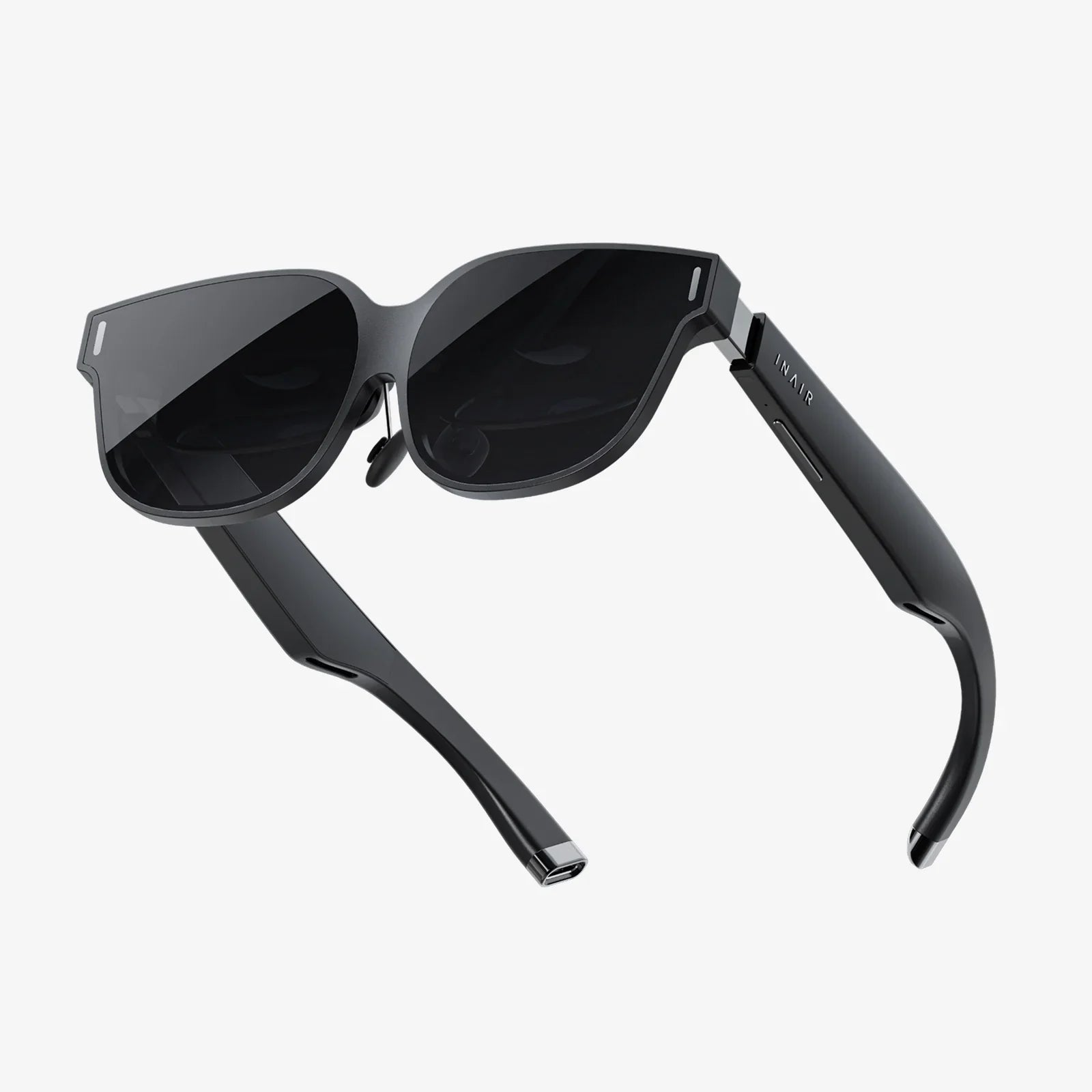
The primary interface for XR is the head-mounted display (HMD), though experiences can also be accessed via smartphones and projectors. These devices are packed with a suite of sensors and components:
On the software side, the creation of XR experiences relies on powerful game engines, which provide the tools to render 3D environments, physics, and lighting. Spatial mapping software scans and digitizes the physical environment, creating a mesh that allows virtual objects to understand and interact with real-world surfaces. This is the foundation for occlusion, where a real-world table can hide a virtual object behind it, a key feature for believable MR. Furthermore, the development of robust software development kits (SDKs) has democratized creation, allowing developers to build applications for these platforms more efficiently.
While gaming and entertainment are the most visible applications, the true potential of XR lies in its capacity to solve real-world problems and revolutionize professional workflows across the economy.
XR is proving to be a lifesaving tool. Surgeons use AR overlays to visualize patient anatomy, such as veins or tumors, directly on their body during procedures, improving precision and safety. Medical students practice complex surgeries in risk-free VR simulations, and VR is also being used for pain management, physical therapy, and treating phobias and PTSD through controlled exposure therapy.
From design to maintenance, XR is streamlining industrial processes. Engineers and designers can collaborate on life-sized 3D prototypes of cars or buildings in a shared virtual space, identifying issues before any physical materials are used. On the factory floor, assembly line workers can use AR smart glasses to see digital instructions overlaid on the machinery they are repairing, reducing errors and training time. Remote experts can see what a field technician sees and provide visual guidance from thousands of miles away.
XR creates immersive learning experiences that are impossible with textbooks. Students can take virtual field trips to ancient Rome, explore the human body from the inside, or manipulate complex molecular structures. This experiential learning leads to dramatically improved knowledge retention and engagement.
Imagine trying on clothes, glasses, or makeup virtually from your home, or seeing how a new sofa would look and fit in your living room before you buy it. XR makes this possible. In the realm of remote work, VR meeting spaces offer a sense of presence and shared space that video calls cannot, fostering better collaboration and a stronger company culture for distributed teams.
Despite its immense potential, XR faces significant hurdles before it becomes as ubiquitous as the smartphone.
The trajectory of XR points towards a more integrated and invisible future. We are moving towards sleek, socially acceptable glasses that will eventually replace our smartphones as the primary portal to digital information. Advances in haptic technology will allow us to feel virtual objects, and breakthroughs in eye-tracking and brain-computer interfaces could lead to control systems driven by our gaze and thoughts.
The ultimate goal is what researchers call the "Visual Turing Test"—creating a virtual experience so indistinguishable from reality that a human cannot tell the difference. While that remains on the horizon, each year brings us closer. The convergence of 5G connectivity, edge computing, and artificial intelligence will further supercharge XR, enabling more complex, persistent, and shared experiences that are untethered from powerful local computers.
The term XR, therefore, is more than just a marketing buzzword. It is a acknowledgment that we are no longer just talking about isolated technologies for entertainment. We are talking about a fundamental shift in the human-computer interface. It is the next platform, a new medium that will transform how we work, learn, communicate, and play. It represents the ongoing journey to extend human experiences beyond the limitations of the physical world, blending our reality with the infinite potential of the digital one. The age of staring at a rectangle is giving way to an era of stepping inside the information itself, and that changes everything.