


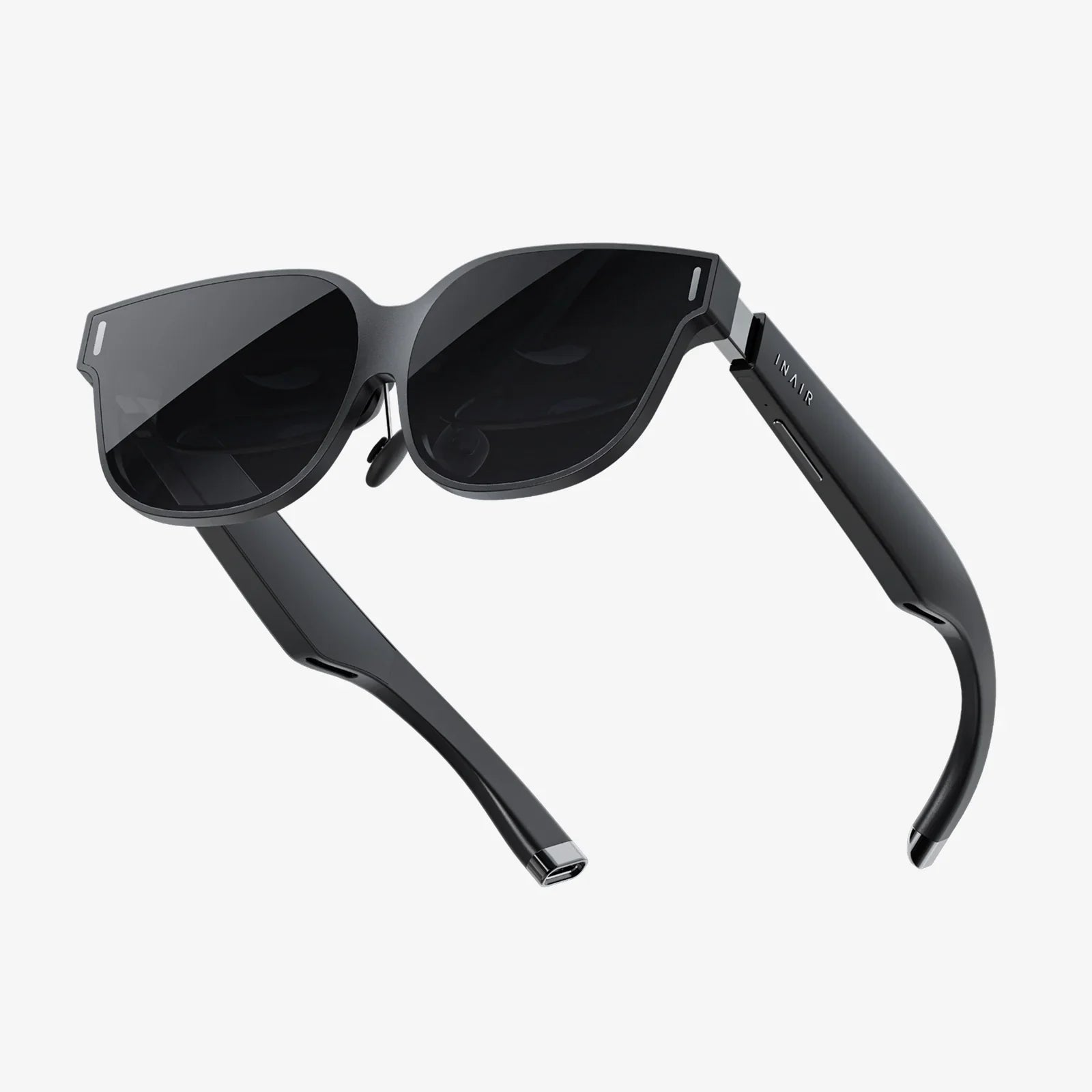
Imagine stepping into a completely digital world, a universe crafted from pure data and imagination, where the only limit is the creativity of its designer. Or perhaps envision a scenario where crucial digital information is seamlessly overlaid onto your physical surroundings, enhancing your perception and ability to interact with the real world. These are not scenes from a distant science fiction future; they are the present and rapidly evolving realities powered by two of the most transformative technologies of our time: Extended Reality (XR) and its powerful subset, Virtual Reality (VR). For anyone curious about the next frontier of human-computer interaction, understanding what XR and VR are is the first step into a vast new digital landscape.
Demystifying the Acronyms: A Spectrum of Experiences
To truly grasp the concept of VR, one must first understand the broader umbrella under which it resides: Extended Reality, or XR. XR is not a single technology but rather a catch-all term that encompasses all real-and-virtual combined environments and human-machine interactions generated by computer technology and wearables. It represents a spectrum that blends the physical and digital worlds to varying degrees.
At one end of this spectrum, we have the completely real environment, our physical world. At the opposite end, we have a fully virtual environment, a digital realm with no connection to your immediate physical surroundings. The magic of XR happens across the entire continuum between these two points. The primary technologies that make up the XR spectrum are:
- Virtual Reality (VR): Occupying the far end of the spectrum, VR creates a fully immersive, computer-generated simulation that replaces the user's real-world environment. Through a head-mounted display, users are transported to a digital world.
- Augmented Reality (AR): Residing closer to the real-world end, AR overlays digital information—such as images, text, or 3D models—onto the user's view of the physical world. The real environment remains central, enhanced by digital details.
- Mixed Reality (MR): Sitting between AR and VR, MR is a more advanced form of augmentation where digital objects are not just overlaid but anchored to and interact with the physical world in real-time. Users can manipulate digital content as if it were truly present in their space.
Therefore, when we ask "what is XR VR?", we are identifying VR as a crucial component of the wider XR ecosystem. It is the most immersive and隔绝的 (isolated) form of experience within that spectrum.
The Core of Virtual Reality: A Deep Dive
Virtual Reality is the technology that creates a simulated environment that can be similar to the real world or entirely fantastical. Unlike traditional user interfaces that are observed on a screen, VR places the user inside an experience, allowing them to interact with 3D worlds. The primary goal of VR is to create a convincing sense of presence, the feeling of actually being there in the virtual environment.
This illusion is achieved through a combination of sophisticated hardware and software working in tandem:
Key Hardware Components
- Head-Mounted Display (HMD): This is the helmet or headset that users wear. It contains a screen (or two, one for each eye) that displays the virtual world. Modern HMDs use high-resolution displays to minimize the "screen door effect" and offer a wide field of view to enhance immersion.
- Tracking Systems: For the brain to be tricked into believing the virtual world is real, the environment must respond naturally to the user's movements. This is achieved through precise tracking of the head's position and orientation (using technologies like gyroscopes, accelerometers, and external lasers or cameras) and often the hands via controllers.
- Audio Systems: Spatial 3D audio is critical for immersion. Sounds in VR change based on the user's head position and orientation, making a noise behind you actually seem like it's coming from behind, completing the sensory illusion.
- Input Devices: These include motion controllers, gloves, and even full-body tracking suits that allow users to reach into, grab, and manipulate the virtual environment. Haptic feedback in these devices provides a sense of touch, further deepening the immersion.
Key Software Principles
- Low Latency: The time between a user's movement and the corresponding change in the display must be extremely short (under 20 milliseconds). Any delay can cause disorientation and simulator sickness.
- High Frame Rates: VR applications must run at a consistently high frame rate (typically 90 frames per second or higher) to maintain smooth visuals and the illusion of a continuous reality.
- Six Degrees of Freedom (6DoF): This refers to the ability to track movement in three-dimensional space. It includes tracking rotational movement (pitch, yaw, roll) and translational movement (forward/back, up/down, left/right). 6DoF is essential for a truly immersive experience where users can lean, crouch, and walk around.
Beyond Gaming: The Expansive Applications of VR
While gaming and entertainment were the initial driving forces behind consumer VR, the technology's potential extends far beyond. Its ability to simulate any environment safely and repeatedly makes it a powerful tool across numerous sectors.
Education and Training
VR offers unparalleled opportunities for experiential learning. Instead of reading about ancient Rome, history students can take a guided walk through a meticulously reconstructed digital forum. Medical students can practice complex surgical procedures on virtual patients without any risk, allowing for repetition and mistake-making that is impossible on a live subject. Similarly, VR is revolutionizing vocational training for pilots, welders, mechanics, and emergency responders, providing realistic and hazardous scenario training in a completely safe environment.
Healthcare and Therapy
The healthcare industry is embracing VR for both treatment and rehabilitation. It is used for exposure therapy to help patients with phobias (like fear of heights or flying) confront their fears in a controlled setting. VR-based physical therapy can turn repetitive exercises into engaging games, improving patient motivation and outcomes. It is also being used for pain management, providing a powerful distraction for patients undergoing painful procedures or suffering from chronic pain.
Enterprise and Design
Architects and engineers use VR to walk clients through unbuilt designs, providing a true sense of scale and space that blueprints or 3D renders cannot match. Automotive companies design and test new vehicles in VR long before a physical prototype is built, saving immense time and resources. Corporate training for soft skills, public speaking, and even onboarding are being enhanced through immersive VR simulations.
Social Connection and Remote Collaboration
The concept of the "metaverse" is largely built on VR technology. Social VR platforms allow people to meet, interact, and share experiences as lifelike avatars in virtual spaces, regardless of physical location. This has profound implications for remote work, enabling teams to collaborate on 3D models in a shared virtual room as if they were physically together, breaking down the barriers of traditional video conferencing.
The Future Trajectory of XR and VR
The technology behind VR is advancing at a breakneck pace. We are moving towards lighter, wireless headsets with higher-resolution displays, wider fields of view, and more realistic haptic feedback. Several key trends are shaping the future:
- Increased Accessibility and Affordability: As technology improves and economies of scale take effect, high-quality VR experiences are becoming available to a much wider audience.
- Advancements in Haptics: The development of gloves and full-body suits that can simulate touch, pressure, temperature, and even resistance will be a game-changer, creating a truly multi-sensory experience.
- Eye and Face Tracking: Integrating these technologies into headsets will allow for more realistic social interactions (by animating avatars based on real expressions) and foveated rendering, a technique that drastically improves performance by rendering only the area the user is directly looking at in high detail.
- Brain-Computer Interfaces (BCI): Though further out on the horizon, BCIs represent the ultimate interface, potentially allowing users to control virtual environments through thought alone.
These advancements will continue to blur the line between the physical and the digital, making virtual experiences increasingly indistinguishable from reality and opening up applications we have yet to imagine.
Challenges and Considerations
Despite its immense potential, the widespread adoption of VR faces hurdles. Issues like simulator sickness, which affects some users, is a ongoing area of research. The cost of high-end equipment, while falling, can still be a barrier. There are also important ethical and social questions to consider regarding data privacy, prolonged use, and the psychological effects of increasingly realistic virtual worlds. As with any powerful technology, a thoughtful and human-centric approach to its development and deployment is crucial.
The journey into virtual worlds is no longer a fantasy confined to novels and films. It is a tangible, rapidly evolving technology that is reshaping how we learn, work, heal, and connect. From its position as a key pillar of the broader XR spectrum, Virtual Reality offers a portal to limitless possibilities, challenging our very definitions of reality and experience. The door to these new dimensions is now open, inviting us all to step through and explore what lies on the other side.
Share:
Best VR Headset for iPhone 7 with Controller: Your Ultimate Immersive Guide
How Much Does It Cost For A VR Headset - A Complete Price Breakdown