


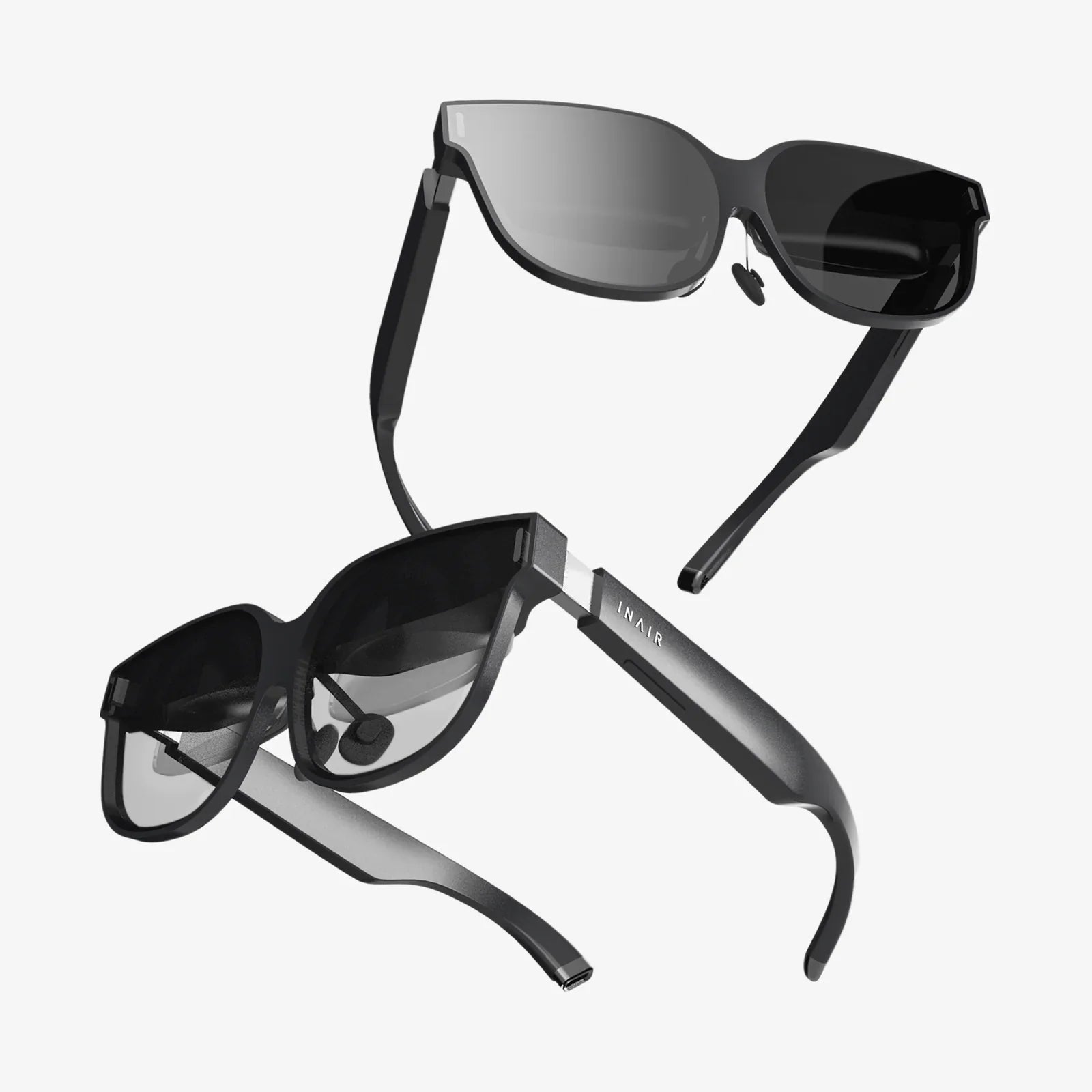
Stepping into a virtual world is no longer the stuff of science fiction; it's a reality available at our fingertips. But with a rapidly expanding market, the question on every potential user's mind is a critical one: what truly separates a forgettable gadget from a transformative portal to other dimensions? The answer lies not in a single magic bullet but in a delicate, sophisticated symphony of hardware and software engineering, all working in concert to trick your senses and transport your mind. Choosing the right headset is about understanding the pillars that build a convincing and comfortable virtual reality experience.
The Window to Another World: Display and Visual Fidelity
Your eyes are the primary gateway to immersion, and the display technology is the first, and perhaps most crucial, frontier. A good VR headset must prioritize visual clarity above all else. This is measured through several key metrics.
The most talked-about specification is resolution. Simply put, this is the number of pixels packed into the screens placed in front of your eyes. Higher resolution directly combats the "screen door effect"—that distracting grid of visible lines between pixels that shatters immersion by reminding you you're looking at a screen. Modern high-quality headsets strive for resolutions that make individual pixels indistinguishable, creating a smooth, continuous image.
However, resolution is only part of the story. The refresh rate, measured in Hertz (Hz), is equally vital. This is how many times per second the image on the screen is refreshed. A low refresh rate can lead to noticeable lag, blurring, and, most problematically, motion sickness. For a comfortable and fluid experience, a high refresh rate (90Hz and above) is essential. It ensures that when you turn your head quickly, the virtual world updates instantaneously, maintaining the illusion of reality and keeping discomfort at bay.
Another critical factor is the field of view (FOV). This is the extent of the observable world seen at any given moment, measured in degrees. A narrow FOV feels like looking through a pair of binoculars or a snorkeling mask, constantly reminding you of the headset's boundaries. A wider FOV, ideally above 100 degrees, expands your peripheral vision, deepening the sense of presence and "being there." The pursuit of a human-like FOV (around 220 degrees) is a key driver of innovation in high-end hardware.
Finally, the type of panel technology used (such as LCD or OLED) impacts factors like color saturation, black levels, and pixel response times. OLED panels, for instance, can achieve perfect blacks, which enhances contrast and realism in dark scenes, while some advanced LCDs can offer better pixel persistence for reducing motion blur.
The Art of Perception: Tracking and Controllers
Seeing a believable world is one thing; being able to interact with it naturally is another. This is where precision tracking comes into play. A good VR headset must know exactly where it is in space and how your hands are moving.
There are two primary methods for tracking headset and controller position: inside-out and outside-in tracking. Outside-in tracking uses external sensors or base stations placed around the room to precisely triangulate the position of the headset and controllers. This method is renowned for its extremely high accuracy and low latency, making it the gold standard for enthusiast-grade and professional applications where millimeter precision is required.
Inside-out tracking, now more common in consumer headsets, uses cameras mounted on the headset itself to look outward, mapping the environment and tracking controller movements without any external hardware. This offers fantastic convenience and ease of setup, eliminating the need to mount sensors around your play space. The quality of inside-out tracking varies greatly, with better systems using more cameras and advanced algorithms to minimize tracking loss and provide a robust, responsive experience.
The controllers are your hands in the virtual world. A good set of controllers feels like an extension of yourself. They should be ergonomically designed, comfortable to hold for extended periods, and intuitively designed to represent hands or tools. Key features include:
- Haptic Feedback: Subtle vibrations that provide tactile sensation, like feeling the virtual recoil of a gun or the buzz of a lightsaber clashing.
- Analog Grips/Triggers: Pressure-sensitive inputs that allow for nuanced interactions, like gently picking up an object instead of just grabbing it.
- Finger Tracking: The ability to detect individual finger movements, enabling natural gestures like pointing, waving, or making a fist, which adds a profound layer of social and interactive realism.
The Unseen Foundation: Processing Power and Performance
The most beautiful virtual world is useless if it stutters and lags. Consistent performance is non-negotiable for comfort and immersion. This burden is handled either by an external source or by the headset itself.
PC-Connected headsets leverage the raw power of a high-end computer to render complex, graphically intense environments. This allows for the most visually stunning experiences available, pushing the boundaries of realism and detail. The downside is the requirement of a powerful and often expensive computer and being tethered by a cable, which can limit freedom of movement.
Standalone headsets have all the necessary computing power built into the headset itself. They are wireless, self-contained, and incredibly convenient, offering a frictionless entry into VR. The trade-off has traditionally been in graphical fidelity, as mobile processors cannot compete with a high-end desktop. However, the gap is closing rapidly. Modern standalone devices use advanced techniques like fixed foveated rendering (which focuses processing power on the center of your vision where detail is highest) and increasingly powerful mobile chipsets to deliver impressive visuals without a tether.
Some systems now offer a hybrid approach, functioning as a capable standalone device but also allowing for a connection to a PC to access the highest-end content, offering the best of both worlds.
The Human Factor: Comfort and Ergonomics
You can have the most technologically advanced headset ever made, but if it's a pain to wear, it will gather dust on a shelf. Comfort is a feature that is often overlooked in spec sheets but is paramount to a good experience.
Weight distribution is critical. A front-heavy headset will constantly strain your neck and cheeks. Good designs use counter-balancing, often through the strap system, to distribute weight evenly across your head. The strap design itself—whether it's a simple elastic band, a rigid plastic halo, or an elaborate top-strap system—must be easily adjustable and secure without causing pressure points.
The facial interface, the part that touches your face, should be made of a soft, breathable, and hypoallergenic material like a high-quality foam or silicone. It should form a light seal without pressing too hard, and it should be easily removable for cleaning. Furthermore, the ability to have a customized fit is a hallmark of a good headset. This includes having interchangeable facial interfaces for different face shapes and, crucially, a mechanical IPD (interpupillary distance) adjustment. This allows you to physically shift the lenses to match the distance between your pupils, ensuring a clear, single image and preventing eye strain and headaches.
The Soul of the Machine: Audio and Software
Immersion is an all-encompassing sensory experience, and sound is half of that equation. Spatial audio is what transforms a 3D picture into a 3D place. A good VR headset integrates audio solutions that accurately simulate how sound behaves in the real world. You should be able to hear an object moving behind you, above you, or to your left without turning your head. This can be achieved through high-quality built-in speakers that don't cover your ears, allowing you to remain aware of your real surroundings, or through dedicated headphones that offer richer sound isolation. The best systems offer precise positional audio that is crucial for gameplay, social interaction, and cinematic immersion.
Finally, a headset is just a shell without its software ecosystem. The operating system should be intuitive, responsive, and easy to navigate while in VR. It's the home base from which you access content, adjust settings, and socialize. The true value, however, is in the content library available. A robust platform will offer a wide array of high-quality games, creative applications, fitness programs, and social experiences. Furthermore, a healthy ecosystem is supported by active developers and regular software updates that not only add new features but also refine performance and tracking, continually improving the headset long after it's left the factory.
Ultimately, the quest for the perfect VR headset is a balancing act. It's about finding the harmonious intersection of razor-sharp visuals, rock-solid tracking, effortless comfort, and a thriving digital world to get lost in. It's the device that doesn't just show you a new reality but makes you forget the old one entirely, leaving you with nothing but the experience itself.
Share:
Wearables in Spanish: The Cultural Revolution Reshaping Health and Tech
VR Glasses Function: A Deep Dive Into The Technology That Transports You