Have you ever wondered if you're truly grasping the difference between the digital worlds that are rapidly reshaping our reality? The terms Virtual Reality and Augmented Reality are often used interchangeably, but they represent two fundamentally distinct experiences, each with its own power to transform how we work, play, and connect. Understanding this divide is not just tech jargon; it's the key to unlocking the future of human-computer interaction. This deep dive will peel back the layers of these immersive technologies, revealing the core principles that set them apart and the exciting possibilities that lie ahead.
The Foundational Principle: Immersion Versus Integration
At its heart, the most significant distinction between VR and AR lies in their relationship with your physical environment. This core philosophical difference dictates everything from the hardware design to the user's psychological experience.
Virtual Reality (VR) operates on the principle of immersion. Its primary goal is to replace your reality. When you don a VR headset, the physical world around you disappears, blocked out by opaque displays housed in a fully enclosed visor. You are visually, and often audibly, transported to a completely computer-generated environment. Whether you're exploring a fantastical landscape, standing on the surface of Mars, or navigating a virtual training simulation, your physical surroundings are irrelevant. VR creates a sense of presence—the convincing feeling of being somewhere else. This total sensory detachment is its greatest strength and its most defining characteristic.
In stark contrast, Augmented Reality (AR) is built on the principle of integration. Instead of replacing your world, it augments it. AR technology superimposes digital information—images, data, 3D models, animations—onto your live view of the real world. You remain firmly grounded in your actual environment, but that environment is now enhanced with a digital layer. This is typically achieved through either a transparent headset (often called smart glasses) or, more commonly, the camera viewfinder on a smartphone or tablet. The magic of AR is its contextual relevance; the digital content interacts with and is anchored to the physical world. A navigation arrow appears on the street in front of you, a virtual sofa is placed in your living room to check its fit, or a historical figure seems to stand in your city square.
A Tale of Two Headsets: Diverging Hardware Architectures
The philosophical split between immersion and integration directly manifests in the physical design of the devices that deliver these experiences. The hardware for VR and AR is engineered for entirely different purposes.
Virtual Reality Hardware: The Gateway to Another World
VR systems are designed to be sensory isolation chambers. The typical VR headset is a bulky, closed-face unit featuring:
-
Opaque, High-Resolution Displays: Positioned mere centimeters from your eyes, these screens fill your entire field of view to prevent any glimpse of the outside world.
-
Precise Head-Tracking Sensors: Gyroscopes, accelerometers, and external or internal cameras track the rotation and translation of your head with extreme precision. This allows the virtual environment to respond naturally to your movements, preventing disorientation and reinforcing the sense of presence.
-
Controllers for Interaction: Hand-held motion-tracked controllers are standard, allowing users to reach out, grab, manipulate, and interact with the virtual world. Advanced systems also incorporate hand-tracking, enabling gesture control without any physical controllers.
-
Built-in Audio: Spatial audio is often integrated directly into the headset, simulating 3D soundscapes that change as you move your head, further deepening the immersion.
This hardware is powerful but also inherently tethers the user to a specific physical space (a "play area") or a powerful computer, creating a stationary, dedicated experience.
Augmented Reality Hardware: The Subtle Enhancement Tool
AR hardware prioritizes accessibility, mobility, and situational awareness. It comes in two primary forms:
-
Smartphone/Tablet Cameras: The most ubiquitous AR platform. It uses the device's camera to capture the real world and its screen to display the augmented overlay. This is incredibly accessible but requires holding a device up, which can be cumbersome.
-
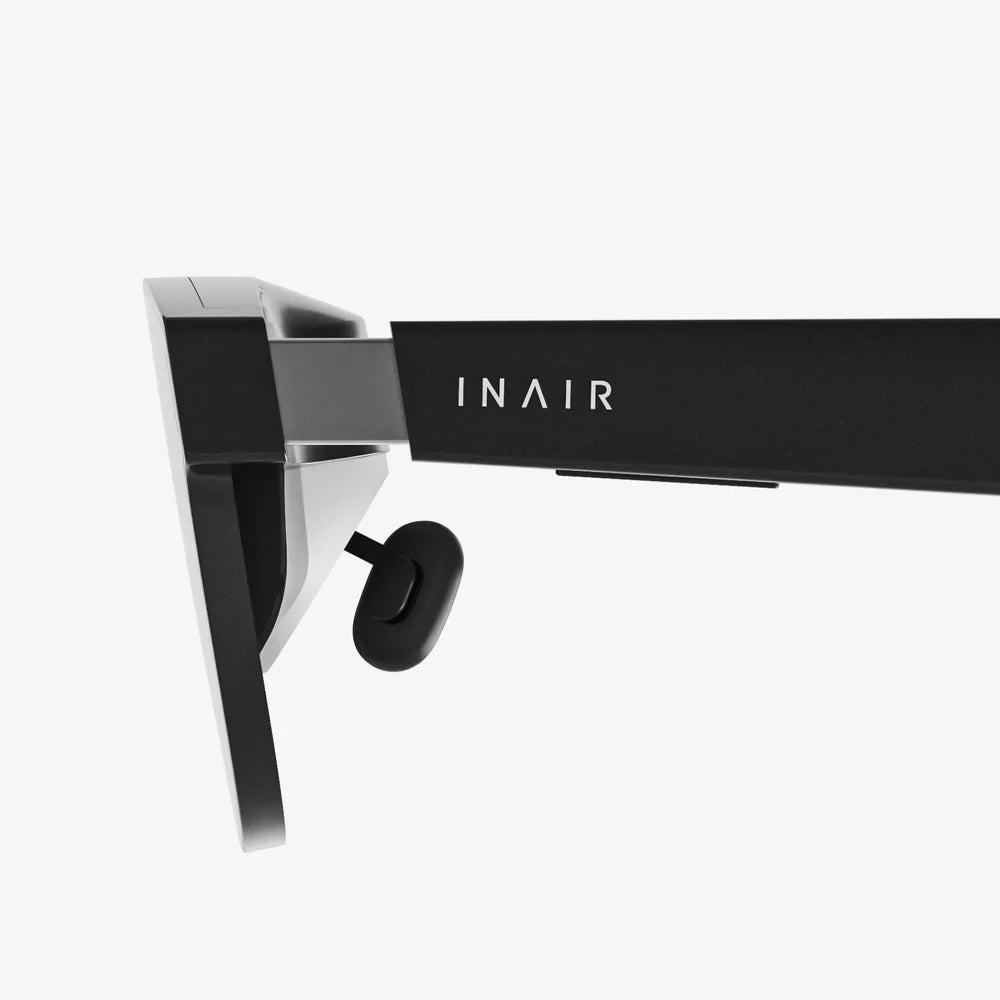
Smart Glasses: The ideal form factor for AR. These resemble standard eyeglasses but project digital images onto their transparent lenses or use waveguides to beam light directly into the user's retina. This allows for a hands-free, always-available experience where digital content appears to coexist with the physical world. These devices are lightweight, have a long battery life, and are designed for all-day wear, making them tools for productivity and information access rather than dedicated entertainment portals.
The key hardware differentiator is the transparent or passthrough display, which keeps the user connected to their environment, alongside cameras and sensors dedicated to understanding the geometry of the real world (a process called SLAM - Simultaneous Localization and Mapping).
Under the Hood: The Core Technologies at Work
While both VR and AR rely on overlapping technologies like computer graphics and motion tracking, their technical challenges and focuses are distinct.
VR's Technical Challenge: Rendering and Latency
The paramount concern for VR is achieving photorealism and eliminating latency. The graphical fidelity of the virtual world must be high enough to maintain the user's suspension of disbelief. Any lag between the user's head movement and the update of the display can lead to motion sickness, a phenomenon known as simulator sickness. This demands incredibly powerful graphics processing units (GPUs) to render two high-resolution views (one for each eye) at a minimum of 90 frames per second. The technology is primarily concerned with creating a convincing and comfortable fiction.
AR's Technical Challenge: Recognition and Alignment
AR's biggest hurdle is understanding the real world. Its software must excel at:
-
Computer Vision: Recognizing objects, surfaces, and environments. It needs to distinguish a floor from a wall and a table from a chair.
-
Spatial Mapping: Creating a real-time 3D map of the user's surroundings to accurately place and persist digital objects in space.
-
Occlusion: Intelligently determining when a real-world object should block a digital one. If a virtual character walks behind your real sofa, the software must hide the parts of the character that are logically obscured.
This makes AR less about raw graphical power and more about sophisticated AI, machine learning, and sensor fusion to seamlessly blend the digital and physical realms.
Contrasting Applications: How They Are Used in the Real World
The unique strengths of VR and AR naturally lead them to solve different types of problems across various industries.
The Virtual Reality Domain: Training, Simulation, and Deep Engagement
VR excels in situations where total focus and a controlled environment are beneficial or necessary.
-
Training and Simulation: Pilots, surgeons, and soldiers use VR to practice complex, dangerous, or expensive procedures in a risk-free environment. Medical students can perform virtual dissections, and mechanics can learn to repair complex machinery.
-
Gaming and Entertainment: This is VR's most famous application, offering unparalleled immersion in interactive worlds, 360-degree videos, and virtual social spaces.
-
Therapy and Rehabilitation: VR is used for exposure therapy to treat phobias (like fear of heights or flying), for pain distraction in burn victims, and for motor skill rehabilitation through engaging virtual exercises.
-
Architectural and Design Visualization: Architects and clients can "walk through" a building long before the foundation is poured, allowing for design changes and a true sense of scale and space.
The Augmented Reality Domain: Information, Assistance, and Context
AR thrives by providing contextual information and assistance within the flow of everyday life and work.
-
Industrial Maintenance and Repair: A technician wearing smart glasses can see schematics, instructions, or expert guidance overlaid directly onto the malfunctioning equipment they are fixing, freeing their hands and improving accuracy.
-
Retail and E-Commerce: Users can "try on" clothes, glasses, or makeup virtually through their phone camera or see how a new piece of furniture would look in their actual living room.
-
Navigation: AR can project turn-by-turn directions onto the real-world road ahead, making navigation more intuitive than looking at a 2D map.
-
Education: Textbooks can come alive with 3D models of the human heart or historical artifacts, and students can interact with complex concepts overlaid onto their desks.
-
Remote Collaboration: An expert in one location can see what a field technician sees and draw annotations directly into their field of view, guiding them through a process in real-time.
The Blurring Lines: Passthrough VR and the Spectrum of Reality
The line between VR and AR is not always rigid. A technology called Mixed Reality (MR) often sits between them, and a new feature known as passthrough VR is creating a fascinating hybrid.
Passthrough VR uses the headset's external cameras to stream a live, black-and-white or color video feed of the real world into the headset. This allows a VR device to function like an AR device, overlaying digital objects onto a video representation of your surroundings. While not as elegant or socially acceptable as transparent AR glasses (due to latency and the "screendoor" effect of a camera feed), it demonstrates how the technologies are converging. The ultimate goal for many is a single pair of glasses that can function across a reality-virtuality continuum, able to switch from full transparency (AR) to full opacity (VR) as needed.
Choosing Your Reality: Which One is Right for the Future?
So, which technology is "better"? The question is irrelevant. They are different tools for different jobs. VR is the ultimate tool for escapism, training, and deep simulation. It is a destination. AR is the ultimate tool for assistance, information, and enhancement. It is a layer on top of your destination.
The future is not about one winning over the other. Instead, we are moving towards a world where these technologies will coexist and even converge. We might use VR for focused work sessions in virtual offices or immersive learning, and then switch to AR glasses to interact with colleagues in the physical office, access data hands-free on the manufacturing floor, or get contextual information about the city we're exploring. The defining difference will always remain: VR replaces your world, while AR adds to it.
Imagine a world where your every interaction is enhanced, where information is seamlessly woven into the fabric of your perception, and the boundaries between the digital and the physical become almost invisible. This isn't a distant sci-fi fantasy; it's the logical endpoint of the paths carved by AR and VR. The journey to that future begins with understanding the fundamental rift between these two powerful visions for computing, a choice not between better and worse, but between a new world and an enhanced one.


Share:
Music AR Technology: Reshaping the Sonic Landscape and Live Experience
Future of AR Technology: A New Reality Awaits