


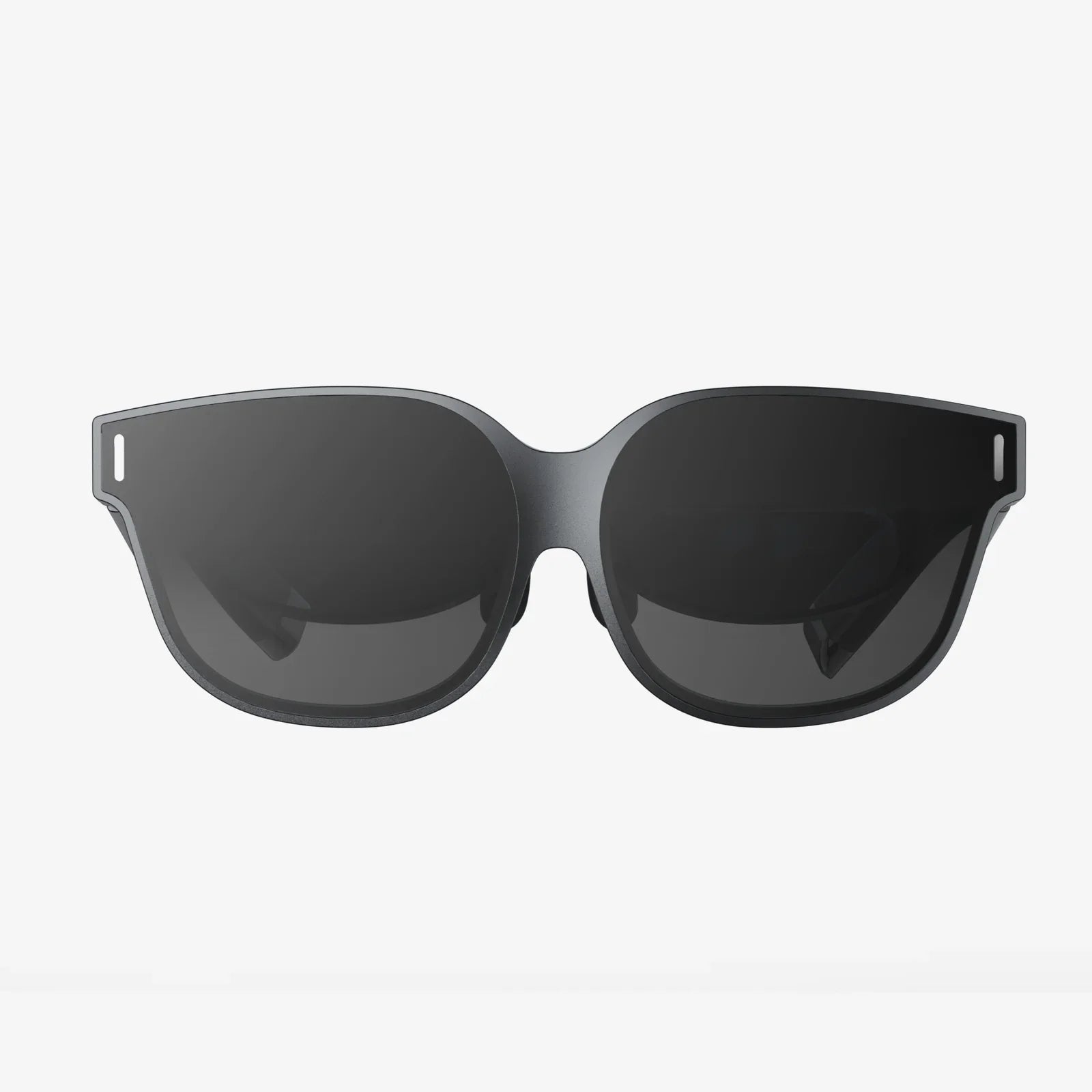
Imagine a world where your surroundings are not just seen but understood, where digital information doesn't just overlay your vision but interacts with it intelligently and intuitively. This is the powerful, almost magical promise at the intersection of Augmented Reality (AR) and Artificial Intelligence (AI)—a fusion that is rapidly moving from science fiction to tangible reality, transforming industries from healthcare to manufacturing. The seamless experience of a virtual dinosaur walking across your living room floor or a navigation arrow painted onto the road itself belies a staggering complexity of underlying technologies. It’s a symphony of advanced computation, and understanding the orchestra of technologies involved is key to appreciating the revolution at hand.
The Core Pillars of Artificial Intelligence
Before we can understand how AI empowers AR, we must first dissect the fundamental technological building blocks of AI itself. At its heart, AI is a broad field of computer science dedicated to creating systems capable of performing tasks that typically require human intelligence.
Machine Learning and Deep Learning
Machine Learning (ML) is the engine of modern AI. It provides systems the ability to automatically learn and improve from experience without being explicitly programmed for every scenario. This is achieved through algorithms that parse data, learn from its patterns, and then make determinations or predictions based on that learned knowledge. Deep Learning, a powerful subset of ML, utilizes artificial neural networks inspired by the human brain. These multi-layered (hence "deep") networks can process vast amounts of unstructured data like images, sound, and text. Convolutional Neural Networks (CNNs), for instance, are exceptionally adept at processing pixel data and are fundamental to computer vision tasks, a critical area for AR.
Computer Vision: The Eyes of AI
If Machine Learning is the brain, Computer Vision (CV) is the visual cortex. This technology enables computers to derive meaningful information from digital images, videos, and other visual inputs. Key processes within CV include:
- Object Detection and Recognition: Identifying and classifying objects within a scene (e.g., recognizing a chair, a person, or a specific product).
- Image Segmentation: Partitioning an image into multiple segments to simplify its representation and make it easier to analyze.
- Feature Extraction: Identifying and isolating specific, relevant features from an image, such as edges, corners, or textures.
- Simultaneous Localization and Mapping (SLAM): While often associated directly with AR, SLAM is a complex CV technique that allows a device to map an unknown environment while simultaneously tracking its location within that map.
Natural Language Processing (NLP)
NLP gives machines the ability to read, understand, and derive meaning from human languages. This encompasses everything from speech recognition ( converting spoken words to text) to natural language understanding (discerning intent and sentiment) and natural language generation (creating human-like text). For AR, NLP enables voice-controlled interfaces and the ability to process text in the real world, like translating a street sign instantly.
Data Processing and Cloud Computing
AI is voraciously data-hungry. The algorithms require massive datasets for training and often significant computational power for inference (making predictions). This is where cloud computing platforms become indispensable. They provide the scalable storage and immense processing power, often through specialized hardware like Graphics Processing Units (GPUs) and Tensor Processing Units (TPUs), which are optimized for the parallel computations required by neural networks.
The Technological Framework of Augmented Reality
AR technology is responsible for seamlessly blending digital content with the physical world. This requires a sophisticated pipeline to perceive the environment and anchor virtual objects within it convincingly.
Sensors: Perceiving the Real World
AR devices are equipped with a suite of sensors that act as their digital senses:
- Cameras: The primary sensor, used to capture the live video feed of the user's environment that serves as the canvas for AR.
- Depth Sensors (LiDAR, ToF): Light Detection and Ranging (LiDAR) and Time-of-Flight (ToF) sensors actively project light onto the environment and measure the time it takes to return. This creates a precise depth map, understanding the distance to every surface and object, which is crucial for realistic occlusion (where virtual objects appear behind real ones).
- Inertial Measurement Units (IMUs): These contain accelerometers, gyroscopes, and magnetometers that track the device's movement, rotation, and orientation in space with high speed and precision, ensuring digital content stays locked in place.
- GPS and RFID: Provide broader location context, useful for outdoor, large-scale AR experiences.
Processing: The AR Brain
The raw data from the sensors is processed to make sense of the world. This involves:
- 3D Reconstruction: Creating a three-dimensional mesh of the environment from sensor data.
- Tracking and Localization: Using SLAM algorithms to continuously update the device's position within the constructed map.
- Calibration: Ensuring perfect alignment between the virtual camera and the real-world view, accounting for lens distortion.
Display Technologies: Blending the Real and Virtual
This is the final output stage. Different methods exist:
- Optical See-Through: Used in smart glasses, where digital images are projected onto semi-transparent lenses, allowing the user to see the real world directly.
- Video See-Through: Used in smartphones and some headsets, where cameras capture the real world, and a combined real+virtual image is displayed on a screen.
- Spatial Projection: Projecting AR imagery directly onto physical surfaces without requiring the user to wear a device.
The Convergence: Where AI and AR Technologies Unite
The true magic happens when these two technological stacks merge. AI doesn't just enhance AR; it transforms it from a simple display tool into a contextual, intelligent, and interactive partner.
Intelligent Scene Understanding
Basic AR can place a virtual object on a horizontal surface detected via SLAM. AI-powered AR, however, uses advanced computer vision to understand what that surface is. Is it a wooden coffee table? A concrete floor? A kitchen counter? By recognizing objects and materials, AI allows the digital content to interact appropriately. A virtual ball could bounce differently on a table than on a carpet. A virtual character could intelligently walk around your sofa instead of through it.
Enhanced Tracking and Occlusion
AI dramatically improves the stability and realism of AR. Machine learning models can predict motion to make tracking smoother and more robust. More importantly, semantic segmentation—an AI-driven CV task—identifies different elements in a scene (e.g., person, sky, building, car). This allows for breathtakingly realistic occlusion; a virtual dog can run behind your real-life couch and correctly disappear from view, then reappear on the other side.
Gesture and Gaze Recognition
AI enables natural user interfaces. Cameras feed data into neural networks trained to recognize complex hand gestures, allowing users to manipulate virtual objects with their hands. Similarly, gaze-tracking technology, powered by AI, can determine where a user is looking, enabling control through sight and creating more immersive experiences where digital characters can appear to make eye contact.
Personalized and Context-Aware Content
This is perhaps the most transformative application. By leveraging AI's ability to learn from data, AR systems can become personalized. An AR shopping app could use your past preferences to highlight products you'd like on a store shelf. An AR navigation system could learn your daily commute and overlay directions only when you deviate from your usual path. NLP can analyze text in your environment—a restaurant menu, a document—and offer instant translations, summaries, or additional information, all in context.
The Supporting Cast: Edge Computing and 5G
The intense processing demands of fusing AR and AI cannot be met by mobile processors alone. This is where two other critical technologies come into play:
- Edge Computing: Instead of sending all sensor data to a distant cloud server (which introduces lag or latency), edge computing processes data closer to the source—on the device itself or on a nearby local server. This is essential for the real-time responsiveness required by AR; a virtual object must stay locked in place without jitter, which demands processing in milliseconds.
- 5G Connectivity: For tasks too heavy for the edge device, 5G networks offer the high bandwidth and ultra-low latency needed to offload processing to the cloud almost instantaneously. This enables more complex AI models and richer AR experiences on thinner, lighter, less powerful devices.
Future Trajectories and Ethical Considerations
The technology is advancing toward more seamless, powerful, and ubiquitous integration. We are moving toward AR glasses that are as socially acceptable as regular eyeglasses, powered by AI chipsets small enough to be embedded in the frame. Neuromorphic computing, which mimics the brain's architecture, promises even greater efficiency for on-device AI. However, this powerful convergence raises significant questions about data privacy, as these devices constantly capture and analyze our environments; digital addiction; and the potential for reality distortion, misinformation, and new security threats in the physical-digital blended space. Navigating these challenges is as important as advancing the technology itself.
The dance between AR and AI is a testament to modern engineering, where advancements in algorithms, sensor miniaturization, and processing power coalesce to create something far greater than the sum of their parts. This isn't just about overlaying a filter on a video; it's about constructing a dynamic, intelligent layer of understanding atop our physical reality, fundamentally changing how we work, learn, play, and connect with the world around us. The future is not just augmented; it's perceptive, contextual, and waiting to be explored.
Share:
Virtual Office: The Definitive Guide to the Future of Work
Virtual Office Definition: The Complete Guide to the Future of Work