


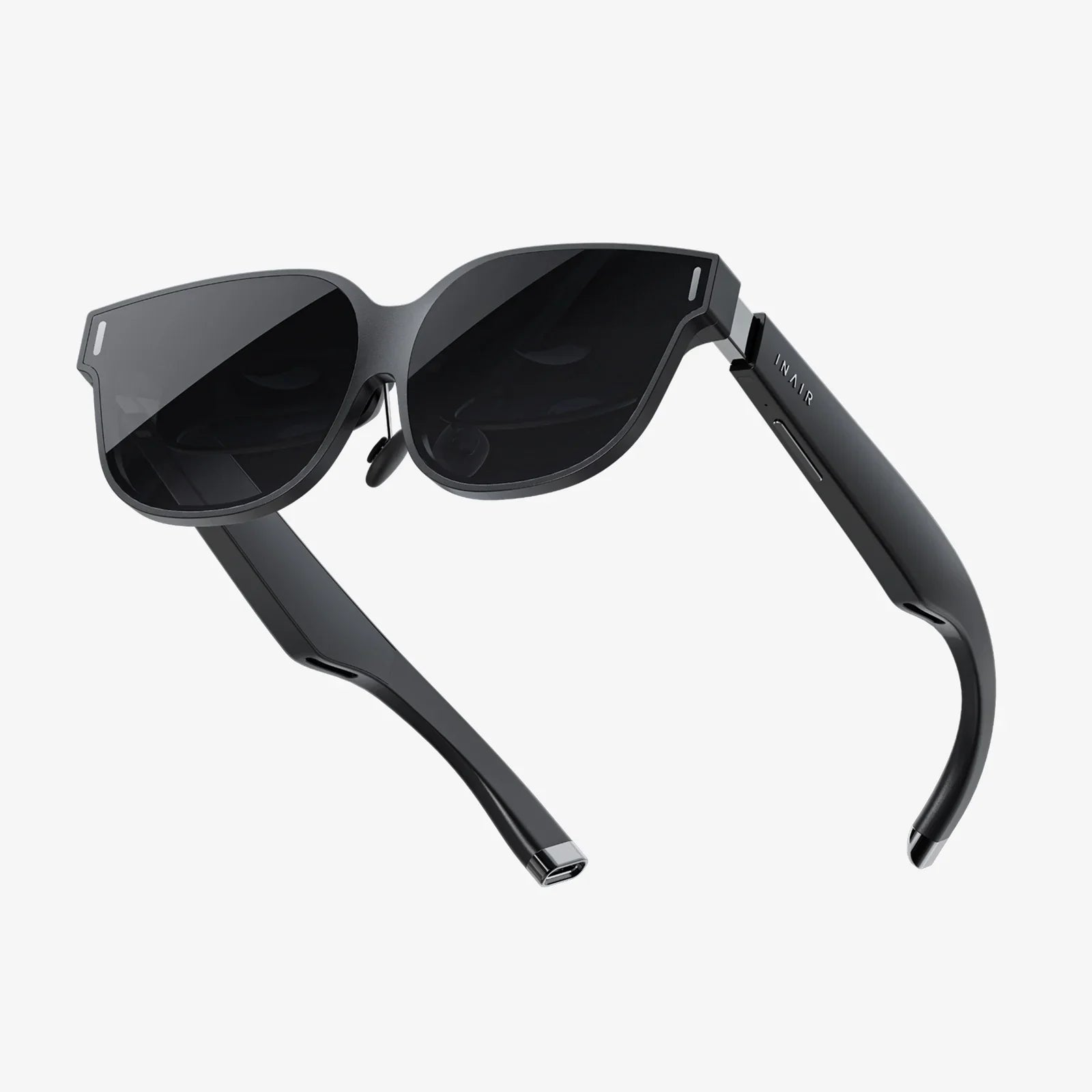
You raise your phone or slip on a pair of sleek glasses, and suddenly, the world is transformed. A dinosaur lumbers through your living room, navigation arrows are painted onto the street ahead, or a historical figure stands on the corner, recounting tales of a bygone era. This is the magic of Augmented Reality (AR), a technology poised to reshape our interaction with the digital and physical realms. But behind this seemingly effortless overlay of digital information lies a complex technological ballet. While most users focus on the dazzling graphics or the sleek hardware, the true magic—the most fundamental technology—is something far less visible but infinitely more critical: the device's ability to understand the world it sees. This isn't about just displaying an image; it's about perceiving, comprehending, and interacting with reality itself.
The Illusion of Simplicity and the Reality of Complexity
To the uninitiated, AR might seem like a straightforward video feed with some clever graphics superimposed on top. This perception couldn't be further from the truth. The core challenge of AR is not simply drawing a 3D model; it is anchoring that model to a specific point in the real world and ensuring it persists, interacts, and behaves as if it were a real physical object, regardless of how the user moves their device or head. For this to happen, the AR system must solve a series of profound questions in real-time: Where am I? What is around me? How am I moving? The technology that answers these questions is the bedrock upon which all AR experiences are built.
Contenders for the Crown: The Supporting Cast
Before crowning the champion, it's essential to acknowledge the incredible ensemble of technologies that make AR possible. Each plays a vital role, but they serve a more fundamental master.
Display Technology: The Window to the Blend
Whether it's a smartphone screen, optical see-through glasses, or retinal投影, the display is the user's conduit for the experience. It is the canvas where the digital and physical merge. Advancements in waveguides, micro-LEDs, and resolution are crucial for making AR immersive and comfortable. However, a high-resolution display is useless if the digital content is wobbling, misaligned, or floating arbitrarily in space. The display is the messenger, not the message.
Processing Power: The Brain's Muscle
The computational demands of AR are staggering. It involves processing high-resolution camera feeds, running complex algorithms for understanding the environment, rendering high-fidelity 3D graphics, and handling user input—all within milliseconds to maintain the illusion of real-time interaction. Specialized processors and graphics units are the brute force that powers this operation. Yet, raw processing power is a tool; it executes the instructions given by a more foundational system. Without the right instructions, even the most powerful processor is lost.
Cameras and Sensors: The Digital Eyes and Ears
Cameras capture the visual world, providing the raw data from which everything else flows. But modern AR systems rely on a much richer sensor suite. This includes:
- Inertial Measurement Units (IMUs): These combinations of accelerometers and gyroscopes track the device's movement and rotation with high frequency, providing crucial data on how the device is moving through space.
- Depth Sensors: Technologies like LiDAR (Light Detection and Ranging) or structured light project patterns or laser dots onto the environment to accurately measure the distance to objects, creating a detailed 3D depth map of the surroundings. This is invaluable for understanding geometry and occlusion (having digital objects correctly pass behind real-world ones).
- RGB Cameras: The standard cameras we know, used for capturing color and texture information.
These sensors are the primary data-gathering apparatus. They are the equivalent of the optic nerve, feeding information to the brain. But data alone is meaningless without interpretation.
The True Fundamental: The Conductor of the Orchestra
If sensors are the orchestra and the processor is the concert hall, then the most fundamental technology is the conductor: the sophisticated fusion of computer vision and sensor data that enables a device to create and maintain a model of its environment. This process is most famously encapsulated by a single, powerful acronym: SLAM.
Simultaneous Localization and Mapping: The Heart of AR
SLAM is the real-time computational process of constructing a map of an unknown environment while simultaneously tracking the device's location within that map. It is the answer to the questions "Where am I?" and "What is around me?" at the same time. This is the non-negotiable, fundamental prerequisite for any persistent, interactive AR experience.
Here’s how it works at its core:
- Feature Detection and Tracking: As the device moves, its cameras capture sequential images. Computer vision algorithms analyze these images to identify distinct features or keypoints—corners, edges, or unique patterns on objects like a picture frame or a door handle.
- Motion Estimation: By tracking how these features move from frame to frame in the 2D image, and combining this with the high-frequency motion data from the IMU, the system can make a precise estimate of how the device itself has moved and rotated in 3D space.
- Map Building (Sparse and Dense): As the device moves and more features are detected, the system begins to triangulate the 3D position of these features relative to the device's starting point. This creates a sparse point cloud—a basic 3D wireframe map of the environment. More advanced systems use depth sensors to create a dense mesh, a rich, photorealistic 3D model of the space with accurate surfaces and geometry.
- Loop Closure and Relocalization: This is where the magic of persistence happens. If the device wanders and then returns to a previously mapped area, SLAM recognizes the familiar features and "closes the loop," correcting any small errors that accumulated in its estimated path. It can also relocalize itself instantly if the view is momentarily obstructed, finding its position again within the established map.
It is this constantly updating, precise understanding of the device's six degrees of freedom (6DoF) movement (x, y, z axis movement and rotation) within a known spatial context that allows a virtual coffee cup to sit firmly on a real table, even if you walk around it or leave the room and come back. SLAM provides the coordinate system to which every digital asset is anchored.
Environmental Understanding: Beyond Geometry
While SLAM handles the "where," truly advanced AR requires understanding the "what." This is where another layer of fundamental computer vision comes in:
- Plane Detection: Identifying horizontal (floors, tables) and vertical (walls) surfaces is essential for placing objects convincingly.
- Object Recognition: Distinguishing a chair from a couch allows for more intelligent interaction, like having a virtual character sit down.
- Occlusion: Using the environmental map, the system can determine when a real-world object should be in front of a digital one, making the illusion perfect. A virtual character will step behind your real sofa, not float in front of it.
- Light Estimation: Analyzing the ambient color and lighting of a room allows the system to shade and light digital objects to match their surroundings, preventing them from looking like brightly lit cartoons in a dimly lit room.
This environmental understanding transforms the AR device from a mere observer into an active participant in the space.
The Symbiotic Relationship: Why It All Matters
The fundamental nature of SLAM and environmental understanding is proven by its symbiotic relationship with every other component:
- Without SLAM, sensors are blind. A LiDAR scanner produces a beautiful cloud of points, but without SLAM to place each scan in a consistent global framework, it's just a disconnected series of snapshots. The IMU data drifts into inaccuracy without the visual corrections from camera-based tracking.
- Without SLAM, processing power is wasted. The processor would have no coherent world model to render graphics onto. It would be pushing pixels for a world it doesn't understand.
- Without SLAM, displays show a broken illusion. Graphics would jitter, drift, and fail to anchor, instantly breaking immersion and making the experience unusable.
Every other technology in the AR stack is optimized to serve this core process of perception. Processors are designed with neural engines to accelerate the computer vision models that power SLAM. Sensors are chosen and calibrated specifically to provide the cleanest, most synchronized data for the SLAM algorithms. It is the sun around which the entire AR solar system orbits.
The Future Built on a Fundamental Base
The evolution of AR hinges on the continued advancement of this foundational technology. The push for more powerful, yet smaller and more energy-efficient SLAM algorithms is driving research in machine learning and neuromorphic computing. The goal is a world where AR devices can understand semantics and context—not just seeing a table, but knowing it's a dining table meant for placing things, or not just seeing a wall, but knowing it's a wall you can hang a virtual screen on. This deeper understanding will unlock the next generation of AR, from seamless collaborative design to truly immersive navigation and storytelling.
So, the next time you witness a digital marvel seamlessly integrated into your physical world, look past the bright display and sleek hardware. Remember the silent, relentless, and profoundly complex process happening beneath the surface. It is the unsung engine of computer vision and sensor fusion, solving the ancient puzzle of perception and navigation in real-time, that truly is the most fundamental technology to Augmented Reality. This invisible framework is what will ultimately allow us to not just view the blended world, but to truly live and interact within it, forever changing the fabric of our daily reality.
Share:
Building Augmented Reality Glasses: The Engineering Marvel Reshaping Reality
Building Augmented Reality Glasses: The Engineering Marvel Reshaping Reality