


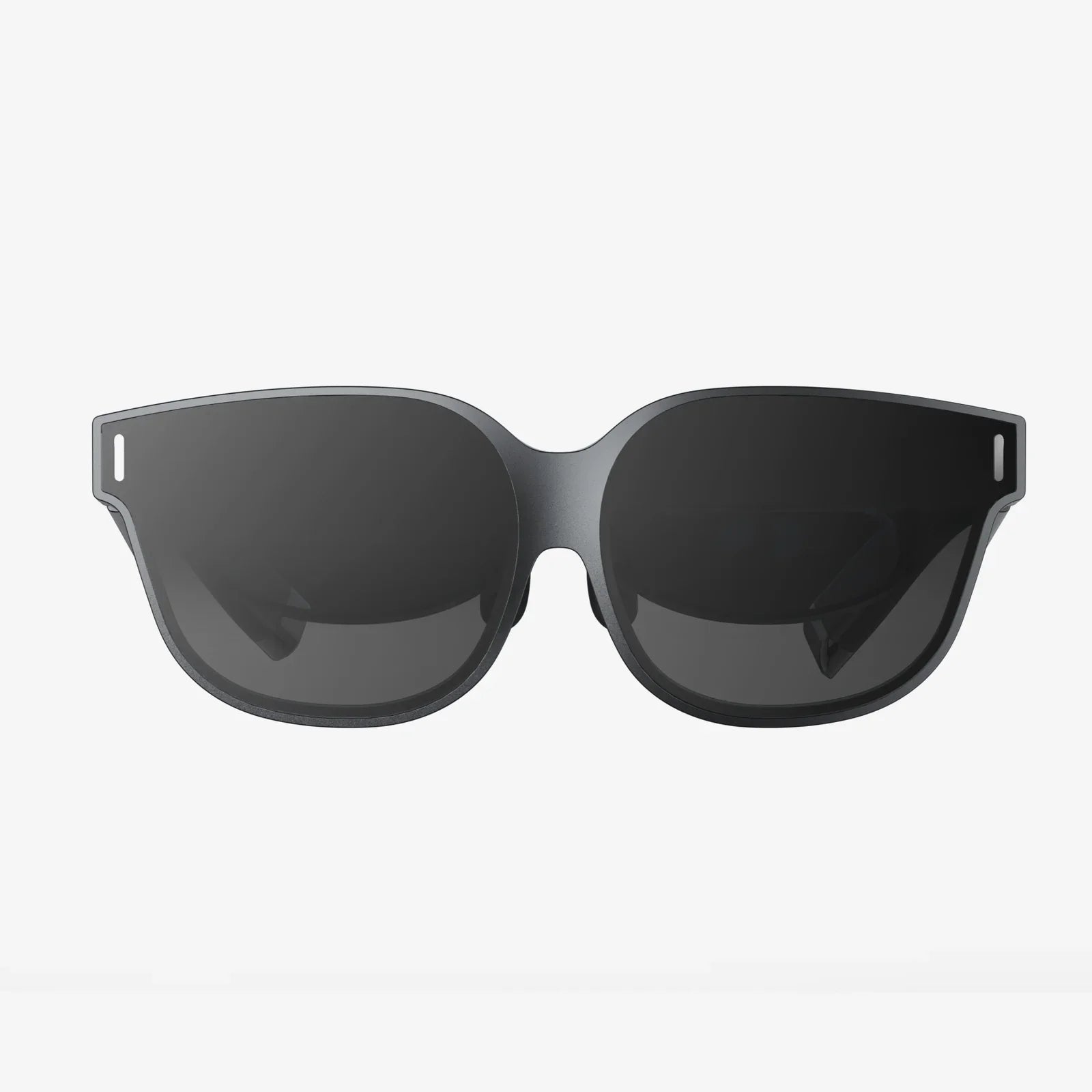
The world is on the cusp of a visual computing revolution, and it’s not happening on our desks or in our palms—it’s happening on our faces. Smart glasses, once the stuff of science fiction, are rapidly evolving from niche novelties into powerful, practical tools that promise to seamlessly blend the digital and physical worlds. But with this exciting new category comes a bewildering array of options and technical jargon. Navigating the market to find the perfect pair that aligns with your needs, style, and budget can feel overwhelming. This guide is designed to cut through the noise, providing a deep dive into the critical features you must evaluate to find the smart glasses that will truly enhance your reality, not distract from it.
The Foundation: Defining Your Primary Use Case
Before diving into technical specifications, the most crucial step is introspection. What do you genuinely want these glasses to do? The ideal feature set for a user is entirely dictated by their primary use case. Broadly, these purposes fall into several categories, though many devices aim to blend them.
Information at a Glance (The Minimalist Approach)
For many, the primary appeal is effortless access to information. This includes notifications for calls, messages, and emails; real-time navigation cues overlaid onto the street ahead; weather updates; and calendar reminders. The goal here is contextual awareness—getting what you need without ever pulling out a phone, thus staying present in the moment.
Immersive Media and Entertainment
This use case transforms the glasses into a private theater. Imagine watching movies, streaming content, or playing games on a massive virtual screen that only you can see, all while sitting on a plane, lying in bed, or taking a break at work. This demands a high-quality display and robust audio solution.
Enhanced Productivity and Remote Work
Here, smart glasses become a portable multi-monitor setup. They can project multiple virtual screens for coding, writing, or analyzing data, effectively turning any space into a productive workstation. Features like voice control for drafting documents and seamless integration with productivity suites are key.
Content Creation and First-Person Perspective
For vloggers, journalists, mechanics, or anyone who needs to document their point of view, smart glasses with high-quality built-in cameras offer a hands-free way to capture photos and video, often live-streaming directly to social platforms.
Accessibility and Assisted Reality
This is one of the most powerful applications. Smart glasses can provide real-time audio descriptions of surroundings for the visually impaired, transcribe conversations for the hearing impaired, or offer translation overlays for spoken foreign language, breaking down barriers in communication and navigation.
Identifying your dominant use case is the compass that will guide your evaluation of all subsequent features.
The Window to Digital Worlds: Display Technology
The display is the soul of the smart glasses experience. How digital information is presented—its quality, placement, and intrusiveness—is paramount. There are several competing technologies, each with its own trade-offs.
Waveguide Technology: The Mainstream Favorite
Waveguides are thin, transparent substrates (often glass or plastic) that sit within the lens of the glasses. Light from a micro-projector is "coupled" into the waveguide, which then "guides" the light through internal reflections until it is directed into the user’s eye. This allows for a sleek, glasses-like form factor.
- Birdbath (BJB) Optics: A common and cost-effective design. It uses a partially reflective "combiner"—essentially a beam splitter—to fold the light from a micro-display into the user’s eye. It can offer bright colors and good contrast but often has a smaller field of view and can be bulkier.
- Diffractive Waveguides (e.g., Surface Relief Gratings): These use microscopic grating structures to diffract light into the eye. They enable very thin and light designs but can sometimes suffer from rainbow-like artifacts (chromatic aberration) and are more complex to manufacture.
- Holographic Waveguides: A newer approach using holographic optical elements (HOEs) to manipulate light. They promise excellent image quality, a large eyebox (the sweet spot where the image is visible), and efficient light utilization, potentially leading to better battery life.
Key Display Metrics to Scrutinize
- Field of View (FoV): Think of this as the size of your virtual screen. A larger FoV is crucial for immersive experiences like movie-watching or gaming, as it fills more of your vision. A smaller FoV is sufficient for simple notifications and data snippets. It is measured diagonally in degrees.
- Resolution and Brightness: A higher resolution ensures text is sharp and images are clear. Brightness, measured in nits, is critical for outdoor visibility. If you plan to use your glasses in sunlight, look for a rating of at least 1,000 nits, if not higher. Dim displays become useless on a bright day.
- Color Accuracy and Contrast: For media consumption and design work, rich, accurate colors and deep blacks are essential for an enjoyable experience.
- Transparency and Opacity: The best displays feel like a natural overlay on the real world. The lens itself should be highly transparent when not in use. Some advanced models offer electrochromic dimming, which can electronically tint the lenses to improve contrast in bright environments or provide privacy.
Hearing the Future: Audio Solutions
If the display is the soul, audio is its voice. Most smart glasses forgo traditional headphones for more open-ear audio solutions to maintain awareness of your environment.
Bone Conduction
This technology sends vibrations through the bones of your skull directly to your inner ear, bypassing the eardrum. The main advantage is that your ears remain completely uncovered. However, audio fidelity, particularly bass response, has traditionally been a limitation, though it is improving. It can also sometimes cause a tingling sensation at higher volumes.
Directional Sound and Open-Ear Speakers
This is the most popular method. Tiny speakers are embedded in the temples (arms) of the glasses, positioned to beam sound directly into your ear canal. Advanced acoustic engineering uses phase cancellation and directional audio projection to minimize sound leakage, making your audio more private than you might expect. The sound quality can be remarkably good, offering a satisfying balance between personal audio and environmental awareness.
When evaluating audio, consider call quality—does it have beamforming microphones to isolate your voice and cancel background noise during calls? For privacy, consider if those around you can hear your audio (sound leakage) in quiet settings like an office or library.
The Brain and The Battery: Performance and Endurance
Processing Power: Onboard vs. Tethered
Some smart glasses are self-contained computers, with a dedicated processor, RAM, and storage onboard. This grants true untethered freedom. Others act as a "dumb" display, relying on a wired or wireless connection to a smartphone or dedicated processing unit to handle the heavy computational lifting. Tethered designs can be lighter, cheaper, and benefit from the constant cycle of phone processor upgrades, but they tether you to another device. Onboard processing offers independence but impacts weight, heat, and battery life.
Battery Life: The Ultimate Limiter
Battery technology remains the single biggest constraint. Manufacturers will quote two numbers: active use time (e.g., with the display on and audio playing) and standby time. Scrutinize the active use time. Two to four hours is common for many models, which may be sufficient for a movie or a focused work session but won’t last a full day without a recharge. Look for features like:
- A portable charging case: Much like wireless earbuds, this can significantly extend total daily usage.
- Fast charging: A 15-minute charge providing 1-2 hours of use can be a lifesaver.
- Power-efficient components: Low-power displays and processors are key to all-day endurance.
Consider where the battery is housed—in the temples, which can affect weight distribution, or in a separate pack.
Capturing Reality: Camera and Sensing Capabilities
For content creation and augmented reality, cameras and sensors are vital.
- Camera Resolution and Quality: A high-resolution sensor (12MP or higher) is important for capturing usable photos and video. Look for features like image stabilization, low-light performance, and wide-angle lenses to capture more of the scene.
- Spatial Mapping: True AR requires the glasses to understand the 3D geometry of the world. This is achieved through a combination of cameras, depth sensors (like time-of-flight sensors), and inertial measurement units (IMUs). These sensors map surfaces, measure distances, and allow digital objects to interact realistically with the physical world—like a virtual pet sitting convincingly on your real coffee table.
- Eye Tracking: An advanced feature that uses internal cameras to track where you are looking. This enables intuitive interaction (e.g., selecting a menu item just by looking at it), dynamic depth of field (blurring digital objects you aren’t looking at), and advanced biometric authentication.
The Invisible Framework: Software and Ecosystem
The most powerful hardware is useless without intelligent software. The operating system and app ecosystem determine what you can actually do with your glasses.
- Native OS vs. Companion App: Does the device run a full, customized operating system, or is it primarily controlled via a companion app on your phone? A native OS can feel more responsive and integrated.
- App Availability: Investigate the available apps. Are the key services you use— messaging, navigation, music, productivity—supported? A robust and growing app store is a strong indicator of a healthy platform.
- Voice Assistant Integration: Voice is the primary input method for most smart glasses. Seamless, hands-free integration with a major voice assistant is non-negotiable for a smooth experience.
- Developer Support: A strong SDK (Software Development Kit) and active developer community ensure a pipeline of new and innovative apps in the future.
Form Meets Function: Design, Fit, and Comfort
You have to want to wear them. Smart glasses are a personal accessory as much as they are a tech product.
- Weight and Balance: Lightweight materials like titanium and advanced polymers are preferred. The weight should be evenly distributed to avoid pressure on the nose or ears during long wearing sessions.
- Modularity and Prescription Lenses: Can the optical inserts be swapped out? Any worthwhile manufacturer will partner with lens makers to offer prescription lens options, ensuring those who need vision correction aren’t left out. Look for options for sunglasses tints and blue light filtering as well.
- Style: Do they look like normal glasses, or do they scream "tech gadget"? A timeless, versatile design will age better and be appropriate for more social situations. Interchangeable temples can allow you to change your style.
- Durability and IP Rating: An IP rating for water and dust resistance (e.g., IP54) provides peace of mind against rain, sweat, and spills.
Privacy, Security, and The Social Contract
Wearing a camera on your face raises legitimate concerns. Responsible manufacturers build in clear physical indicators—like a bright LED light—that shows when the camera is active. Examine the company’s data policy: where is your captured data stored, and how is it used? As a user, it’s your responsibility to be mindful of your surroundings and respect the privacy of others, only recording where it is legally and socially acceptable.
The Price of the Future
Cost varies wildly, from under two hundred for basic notification glasses to several thousand for full-featured AR development kits. Set a realistic budget based on your use case. Remember, you are investing in a first-generation platform; the technology will evolve rapidly. For most, a mid-range model that excels in a few key areas is a smarter buy than a bleeding-edge, prohibitively expensive prototype.
The perfect pair of smart glasses doesn’t exist yet—every model is a compromise. But by meticulously weighing these features—display clarity, audio immersion, battery endurance, software smarts, and timeless design—against your personal needs and budget, you can find a pair that doesn’t just add a layer of digital noise to your life, but thoughtfully enhances your perception of the world itself. The future is looking right back at you, and it’s waiting to be tried on.
Share:
Virtual Desktop VR Dual Monitors: The Ultimate Guide to Your Infinite Workspace
AR in Media: The Invisible Revolution Reshaping Our Digital Narratives