


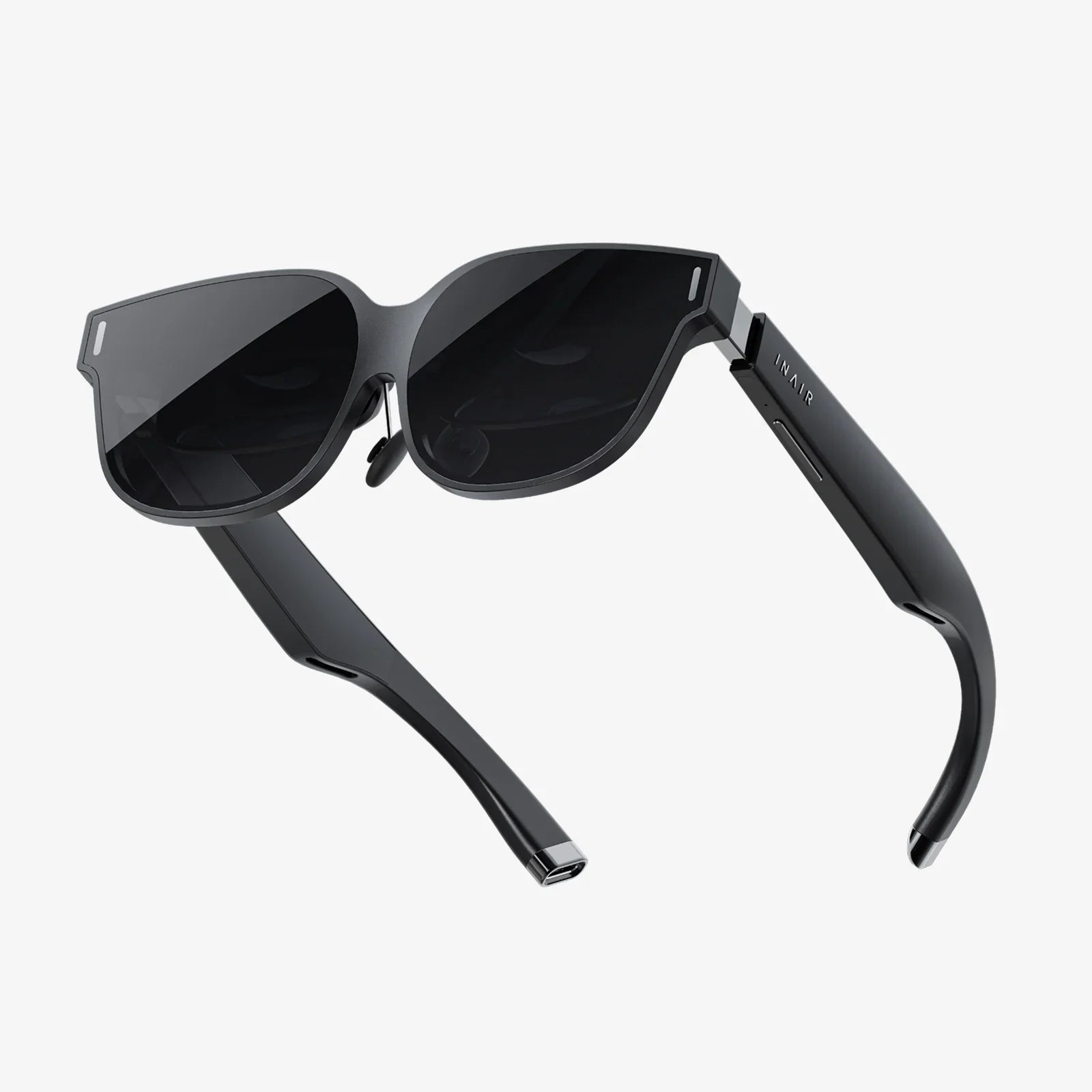
You strap on the headset, and the familiar world around you dissolves. In an instant, you’re transported—standing on the surface of Mars, sitting in a front-row theater seat thousands of miles away, or facing down a mythical beast in a lush, forgotten forest. This is the immediate, jaw-dropping promise of virtual reality. But if you think that promise begins and ends with gaming, you’re missing the vast, unfolding universe of possibilities that a VR headset unlocks. The question isn't just 'what can I play?' but rather, 'where can I go, what can I learn, who can I become, and how can I transform my reality?' Prepare to have your perception of this technology completely rewritten.
The Foundational Experience: A Universe of Interactive Entertainment
It would be remiss not to start where VR found its first mass audience: in the realm of play. Gaming in VR is not merely an evolution; it's a revolution in interactive entertainment. It shifts the experience from controlling a character on a screen to embodying the protagonist within the world itself. The difference is profound.
Instead of pushing a thumbstick to swing a sword, you physically swing your arm. You lean to peer around corners, you crouch to take cover, and you physically aim your weapons. This full-body engagement creates an unparalleled sense of presence—the visceral, convincing feeling that you are actually 'in' the game. This genre has exploded, offering everything from heart-pounding horror experiences that feel terrifyingly real to intricate puzzle games where you manipulate the environment with your own hands, fantastical RPGs where you cast spells with gestures, and incredibly realistic simulations, from piloting fighter jets to driving Formula 1 cars.
Beyond traditional games, VR has resurrected and reimagined the social arcade. Playrooms, virtual bowling alleys, and minigolf courses become spaces where you can meet friends, whose avatars express real-time motion and speech, to play and laugh together as if you were in the same physical room, despite being continents apart.
A Front-Row Seat to the World: The Revolution of Live Events and Travel
What if you could attend the biggest concert on the planet, witness the championship game, or sit in a prestigious lecture hall without ever booking a flight or fighting for a ticket? VR is making this a reality. Through specialized 360-degree cameras and live-streaming VR platforms, users can experience events as if they were there.
Imagine putting on your headset and finding yourself standing on the 50-yard line during the Super Bowl, with the ability to look around at the roaring crowd. You can have a virtual front-row seat at a concert, watching your favorite artist perform from an angle no physical ticket could offer. The applications extend to the arts as well, with live-streamed theater productions, opera, and ballet performances, making high culture accessible to a global audience.
This technology is also a powerful tool for exploration and travel. For those who are physically unable to travel, due to constraints of health, cost, or time, VR offers a compelling alternative. You can take a guided tour of the ancient pyramids of Giza, walk the bustling streets of Tokyo, or dive the Great Barrier Reef—all from your living room. These aren't just videos; they are immersive, navigable experiences that offer a genuine sense of place and scale, inspiring future travel or providing a window to the world for those who cannot otherwise access it.
Transforming the Classroom: Immersive Education and Training
Perhaps one of the most impactful uses of VR is in the field of education. The old adage "experience is the best teacher" finds its ultimate expression in virtual reality. VR transforms learning from a passive, abstract activity into an active, experiential one.
- History Lessons Come Alive: Instead of reading about ancient Rome, students can walk through a digitally reconstructed Forum, hearing the sounds and seeing the scale of the architecture around them. They can stand on the deck of a Viking longship or witness key moments in history firsthand.
- Scientific Exploration: Biology students can take a journey inside the human bloodstream, watching red and white blood cells navigate arteries. Astronomy classes can become voyages through the solar system, with students able to manipulate planets to understand orbits and scale.
- Vocational and Skill Training: This is where VR shines brightly. Medical students can practice complex surgical procedures on virtual patients, making mistakes and learning without any risk to a real person. Mechanics can learn to repair engines by taking apart and reassembling virtual models. Aspiring pilots have used simulators for decades, but VR makes this training more accessible and detailed than ever before. This risk-free environment for practicing high-stakes skills is revolutionizing professional training across countless industries.
The Ultimate Workout: Fitness and Physical Wellbeing
For many, the biggest barrier to consistent exercise is boredom. Treadmills and stationary bikes can be monotonous. VR smashes this barrier by making fitness an adventure. A plethora of applications are designed specifically to get users sweating, often without them even realizing how hard they're working because they're so engaged in the experience.
You can find yourself in a rhythm game where slicing blocks and dodging barriers to the beat of music becomes a full-body cardio session. Boxing games provide an intense upper-body and core workout as you duck, weave, and throw punches. Other apps turn your workout into an adventure, having you row through fjords, climb mountains, or complete obstacle courses. The key advantage is immersive distraction—your focus is on the game, the score, or the environment, not on the repetition of the exercise. Many apps also incorporate tracking, allowing you to monitor calories burned, time active, and progress over time, gamifying your fitness journey and providing powerful motivation.
Building Bridges in Virtual Space: Social Connection and Collaboration
In an increasingly digital and remote world, VR offers a new paradigm for social interaction. Platforms exist that are less like apps and more like entire virtual metropolises. In these spaces, you are represented by a customizable avatar that tracks your movements and gestures.
You can meet friends to watch movies together in a virtual cinema, your avatars sitting next to each other and reacting in real time. You can attend virtual meetups, conferences, or classes, where the sense of shared presence fosters a much deeper connection than a standard video grid. Businesses are leveraging this for remote collaboration, allowing architects and engineers to examine 3D models of buildings or products together at life-like scale, or for remote teams to brainstorm on virtual whiteboards in a shared space that feels more cohesive and creative than a traditional video call. For individuals separated by distance, it provides a powerful sense of "being together," helping to combat loneliness and build community in a deeply human way.
A New Canvas: Storytelling and Artistic Expression
VR is fundamentally changing the language of narrative. Traditional film is a passive experience: you watch a story unfold on a rectangle. VR filmmaking, or "cinematic VR," places you inside the story. You are an observer within the scene, with the agency to look wherever you choose. This creates a powerful, empathetic connection to the characters and events, as you feel you are witnessing them firsthand. Documentarians use this to create profound empathy, transporting viewers to refugee camps, natural wonders, or the lives of people in vastly different circumstances.
Furthermore, VR is an incredible medium for creation. Applications allow users to paint and sculpt in three-dimensional space. You are no longer limited to a 2D canvas; you can walk around your creation, build life-size sculptures, and create entire worlds from nothing but your imagination. This has opened up new frontiers for artists, designers, and hobbyists, providing a tool for expression that feels as natural and limitless as thought itself.
Enterprise and Therapeutic Applications: Solving Real-World Problems
Beyond consumer uses, VR is a serious tool in professional and therapeutic settings. Architects and real estate agents use VR to create immersive walkthroughs of unbuilt homes and developments, allowing clients to experience the space before a single brick is laid. Car companies design and test new vehicles in VR, saving millions on physical prototypes.
In healthcare, the applications are life-changing. VR is now a well-established tool for exposure therapy, helping patients with phobias (like fear of heights, flying, or spiders) to confront their triggers in a safe, controlled, and gradual environment. It is used for physical rehabilitation, turning repetitive exercises into engaging games to improve patient motivation and outcomes. Perhaps most remarkably, VR is used for pain management, immersing burn victims in a "snow world" to distract their brain from agonizing procedures, significantly reducing the perceived pain.
The journey through a VR headset is limited only by the imagination of developers and the willingness of users to explore. From the deepest reaches of fantasy to the most practical applications in our daily work and health, this technology is not a passing fad but a foundational shift in how we interact with digital information and with each other. It is a passport to experiences previously confined to dreams, a tool for profound learning and connection, and a medium poised to redefine entertainment, socializing, and industry. The real world is just one reality now. The question is no longer what to use a VR headset for, but what incredible experience you will choose to have next.
Share:
Best Current VR Headset: A Deep Dive into the Pinnacle of Immersive Technology
How to Make VR Headset More Comfortable - The Ultimate Guide to Extended Play