


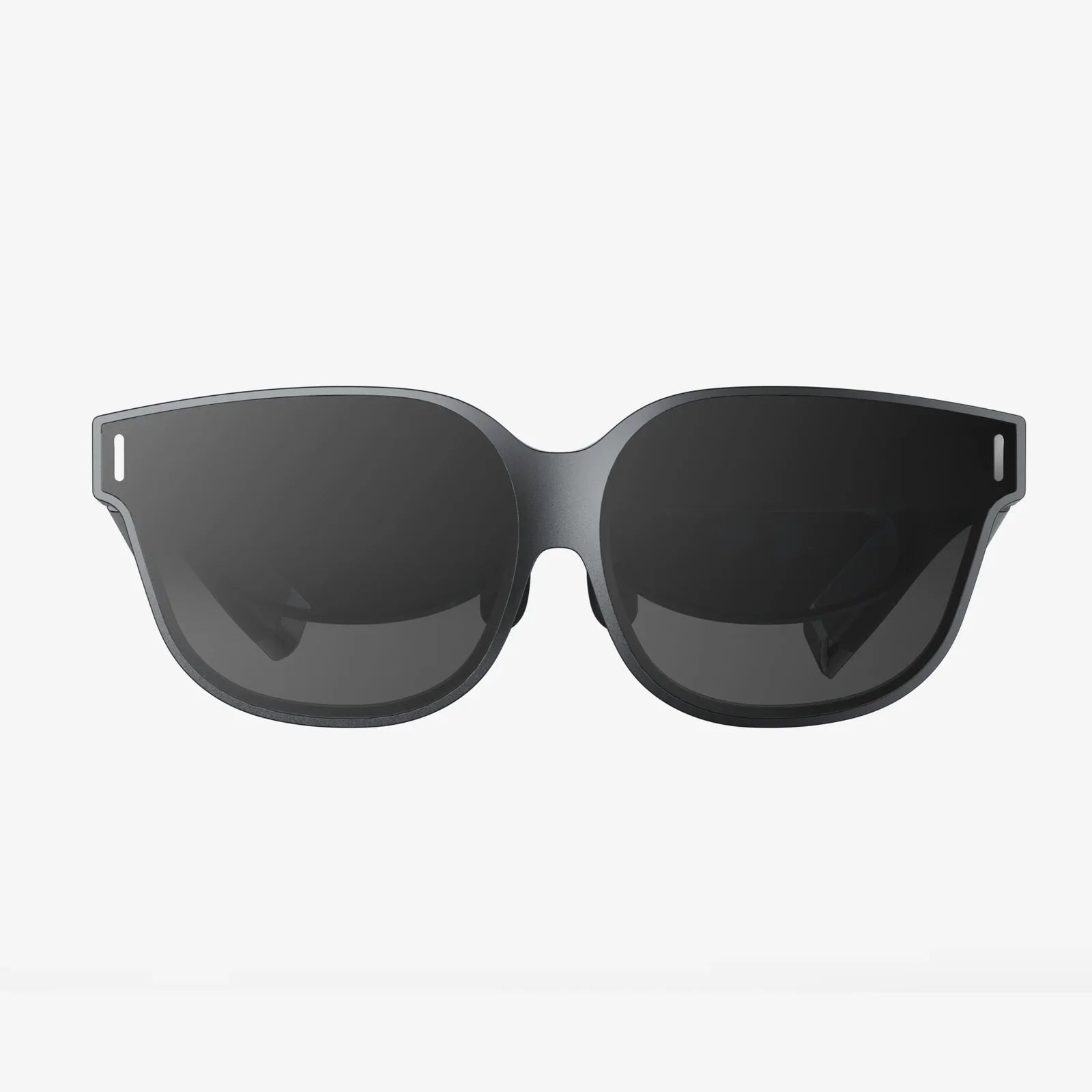
You strap on the sleek, modern visor, your controllers humming to life in your hands. As the digital world envelops your senses, have you ever stopped to wonder where it all began? The story of the very first VR headset isn't a tale of the 2010s, or even the 1990s. It’s a surprising dive into a past so distant from today's technology that its origins might shock you, beginning not with gaming, but with a top-secret military project born in the heart of the Cold War.
The Seeds of a Revolution: Before the Headset Was Even a Concept
To truly understand the genesis of virtual reality, we must first look at the foundational ideas that made it conceivable. The human desire to escape into an artificial world is ancient, manifesting in panoramic paintings, elaborate theater sets, and later, in the fantastical concepts of science fiction. It was author Stanley G. Weinbaum’s 1935 short story, Pygmalion’s Spectacles, that arguably provided the first literary blueprint. In it, a professor invents a pair of goggles that transport the wearer into a fictional world, engaging all their senses through holographic recordings and fictional technology. This was a prescient vision, but it would take real-world engineering and pressing geopolitical needs to turn fiction into fact.
In the 1950s, cinematographer Morton Heilig became a key figure in this pre-history. A man profoundly ahead of his time, Heilig believed cinema should be an experience that engaged the audience completely. His 1962 invention, the Sensorama, was a bulky, arcade-style cabinet, not a headset, but it was a monumental leap forward. It featured a stereoscopic 3D display, stereo sound, blowing wind, and even smells to simulate a motorcycle ride through Brooklyn. Heilig also patented a design for a head-mounted display around the same time, intended to be used with the Sensorama. While his Telesphere Mask offered stereoscopic 3D and wide vision, it lacked a critical component: it was not interactive. It was a passive experience, a movie for one’s eyes. It was a magnificent dead end, demonstrating the potential for immersive media but missing the crucial element of tracking and user agency that defines true VR.
The Cold War Crucible: Where Necessity Spawned Invention
While visionaries like Heilig were working on entertainment, a far more pragmatic and dangerous driver of innovation was escalating: the Cold War. The jet age had arrived, and fighter aircraft were becoming incredibly fast and complex machines. Training pilots was exorbitantly expensive and extremely dangerous. The military needed a way to safely and cost-effectively train them for dogfights, instrument reading, and landing on aircraft carriers. This pressing need, backed by a virtually unlimited budget from the U.S. Department of Defense, became the catalyst for the first true virtual reality headset.
This is where the story converges on the answer to our central question. The widely acknowledged title of the very first virtual reality head-mounted display (HMD) belongs to a device so far removed from today’s sleek designs that it seems almost alien: The Headsight, created by engineers at Philco Corporation in 1961.
Deconstructing the First: The Philco Headsight of 1961
The Headsight was not created for gaming or exploring digital worlds. Its purpose was purely utilitarian: remote viewing. It consisted of a single, large cathode-ray tube (CRT) screen for one eye and a magnetic tracking system, which was revolutionary for its time. The system was linked to a closed-circuit camera. When the user turned their head, the remote camera would move in perfect sync, allowing them to look around a dangerous or remote environment from a safe location. Imagine bomb disposal experts or soldiers peering around corners without exposing themselves—that was the envisioned application.
Let's break down its components and why it qualifies as the first VR HMD:
- Display: A monoscopic CRT screen mounted directly in front of the eye.
- Tracking: A magnetic tracking system that monitored the user's head movements (yaw, pitch, and roll) and translated them to the remote camera.
- Immersion: It provided a first-person perspective that was directly and wirelessly controlled by the user's head motions. This was the birth of the fundamental VR principle: the tracking of human movement to manipulate a viewpoint within a separate environment.
However, the Headsight had significant limitations. It displayed a live video feed from the real world, not a computer-generated one. There was no digital environment, no polygon graphics. Yet, it incorporated the two most critical technological pillars of any VR system: a head-mounted display and motion tracking. It was, in essence, the first functional step into augmented reality and telepresence, technologies that are now flourishing. For these reasons, the Philco Headsight earns its historical place as the progenitor of all VR headsets that followed.
The True Father of VR: Ivan Sutherland’s “Sword of Damocles”
If the Headsight was the primordial ancestor, the next major evolutionary leap came just a few years later and is what many purists consider the true origin point of computer-generated virtual reality. In 1968, computer scientist Ivan Sutherland, with the help of his student Bob Sproull, created what he called The Ultimate Display. The world would come to know it by a more dramatic name: The Sword of Damocles.
This name was utterly fitting. The device was so terrifyingly immense and heavy that it had to be suspended from a mechanical arm bolted to the ceiling, poised over the user’s head like the legendary sword. But beneath its intimidating exterior was a breathtaking array of firsts:
- Computer-Generated Graphics: Unlike the Headsight’s video feed, the Sword of Damocles displayed simple, wireframe 3D graphics generated by a computer. Users could be immersed in a completely synthetic world, a foundational leap.
- Stereoscopic Vision: It used two small CRT displays (one for each eye) to create a true stereoscopic 3D effect, providing depth perception within the digital world.
- Advanced Tracking: It employed both ultrasonic trackers and mechanical tracking to precisely follow the user’s head movements, updating the perspective of the wireframe graphics in real-time.
Sutherland’s system was the first to combine a head-mounted display with computer graphics and tracking to create an interactive, immersive, computer-generated experience. It was the blueprint. The concepts he pioneered—real-time rendering, perspective, and interactive graphics—are the direct DNA of every VR, AR, and mixed reality system in use today. His 1965 essay, which described the Ultimate Display as “a room within which the computer can control the existence of matter,” remains a guiding star for the entire industry.
The Long Road to Mainstream: From Labs to Living Rooms
The groundbreaking work of the 1960s was followed by decades of research, primarily within government and university labs. NASA took a keen interest, developing advanced VR and telepresence systems for controlling robots in space. The term “Virtual Reality” itself was coined in the 1980s by Jaron Lanier, whose company, VPL Research, developed the first commercial VR goggles and data gloves, bringing the technology out of the lab and into the public consciousness, albeit at a price tag far beyond any consumer.
The 1990s saw the first major consumer push, with a number of companies attempting to bring VR to arcades and home consoles. These systems were characterized by low-resolution graphics, immense latency causing nausea, and high costs. They captured the world’s imagination but failed to deliver a comfortable or compelling experience, leading to a widespread “VR winter” that lasted for nearly two decades. The technology simply wasn't ready; the computing power required was too expensive, and the miniaturization of components hadn't yet caught up to the ambition.
The thaw began in the 2010s. The smartphone revolution was the unexpected key. The mass production of high-resolution, miniaturized displays, accurate motion sensors (gyroscopes, accelerometers), and powerful, compact processors—all driven by the demand for better phones—finally provided the affordable, high-quality components needed to build an effective headset. A pivotal moment came in 2012 with the wildly successful Kickstarter campaign for a new developer kit, which proved there was immense pent-up demand. This led to a new arms race in technology, with major corporations investing billions, finally realizing the dreams first sketched out by engineers in the 1960s.
From the Sword of Damocles to the Metaverse: A Legacy Forged
The journey from the Philco Headsight’s remote viewing system to today’s all-encompassing digital worlds is a testament to human ingenuity. It shows how technology often evolves in cycles: a visionary idea is born (Heilig, Sutherland), it fails to find a market due to technical limitations (the 90s crash), and is then reborn when adjacent technologies mature (the smartphone). The very first VR headset was not a singular invention but a series of critical innovations, each building on the last.
The Headsight established the core principle of head-tracking for viewpoint control. The Sword of Damocles defined the paradigm of a computer-generated world. The commercial efforts of the 80s and 90s, while failures, popularized the concept and taught valuable lessons about human factors like latency and comfort. And the modern era has finally brought it all together, creating devices that are beginning to approach the visions of Weinbaum, Heilig, and Sutherland.
So, the next time you lose yourself in a virtual concert, train for a complex surgical procedure, or simply explore a fantastical landscape from your living room, remember the immense history behind the device on your head. It all started not with a game, but with a pragmatic solution to a Cold War problem—a single, heavy eye-piece that moved a camera, igniting a revolution in how we perceive and interact with reality itself. The future of virtual worlds is being written today, but its prologue was drafted over sixty years ago in a lab, forever changing the boundary between the real and the imagined.
Share:
Best Non-Standalone VR Headset: Your Ultimate Guide to Tethered Immersion
What's a Good VR Headset? The Ultimate Guide to Finding Your Perfect Match