


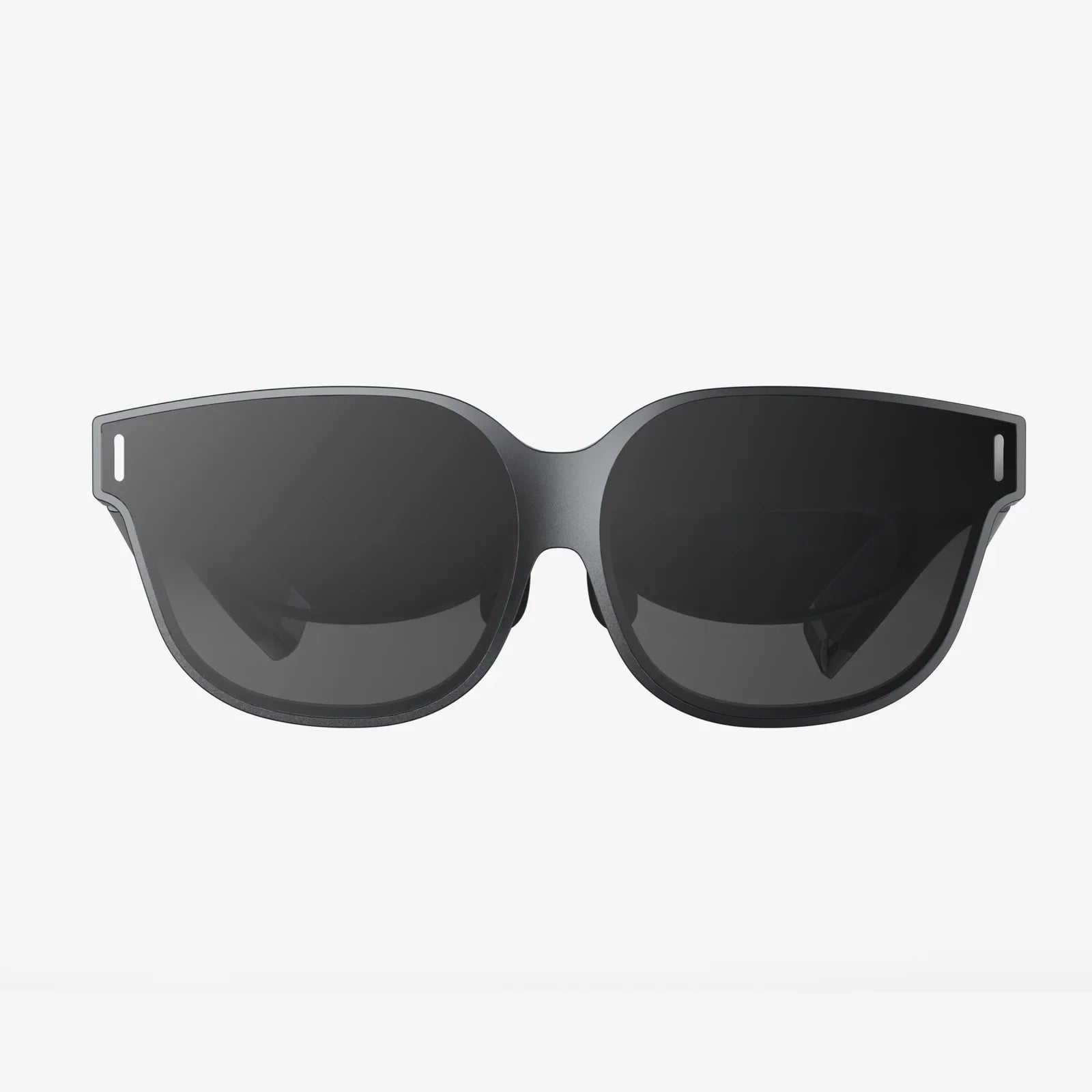
You’ve seen the future, and it’s a virtual one. The promise of stepping into another world, whether to game, create, socialize, or learn, is more tangible and affordable than ever. But with a landscape teeming with options, from sleek standalone devices to powerful tethered systems, the burning question remains: what's a good VR headset, really? The answer isn't a single model name; it's a checklist of features, compromises, and experiences that align perfectly with your needs and budget. This definitive guide cuts through the marketing jargon to break down the core components that separate a forgetgettable gadget from a transformative portal to new realities.
The Foundation: Understanding the Three Types of Headsets
Before diving into specs, you must first choose your path. The entire VR experience is shaped by one fundamental choice: the type of headset. There are three primary categories, each with its own philosophy of immersion.
Standalone VR: The Accessible All-in-One
Imagine a headset that requires no wires, no powerful external computer, and no external sensors. You put it on, and you're inside. This is the magic of standalone VR. All the necessary processing power, graphics rendering, and tracking technology are built directly into the device itself.
The Hallmarks of a Good Standalone Headset:
- Freedom of Movement: Untethered from a computer, you can spin, crouch, and move without a second thought. This is arguably the purest form of VR immersion for room-scale experiences.
- Ease of Use: The setup is incredibly simple. Often, you just need to power it on, define your play area with a boundary, and you're ready to go.
- Portability: It’s a self-contained system. You can easily take it to a friend's house or move it to a different room.
Considerations: The convenience comes with trade-offs. The mobile-grade processors, while impressive, cannot match the raw graphical power of a high-end gaming PC. This means visuals will be less detailed, with simpler textures and effects. Battery life is also a factor, typically offering 2-3 hours of continuous use.
PC VR (Tethered): The Powerhouse of Performance
For those seeking the highest fidelity, most graphically intense, and visually stunning virtual experiences, PC VR is the undisputed king. These headsets act as dedicated displays and motion trackers, but all the heavy computational lifting is handled by a powerful gaming computer to which the headset is connected via a cable.
The Hallmarks of a Good PC VR Headset:
- Top-Tier Visuals: Experience incredibly high resolutions, stunning detail, advanced lighting effects, and smooth, high frame rates that are the benchmark for VR.
- Deep Content Library: Access to vast platforms like SteamVR, which hosts thousands of experiences, from massive AAA titles to innovative indie gems.
- Advanced Features: Often pioneers of new technology like eye-tracking, facial expression tracking, and wider field-of-view displays.
Considerations: The obvious drawback is the cable, which can break immersion and poses a tripping hazard (though pulley systems can help). The cost of entry is significantly higher, as you must own or purchase a VR-ready gaming PC in addition to the headset. Setup is also more involved.
Console VR: The Plug-and-Play Specialist
This category is more niche but offers a compelling proposition. Designed to work exclusively with a specific video game console, these headsets offer a curated, high-quality experience that sits between the accessibility of standalone and the power of PC VR.
The Hallmarks of a Good Console Headset:
- Optimized Performance: Since the hardware target is fixed (one specific console), developers can perfectly optimize their games for a smooth, consistent experience.
- High-Quality Exclusive Titles: Often home to critically acclaimed, system-selling games developed by first-party studios.
- Simplified Setup: While not as simple as standalone, it’s far less complex than a PC VR setup, usually involving plugging a single cord into the console.
Considerations: You are locked into a specific ecosystem. The content library, while high-quality, is smaller than what's available on PC. It also requires ownership of the corresponding console.
Deconstructing the Specs: What Actually Matters?
Once you've chosen your headset type, you need to understand the language of VR specifications. Not all numbers are created equal.
Visual Clarity: Resolution, Lens Quality, and Display Type
This is where the digital world meets your eyes. A good visual experience is a combination of several factors.
- Resolution per Eye: More is generally better. Look for a combined resolution that approaches or exceeds 4K (3840 x 2160). This drastically reduces the "screen door effect" (the visible grid between pixels), making the image appear solid and crisp.
- Lens Technology: Fresnel lenses are common but can cause god rays (glare around high-contrast objects). Pancake lenses are a newer, superior technology that allows for a much thinner headset profile and provides edge-to-edge clarity with minimal distortion.
- Field of View (FoV): This is how much of the virtual world you can see, measured diagonally like a camera lens. A standard FoV is around 90-110 degrees. A wider FoV (e.g., 120+ degrees) is more immersive but requires more rendering power and can be more expensive.
Smoothness and Comfort: Refresh Rate
Measured in Hertz (Hz), the refresh rate is how many times the image on the display updates per second. A higher refresh rate (90Hz and above, with 120Hz being the new gold standard) is crucial for comfort and immersion. It makes motion look incredibly smooth, reduces latency (lag), and is a primary defense against VR-induced motion sickness. A good VR headset prioritizes a high, consistent refresh rate.
Tracking: How the World Sees You
How does the headset know where you are and what you're doing? There are two main methods.
- Inside-Out Tracking: Cameras on the headset itself look outward to map your environment and track the controllers. This is the standard for modern standalone and PC VR headsets. It requires no external base stations, making setup a breeze. A good inside-out tracking system has wide-angle cameras for robust coverage, even when controllers are held close to the body.
- Outside-In Tracking: External sensors or base stations placed around your room emit signals (lasers or infrared light) that are picked up by sensors on the headset and controllers to pinpoint their location in 3D space. This method is renowned for its millimetric precision and is still favored by competitive VR enthusiasts for its flawless tracking, especially behind the user's back. The trade-off is a more complex setup with external hardware.
The Intangibles: Comfort is King
You can have the most powerful headset in the world, but if it's painful to wear, it will gather dust. Comfort is a spec in itself.
- Weight Distribution: A good headset balances weight effectively. A front-heavy device will press into your cheeks and forehead. Look for designs that use a counterweight at the back or a top strap to redistribute the load onto the crown of your head.
- Facial Interface: The foam or rubber gasket that seals against your face should be soft, breathable, and easily replaceable for hygiene. A good interface creates a light seal without applying uncomfortable pressure.
- IPD Adjustment: Interpupillary Distance is the distance between your pupils. A good headset offers either a physical slider (best) or a software adjustment to match this distance. An incorrect IPD setting can cause eye strain, headaches, and a blurry image.
The Ecosystem: Beyond the Hardware
A VR headset is not an island. Its value is deeply tied to the ecosystem it inhabits.
The Content Library: Why You're Really Buying It
Hardware is a means to an end, and that end is software. Before committing, investigate the storefront. Is it filled with the experiences you want? Look for:
- A strong lineup of exclusive titles.
- A robust library of indie games and experimental apps.
- Non-gaming applications: fitness apps, social platforms, creative tools, and media players.
- Regular sales and developer support.
Controllers: Your Hands in the Virtual World
Controllers are your primary connection to the virtual world. A good pair feels intuitive and natural.
- Ergonomics: They should feel good in your hands, with buttons and triggers placed naturally for your fingers.
- Haptic Feedback: Subtle, nuanced vibrations that make interactions feel real—from the gentle thrum of a virtual object to the recoil of a weapon.
- Tracking: They must be tracked flawlessly by the headset's chosen system, with no jitter or loss of signal.
Future-Proofing and Upgradability
VR technology is evolving rapidly. While you can't future-proof completely, some headsets offer a longer shelf life through modular design or support for add-ons like improved headstraps, external tracking modules, or even upgraded controllers down the line.
Matching a Headset to Your Profile
Now, let's apply all this knowledge. What does a good VR headset look like for you?
The First-Timer / Casual User
Your Priority: Ease of use, affordability, and fun. Your Best Bet: A high-end standalone headset. It offers the least friction between unboxing and being in VR. You’ll get a massive library of accessible games and apps without any technical hassle.
The Hardcore Gamer / Tech Enthusiast
Your Priority: The absolute best visuals, performance, and access to the deepest catalog of complex games. Your Best Bet: A PC VR headset. You're willing to deal with the cable and PC setup to experience VR at its graphical pinnacle. You value precision tracking and high frame rates above all else.
The Fitness Fanatic
Your Priority: Comfort during intense movement, sweat resistance, and a great library of fitness apps. Your Best Bet: A lightweight standalone headset with a comfortable, breathable facial interface and available accessories like a dedicated fitness face cover. The wireless nature is non-negotiable for workouts.
The Creative Professional / Socializer
Your Priority: High resolution for detail work, strong pass-through cameras for mixed reality, and excellent social platforms. Your Best Bet: A modern standalone or PC VR headset that champions high-resolution displays and full-color pass-through, allowing you to see your real environment clearly while overlaying digital creations or interacting with friends in AR spaces.
The journey to find your perfect virtual reality companion is a personal one, defined by the experiences you crave and the world you want to build. It’s not about finding the single “best” headset, but about identifying the device that best disappears on your face, letting you focus entirely on the wonders within. The ultimate test is putting one on and feeling that unmistakable click—where technology fades away, and pure possibility begins.
Share:
What Was The Very First VR Headset? The Surprising Truth Revealed
Why AR is Equal to MR in Perfect Competition: The Foundation of Market Theory