


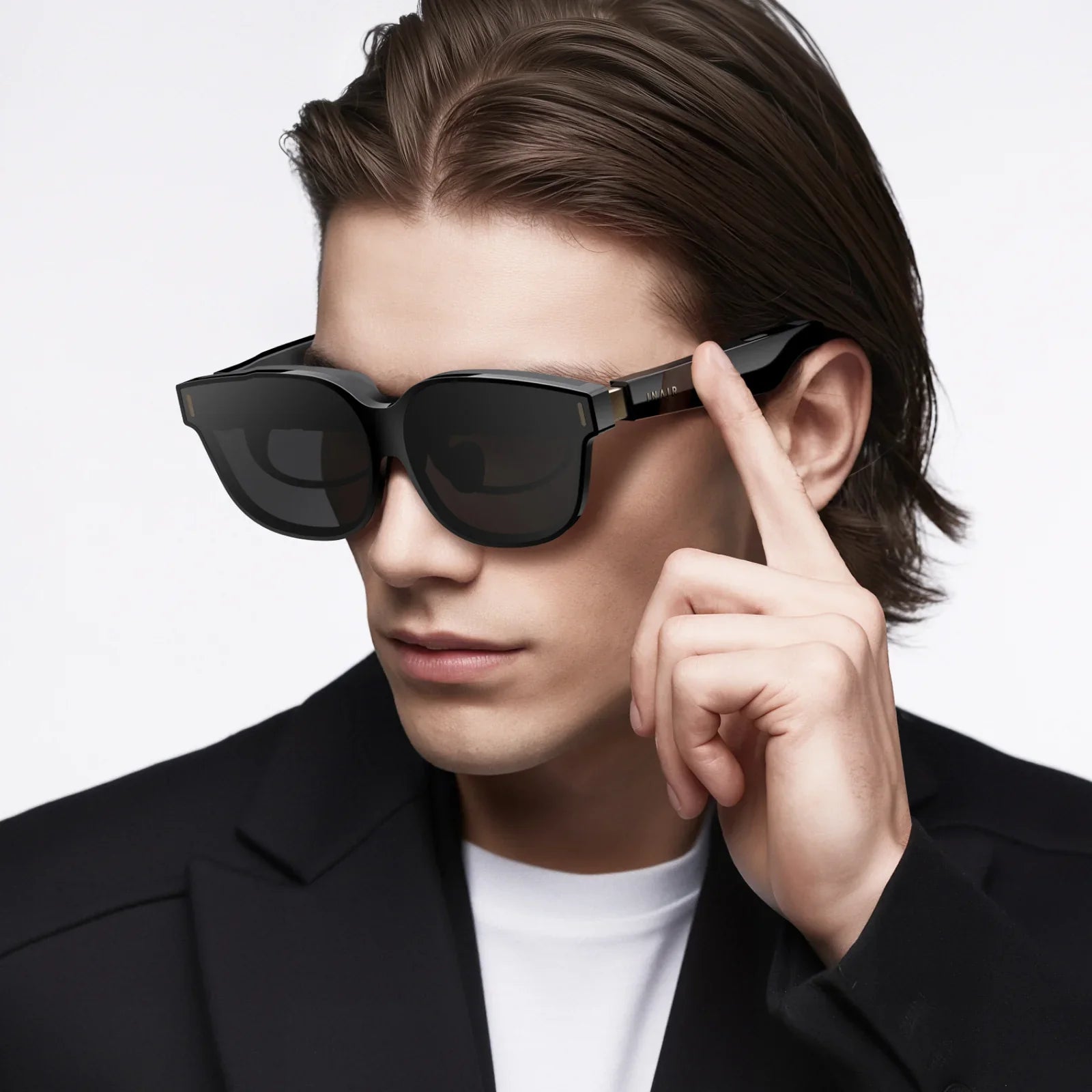
The race to dominate your field of view is hotter than ever. You're not just shopping for a gadget; you're looking for a portal, a key to unlock new worlds, revolutionize your workflow, and redefine social connection. The question burning in the mind of every tech enthusiast and curious newcomer alike is a simple one with a complex answer: what will be the best VR headset? The answer doesn't lie in today's spec sheets, but in the convergence of tomorrow's technologies. The best headset won't be the one with the highest number in a marketing brochure, but the one that masterfully balances a symphony of cutting-edge components to create an experience so seamless, so compelling, that the technology itself disappears, leaving only the adventure.
Beyond Resolution: The Quest for Visual Fidelity
For years, the conversation started and ended with resolution. More pixels were unequivocally better. While display clarity remains paramount, the definition of 'visual fidelity' has expanded dramatically. The best future headsets will excel across multiple visual axes.
The term 'resolution' itself is becoming a legacy metric. The new gold standard is pixels-per-degree (PPD). This measures how many pixels are packed into a single degree of your field of view, a far more accurate gauge of perceived sharpness. A 4K display spread across a massive field of view can look worse than a lower-resolution display in a narrower one. The best headsets will need to push PPD into the 35-40+ range, approaching the perceived clarity of a modern smartphone, to truly eliminate the 'screen door effect' and achieve visual realism.
However, resolution is nothing without color and contrast. This is where display technology itself becomes critical. The move from LCD to OLED and now to Micro-OLED panels is a game-changer. Micro-OLEDs offer incredibly high pixel density, perfect blacks, vibrant colors, and faster response times than traditional OLEDs. They are a cornerstone for the next generation. Simultaneously, Mini-LED backlighting with full-array local dimming is creating LCD panels with contrast ratios that rival OLED, offering a compelling alternative. The best headset will likely leverage one of these advanced technologies to deliver breathtaking dynamic range and HDR capabilities, making virtual scenes feel alive and authentic.
Perhaps the most crucial visual innovation is Pancake Lenses. Traditional Fresnel lenses are bulky, cause glare, and have a small 'sweet spot' for clarity. Pancake optics use a folded light path to create a dramatically thinner and lighter headset profile. More importantly, they provide edge-to-edge clarity, a massive leap in visual comfort. Any headset aspiring to be the best must adopt this lens technology to make the visual experience consistently sharp and comfortable.
The Unbreakable Chain: Performance and Processing Power
A stunning display is useless if it's not fed a steady, smooth stream of high-fidelity imagery. This is where raw processing power and intelligent optimization come into play.
The heart of this effort is foveated rendering. This revolutionary technique uses internal eye-tracking sensors to determine exactly where your fovea (the center of your retina with the highest visual acuity) is looking. The system then renders the area you're directly looking at in ultra-high detail, while intelligently reducing the rendering quality in your peripheral vision—where you can't perceive the difference. This can reduce the GPU workload by orders of magnitude, allowing for vastly more complex graphics and higher resolutions without requiring a supercomputer. Reliable, low-latency eye-tracking for foveated rendering is non-negotiable for a best-in-class headset.
This leads to the great architectural debate: standalone (all-in-one) vs. tethered (PC-powered) vs. hybrid. The best headset might not be a single type, but the one that executes its chosen paradigm flawlessly.
- Standalone: The ultimate convenience. The best standalone headsets will feature processors that are generations ahead of today's mobile chipsets, approaching console-level performance while managing thermals and battery life intelligently. They offer untethered freedom for fitness, social apps, and media consumption.
- Tethered: The ultimate performance. These headsets act as pure displays for a powerful external computer, delivering the absolute highest-fidelity experiences for hardcore simulation and AAA gaming. The best will use a single, lightweight cable or even high-bandwidth wireless streaming to maintain that connection.
- Hybrid: The potential holy grail. A headset that can operate as a capable standalone device for mobility and convenience, but can also seamlessly connect to a gaming PC to unlock its full graphical potential. This flexibility is incredibly compelling but also the most difficult to engineer effectively.
The Forgotten Sense: Mastering Audio and Haptics
Immersion is a multisensory experience. A headset can have a perfect screen, but if it sounds thin and feels disconnected, the illusion shatters.
Spatial audio is the baseline. The best headsets will have integrated, high-quality directional audio drivers that sit just off the ear, allowing for both immersive sound and environmental awareness. They must accurately simulate how sound behaves in a 3D space—echo, occlusion, and directionality—to truly sell the reality of a virtual environment.
But the next frontier is haptics. Rumble motors are a thing of the past. Advanced haptic engines in the headset itself can provide subtle, yet powerful, tactile feedback. Imagine feeling the thump of a virtual object landing in front of you, the light buzz of a raindrop hitting your digital helmet, or the deep resonance of a virtual explosion. This somatic layer adds a profound depth to immersion that is often overlooked in spec comparisons.
The Human Factor: Ergonomics, Comfort, and Identity
You can have the most technologically advanced headset ever made, but if it's a pain to wear, it will gather dust. The 'best' headset will be the most comfortable one.
Weight distribution is everything. The goal is to move the center of mass as close to the center of your head as possible. This is achieved through innovative strap designs—like rigid top-straps and adjustable counter-weights—and the use of lightweight materials like magnesium alloy and advanced composites. The industry is rapidly moving away from the 'ski-goggle' model to a more balanced, halo-style or hybrid design that takes pressure off the face.
Related to this is the inter-pupillary distance (IPD) adjustment. A simple software slider is no longer acceptable. The best headsets will feature continuous, motorized IPD adjustment that is automatically calibrated via eye-tracking, ensuring a perfect match for your unique physiology and guaranteeing the clearest possible image.
Finally, the creation of a persistent digital avatar is becoming a core social feature. The best headsets will use their sensor arrays (cameras and eye-trackers) for full-face and eye-tracking, capturing your expressions and emotions in real-time and mapping them onto your digital persona. This allows for nuanced, natural social interaction in virtual meetings and social spaces, making communication feel human again.
The Invisible Ecosystem: Software and Content
Hardware is nothing without a soul. The best headset will be part of a thriving, accessible ecosystem.
This means a robust and curated digital storefront, but also a commitment to backward compatibility and a clear upgrade path for existing software libraries. Users need to know their investment in content is safe. Furthermore, the headset must be a versatile tool. It needs to excel not only as a gaming platform but also as a spatial computing device for productivity (virtual monitors, 3D design) and a social and fitness platform. The killer app might not be a game, but a revolutionary way to work or connect.
True versatility also means supporting open standards rather than building a walled garden. Support for initiatives like OpenXR allows developers to build experiences that work across different hardware, ensuring a healthier and more competitive content landscape for everyone. The best headset will be a gateway, not a prison.
The Final Reckoning: A Symphony, Not a Solo
So, what will be the best VR headset? It will not be defined by a single overwhelming feature. It will be the product that harmonizes all these elements with masterful execution. It will have the visual clarity of high-PPD Micro-OLED displays sharpened by Pancake lenses, powered by the intelligent efficiency of foveated rendering. It will offer the flexibility of a hybrid design or excel so profoundly in its chosen category that the trade-off is meaningless. It will be feather-light and mould to your head with personalized comfort, making multi-hour sessions a pleasure. It will sound real, and through advanced haptics, it will feel real. It will understand your expressions and translate them into a digital world, and it will be the key to a vast, evolving library of experiences and productivity tools.
This ultimate headset doesn't exist today, but its blueprint is clear. The future of virtual reality isn't about a single number on a box; it's about the complete eradication of the barrier between you and the experience. When you finally strap it on, the question of which headset is best will vanish from your mind, replaced entirely by the awe of where you can go and what you can do. The journey to find it is just beginning, and the destination will be worth the wait.
Share:
Fastest VR Headset - The Ultimate Guide to Unmatched Performance and Immersion
What Is The Best Cheap VR Headset For PC: The Ultimate 2024 Buyer's Guide