


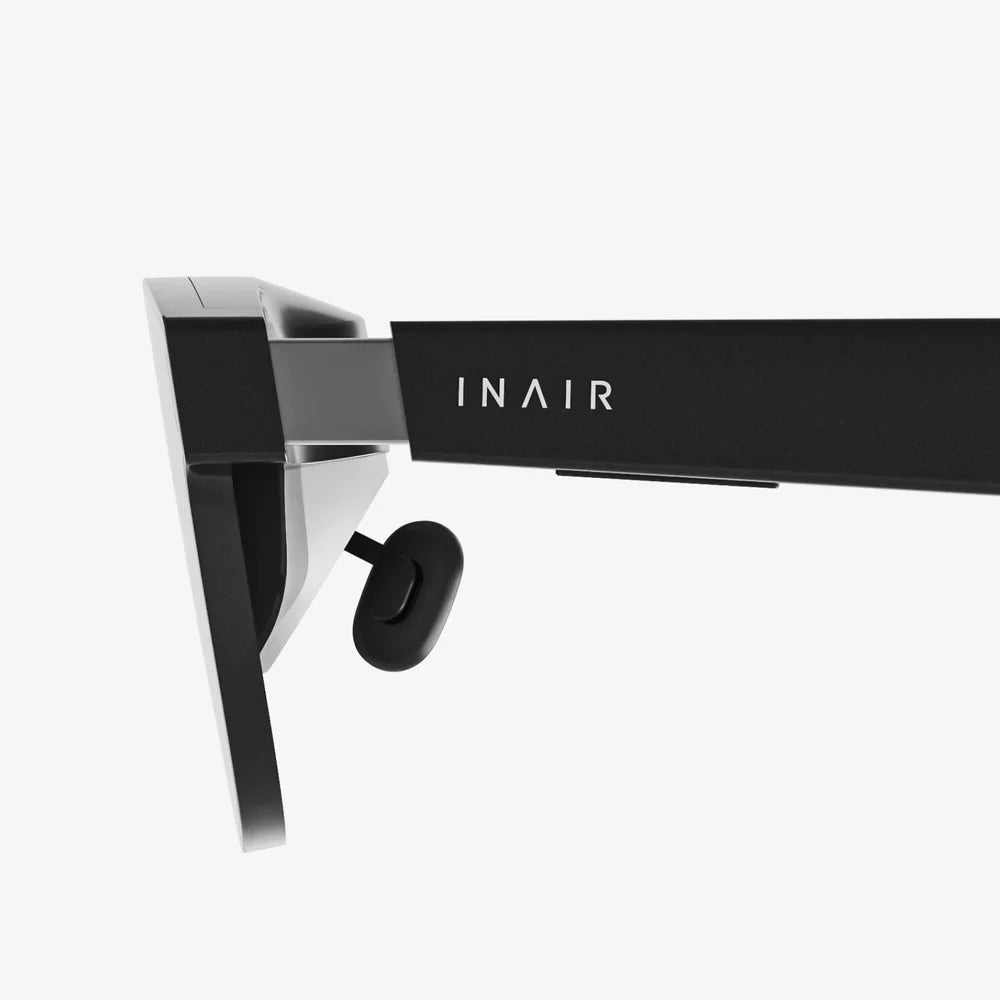
Imagine stepping through your screen into a new reality. You're no longer just watching a movie or playing a game; you're inside it. The world around you responds to your movements, your gaze, and your curiosity. This is the promise, the magic, and the profound technological leap offered by a VR headset. It's more than a gadget; it's a portal, and understanding it is the first step into the next evolution of human-computer interaction.
At its most fundamental level, a VR headset is a head-mounted device that uses advanced technology to create a simulated, three-dimensional environment for the user. Unlike traditional screens that sit statically in your room, a VR headset places the digital world directly in your field of vision, tracking your head movements to make the experience feel natural and immersive. The primary goal is to trick your senses, primarily sight and sound, into believing you are somewhere you are not. This is achieved through a combination of sophisticated hardware and software working in concert.
The Core Components: How a VR Headset Works
To understand what a VR headset is, you must look inside it. While designs vary, most quality headsets share several key components that form the backbone of the virtual experience.
The Display and Lenses
The heart of any VR headset is its display system. Inside the unit, one or two high-resolution screens are positioned extremely close to your eyes. These screens are responsible for generating the visuals you see. However, placing a screen so near your eyes would be uncomfortable and blurry. This is where specialized lenses come in. They are placed between your eyes and the screens, refracting the focused light and allowing your eyes to comfortably perceive the image. These lenses create a wide field of view (FOV), expanding the digital world to your peripheral vision and significantly enhancing the feeling of immersion.
Tracking Systems: Inside-Out vs. Outside-In
For the virtual world to feel real, it must move in perfect sync with you. This is the role of the tracking system. When you turn your head, look up, or crouch down, the headset must detect these movements and instantly adjust the perspective on the screen. There are two primary methods for achieving this precise tracking.
Outside-In Tracking: This method uses external sensors or cameras placed around the room. These devices constantly monitor the position of the headset (and often the controllers) by tracking lights or sensors on the device itself. This system is known for its high precision and low latency but requires a more complex setup within a defined play area.
Inside-Out Tracking: A more modern approach, inside-out tracking embeds cameras directly onto the headset itself. These outward-facing cameras observe the physical environment, tracking the position of stationary objects to triangulate the headset's movement in real-time. This eliminates the need for external hardware, making the system more portable and user-friendly, though it can sometimes be less accurate at the very edges of its tracking volume.
Audio and Haptics
Immersion isn't just visual. Spatial audio is a critical component of a convincing VR experience. Instead of standard stereo sound, spatial audio uses advanced algorithms to simulate how sound waves behave in a three-dimensional space. A noise behind you will sound like it's coming from behind, and its volume and tone will change realistically as you turn your head. Many headsets integrate speakers near the ears or use specialized headphones to deliver this effect.
Furthermore, haptic feedback adds a tactile layer to the experience. This can range from simple controller vibrations that simulate recoil from a virtual gun to more advanced vests and accessories that can mimic the feeling of impact, pressure, or even a change in atmospheric conditions.
Controllers and Input
To interact with the virtual world, you need your hands. VR controllers are motion-tracked devices held in each hand, often featuring buttons, joysticks, triggers, and haptic feedback. They allow you to grab, push, throw, and manipulate objects with a surprising degree of nuance. More advanced systems are beginning to incorporate hand-tracking technology, using the headset's cameras to track your bare hands and fingers, enabling even more natural and intuitive interaction without the need to hold a physical controller.
A Brief History: From Sci-Fi to Your Living Room
The concept of virtual reality is not new. Science fiction writers have dreamed of immersive artificial worlds for decades. However, the tangible history of VR headsets began much earlier than most people realize.
The first semblance of a VR headset, the Sensorama, was created in the 1960s. It was a large, mechanical apparatus that offered immersive film experiences complete with stereo sound, wind, and even smells. Later in the same decade, the first head-mounted display (HMD) system was created for military use. These early systems were crude, incredibly expensive, and remained confined to research labs.
The term "virtual reality" was popularized in the late 1980s and early 1990s when several companies attempted to bring VR to the consumer market. These early commercial efforts were plagued by low-resolution graphics, crippling latency (the delay between movement and screen update, which causes nausea), and astronomical costs, leading to a commercial failure and sending VR into a "winter" for nearly two decades.
The modern VR renaissance began in the 2010s, driven by two key factors: the proliferation of powerful, miniaturized smartphone components (high-resolution screens and motion sensors) and the passion of a dedicated developer community. A pivotal moment was the development of a prototype that leveraged a smartphone for its display and processing, proving that high-quality VR could be achieved at a fraction of the previous cost. This directly led to the release of the first generation of modern, PC-powered VR headsets in 2016, marking the true beginning of VR as a viable consumer technology.
Types of VR Headsets: Finding Your Entry Point
Today's VR market offers a spectrum of devices catering to different needs, budgets, and levels of desired immersion. They can be broadly categorized into three groups.
Standalone VR Headsets
These are all-in-one units that require no external computer, console, or phone. All the necessary processing power, battery, and hardware are built directly into the headset. They are wireless, portable, and offer the easiest entry point into VR. Users can simply put on the headset and start experiencing content anywhere with enough space to move safely. While historically less powerful than their tethered counterparts, the gap in performance and visual fidelity is closing rapidly with each new generation of standalone hardware.
PC-Powered VR Headsets
For the ultimate in visual fidelity and performance, PC-powered headsets are the gold standard. These headsets are connected via a cable to a powerful gaming computer that handles the intense rendering required for the most detailed and complex virtual worlds. This setup offers the highest resolutions, the fastest refresh rates (critical for comfort), and access to the most graphically demanding experiences and simulations. The trade-off is the cost of the high-end PC and the physical tether, which can limit freedom of movement.
Console-Powered VR Headsets
This category functions similarly to PC-powered VR but is designed to work exclusively with a specific video game console. This offers a more streamlined and user-friendly experience than a PC setup, as the hardware is standardized and optimized by a single company. It provides a strong middle ground, offering high-quality, tethered VR experiences without the complexity and cost of a high-end gaming PC, making premium VR more accessible to a wider audience.
Beyond Gaming: The Expansive Applications of VR
While gaming is the most well-known and commercially successful application for VR headsets, their potential extends far beyond entertainment. The ability to simulate presence has profound implications for numerous fields.
Education and Training: Medical students can practice complex surgical procedures on virtual patients without risk. Mechanics can learn to repair engines by taking apart virtual models. History students can take a field trip to ancient Rome. VR offers safe, repeatable, and deeply engaging training scenarios that were previously impossible or prohibitively expensive.
Enterprise and Design: Architects and engineers use VR to walk clients through unbuilt structures. Car designers can review full-scale 3D models of new vehicles. Companies use VR for virtual meetings where participants feel as if they are in the same room, collaborating on 3D designs in real-time, regardless of their physical location.
Healthcare and Therapy: VR is being used for exposure therapy, helping patients with phobias like fear of heights or flying confront their triggers in a controlled, safe environment. It's also used for physical rehabilitation, turning exercises into engaging games, and for managing pain during painful medical procedures by distracting the patient.
Social Connection and Travel: Social VR platforms allow people to meet, talk, and share experiences using personalized avatars, creating a powerful sense of togetherness across vast distances. Furthermore, you can use VR to visit distant museums, explore natural wonders, or attend live concerts from the comfort of your home.
Challenges and Considerations
Despite its incredible potential, VR technology is not without its challenges. For some users, VR can cause cybersickness, a type of motion sickness caused by a disconnect between what the eyes see and what the inner ear feels. This is mitigated by high refresh rates, low latency, and stable tracking, but it remains a barrier for some.
There are also concerns about privacy, as headsets with inside-out tracking are essentially mapping your home environment. The long-term social and psychological effects of prolonged immersion in virtual worlds are also a topic of ongoing study and debate. Furthermore, creating a comfortable and accessible experience for users with glasses or different visual abilities remains a key focus for developers.
The Future is Immersive
The trajectory of VR is moving towards greater fidelity, comfort, and accessibility. Future headsets will be lighter, with higher-resolution displays that eliminate the "screen door effect," and wider fields of view. Advancements in haptics will bring touch into the experience, and eye-tracking technology will allow for more intuitive interfaces and dramatic performance improvements through foveated rendering. The ultimate goal is the so-called "holy grail" of VR: photorealistic graphics with perfectly natural interaction in a wireless form factor that is as comfortable as a pair of sunglasses.
The question of what a VR headset is evolves with each technological breakthrough. It started as a clunky window into primitive digital spaces and is rapidly becoming a seamless gateway to new realities. It is a tool for creators, a haven for gamers, a classroom for students, and a new medium for human connection. This is just the beginning of the journey. The boundaries between the digital and the physical are blurring, and the humble VR headset is your ticket to explore what lies on the other side.
Share:
How to Use VR Headset with Phone: The Ultimate Setup and Immersion Guide
Extended Reality Training Service: Revolutionizing Professional Development and Skill Acquisition