


Imagine a world where the line between the digital and the physical blurs into irrelevance, where you can walk with dinosaurs, redesign your living room in real-time, or receive step-by-step instructions overlaid directly onto a complex machine you're repairing. This isn't the distant future; it's the unfolding present, powered by two revolutionary technologies: Augmented Reality and Virtual Reality. But what exactly are they, and how are they quietly weaving themselves into the fabric of our daily lives, from how we work and learn to how we play and connect?
Demystifying the Digital Duo: Core Concepts
While often mentioned in the same breath, AR and VR offer distinctly different experiences. Understanding their core principles is the first step to appreciating their potential.
What is Virtual Reality (VR)?
Virtual Reality is the technology of immersion. It aims to shut out the physical world entirely and transport the user to a fully digital, computer-generated environment. By wearing a head-mounted display (HMD), users are visually and acoustically isolated from their actual surroundings. Advanced systems incorporate motion tracking, allowing users to navigate and interact with the virtual world using handheld controllers or even their own hands via inside-out tracking. The goal of VR is presence—the convincing feeling of "being there" in a place that doesn't physically exist. Whether it's a fantastical game world, a meticulous surgical simulation, or a virtual meeting room, VR replaces reality with a new one.
What is Augmented Reality (AR)?
Augmented Reality, in contrast, is the technology of enhancement. It does not replace the real world but rather superimposes digital information—images, data, 3D models, annotations—onto the user's view of their physical environment. The real world remains the foundation, and digital content is layered on top of it, creating a composite view. This is most commonly experienced today through smartphone and tablet cameras, but more advanced AR is delivered through smart glasses or transparent heads-up displays. The magic of AR lies in its contextuality; the digital information is directly relevant to what the user is looking at, such as navigation arrows on a street or assembly instructions on a piece of furniture.
The Technological Engine Room: How They Work
Both AR and VR are feats of engineering, combining sophisticated hardware and complex software to create their illusions.
The Hardware of Illusion
VR Systems: A typical VR setup centers on the headset, which contains high-resolution displays for each eye, creating a stereoscopic 3D effect. Lenses focus and reshape the image for each eye across a wide field of view. Inside, a gyroscope, accelerometer, and magnetometer track the head's orientation and movement (rotational and positional tracking). External sensors or built-in cameras can track the headset's position in physical space, enabling room-scale VR where users can physically walk around. Controllers equipped with their own sensors provide haptic feedback, translating digital interactions into physical sensations.
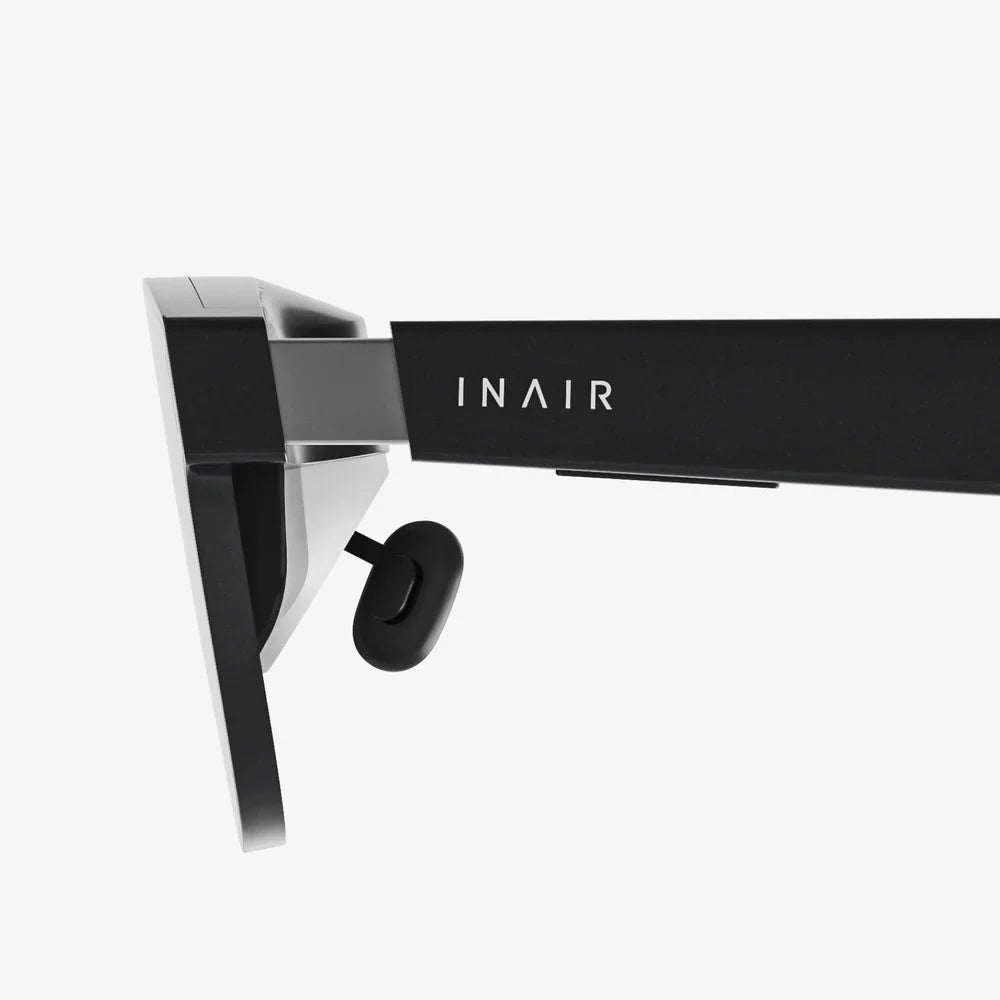
AR Systems: AR hardware varies from simple to complex. Smartphones use their camera, GPS, and inertial measurement unit (IMU) to understand the world and place digital objects within it. Dedicated AR glasses feature transparent displays (like waveguides or holographic lenses) that project light into the user's eyes while allowing them to see the real world clearly. They also pack cameras for mapping the environment (simultaneous localization and mapping, or SLAM), microphones, and powerful processors to understand and interact with the surroundings in real-time.
The Software That Sees and Understands
The real intelligence lies in the software. For AR to work, the system must understand the environment. This is achieved through computer vision, where algorithms analyze camera feed to detect flat surfaces (like floors and tables), recognize objects, and map the physical space. This allows a digital character to convincingly sit on your real coffee table. VR software, particularly for room-scale experiences, uses similar SLAM technology to create a guardian or chaperone system, mapping your play area to keep you safe from walls and furniture.
A Tale of Two Realities: Key Differences Summarized
The following table encapsulates the fundamental distinctions between AR and VR:
| Feature | Virtual Reality (VR) | Augmented Reality (AR) |
|---|---|---|
| Experience | Immersive, fully digital | Enhanced, hybrid reality |
| Environment | Computer-generated, closed off from real world | Real-world with digital overlays |
| Hardware | Head-mounted display (HMD) with controllers, often requires a powerful computer or standalone unit | Smartphones, tablets, smart glasses |
| User Awareness | Isolated from physical surroundings | Remains aware of and engaged with physical surroundings |
| Primary Goal | To create a sense of presence in a virtual world | To provide contextually relevant information within the real world |
Transforming Industries: The Practical Power of AR and VR
Beyond gaming and entertainment, these technologies are driving tangible value across numerous sectors.
Revolutionizing Training and Education
VR creates risk-free training environments for high-stakes professions. Surgeons can practice complex procedures on virtual patients, mechanics can learn to repair new engine models before they even exist physically, and firefighters can train for dangerous scenarios without any real danger. AR, on the other hand, acts as an on-the-job performance support tool. A technician wearing AR glasses can see wiring diagrams overlaid directly on the equipment they are fixing, and a medical student can study human anatomy with a 3D heart model floating above their textbook.
Redefining Design and Manufacturing
In architecture and engineering, VR allows designers and clients to virtually walk through a building before a single brick is laid, enabling changes to be made at a fraction of the cost. Automotive designers use VR to evaluate the look and feel of a car's interior. AR is used on factory floors, where assembly line workers can see instructions and part locations directly in their field of view, drastically reducing errors and improving efficiency. Digital prototypes can be viewed and interacted with in the real world, accelerating the design iteration process.
Enhancing Retail and Commerce
AR has become a powerful tool for commerce. Furniture retailers allow customers to use their smartphone cameras to see how a sofa or lamp would look and fit in their actual living space. Cosmetic companies offer virtual try-on apps for makeup and sunglasses. This "try before you buy" capability reduces purchase hesitation and lowers return rates, creating a more confident and engaging shopping experience from home.
Creating New Frontiers in Healthcare
The applications in healthcare are profound. VR is used for exposure therapy, helping patients with phobias or PTSD confront and manage their anxieties in a controlled setting. It's also used for pain management, distracting patients during painful procedures. AR provides surgeons with vital patient data, like ultrasound imagery, projected directly onto their field of view during an operation, keeping them focused without looking away at a screen.
The Blurred Line: Mixed Reality and the Future
The evolution of these technologies is leading to a convergence known as Mixed Reality (MR). MR is not just overlaying digital content but anchoring it intelligently to the real world where it can be interacted with. Imagine a VR game where your real desk becomes a virtual control panel, or an MR headset that lets you place a virtual television on your wall that stays there even when you leave the room and come back. This spectrum of experiences, from the real world to a fully virtual one, is often referred to as the "Virtuality Continuum," and it represents the future of spatial computing.
Considerations and Challenges
Despite the excitement, challenges remain. For VR, issues like motion sickness (cybersickness), the high cost of high-end systems, and the social isolation of being closed off from the world are hurdles. For AR, creating socially acceptable and stylish form factors for glasses, ensuring user privacy as devices constantly scan environments, and developing longer battery life are critical areas of development. For both, creating compelling, non-novelty content that delivers lasting value is key to mainstream adoption.
The journey of AR and VR is just beginning. From transformative enterprise tools to new artistic mediums and social platforms, these technologies are poised to redefine our relationship with computing and with each other. They are moving from isolated novelties to interconnected layers of our reality, offering a glimpse into a future where our digital and physical lives are seamlessly intertwined, limited only by the boundaries of our imagination.
Share:
Technology Used in Augmented Reality: The Digital Layer Reshaping Our World
Spatial Augmented Reality Examples: Illuminating the Future of Interaction