


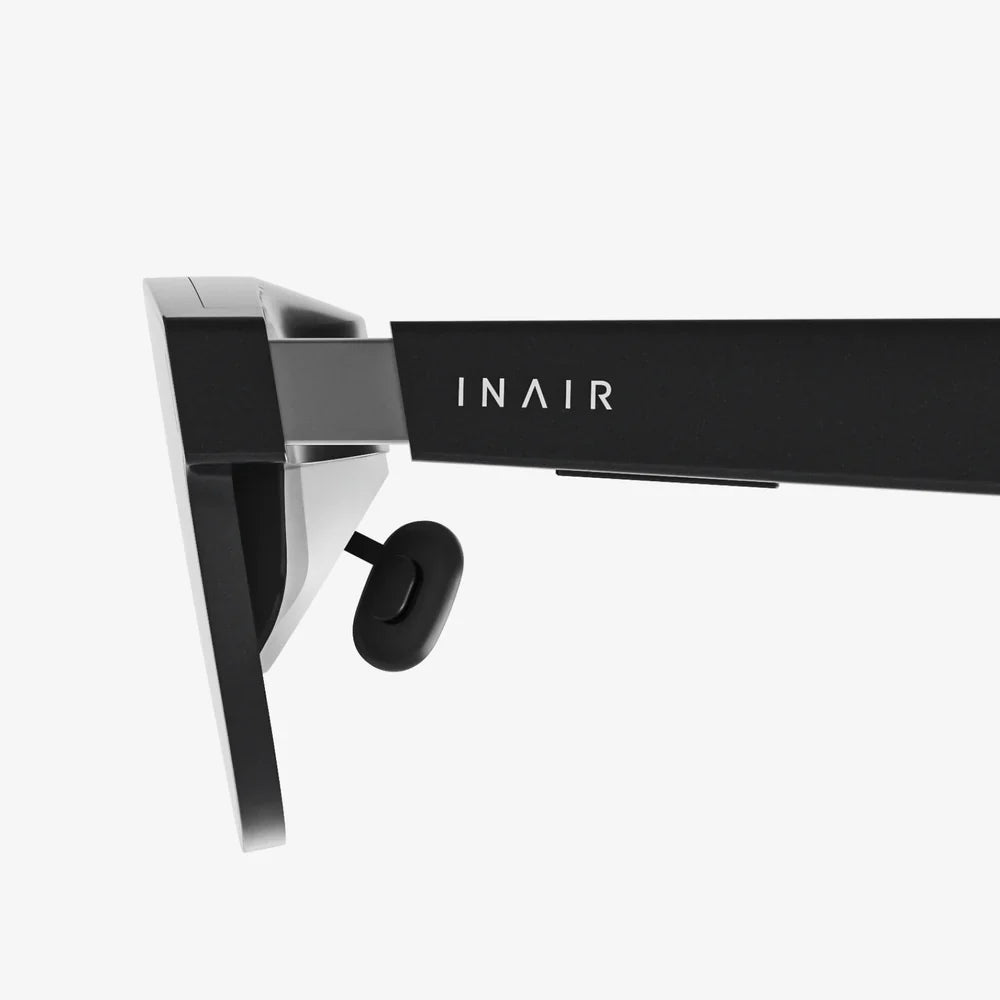
Imagine a world where information flows seamlessly into your perception, where language barriers dissolve with a glance, and your entire digital world is accessible without ever looking down at a screen. This isn't a distant sci-fi fantasy; it’s the emerging reality promised by AI glasses. The market is buzzing with potential, and everyone is asking the same question: what's the best AI glasses available today? The answer is more nuanced than a simple product name. Finding the best pair isn't about a single brand victory; it's about identifying which device aligns perfectly with your needs, lifestyle, and vision for the future. This deep dive will unpack the technology, the contenders, and the critical factors that separate a gimmick from a genuine glimpse into the next computing revolution.
Beyond the Hype: Defining the "AI" in AI Glasses
Before crowning a champion, we must first understand what we're judging. AI glasses are not simply cameras attached to frames or displays that project a basic interface. The true differentiator is the artificial intelligence that powers them. This intelligence manifests in several core functionalities that define the category.
The Power of Real-Time Translation
One of the most compelling and immediately useful applications is real-time language translation. Advanced models use sophisticated neural networks to process spoken language, translate it almost instantaneously, and display the text translation directly in your line of sight. This isn't just reading a translated menu; it's about having a fluid conversation with someone in a different language, seeing their words and your replies translated in real time, effectively creating a world without language barriers.
Advanced Computer Vision and Contextual Awareness
The best AI glasses act as a second brain for your eyes. Their integrated cameras and sensors constantly analyze the visual world. This enables features like:
- Object and Text Recognition: Look at a landmark and see its history pop up. Glance at a restaurant to see its reviews and menu. Read a foreign sign and get an instant translation overlaid on the text itself.
- Navigation and Wayfinding: Instead of holding up your phone, arrows and directions are seamlessly projected onto the real world, guiding you to your destination while keeping your head up and aware of your surroundings.
- Accessibility Enhancements: For individuals with visual or auditory impairments, this technology is transformative. Imagine glasses that can identify people and whisper their name into your ear, describe scenes, read text aloud, or amplify specific sounds in a noisy environment.
Seamless Audio and Voice Integration
The auditory experience is just as important as the visual. High-fidelity speakers that deliver sound directly to your ears without bothering those around you are a key feature. Coupled with powerful voice assistants, this allows for completely hands-free control. You can make calls, send messages, set reminders, play music, and query information using just your voice, all while the AI processes your requests contextually.
Key Considerations When Choosing Your AI Glasses
With the core features in mind, evaluating any pair of AI glasses comes down to a balance of several critical factors. The "best" pair is the one that strikes the right balance for you.
Design and Wearability: Tech You'll Actually Want to Wear
This is arguably the most important hurdle. The first generation of smart glasses often suffered from a bulky, awkward, and obviously "techie" aesthetic. The best modern iterations prioritize a sleek, minimalist design that closely resembles high-end traditional eyewear. They are lightweight, comfortable for all-day wear, and come in a variety of shapes and lens options (including prescription). If they aren't comfortable and stylish enough to wear every day, their advanced features become irrelevant.
Display Technology: The Window to Your Digital Overlay
How information is projected into your field of view is a key differentiator. There are two main approaches:
- AR Displays (Waveguides): These use complex microscopic structures within the lens to project a digital overlay that appears to float in the real world. This is the gold standard for true augmented reality, offering a more immersive and integrated experience, but it is also more expensive and complex to manufacture.
- Heads-Up Displays (HUDs): A simpler approach that uses a small LED projector to display information on a tiny section of the lens, often in the corner of your eye. It's less immersive but can be more than sufficient for notifications, basic text, and simple data like time or battery life.
The choice here depends on whether you want full AR immersion or subtle, glanceable information.
Battery Life and Performance: Powering the Future
AI processing is computationally intensive and drains battery life quickly. The best devices manage this through a combination of a efficient onboard processors and offloading complex tasks to a paired smartphone. All-day battery life is the ultimate goal, but most current models require a midday charge for heavy use. Evaluating real-world battery performance, not just manufacturer claims, is crucial.
Privacy and the Social Contract
This is a paramount concern. Glasses with always-on cameras and microphones understandably raise privacy alarms. The best companies address this head-on with clear physical indicators (like recording lights) and thoughtful design choices that prioritize user consent and transparency. Choosing a provider with a strong, clear privacy policy and ethical data handling practices is non-negotiable for a technology this personal.
The Current Landscape: A Spectrum of Approaches
Rather than a single dominant player, the market currently features different philosophies, each with its own strengths and target audience.
The Full-AR Immersive Vision
This category aims for the full sci-fi experience: rich, interactive holograms seamlessly integrated into your environment. These devices are pushing the boundaries of display technology, spatial computing, and processing power. They are often described as spatial computers for your face. They represent the bleeding edge of what's possible but can come with trade-offs in battery life, weight, and cost, positioning them more as powerful development tools or for specific enterprise applications rather than all-day consumer wear.
The Subtle, Assistive Companion
On the other end of the spectrum are devices that focus on being a practical, lightweight assistant. They prioritize superb audio, a reliable voice assistant, and subtle notifications. Their camera is used for quick captures or specific AI-powered tasks like translation, but they don't aim for a persistent AR overlay. Their genius is in their simplicity and wearability, offering a less intrusive but still powerfully connected experience that feels natural and socially acceptable today.
The Audio-First Evolution
Some of the most successful wearables have started with exceptional audio. This approach leverages advanced speaker and microphone technology to deliver a stellar music and call experience first, then layers on smart features like voice AI and light notifications. For many, this is the perfect gateway into wearable AI, offering tangible daily benefits without a radical change in behavior or appearance.
The Future is Clear: Where AI Glasses Are Headed
The technology is advancing at a breathtaking pace. The devices available today are merely the first steps. In the near future, we can expect:
- Revolutionary Battery Tech: New battery chemistries and low-power processors will finally deliver the all-day, untethered experience that is essential for mass adoption.
- True Contextual Understanding: AI will evolve from recognizing objects to truly understanding context and intent. Your glasses will not just see a coffee shop; they will know you have a meeting there in ten minutes and automatically pull up the notes for it.
- Seamless Biometric Integration: Continuous health monitoring—tracking everything from hydration and blood sugar levels to stress and fatigue—will become a standard, proactive feature, turning your glasses into a guardian of your well-being.
- The Demise of the Smartphone? While the phone won't disappear overnight, the center of our digital gravity will slowly shift from a device in our pocket to an intelligent layer over our eyes and ears.
So, what's the best AI glasses? The truth is, the crown is still up for grabs, and it may be different for everyone. The best pair is the one that feels less like a piece of technology and more like a natural extension of your own capabilities. It’s the pair you forget you're wearing until you need them, the ones that empower you without distracting you, and the ones that open your eyes to a world of possibility—literally. The journey to find your perfect pair is just beginning, and it’s one of the most exciting adventures in modern technology.
Share:
At AR Glasses by Generative AI: The Invisible Interface Reshaping Reality
Augmented Reality and Learning: The Future of Education is Transparent